


About the Breaux Symposium
The John Breaux Symposium is the Reilly Center’s signature annual event, bringing national thought leaders to LSU to explore critical issues in media, politics, and public affairs. The Symposium aims to harness the expertise and perspectives of individuals hailing from a variety of fields and backgrounds.
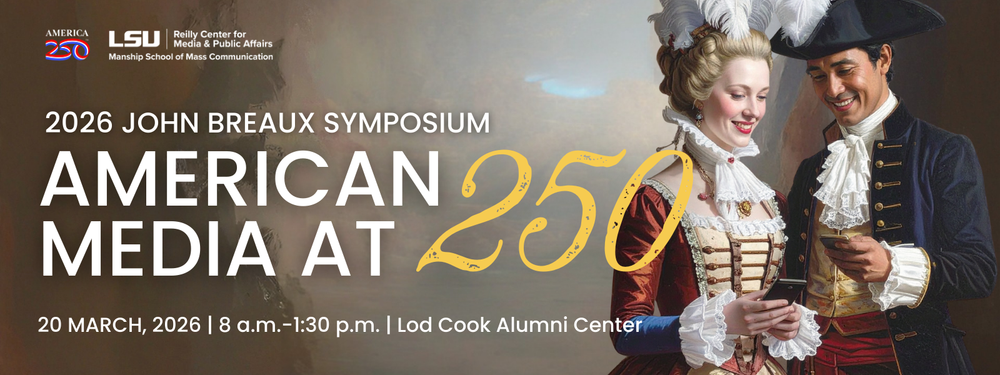
2026 Symposium: American Media at 250
Held at the Lod Cook Alumni Center on March 20, the 2026 John Breaux Symposium tackled the theme of "American Media at 250" — a nod to the anniversary of the Declaration of Independence. This year’s program featured national voices and innovative scholars who examined how media has informed and influenced civic life over the past two and a half centuries and what that history can teach us about today’s media landscape. While celebrating this major national milestone, this event also explored challenges and opportunities facing the country moving forward.
In partnership with the Louisiana America 250 Commission, the 2026 John Breaux Symposium encouraged thoughtful dialogue among its 205 registered attendees about the role of media in American democracy — past, present, and future. Watch the video below, or read the event transcript here.
Agenda
7:30 - 8:30 a.m. – Networking & Continental Breakfast
8:30 a.m. – Welcome & Opening Remarks: The Press & Political Communication Then and Now
- Former U.S. Sen. John Beaux, special appearance via video message
- Michael DiResto, Director of the Reilly Center for Media & Public Affairs
9 a.m. – Fake News and Other Media "Dark Arts" in American History
- Jack Hamilton, Ph.D., LSU Boyd Professor; Hopkins P. Breazeale Professor of Journalism at the Manship School of Mass Communication; Columnist for RealClearPolitics
- Jordan Taylor, Ph.D., Digital Content Manager for the Colonial Williamsburg Foundation
- Discussion moderated by: Suzanne Marchand, Ph.D., LSU Boyd Professor; Professor of European Intellectual History
10 a.m. – Media, Civil Discourse & Polarization
- Johanna Dunaway, Ph.D., Research Director for the Syracuse Institute for Democracy, Journalism & Citizenship
- Sunshine Hillygus, Ph.D., Co-Director for Duke University's Polarization Lab
- Discussion moderated by: Michael Henderson, Ph.D., Associate Professor of Political Communication and Political Science; Political Communication Area Head for the LSU Manship School of Mass Communication
11 a.m. – Navigating the Minefield of a Fragmented Media Environment
- Carl Cannon, Executive Editor and Washington Bureau Chief of RealClearPolitics
- Discussion moderated by: Jack Hamilton, Ph.D., LSU Boyd Professor; Hopkins P. Breazeale Professor of Journalism at the Manship School of Mass Communication; Columnist for RealClearPolitics
12 p.m. Noon – Lunch
12:30 p.m. – The Emergence of Independent Media, Today and Tomorrow
- Jonah Goldberg, Editor-in-Chief and Co-founder of The Dispatch
- Discussion moderated by: Michael DiResto, Director of the Reilly Center for Media & Public Affairs
Past Symposia
Past Symposia have hosted scholars, journalists, corporate executives, and political and civic leaders. Through keynote speakers, panels and presentations, the intent of the Symposium is to discuss the public’s knowledge about some aspect of our democracy and identify possible actions to increase public awareness and constructive debate.
The 2026 John Breaux Symposium tackled the theme of "American Media at 250" — a nod to the anniversary of the Declaration of Independence. The program featured national voices and innovative scholars who examined how media has informed and influenced civic life over the past two and a half centuries and what that history can teach us about today’s media landscape. While celebrating this major national milestone, this event also explored challenges and opportunities facing the country moving forward.
In partnership with the Louisiana America 250 Commission, the 2026 John Breaux Symposium encouraged thoughtful dialogue about the role of media in American democracy — past, present, and future.
The widespread use of artificial intelligence tools is now a reality, including in the communication industry. How are these tools being used? What concerns should we have? How will the industries change? What do practitioners need to know now and why? The 2024 John Breaux Symposium—the Reilly Center’s signature annual event–examines these questions and more.
Global journalism has undergone significant changes, impacting everything from who reports the news to how it is published and consumed. As coverage increasingly crosses national borders, global journalism plays a crucial role in providing early warnings of pandemics, climate disasters, terrorism, war, and forced migration.
The symposium featured a keynote panel with global journalism experts Jesse Lewis and Anjan Sundaram, Ph.D. The discussion, moderated by Uyen Diep, a foreign correspondent and current graduate student at LSU's Manship School of Mass Communication, explored theoretical insights to help guide both practitioners and scholars in their future work.
Civic engagement takes many forms, from philanthropy to public service and beyond. But what drives civic engagement, and how does it serve the common good? This year’s John Breaux Symposium, held in honor of Dee Dee Reilly, explored these questions and considered what it means to be a good citizen. The half-day event featured remarks from Sean Reilly and Mayor-President Sharon Weston Broome, who discussed the connections between civic engagement, public service, and philanthropy.
The symposium highlighted how change begins within communities through passionate individuals who are committed to making a difference. With the right tools and resources, citizens can become community leaders and drive positive change. The event included a panel discussion, a keynote address, and presentations by the inaugural grantees of The Community Collaborative: By the Community, For the Community.
Featured speakers included: Roger H. Ogden, Real Estate Developer, Civic Leader and Philanthropist, Keynote Speaker; Katie Knobloch, Ph.D., Associate Professor in the Department of Communications and Associate Director of the Center for Public Deliberation at Colorado State University;
Mia LeJeune, Senior, LSU Manship School of Mass Communication, Moderator; Lauren Crapanzano Jumonville, Director Civic Initiatives, Baton Rouge Area Foundation; Jay Dardenne, Commissioner of Administration, State of Louisiana;
Sherreta Harrison, Sustainability Catalyst, MetroMorphosis; Raymond Jetson, Chief Executive Catalyst, MetroMorphosis; Carol Chin, Natchez Pecan Park Basketball Court grantee; Liam Doyle, Project Enable grantee; Dr. Murelle Harrison and Reginald Brown, Gardere Proud grantees; Morgan Washington and Kathleen Stewart Richey, Give a Child a Chance grantees.
With a new presidential election cycle dawning, the voting public is questioning the security of the nation’s election systems. After the 2016 Presidential Election thrust the vulnerability of our voting technology to the forefront of conversation in the United States, there has been much discussion surrounding the security of future elections, as well as the use of social media as a tool to distribute divisive and false information.
The Reilly Center's annual John Breaux Symposium explored the impact of foreign interference on political discourse, highlighting how such actions have fueled racial tensions and spread disinformation across social media platforms, leading to increased friction among the voting population. Experts discussed the integrity of voting technology and the security of automated machines. This symposium also analyzed the vulnerabilities in the nation’s election systems and the extent of foreign interference in the democratic process.
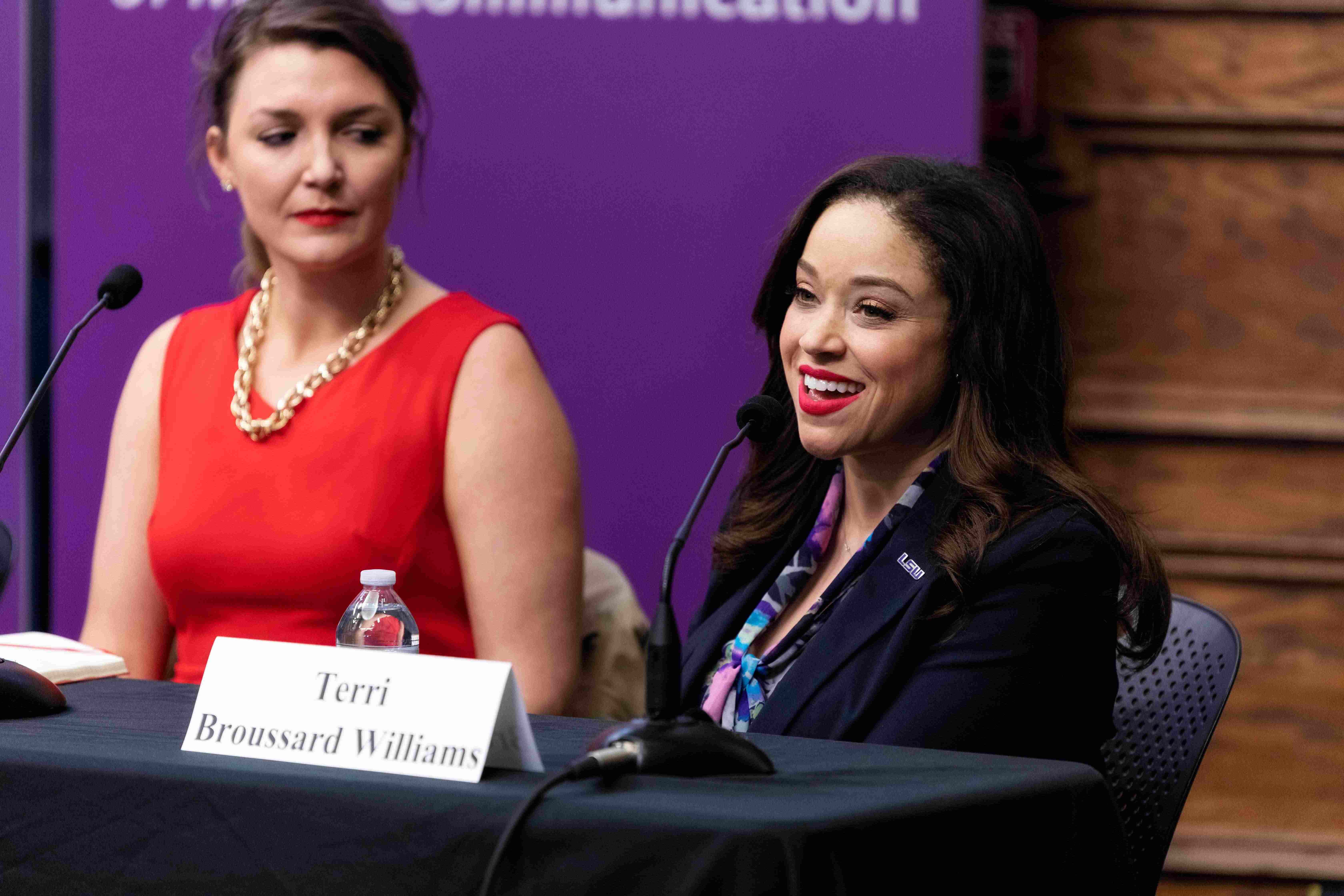
More women ran for political office in the 2018 mid-term elections than at any other time in history. Indeed, record numbers of women were vying for seats on a variety of legislative bodies such as school boards, city councils, state legislatures, and Congress as well as executive offices such as gubernatorial and mayoral seats. The 2018 mid-term elections drastically altered women’s political representation.
The Spring 2019 Breaux Symposium examined the barriers women face in political leadership, beginning with the socialization of young children and continuing through the challenges women encounter in winning and serving in elected office. The symposium highlighted how young girls are often discouraged from seeing themselves as leaders, and how these socialization processes deter women from pursuing political careers. Discussions focused on the factors that motivate women to run for office despite these negative influences, as well as the gendered obstacles, including voter and media bias, that women, especially women of color, face in their pursuit of political power. The symposium also emphasized the benefits of electing more women to political positions and explored strategies for overcoming these challenges.
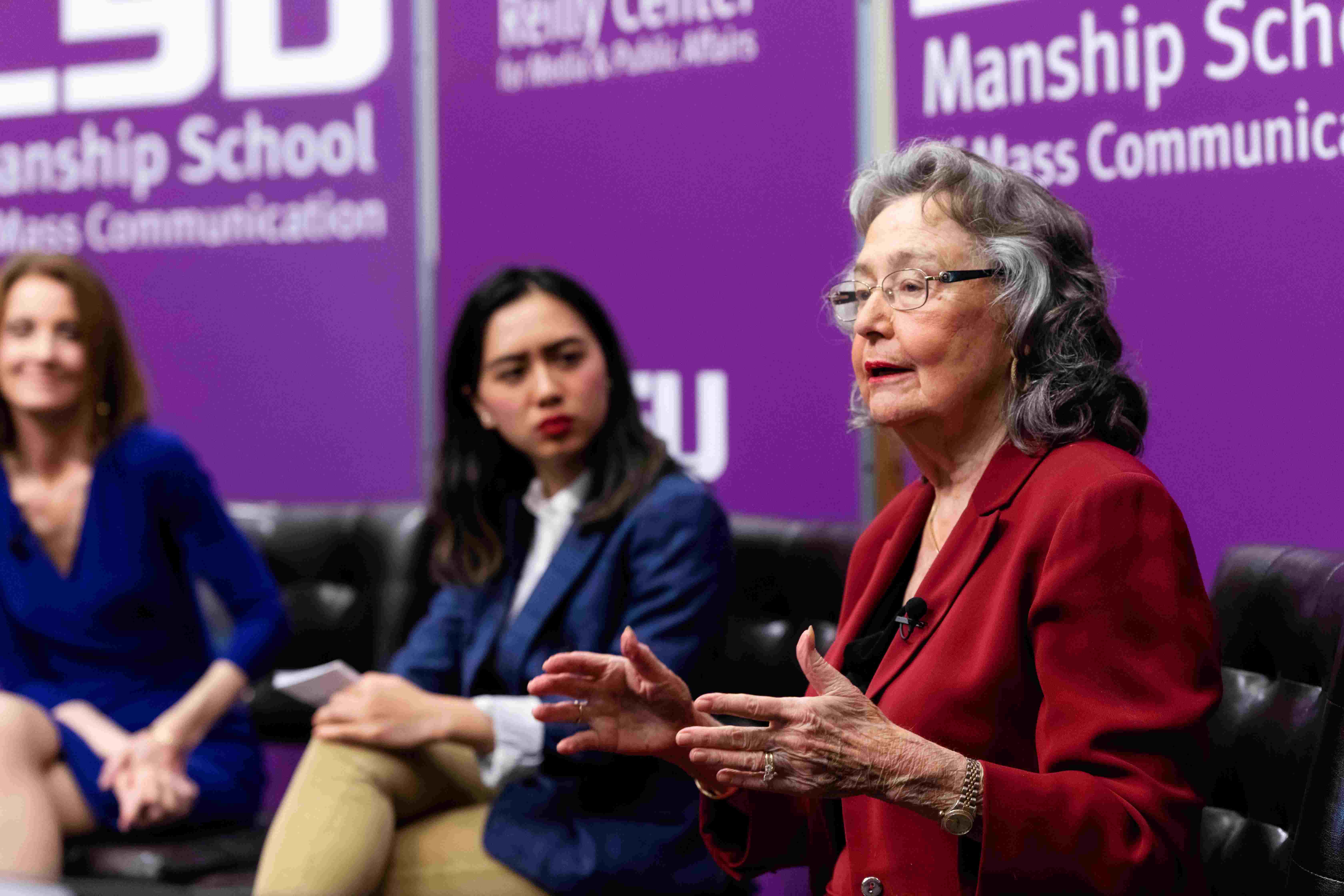
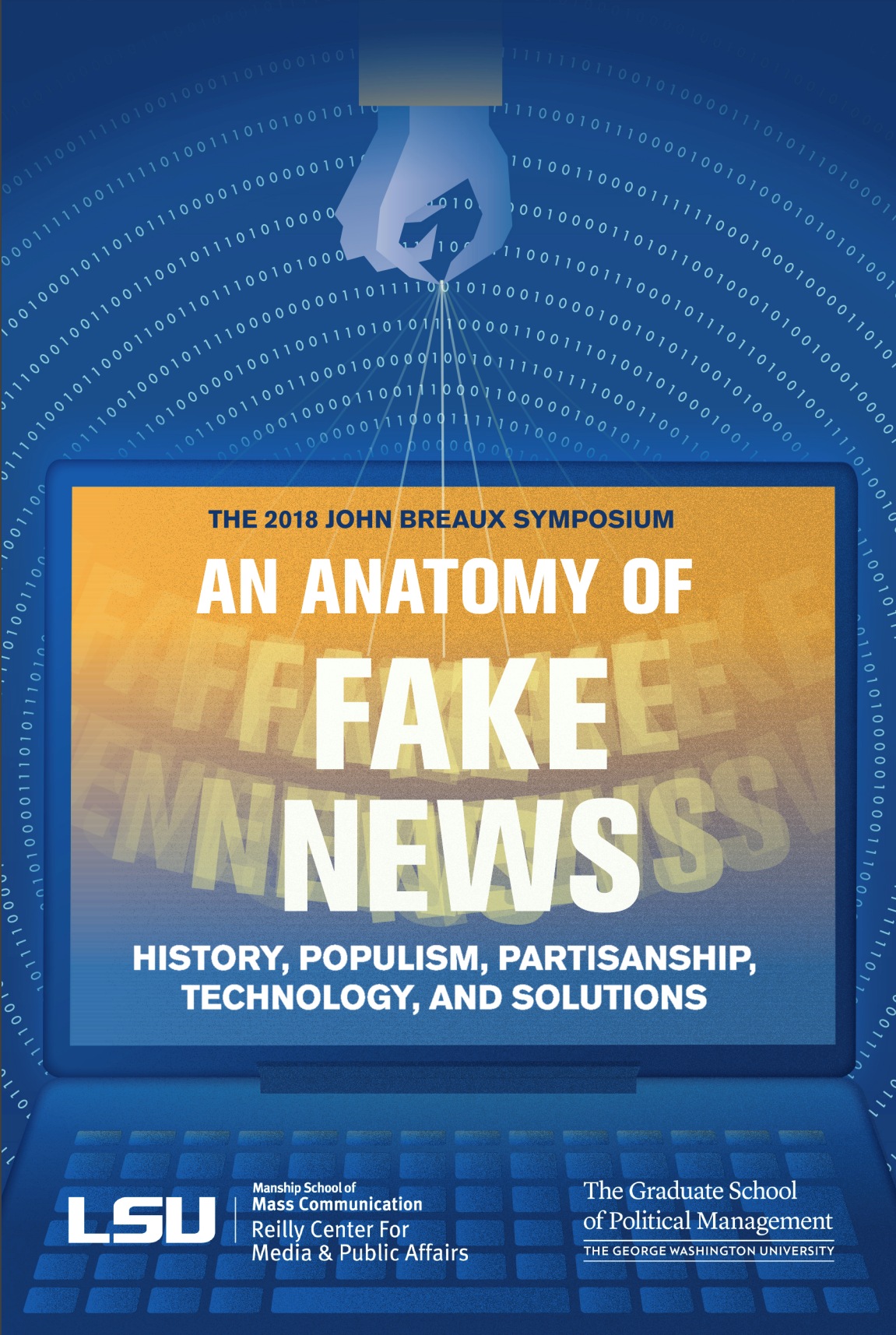
Fake news is a popular phrase with many meanings. Recently, it has oft been used by politicians to reject or discredit information that is not to their liking. This messaging strategy places legitimate journalists and news organizations on the defensive, and sows confusion among the public about what sources to trust.
Perhaps more problematic than the labeling of “real news” as “fake news” is the publication and distribution of known misinformation—promoting news that is fake—for motives ranging from politics to profit. In between these two extremes of intentional behavior exists another form of fake news that involves more accident and incompetence than malice, but does not create any less public confusion.
A good place to start thinking about fake news is to consider an essential feature of responsible journalism, the suppression of unreliable or incendiary information. Fake news honors no such limitations. The breakdown in the contemporary news media has opened the floodgates of misinformation. This is the world we live in today. It is one without adequate information border guards or even borders.
As a result, Louisiana State University’s Manship School of Mass Communication and George Washington University’s Graduate School of Political Management—collaborated in the spring of 2018 to add a new dimension to the exploration of fake news. We did not want to ask the familiar question: What is fake news? Instead we asked a less familiar one: Why is this happening? To what extent is faking new and to what extent is it a continuation of the past?
The event brought together scholars and news experts in the nation’s capital to discuss the pervasive problem of fake news, by focusing on 1) the historical antecedents, 2) anti-establishment populism, 3) the role of political parties and mediating institutions, 4) technological enablement and amelioration, and 5) solutions to these pressing issues.
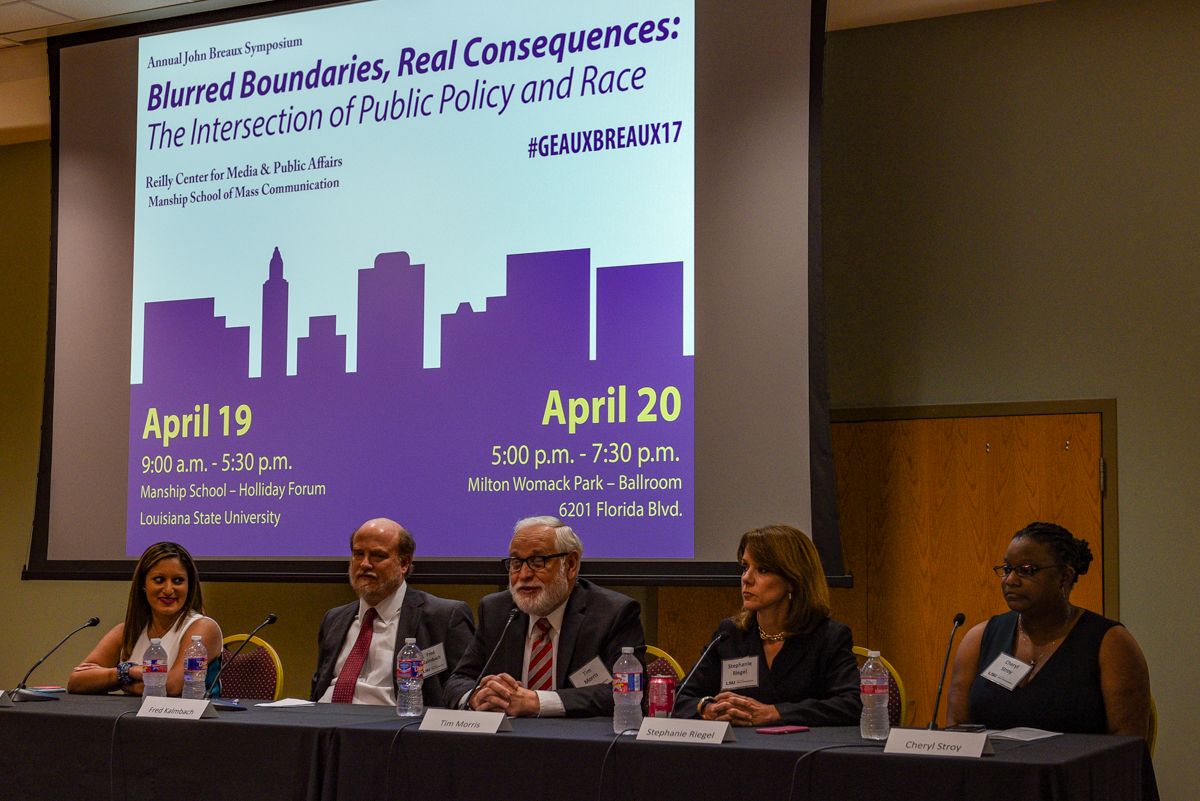
The 2017 John Breaux Symposium, Blurred Boundaries, Real Consequences: The Intersection of Public Policy and Race, sought to facilitate dialogue on issues exacerbated by a series of significant events during the summer of 2016. The death of Alton Sterling, a Black man, at the hands of two white police officers brought longstanding concerns about unequal treatment and opportunity within the Black community in Baton Rouge into sharp focus. The symposium explored the public policy issues underlying racial inequality through expert panels and presentations, including research from Manship School students and faculty.
Baton Rouge Mayor-President Sharon Weston Broome, elected following the Alton Sterling shooting and severe flooding in the area, delivered the keynote address. She discussed her initiatives to tackle racial inequality through public policy. After her speech, Mayor-President Broome met with symposium guests, presenters, and members of the LSU community.
The symposium opened with a presentation from a team of experts who shared findings from the Manship School Community Resilience study, which examined race relations in Louisiana in the wake of the events of 2016. The study aimed to understand how residents have responded to these events and the broader social issues they highlighted.
Leading scholars from across the nation came together to discuss how race intersects with various public policy areas, including education, criminal justice, segregation, wealth, media, health, and politics. The discussion, moderated by Mary Campbell, featured contributions from Drs. Kenneth Fasching-Varner, Shaun L. Gabbidon, Jackelyn Hwang, Lori Latrice Martin, Srividya Ramasubramanian, Holley Wilkin, and Ismail White.
Other highlights from the first day included a capstone presentation on social media strategy for Dialogue on Race Louisiana, and a presentation on LSU’s Cold Case Project, which reexamines unsolved Civil Rights-era murder cases.
Local filmmaker Marcus Brown set the tone for the second day with a screening of his documentary BetterR – The Newsroom, which reflected the challenges faced by local newsrooms during high-profile events like the Alton Sterling shooting. A Media Access Panel, moderated by Ed Pratt, followed the screening and included local media representatives Kiran Chawla, Fred Kalmbach, Tim Morris, Stephanie Riegel, and Cheryl Stroy, along with community leaders Maxine Crump, Juan Cruz, A.V. Mitchell, Myra Richardson, and Shamaka Shumake. The panel explored how the media covers community issues and how members of Louisiana’s diverse communities can better engage with local media.
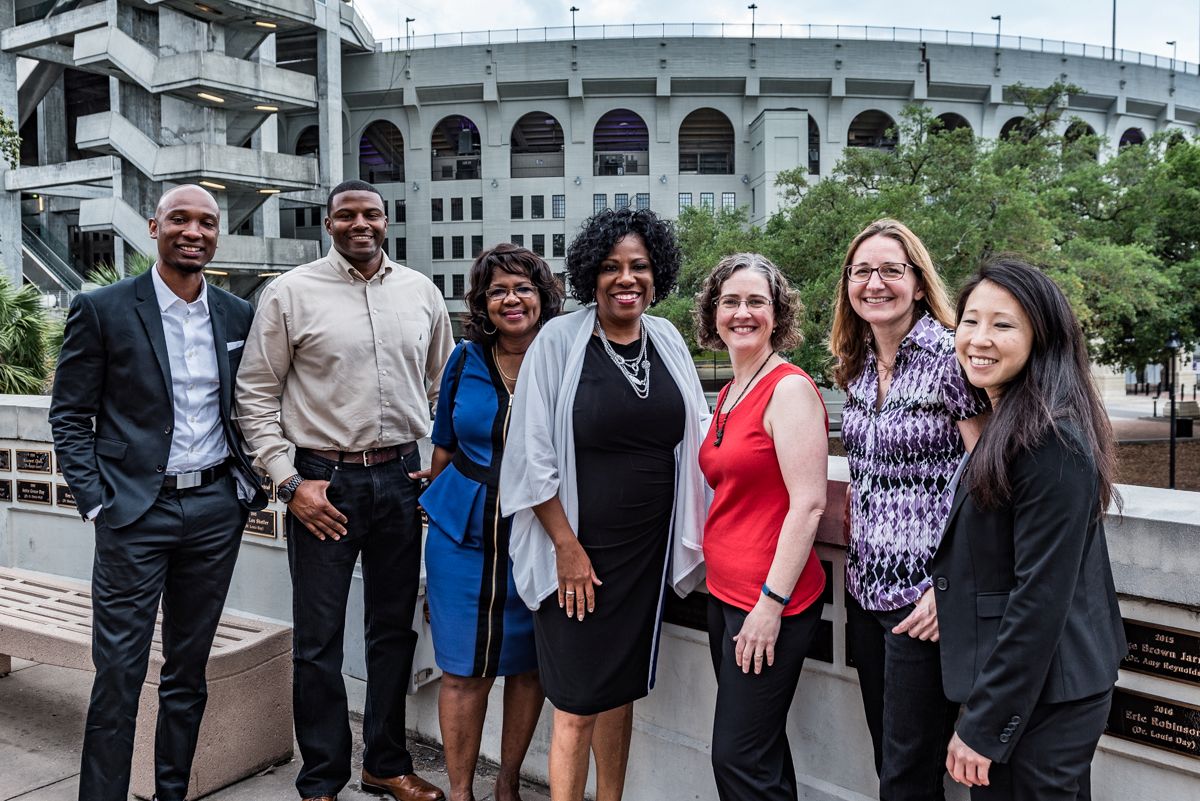
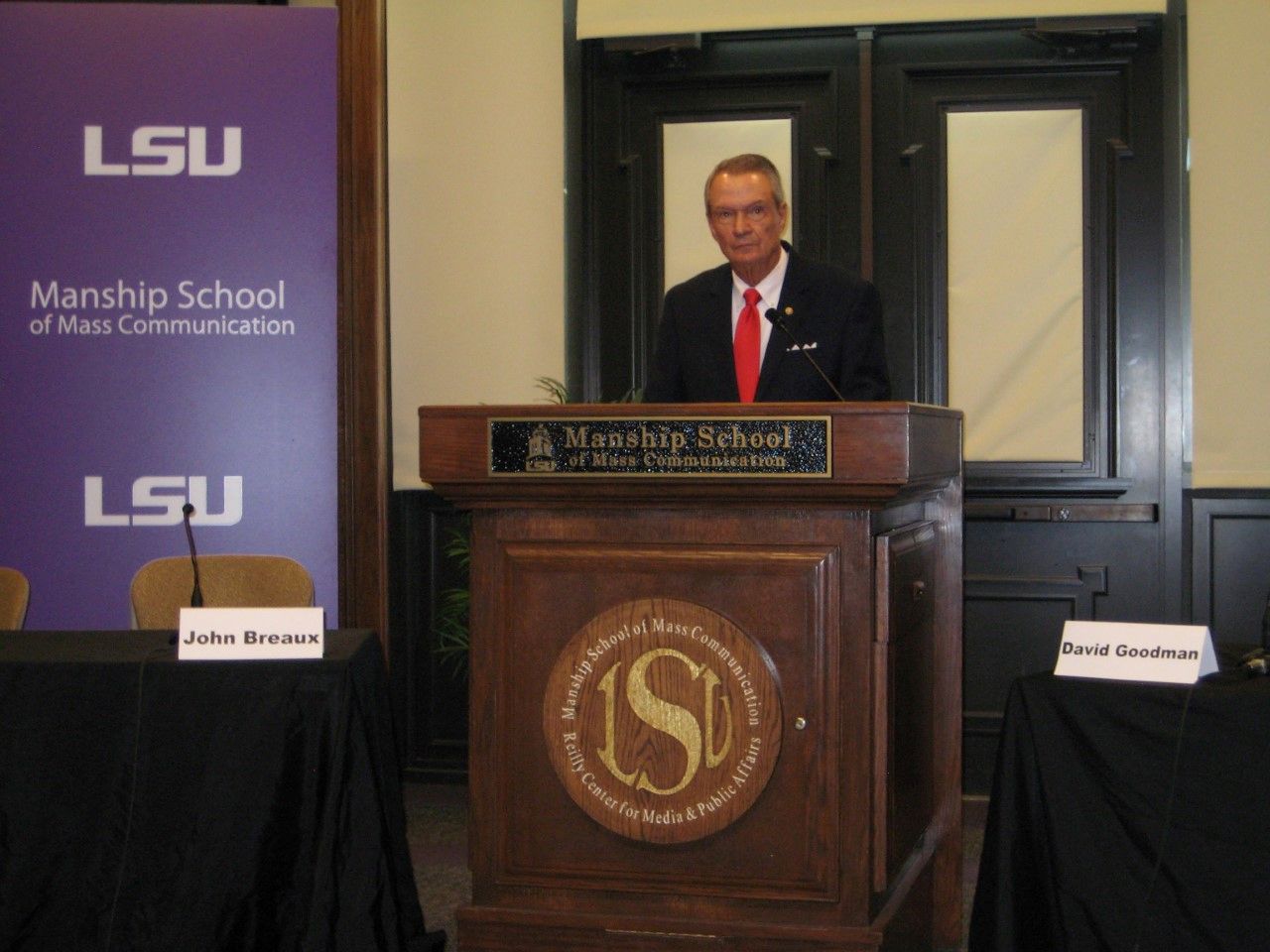
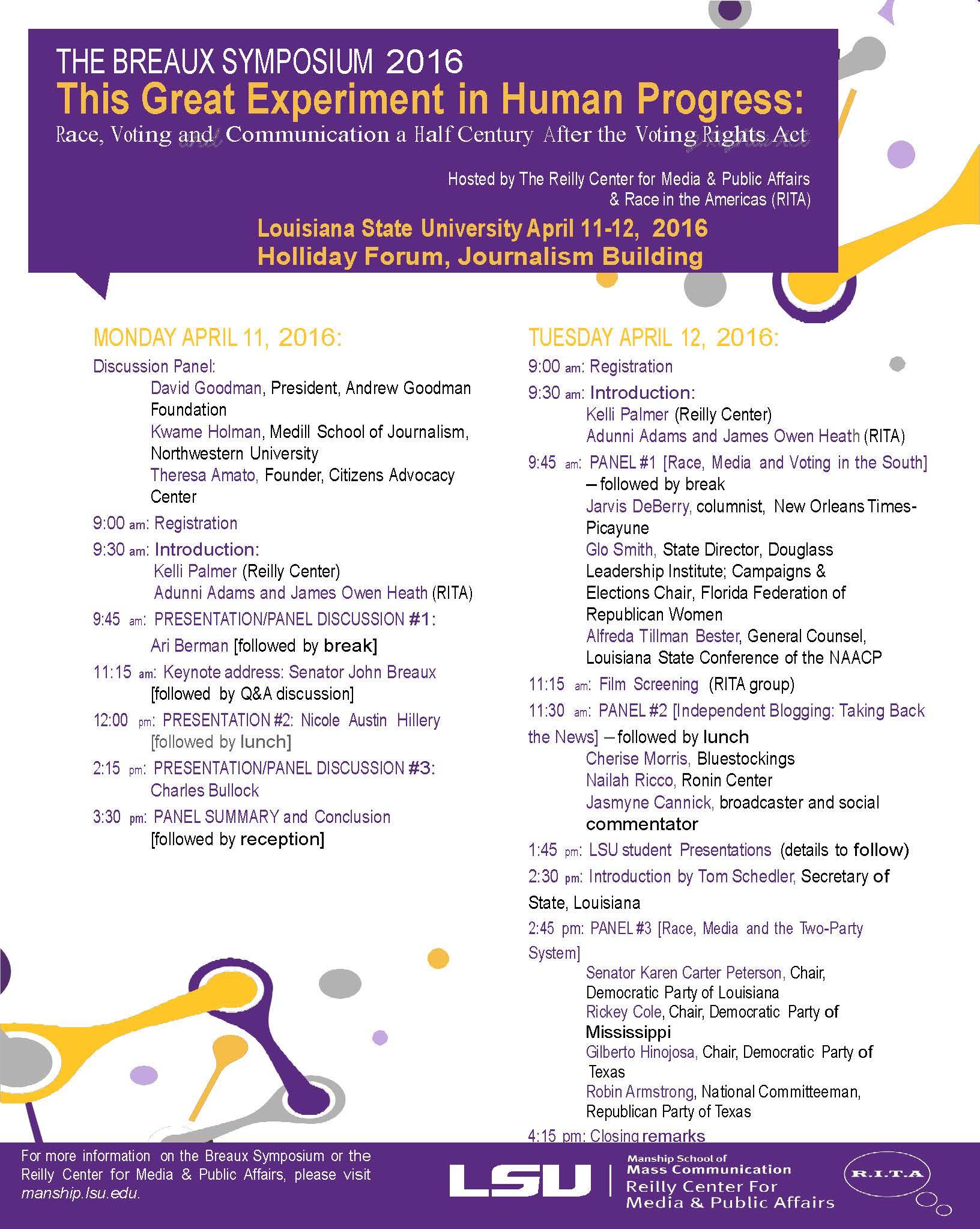
Nearly 51 years after passage of the federal Voting Rights Act of 1965, the 2016 Breaux Symposium brought together scholars, policymakers, and experts to examine the evolving landscape of political participation in the United States. This two-day event also analyzed race relations in the context of the upcoming 2016 presidential election, providing important insights into the challenges and dynamics of modern electoral participation.
Panelists included: Former U.S. Sen. John Breaux; Charles S. Bullock, the Richard B. Russell professor of Political Science at the University of Georgia; Nicole Austin-Hillery, director and counsel for the Brennan Center for Justice at New York University;
Journalist Ari Berman, author of Give Us The Ballot: The Modern Struggle for Voting Rights in America; Kwame Holman of the Medill School of Journalism at Northwestern University; David Goodman, president of The Andrew Goodman Foundation, and brother of Andrew Goodman (one of three civil rights workers murdered in Mississippi in 1964);
Theresa Amato, founder of the Citizens Advocacy Center; Jarvis DeBerry, columnist for NOLA.com | New Orleans Times Picayune; Alfreda Tillman Bester, general counsel for the Louisiana State Conference of the National Association for the Advancement of Colored People, and Jasmyne Cannick, broadcaster and social commentator.
Louisiana Secretary of State Tom Schedler; Louisiana state Sen. Karen Carter Peterson, chair of the Democratic Party of Louisiana; Robin Armstrong, national committeeman from Texas, Republican National Committee; Rickey Cole, chair of the Democratic Party of Mississippi, and Gilberto Hinojosa, chair of the Democratic Party of Texas.
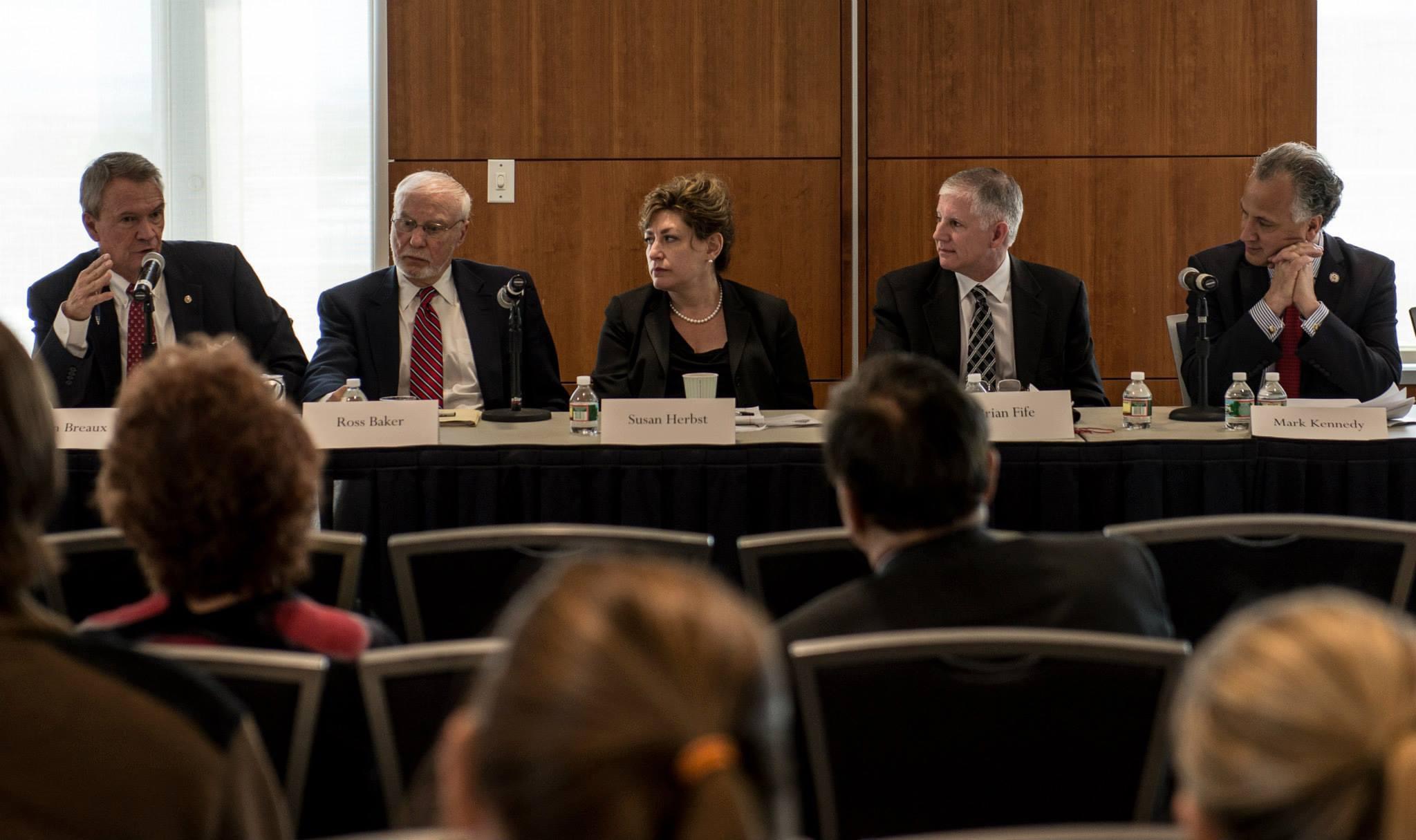
The Reilly Center’s 2014 Breaux Symposium marked the 50th anniversary of the U.S. Supreme Court’s landmark decision in New York Times v. Sullivan, a ruling that transformed libel law by expanding the media’s ability to report on government and public affairs. The symposium analyzed the ruling's lasting effects on the press and government as well as its substantial impact on how public figures are covered by the media. The event featured three panel discussions: “Importance of New York Times v. Sullivan for media and the law," "Impact of New York Times v. Sullivan on media coverage of politics and government," and "Impact of New York Times v. Sullivan on the future of media."
Panelists included: former Louisiana Governor Kathleen Blanco; Professor Jane Kirtley, University of Minnesota and James Goodale, former general counsel of the New York Times and 2013 Silha Lecturer.
Every year, the John Breaux Symposium aims to address two critical questions: How well is the public being informed? What can be done to increase awareness and constructive debate? This year's symposium, held in Washington, D.C., brought together seven former members of Congress to discuss ways to improve the functionality of Congress through the promotion of bipartisanship. All participating former representatives and senators are recognized for their commitment to bipartisan collaboration and are members of the United States Association of Former Members of Congress. This association, chartered by Congress, is dedicated to advancing public service and strengthening representative democracy by encouraging cooperation both within the United States and internationally.
Panelists included: Sen. John Breaux, D-La., who started the symposium in 2000; Sen. Blanche Lincoln, D-Ark; Sen. Byron Dorgan, D-N.D.; Sen. Tom Daschle, D-S.D.; Sen. Trent Lott, R-Miss.; Rep. Norman Dicks, D-Wash.; and Rep. Connie Morella, R-Md. Rep. Mark Kennedy, director of GW’s Graduate School of Political Management and former member of Congress (R-Minn.) provided welcoming remarks and participated in several panel discussions.
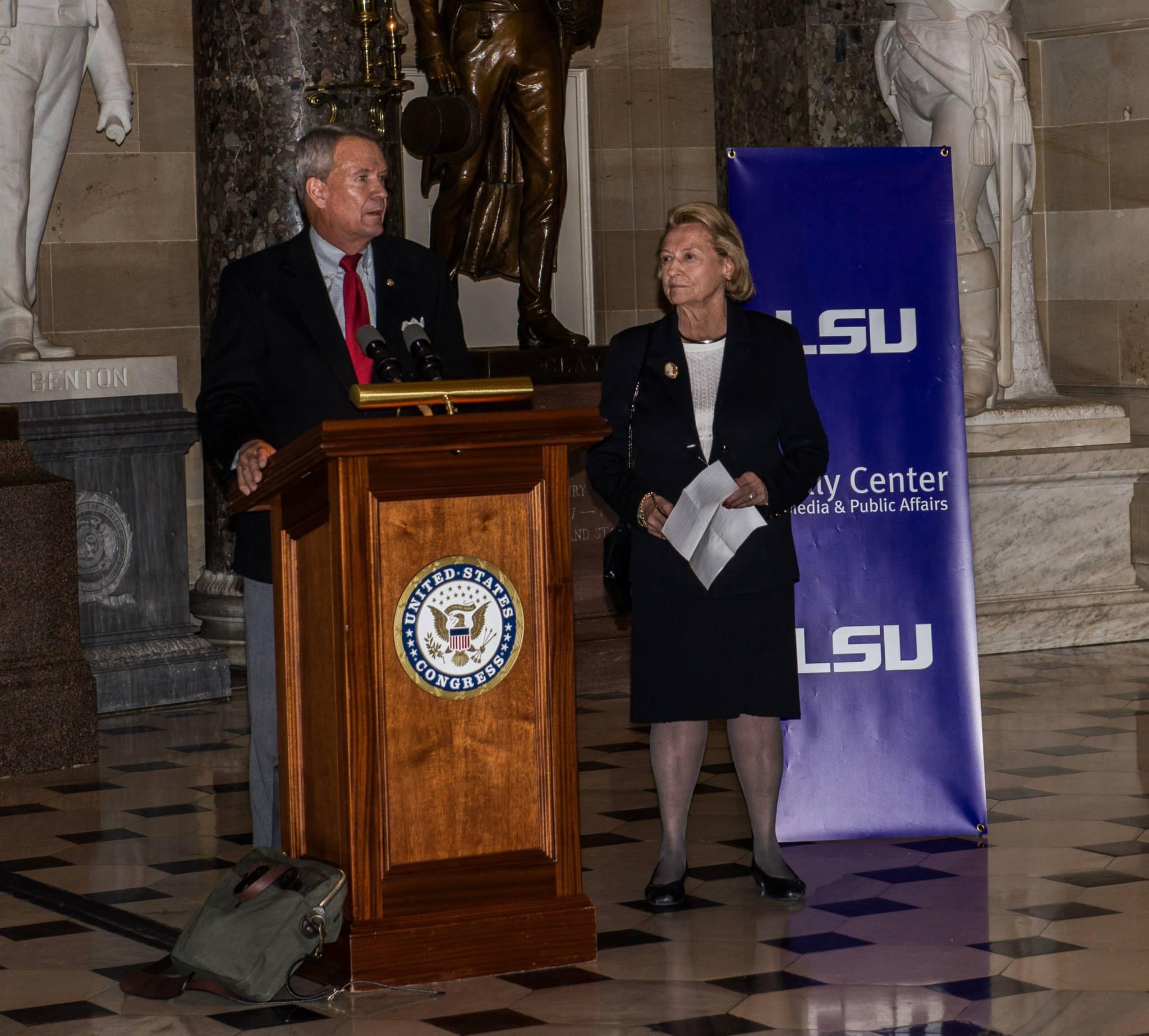
The 2012 symposium focused on the study of propaganda, a topic frequently mentioned in media and politics but often overlooked in academic research in the U.S. While well-received internationally, it received less attention in the U.S., possibly due to our belief in democracy's dedication to facts and truth. The event aimed to address this gap and explore questions many citizens have about the role of propaganda in democratic societies.
The study and practice of political communication are at a crossroads. Within the past decade, the political and media environment has rapidly become markedly more fragmented and polarized. Control of the White House and Congress has shifted back and forth across parties, bringing dramatic changes—and often gridlock—to national policy agendas. Presidents and other elected representatives struggle to make policy and communicate with the public in an often corrosive political atmosphere. And reporters try to make sense of it all with fewer resources and a seemingly less attentive public.
What can be done to improve the study and practice of political communication in this changed environment? How can scholars learn more from practitioners and practitioners learn more from scholars in order to elevate political discourse and public understanding? And crucially, what can the academy do to prepare students for the changing world of media and politics?
The study and practice of political communication are at a crossroads. Within the past decade, the political and media environment has rapidly become markedly more fragmented and polarized. Control of the White House and Congress has shifted back and forth across parties, bringing dramatic changes—and often gridlock—to national policy agendas. Presidents and other elected representatives struggle to make policy and communicate with the public in an often corrosive political atmosphere. And reporters try to make sense of it all with fewer resources and a seemingly less attentive public.
What can be done to improve the study and practice of political communication in this changed environment? How can scholars learn more from practitioners and practitioners learn more from scholars in order to elevate political discourse and public understanding? And crucially, what can the academy do to prepare students for the changing world of media and politics?
March 28th featured a discussion moderated by LSU’s Executive Vice Chancellor and Provost John Maxwell Hamilton, “Professionals and Academics: Learning From One Another for the Public Good.” Panelists will included Amy Walter, Bill Purcell, Michael Delli Carpini and Shanto Iyengar.March 29th panelists explored, examined and tested new ideas to expand and deepen the study of media and public affairs in the classroom, in the public arena, and through research. Session topics will include incivility in politics, the challenges of governing in a polarized media environment, and how to better train students for the 21st century.
Panelists included: Lance Bennett, University of Washington; Robert Entman, The George Washington University; Dan Balz, The Washington Post; Shanto Iyengar, Stanford University; Roderick Hart, University of Texas; Bill Purcell, Harvard University; Amy Walter, ABC News; Michael X. Delli Carpini, University of Pennsylvania; Bob Mann and Regina Lawrence, Louisiana State University.
This symposium sought to provide fresh perspectives on ethnic media — their relevancy among political professionals, academics, ethnic, general audience and digital media professionals, their impact on civic participation and voting patterns and their value to the general audience press and consumers.
Mark Blumenthal described the 2008 presidential election as the “perfect storm” for pollsters. A potential Bradley effect, an increasingly cell-phone only population, and aggressive registration and mobilization campaigns by Barack Obama challenged conventional understanding about how to measure and report public preferences. In this symposium, we explore the issues involved in gauging public opinion in an age of increasingly personalized and interactive communications. We also place recent developments in public opinion polling into a broader historical context, examine how the construct meaning from public opinion surveys, and conclude by looking at the future of public opinion polling. The 2009 symposium idea came from the Manship School’s Kirby Goidel, who was also the lead organizer. Essays by the panelists will result in the publication of a volume in the Media & Public Affairs book series, a collaborative project of the Reilly Center for Media & Public Affairs and LSU Press.
Survey research is going through its most significant transition since the development and widespread adoption of probability-based sampling in 1936. What emerges from this transition is likely to differ in important ways from the mainstay of survey research from 1974 to the present—landline telephone interviews based on random digit dialing. Political Polling in the Digital Age examines how the meaning and measurement of public opinion is changing in an age with almost unlimited information choices and opportunities for public feedback. Do we need better instruments to measure public opinion? Or do we need to fundamentally alter the way we think about public opinion and how it influences democratic governance?
The 2008 Breaux Symposium, “New Models for News,” expanded on the findings of the 2004 symposium, “News in the Public Interest.” The April 25-26 symposium broadened the analysis of original news-gathering and publication to include nonprofit and for profit economic models not just inside the U.S., but internationally, in particular Europe. Organized by Chuck Lewis, founder of the Center for Public Integrity and president of the Fund for Independence in Journalism and John Maxwell Hamilton, LSU’s provost and executive vice chancellor and former dean of the Manship School, the symposium featured essays and discussion from a distinguished panel of scholars and professionals.
The 2007 Breaux Symposium examined the rigorous relationship that should exist between the media and informed news consumers by using the 2008 presidential election as a starting point.
The job of a foreign correspondent, as Richard DiBenedetto of USA Today put it, is “to go someplace where the people at home can’t go and [truthfully] tell them what happened when you got there.” This Breaux Symposium explored ways that new media technology–from satellites and cell phones to digital convergence and the Internet–has changed the creation of foreign news, its delivery, the amount and style of coverage, the accuracy and reliability of information from abroad, public opinion about foreign affairs, and the economics of the media industry. The findings from this symposium resulted in a book published through the Media & Public Affairs bookseries from Pigeons to News Portals, edited by David Perlmutter and John Maxwell Hamilton.
The fifth annual Breaux Symposium, entitled “News in the Public Interest: A Free and Subsidized Press,” focused on a clear though complex question – how can you increase the production, dissemination, and consumption of hard news? The conference was built on the premise that while media markets deliver diverse, instantaneous, and voluminous amounts of information, there are predictable flaws in media coverage. The lack of expressed demand and high costs of production increasingly mean hard news is eclipsed in print and broadcast markets. The emphasis on entertainment and journalists as celebrities crowds out discussion of public affairs. The 2004 symposium focused on a discussion of the types of efforts needed to raise the quality and quantity of hard news, given the economics of news markets. Topics of discussion included: the potential costs of interventions, their likelihood of success, and the indicators one would use to measure progress in promoting public discussion, comprehension, and participation in politics. The six session topics were non-profit ownership, foundation subsidies for information, individual/family ownership, partisan information, government subsidies and international models.
Organized by Dr. Timothy Cook, The Manship School of Mass Communication’s Reilly Chair in Political Communication, the 2003 Breaux Symposium explored the first amendment from three areas: law and history, institutional autonomy of the press, and the economic and technological situations of the news media. The symposium included a presentation of academic papers written specifically on the three areas: Law and History, Institutional Autonomy of the Press and Economic and Technological Situations of the New Media. The session included prepared comments from responders and questions from audience members.
This symposium included 12 panelists who participated in a round table discussion. Questions the panel addressed concerned the role of advocacy groups in today’s campaigns, the role of the media in multi-dimensional campaigns and the future of the parties in political campaigns.
The 2001 symposium explored the disconnect among voters, the amount of information available from the media, how voters are making decisions and the impact of the historic 2000 presidential elections on future interactions among the media, candidates and the electorate.
The inaugural Breaux Symposium, “The Press at the Turn of the Century,” was held in 2000. It investigated the Press’s decline in credibility with the American public and how journalists could restore confidence in a profession badly tarnished by excess and competition.