
Outreach in Physics & Astronomy
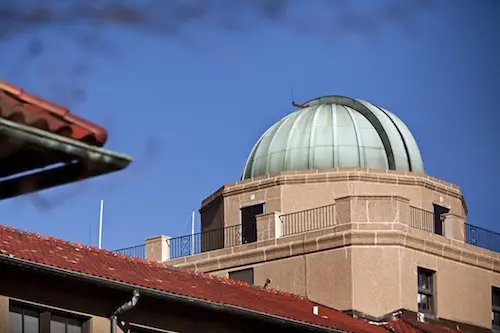
Landolt Astronomical Observatory
The Landolt Astronomical Observatory is located on the LSU campus on the roof of Nicholson Hall on Tower Dr., immediately west of the LSU Student Union (across Tower Dr.). Admission is free. Parking in the lot is free and open after business hours and on weekends.

Saturday Science
The Saturday Science @ LSU lecture series is for high school students, teachers, and the public. We invite you to join us for what we think is an interesting and exciting series.
All lectures will be held from 9:30 AM to 11:30 AM in 130 Nicholson Hall on the Saturdays listed below at LSU in Baton Rouge. We hope you will join us, and we look forward to seeing you and your students.
Research Experiences for Undergraduates
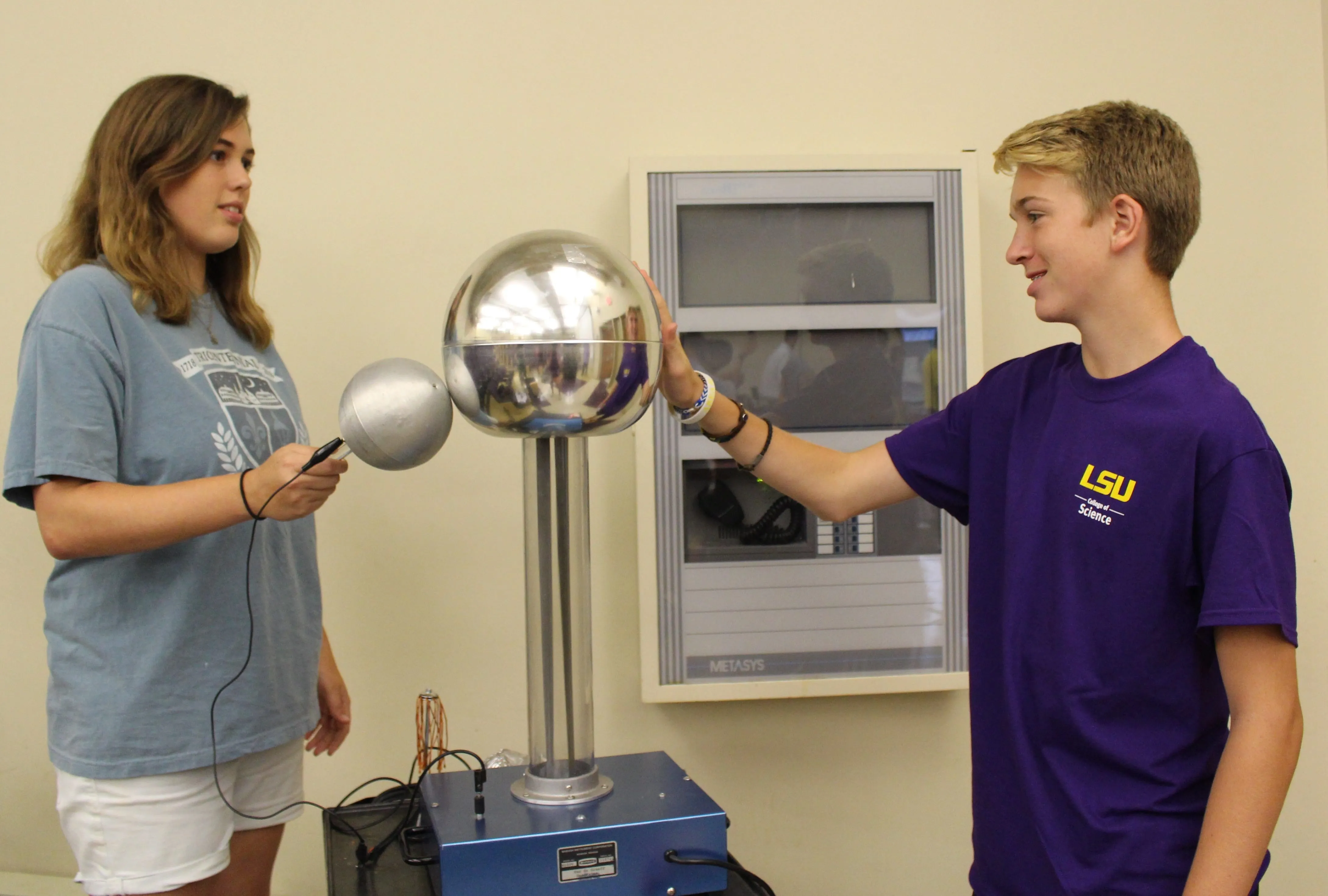
We host a summer REU program in Physics & Astronomy. The 10-week program introduces students to the nature of research-oriented careers in physics & astronomy, and fosters development of research-related skills and knowledge. Participants are matched with faculty mentors based on student interests. Our Department also plays an active role in organizing and participating in the CCT-REU program.
HRPO
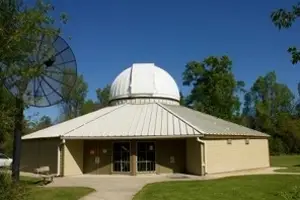
HRPO-Highland Road Park Observatory is located in BREC's Highland Road Park. The 20-inch reflecting telescope is located inside the retractable dome.
LSU's Department of Physics and Astronomy secured funding for the 20-inch and 16-inch telescopes and the equipment needed to operate them. The Department's faculty and graduate students are consistently involved in HRPO's public programs by volunteering as guest speakers and telescope operators, and by sharing their expertise in astronomy.
LIGO
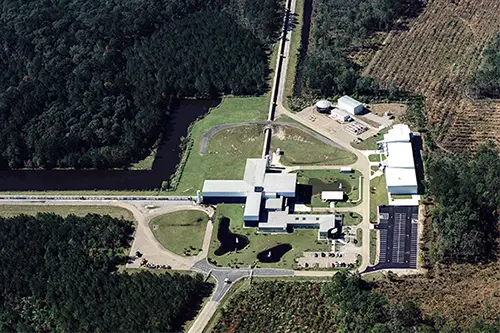
The Laser Interferometer Gravitational-Wave Observatory (LIGO) is designed to open the field of gravitational-wave astrophysics through the direct detection of gravitational waves predicted by Einstein’s General Theory of Relativity. LIGO’s multi-kilometer-scale gravitational wave detectors use laser interferometry to measure the minute ripples in space-time caused by passing gravitational waves from cataclysmic cosmic sources such as the mergers of pairs of neutron stars or black holes, or by supernovae. LIGO consists of two widely separated interferometers within the United States—one in Hanford, Washington and the other in Livingston, Louisiana—operated in unison to detect gravitational waves.
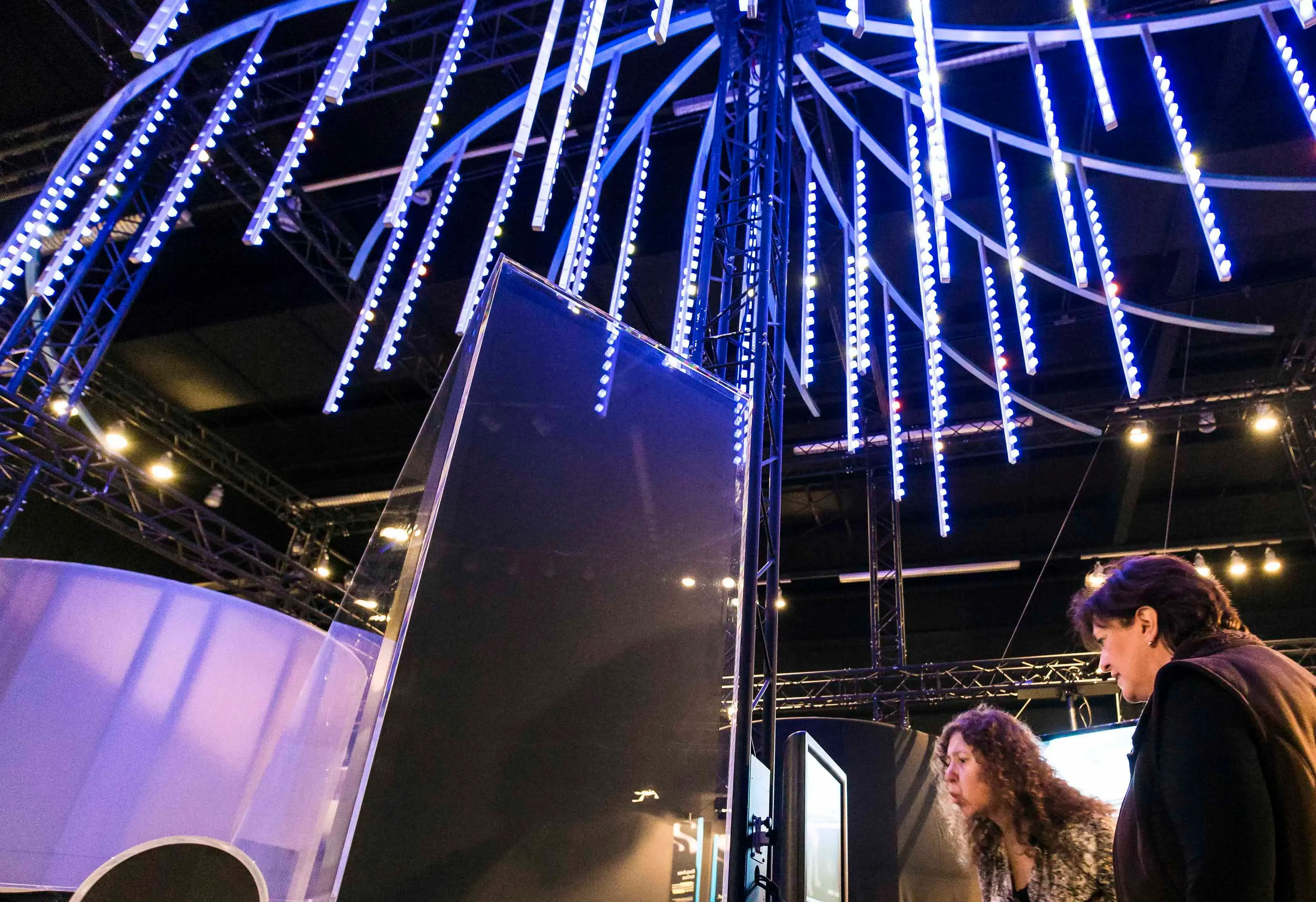
LLPAD - LSU/LIGO
LLPAD - LSU/LIGO Physics and Astronomy Demos is supported by a grant from the Patrick Taylor Foundation, seeks to leverage the educational resources of the LIGO Science Education Center at LIGO Livingston to bring physics demonstrations and other activities to middle and high schools in Louisiana, with an emphasis on those serving underrepresented minorities.

LA Space Grant
Louisiana Space Grant Consortium (LaSPACE), administered by Louisiana State University through the Department of Physics & Astronomy, is a statewide consortium established in 1991 under the National Space Grant College and Fellowship Program, a national network managed by NASA that includes all 50 states, the District of Columbia, and the Commonwealth of Puerto Rico. The LaSPACE mission is to engage college students, academic institutions, science organizations, government agencies, and industry in Louisiana to create a broad academic STEM ecosystem and build a robust NASA-aligned STEM workforce.
SPS
The Society of Physics Students is LSU's club for students interested in physics, astronomy, and related fields. The club is teaming with physics majors, but several others also join.