
TIAMS Media Center
Featured Research
LSU physicist Constantin Schrade will receive a DOE Career Award to explore how altermagnets, an emerging class of magnetic materials, could be used to control the movement of electrons based on their spin. The research builds on his recent work published in Science Advances and could help advance spintronics, a promising approach to developing more energy-efficient computing technologies.
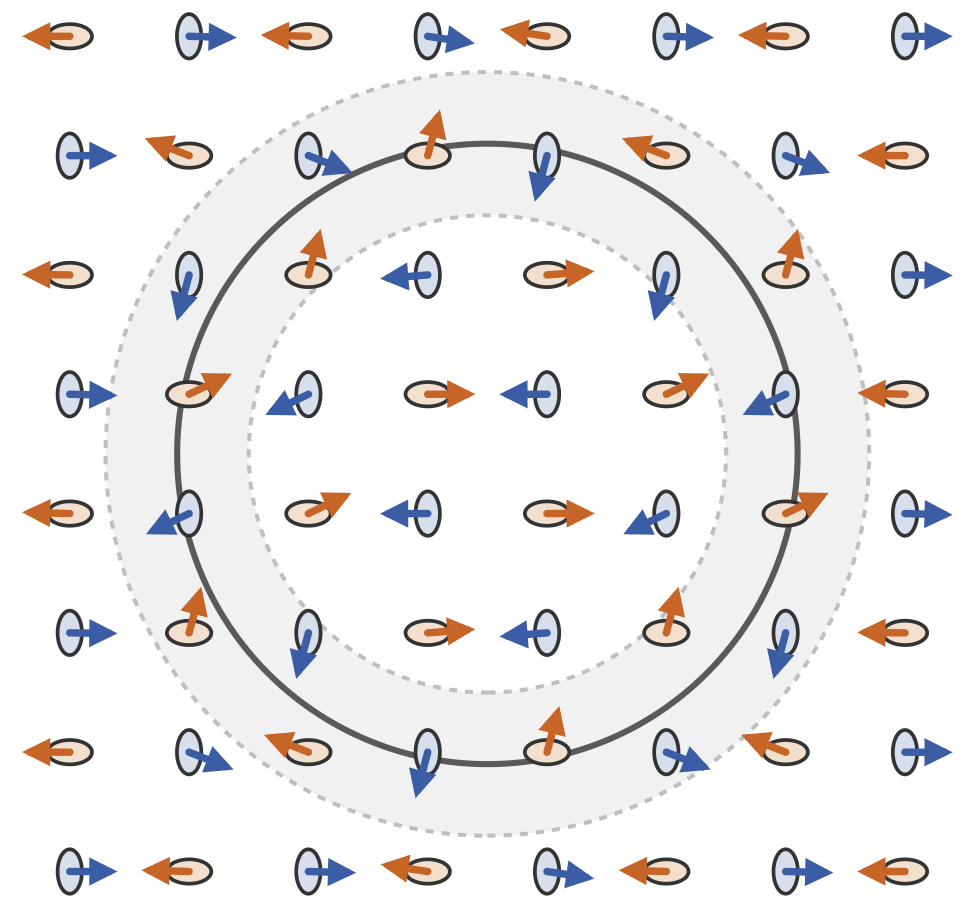
LSU physicist Constantin Schrade and collaborator Mathias S. Scheurer have developed a new theory for controlling how electrons move through altermagnets, an emerging class of magnetic materials. Their work shows that changing the material’s microscopic magnetic patterns could steer electrons in different directions depending on their spin. The findings give scientists new predictions to test and could eventually help researchers control how spin-based information moves through future electronic technologies.
LSU physicists have developed the first room-temperature quantum material capable of distinguishing and transporting different quantum states of light. Published in Nature, the breakthrough establishes a blueprint for engineering future quantum materials that could advance quantum computing, secure communications, sensing technologies, and renewable energy.
LSU physicist Justin Wilson and collaborators have developed a new framework for controlling quantum chaos, adapting techniques originally designed for classical chaotic systems. The team showed that small, occasional corrections can stabilize unstable quantum states despite the constant fluctuations imposed by the uncertainty principle. Their work also revealed a sharp transition between controllable and uncontrollable behavior, uncovering universal rules that could help scientists protect and manipulate quantum information in future technologies.

A newly released image from ESA's Euclid mission provides the most detailed visible-light view of the Milky Way's center ever captured. LSU researchers Matthew Penny and Himanshu Verma are helping use the data to support NASA's Nancy Grace Roman Space Telescope, improving astronomers' ability to detect, confirm, and measure the masses of exoplanets through gravitational microlensing.

Researchers from Louisiana State University contributed to a NASA-led discovery of gamma rays from a rare superluminous supernova detected by the Fermi Gamma-ray Space Telescope. The finding provides some of the strongest evidence yet that highly magnetized neutron stars, known as magnetars, can power some of the brightest stellar explosions in the universe and opens a new window into studying how these extreme cosmic events evolve.
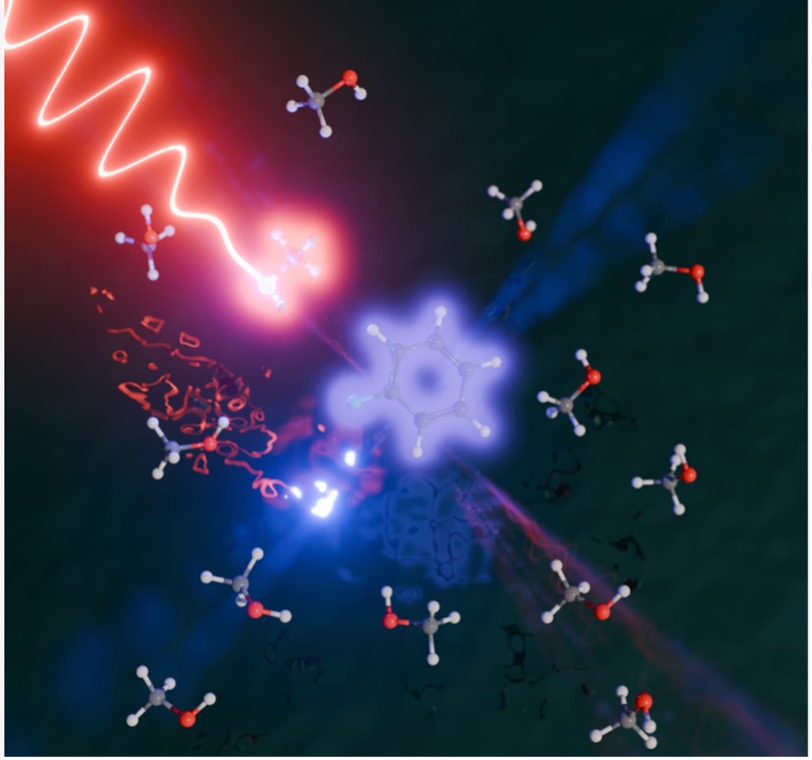
Researchers from Ohio State University and LSU have shown that high-harmonic spectroscopy (HHS)—a laser technique fast enough to track electrons on attosecond timescales—can finally be used to study liquids. In a study published in PNAS, the team found that fluorobenzene forms a surprising local structure when mixed with methanol, dramatically changing the emitted light. The work opens a new window into ultrafast interactions inside liquids, where many essential chemical and biological processes take place.
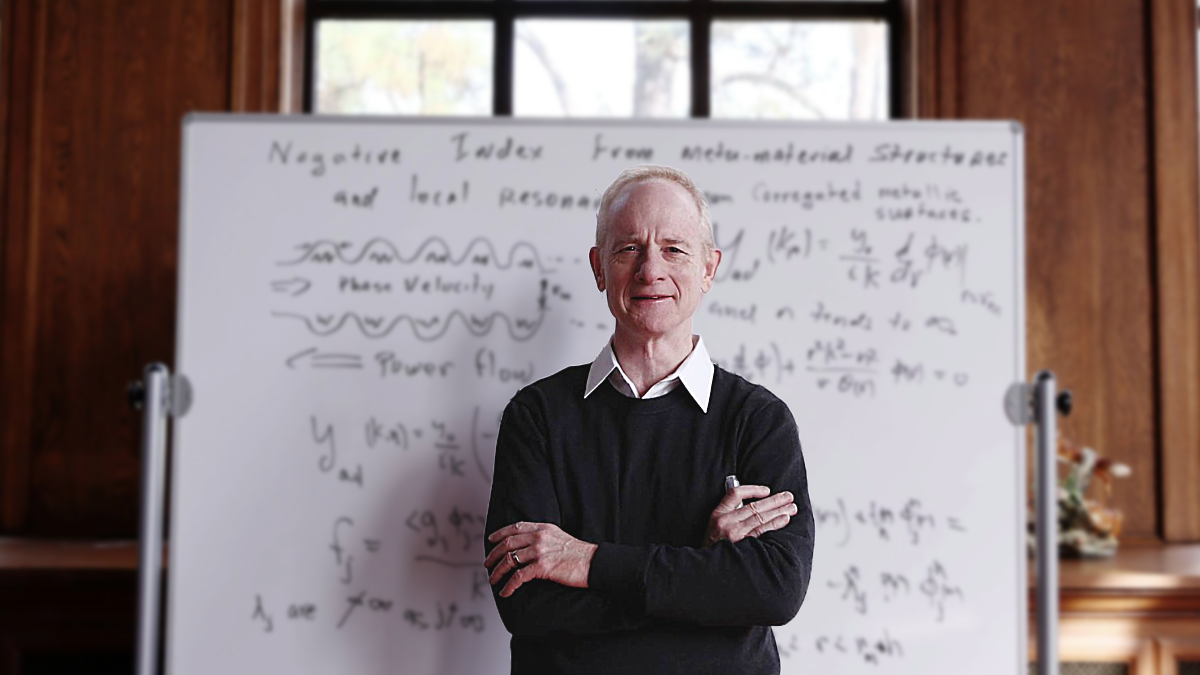
LSU Mathematics professor Robert Lipton has been awarded a $1.25 million MURI grant for his research on extreme deformation in material structures. The project, "Complexity, Nonlocality, and Uncertainty in Heterogeneous Solids," involves collaboration with institutions like Carnegie Mellon University and the University of Chicago. This interdisciplinary effort aims to enhance materials' durability through mathematical modeling and has significant implications for defense and commercial sectors.
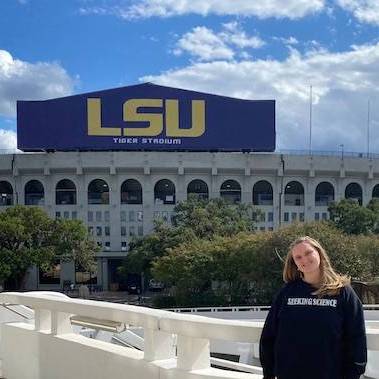
LSU Mathematics Professor James Madden and undergraduate student Lillian Powell leverage chaos theory to tackle traffic challenges after LSU football games in Baton Rouge. Powell's research, funded by an LSU Discover Project Grant, focuses on enhancing road traffic management during sporting events. With Tiger Stadium attracting thousands, the team aims to mitigate significant backups during game exits, improving the overall attendee experience.