
A New Image of the Milky Way May Help Reveal Hidden Worlds
June 24, 2026
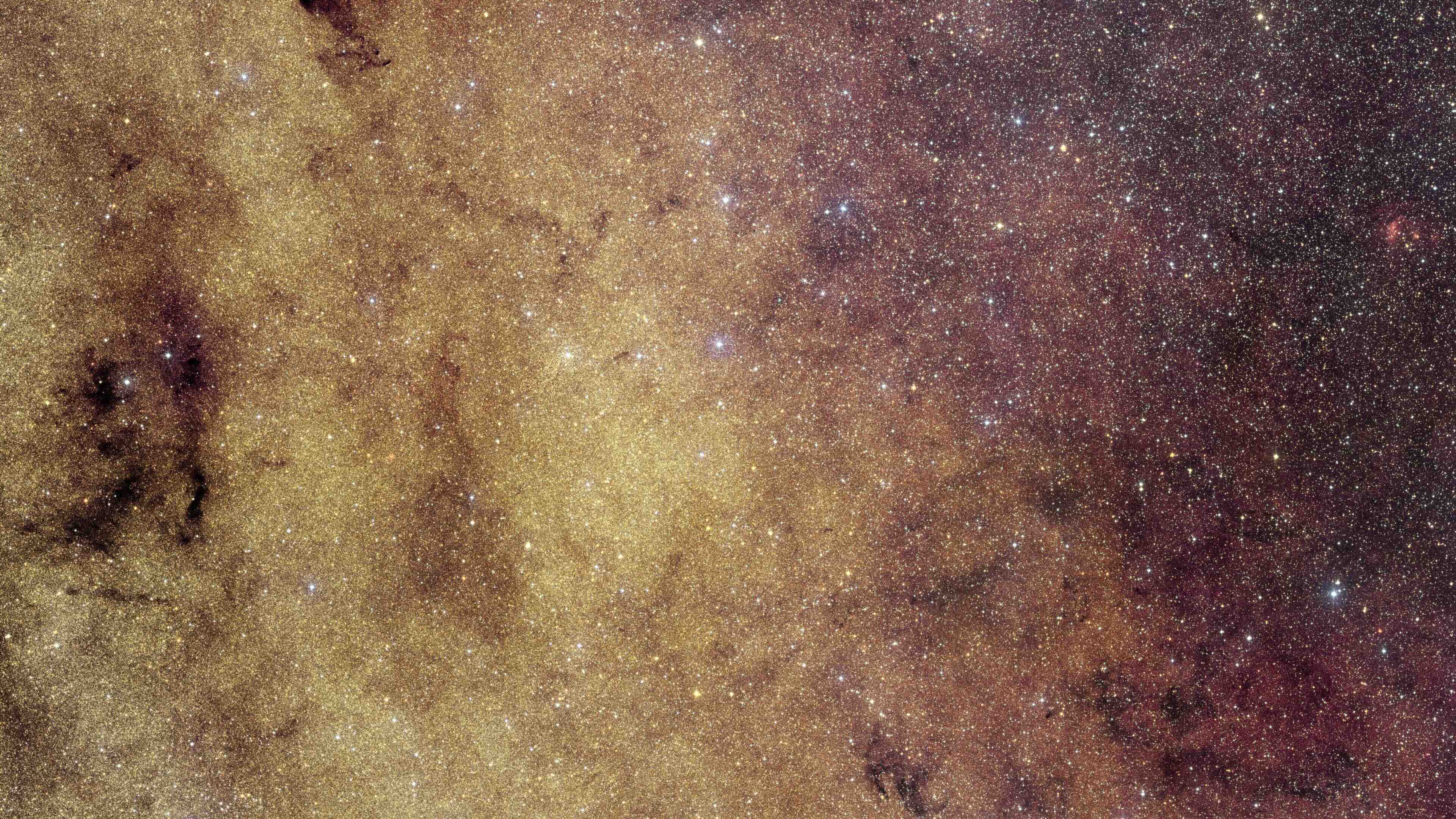
Captured by ESA's Euclid space telescope, this image shows only part of the largest high-resolution visible-light view ever taken of the Milky Way's center, revealing millions of stars and dark clouds of interstellar dust.
– Credit: ESA/Euclid/Euclid Consortium/NASA, CFHT, image processing by J.-C. Cuillandre and E. Bertin (CEA Paris-Saclay).
A newly released image of the Milky Way's crowded center is doing more than revealing millions of stars. Captured by the European Space Agency's Euclid mission, the observation will provide a critical reference for NASA's upcoming Nancy Grace Roman Space Telescope and help astronomers confirm and measure the masses of planets discovered from both past and future microlensing observations. LSU faculty member Matthew Penny and postdoctoral researcher Himanshu Verma are among the scientists helping make that possible.
Released today, the image is the largest and most detailed visible-light image ever captured of the Milky Way's center. Packed with more than 60 million stars, it was assembled from nine observations collected over 26 hours using Euclid's 600-megapixel visible-light camera. The mosaic covers an area of sky equivalent to roughly 22 full moons.
While its resolution is almost as high as the Hubble Space Telescope's wide-field camera, Euclid can capture vastly larger regions of the sky at once. That combination of sharp vision and wide coverage allows astronomers to distinguish individual stars across the entire area Roman will later monitor for planets — an essential capability for identifying planets and measuring their masses through microlensing.
We Can Detect Exoplanets, but Not Easily Weigh Them
Finding planets around other stars is challenging enough. Determining what those planets are actually like — rocky, icy, or gaseous — requires measuring their masses, which is often far more difficult.
The key technique involved here is gravitational microlensing, which occurs when a star passes in front of a more distant star. The gravity of the closer star bends and magnifies the light from the more distant one, temporarily making it appear brighter. If the closer star hosts a planet, that planet creates an additional signal in the light, revealing its presence.
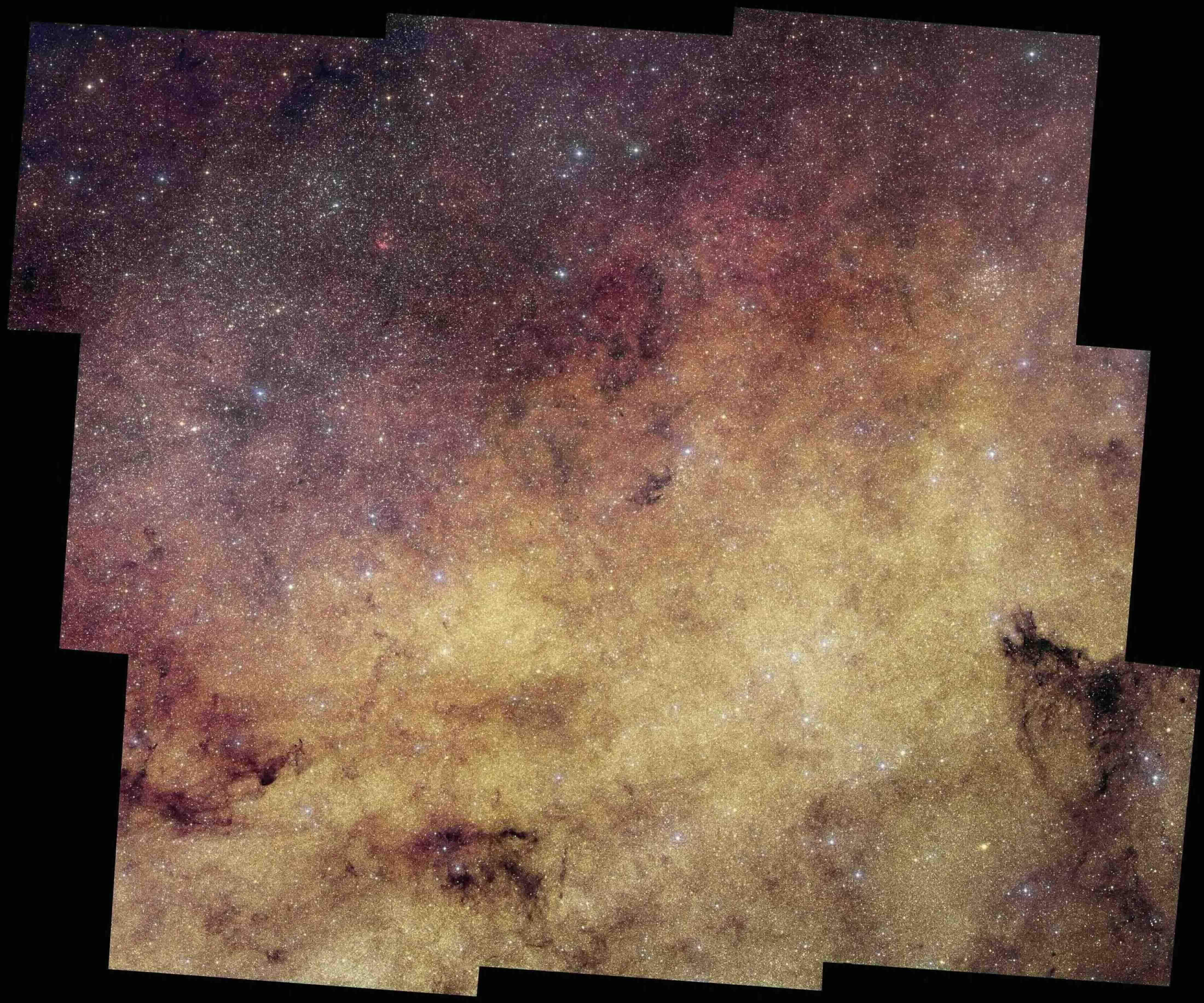
This six-gigapixel image, captured by ESA's Euclid space telescope in March 2025, is the largest high-resolution visible-light view ever made of the Milky Way's center. Covering an area of sky roughly 22 times the size of the full Moon, the mosaic reveals the galaxy's crowded central bulge, dark molecular clouds, and regions of active star formation. The irregular edges visible around the perimeter are artifacts of the nine overlapping telescope pointings used to create the final image.
– Credit: ESA/Euclid/Euclid Consortium/NASA, CFHT, image processing by J.-C. Cuillandre and E. Bertin (CEA Paris-Saclay).
To determine a planet's mass, astronomers need more than the microlensing event itself. They also need a sharp image of the same region taken before or after the stars align, allowing them to track how the two stars gradually separate over time. Obtaining that kind of reference image from Earth has been extraordinarily difficult because the center of the Milky Way is so densely packed with stars.
Euclid as a Time Machine for Roman
That is exactly what Euclid has now provided. The observations will help astronomers refine Roman's observing strategy and improve their ability to interpret future microlensing events.
Matthew Penny, assistant professor in the LSU Department of Physics & Astronomy and co-lead of Euclid's exoplanet science working group, explained why the image is so valuable.
"The Euclid image provides two things," Penny said. "First, it provides a check on the models we used to choose where to put the Roman GBTDS fields. Second, the Euclid image extends the period of time over which we can watch things move with Roman. We want to see the source and lens stars of a microlensing event separate over the course of the five-year Roman mission, but most will only separate by less than a pixel in that time. The extra two years that Euclid adds gives us a better chance to do this."
Euclid captured the observations in March 2025, nearly two years before Roman is expected to begin science operations in 2027. Once observations begin, Roman will repeatedly image the same region every 12 minutes over hundreds of observing days, searching for the subtle brightening events that reveal hidden planets. The additional time provided by Euclid's earlier observations will help astronomers better distinguish the stars involved in future microlensing events, making it easier to identify the lensing objects and measure the masses of the planets they host.
The image also validated years of preparation by Penny and his collaborators. Before Euclid ever observed the galactic center, the team relied on simulated observations to help determine the camera's exposure settings. The decision carried real consequences: because Euclid must compress and transmit enormous amounts of data back to Earth, images that take too long to process risk losing uncompressed data before the next observation begins.
This will allow us for the first time to get a good picture of how many planets of a given mass there are per planetary system, down to the size of the Earth.
Matthew Penny, LSU Department of Physics & Astronomy
"It is really gratifying to see that the simulated images look very similar to the real ones," Penny said. "It is especially heartening that the choice of exposure time for the Euclid images was based on the simulated images. We had to shorten the exposure time to give more time to compress the data based on how long the compression step took on simulated data. The good news is that the exposure time was set appropriately and no data was lost."
For Penny, the release also marks a transition from years of simulations to working with observations from the telescope itself.
"It's just very nice to have real data to work with instead of simulated data," he said. "It feels much more meaningful."
LSU postdoctoral researcher Himanshu Verma has been analyzing Euclid observations to improve resolution beyond Euclid’s raw images and detect even more stars. "By precisely measuring where inside each pixel a star lands, we can combine multiple images with slight offsets to effectively double the resolution” said Verma. “This allows us to better measure two stars when they are close together, and also to see fainter stars.”
As the stars involved in those events gradually separate, astronomers can more easily distinguish which light comes from the background source and which comes from the lensing object—an essential step toward measuring planetary masses and confirming otherwise invisible objects such as isolated black holes, which reveal themselves only through their gravitational influence on background starlight.
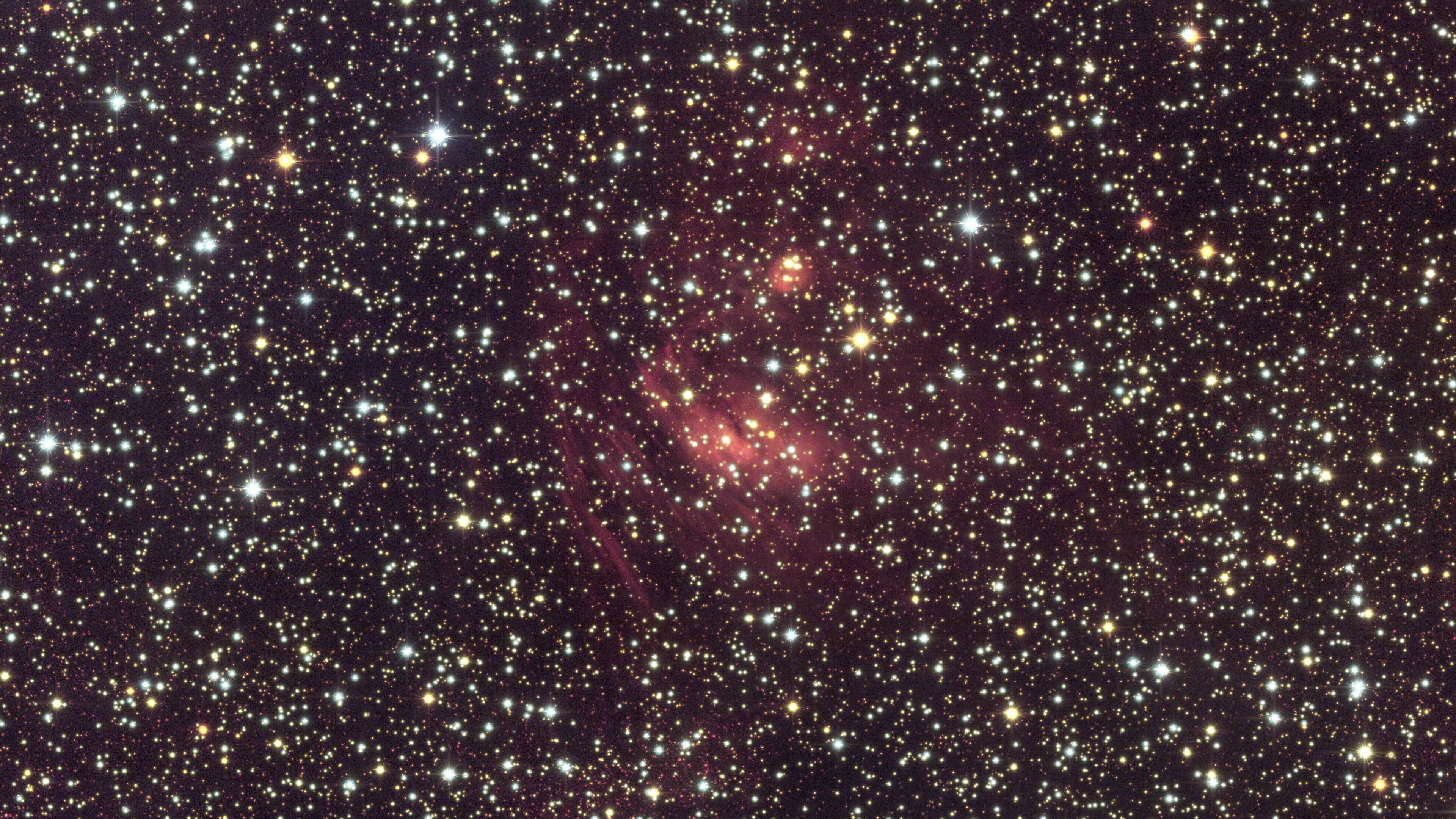
A glowing red cloud known as G000.583-00.870 stands out in this magnified view of the Milky Way's center captured by ESA's Euclid space telescope. Located in the direction of the galactic bulge, roughly 26,000 light-years from Earth, the emission nebula is formed by gas energized by recently formed massive stars, offering a glimpse of ongoing star formation amid one of the galaxy's most densely populated regions. The image is zoomed in 10 times from the full mosaic.
– Credit: ESA/Euclid/Euclid Consortium/NASA, CFHT, image processing by J.-C. Cuillandre and E. Bertin (CEA Paris-Saclay).
A New Era for Planetary Science
The image also includes 51 previously known planetary systems. The Euclid data is also expected to help astronomers determine the masses and distances of approximately 60 previously detected but uncharacterized exoplanets. Combined with Roman's future discoveries, the observations could provide the most complete picture yet of planetary populations throughout the Milky Way.
Because microlensing is especially sensitive to planets orbiting far from their stars, the combined Euclid-Roman observations will provide an unprecedented view of cold planetary systems that are difficult to detect by other methods.
"This will allow us for the first time to get a good picture of how many planets of a given mass there are per planetary system, down to the size of the Earth," Penny said.
The combined power of Euclid and Roman may help answer longstanding questions about how planetary systems form and evolve. Do giant planets like Jupiter prevent smaller worlds from forming? How common are Earth-sized planets? How many free-floating planets wander the galaxy without a host star?
"We might not get clear answers to all of these questions," Penny said, "but we will get a lot closer to them."
By combining Euclid's early observations with Roman's future survey, astronomers hope to build the most detailed census yet of planets across the Milky Way, including Earth-sized planets and even free-floating planets that wander the galaxy without a host star. For Penny, Verma, and their collaborators, the newly released image is not the end of a story but the beginning of years of discovery.
This observation is part of Euclid's Quick Data Release 2 (Q2), a series of smaller data releases published between the mission's major surveys to make new observations available to the scientific community more quickly. The next major Euclid data release is expected later this year.