
Elgrishi Receives NSF Award to Advance PFAS Removal Research
September 09, 2026
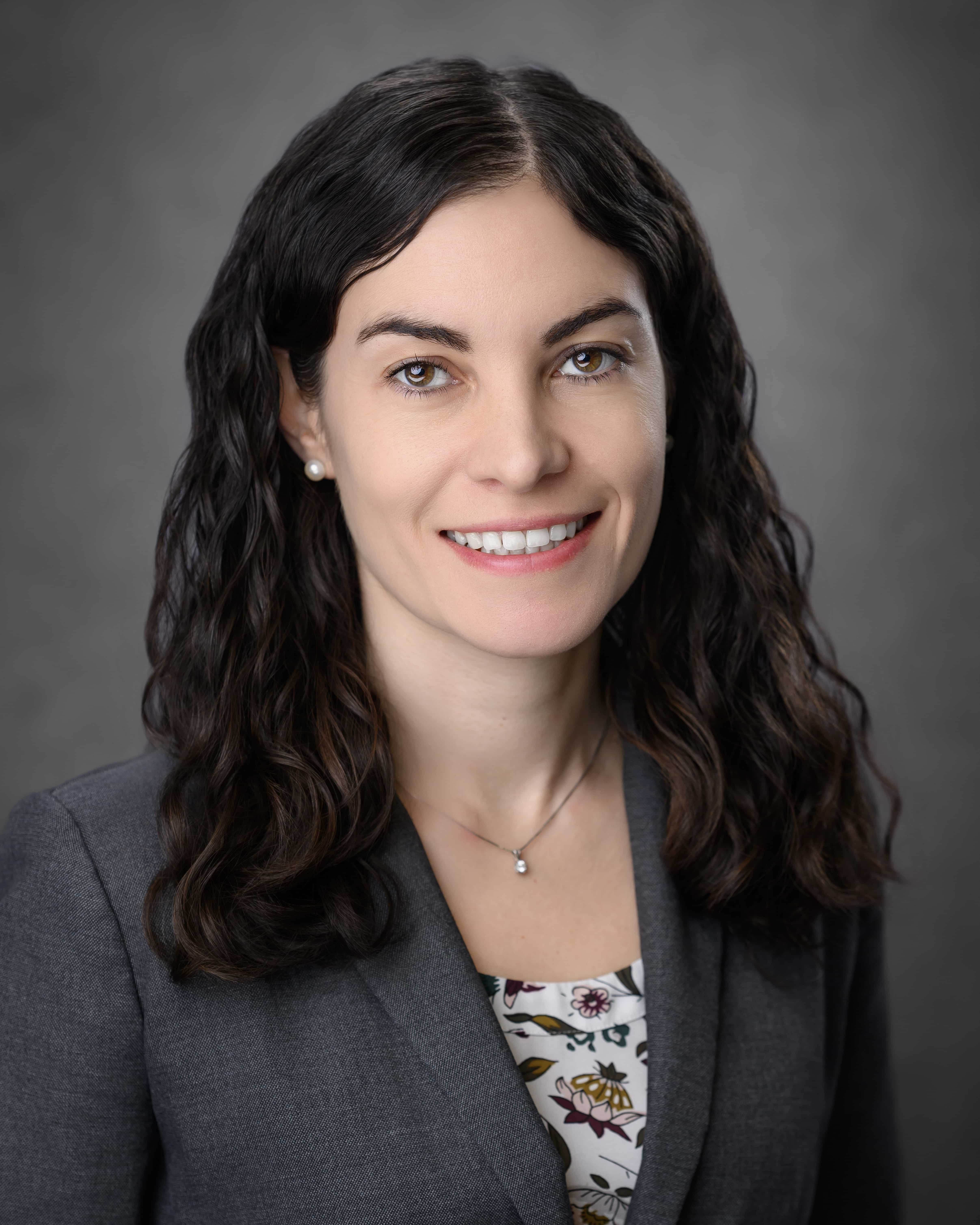
Noémie Elgrishi, Associate Professor, LSU Department of Chemistry
Noémie Elgrishi, associate professor in the LSU Department of Chemistry, received a National Science Foundation EPSCoR Research Fellows award to advance her research on metal-organic cages that can capture charged contaminants, including per- and polyfluoroalkyl substances, or PFAS, from water.
Through the fellowship, Elgrishi and an NSF-supported graduate student will collaborate with Dr. Kristina Håkansson at the National High Magnetic Field Laboratory, or NHMFL, operated by Florida State University. The team will investigate the fundamental molecular interactions that allow certain metal-organic cages to bind PFAS and other charged molecules.
PFAS are a broad class of manufactured chemicals used for their resistance to water, grease and heat. Their strong carbon-fluorine bonds prevent them from breaking down easily, earning them the nickname “forever chemicals.”
Exposure to certain PFAS has been linked to adverse health effects, making their persistence in water an important environmental and public health challenge. Because many PFAS can pass through conventional water-treatment systems, developing effective and reusable materials to capture them remains a priority.
Metal-organic cages contain nanoscale cavities that can trap smaller molecules, allowing them to function like molecular sponges. Elgrishi’s research group previously demonstrated that a metal-organic cage could serve as a recyclable sponge for removing PFOS. The new NSF-supported project will now investigate why some cages capture particular molecules more effectively than others.
“Understanding the interactions that cause a cage to capture one molecule more effectively than another is essential to designing better materials,” Elgrishi said. “NHMFL’s advanced instrumentation will allow us to examine these host-guest systems in much greater detail and use that knowledge to guide the development of more selective molecular sponges.”
The team will prepare host-guest samples at LSU and analyze them using NHMFL’s 21-tesla Fourier-transform ion cyclotron resonance mass spectrometer. The instrument provides ultrahigh-resolution and highly accurate molecular measurements, enabling researchers to characterize complex host-guest systems.
In addition to supporting the development of more selective materials for water purification, the project could inform applications involving molecular recognition in human health, energy storage and catalysis. The fellowship will also provide advanced technical and data-analysis training for Elgrishi and the participating graduate student.
The NSF EPSCoR Research Fellows program helps early- and mid-career investigators establish collaborations with leading research institutions, learn new techniques and access specialized facilities. Elgrishi’s award will expand LSU’s capabilities in supramolecular chemistry while establishing a lasting research partnership between LSU and NHMFL.