
Research@Ourso: Seeing vs. Believing
August 12, 2026
Does experiencing extreme weather firsthand change what we believe, or do our pre-existing beliefs dictate how we interpret the weather?
When a devastating wildfire sweeps through a forest or a record-breaking hurricane batters the Gulf coast, the public’s reaction is rarely uniform. Some citizens push for systemic policy shifts and new regulations, while others focus on stocking emergency kits and fortifying their own homes. These differences lead to an obvious question: why does the exact same crisis often push neighbors down different psychological paths?
A groundbreaking study published in npj Climate Action, a Nature portfolio journal, uncovers the hidden cognitive mechanics behind this split. Co-authored by an international team of researchers including Holly Peterson, assistant professor in the LSU Department of Public Administration, the research maps how the human brain processes extreme weather events and surfaces important clues for policymakers and first-responders looking to shape their messaging to better meet the moment.
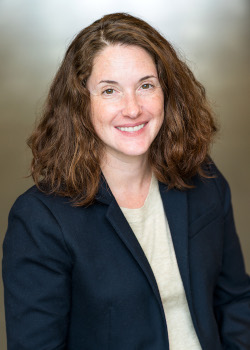
Assistant Professor
Department of Public Administration
Splitting Differences
To find out, the team analyzed comprehensive survey data from more than 2,000 residents across two politically and geographically diverse states hit by severe 2020 disasters: Oregon (wildfires) and Alabama (hurricanes). The survey results revealed a “scale mismatch” was driving the different reactions; a psychological disconnect between the immediate, localized scale where we experience a crisis and the vast, global scale required to solve its root causes.
"Getting harmed by a wildfire or hurricane makes the risk immediate and personal. You don't need a theory of climate change to buy masks, clear vegetation, or make an evacuation plan," Peterson observed. "Protecting yourself is a direct answer to a direct experience. Supporting a carbon tax or new building codes is different. It requires connecting your experience to climate change as an underlying, collective cause, and that 'connecting the dots' step is heavily filtered through prior beliefs and political orientation."
Using the survey data, the researchers were able to map out two distinct pathways for how humans process extreme weather events (EWEs).
Select a path to read more.
Findings
- The study found that personal "harm experience” i.e. the physical, mental, and economic toll of a disaster, is one of the strongest predictors of action.
- Simply seeing what our neighbors and friends are doing, a psychological trigger known as ‘descriptive norms’ also plays a large role in what we choose to do next.
- Notably, the researchers found that when a disaster hit, partisan and political leanings vanished in favor of shared community resilience.
Bottom Line
In this pathway, the goal is personal safety and community resilience. Because these actions feel achievable on an individual level, they are driven by what we see right in front of us.
Findings
- The paper reveals that policy support actually splits into two distinct buckets: Mitigation (tackling global causes, e.g. carbon taxes) and Adaptation (managing local consequences, e.g. stricter zoning laws).
- The study found that people who already have a strong perception of climate change are much more likely to support mitigation policies.
- For people who haven't experienced personal harm, a disaster only leads to policy support if they can "connect the dots" to a larger systemic cause.
- Remarkably, whether looking at conservative, hurricane-affected Alabama or liberal, wildfire-affected Oregon, this psychological mechanism remained virtually identical.
Bottom Line
In this pathway, the priority is overcoming a scale mismatch. Because there is a massive psychological distance between an individual result and the larger cause, the average citizen will not push for policy changes unless they can link both sides.
What Does This Tell Us?
The research from Peterson and her colleagues provides valuable new guidance for communicating in the wake of extreme weather disasters. Because “seeing” and “believing” operate on different psychological paths, the researchers suggest distinct strategies for different sets of real-world communicators:
- Local Leaders and First Responders: Focus on the “Seeing” pathway. In the immediate aftermath of a disaster, capitalize on shared community goodwill by highlighting what neighbors are doing to prepare, offering actionable household steps, and building local volunteer networks.
- Policymakers and Advocacy Groups: Focus on the "Believing" pathway. Recognize that surviving a storm does not automatically turn someone into a policy supporter. To build political momentum, trusted local leaders must explicitly connect the dots between immediate, localized damage and broader systemic climate trends.
While this study solved one psychological mystery, Peterson notes that several important follow-up questions need to be answered.
“[Our study] measured individual behaviors such as discussion, information seeking, preparedness, and community help, but it deliberately did not include voting, contacting elected officials, or participating in campaigns and climate advocacy,” Peterson noted. “Those forms of engagement go beyond policy support, and they may operate through different psychological and institutional pathways than the ones we examined. Whether extreme weather influences them directly, or only through shifts in climate beliefs and concerns, is an open and consequential question.”
Through continual improvement in our understanding of how the human mind naturally separates personal experience from broader context, researchers and government leaders can better support disaster-stricken communities today while building the collective will to safeguard our future.
Want to learn more? Download and read the full study from Nature.