


Champions Institute Topics: Personalized Models Predict Orthopedic Risk in Athletes
January 15, 2026
Injury risk is shaped by movement, workload, and individual anatomy, yet these factors are rarely viewed together. Digital twin technology offers a new way to understand injury risk and recovery, supporting smarter prevention and return-to-play decisions.
Topic: Orthopedic Injury Risk—Digital Twins
Types of Athletes Involved: Competitive, Tactical, and Operational
Problem
Athletes, tactical professionals, and operational workers face a constant risk of orthopedic injuries, yet understanding who is most at risk and how to guide recovery remains complex. Clinical, biomechanical, and performance data are often fragmented, making it difficult to predict injuries or personalize rehabilitation effectively.
Solution
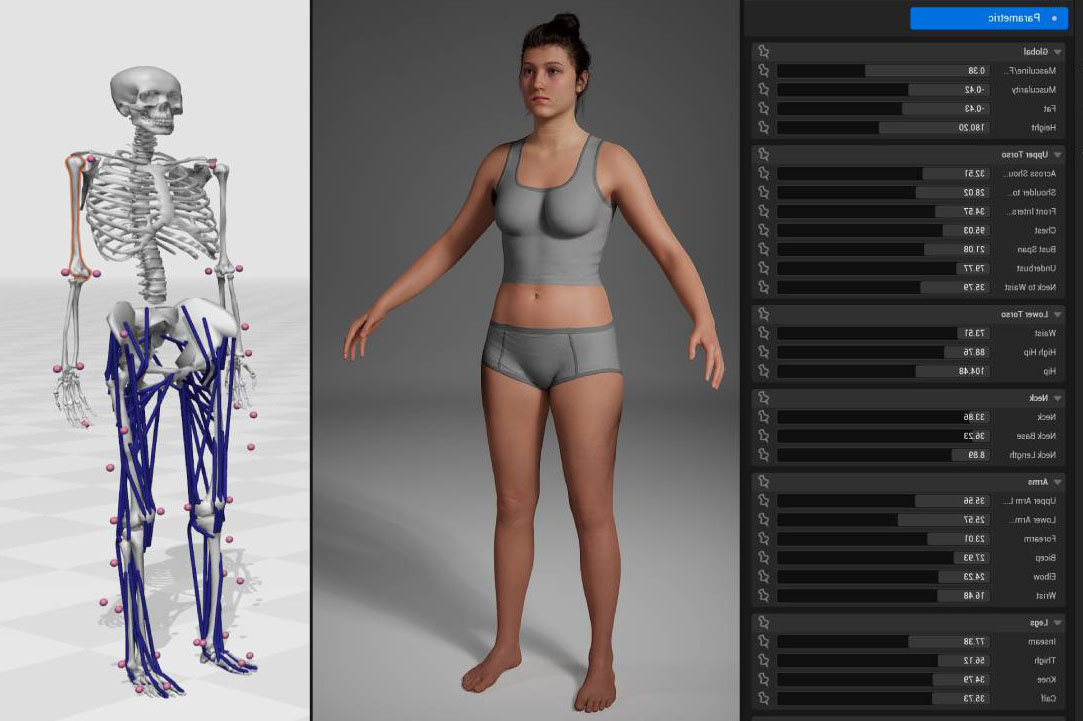
This project creates personalized digital twins—virtual models of individual bodies—that combine motion analysis, musculoskeletal geometry, training load, and clinical history into an interactive platform. These digital models help clinicians, athletic trainers, and researchers visualize and monitor how movement patterns, workload, and structural differences contribute to injury risk, guiding tailored prevention and recovery strategies.
Impact
By integrating multiple sources of data into one dynamic model, this work enables earlier detection of injury risk, more individualized rehabilitation plans, and better return-to-play decisions. The approach extends beyond sports to military, occupational, and aging populations, positioning LSU as a leader in digital twin technologies that enhance health, performance, and resilience.
The system uses high-resolution full-body scanning, motion capture, and Unreal Engine–based visualization tools to create fully interactive, spatial dashboards. Future enhancements will incorporate cognitive assessments and immunological data to refine athlete-specific risk profiles and guide rehabilitation. The long-term goal is a universal digital twin model capable of assessing orthopedic injury, heat stress, mental and physical resilience, and immune response to stress.
Populations studied include competitive athletes, tactical warfighters, and operational workers, with applications ranging from elite sports teams to military readiness and occupational health.
Key Partners / Funders
LSU Athletics, LSU Health Sciences Center, LSU XR Studio, Department of Biological and Agricultural Engineering, Division of Computer Science and Engineering, Department of Kinesiology, industry partners in motion capture, scanning, and rehabilitation technologies.