


Why Science Is the Starting Point for LSU Student Angelene Williams’ Health Care Goals
February 09, 2026
Curiosity has always been at the center of Angelene Williams’ academic path. A senior biological sciences major from Marrero, La., Angelene is building a strong science foundation with a clear goal in mind: a future in health care administration.
Through hands-on coursework, research-driven problem solving, and professional experiences, all while an undergraduate student, she has learned how science extends far beyond the lab—shaping critical thinking, leadership, and data-informed decision-making. As we recognize International Day of Women and Girls in Science, Angelene shares how her time at LSU has prepared her for the next step in her journey.
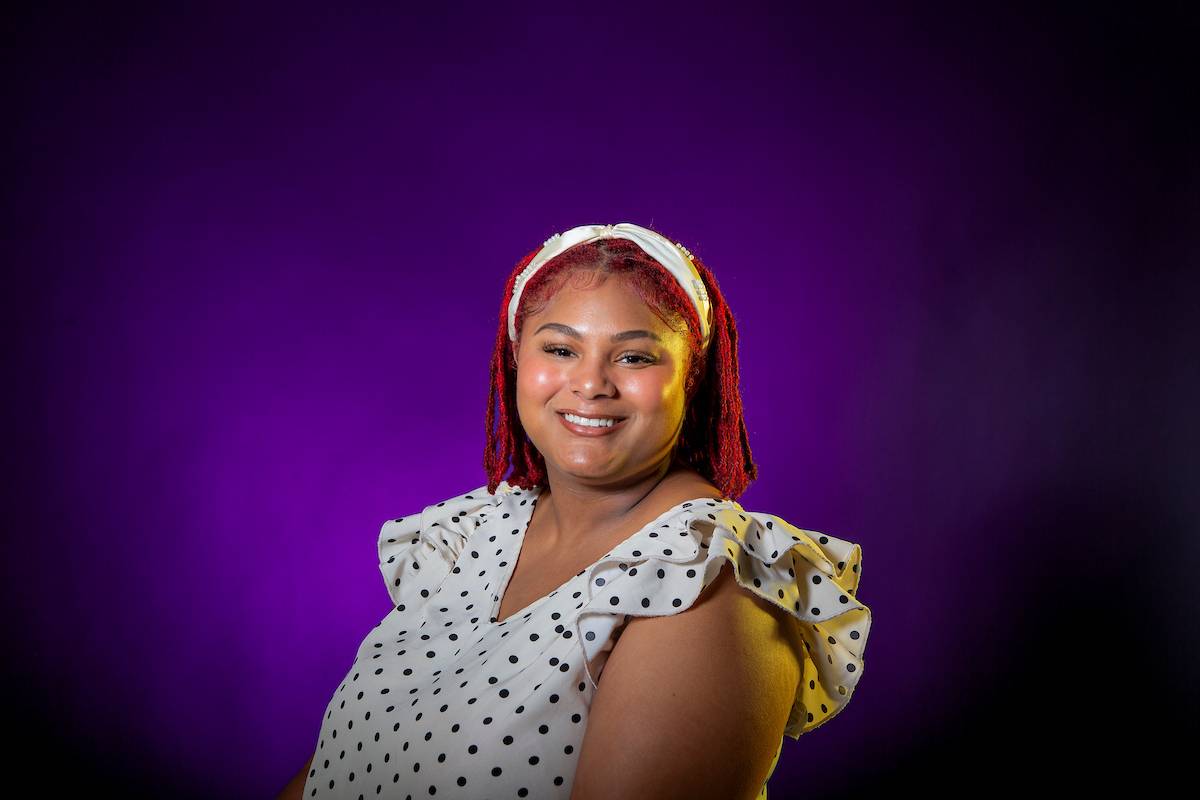
Angelene Williams
What inspired you to study science?
Growing up, I was deeply curious about how the world worked. While most children stayed up late watching cartoons, I'd stay up late watching the Discovery Channel with my grandpa. I was always drawn to asking questions and finding explanations.
In my senior year of high school, I was placed in the IB (International Baccalaureate) program, where I could take college-level courses, and it was during this time that I took IB biology.
One requirement for this course was to complete a research project that spanned the entire course. The research topic I chose required me to grow pea plants in my backyard for the entire semester.
As someone without a green thumb, this was a bit challenging. But I remember being so excited every day to check on my plants, document my observations, and eventually getting to interpret my results. It was through this project that I learned what science was really about.
Science isn't just about facts and formulas; it’s about understanding patterns and using your interpretation to solve real-world problems. Over the years, my love for science has only grown. Being a science major has helped me develop patience and has given me a deep appreciation for the world around me. Every day, my coursework challenges me to think more deeply and creatively.
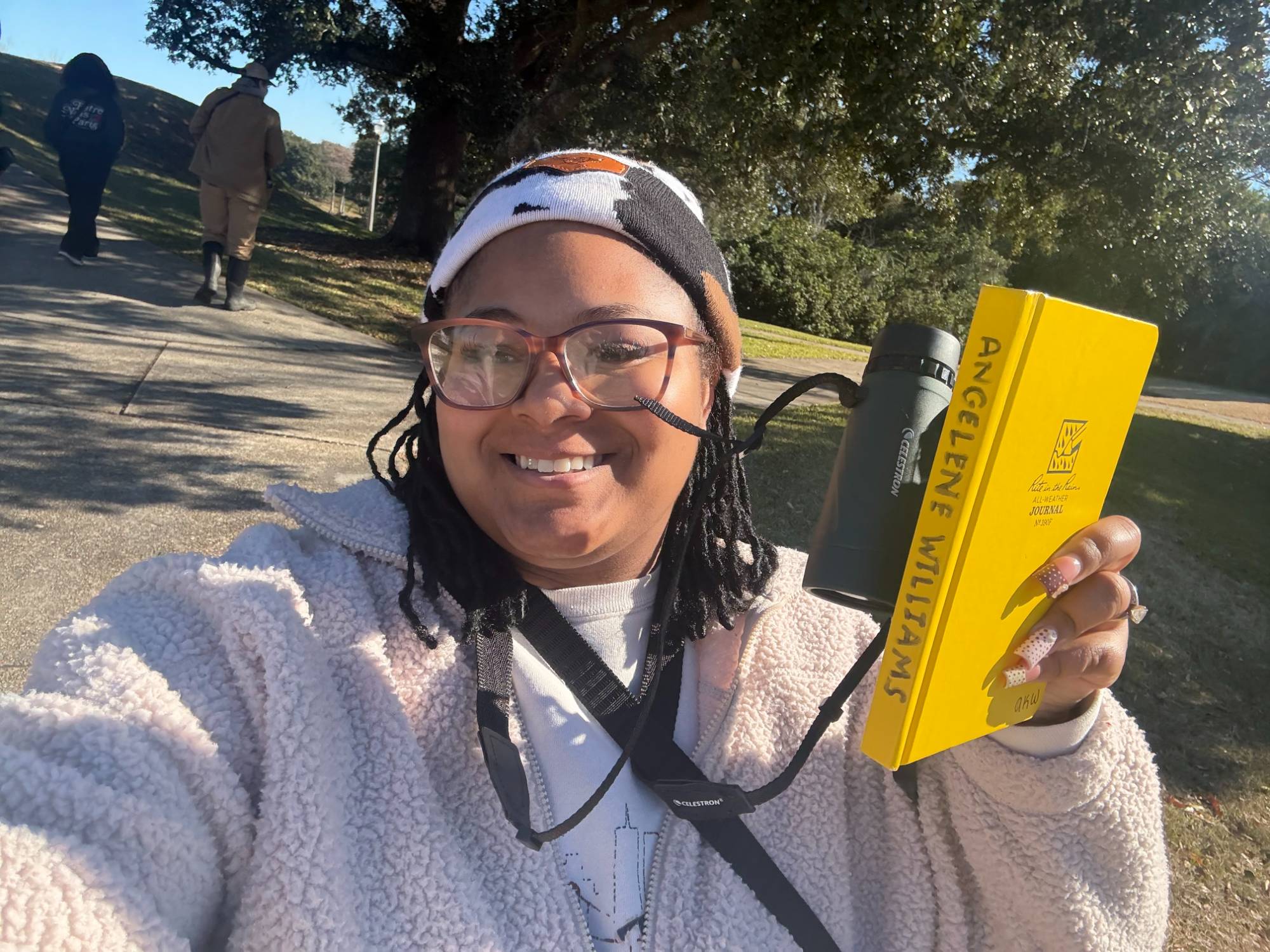
In Biology 4142 Ornithology class, Williams and her classmates go birdwatching. Here, she's birdwatching around the Baton Rouge Capitol Lakes.
Why did you choose to enroll at LSU?
After deciding I wanted to pursue a career in the sciences, LSU seemed like my best option. I remember reading that LSU was among the nation's leading research universities, and that really set it apart for me.
After touring the University with my dad, I was left in pure awe and excitement. The beauty of LSU's campus alone was a huge deciding factor for me. After touring the campus for the first time and speaking with some faculty, I was assured that LSU would do whatever it could to make the transition away from home as smooth as possible.
“ When it came time to apply to college, I only sent one application, and that was to LSU. I knew from the first time I stepped on campus that LSU was the only school for me. ”
Why are you interested in pursuing a master's degree in health administration, and how did you decide this was the right next step for you?
As stated previously, I have had the opportunity to speak with many people, some of whom are family, who have worked in hospital administration. During my freshman year, I shadowed and volunteered at hospitals and clinics. I enjoyed the experiences but ultimately felt that I no longer wanted to pursue medicine or nursing.
I liked the feel of a hospital setting, but was ultimately more interested in leadership roles that focus on improving systems and operations rather than delivering direct bedside care. Healthcare administration is a role that would allow me to combine critical thinking skills, leadership, and service. The healthcare system is very complex, and I have always been interested in the ins and outs of running a hospital. A master's degree in healthcare administration would give me the formal training I need to support my long-term career goals.
How do you see your science background preparing you for a future role in hospital administration?
Two major skills that I will take with me are problem-solving and critical thinking. I have spoken with many people who work in hospital administrative positions, and many of them say the same thing. "Don't go into this field for the money or if you think it's going to be easy.”
Many positions in this field require you to make critical, informed decisions every day. Science has taught me to approach problems methodically, and I will need this when making major decisions in the future. Science has also taught me how to utilize data in my decision-making.
In the hospital setting, an administrator will often rely on data to know what initiatives need to be taken. This can be in the form of patient outcomes, staffing efficiency, or financial health. Most importantly, science is rooted in the idea of continuous learning. As a scientist, I am a student for life. In a hospital setting, I will need to constantly educate myself on new findings, technologies, and policies.
What experiences at LSU, classes, research, student organizations, or internships have helped you prepare or that you have enjoyed?
My experiences at LSU have helped to prepare me academically and professionally. Through my coursework, I have been in many labs for chemistry, anatomy, and biology, among others. Although research-driven problem-solving can be challenging, I have grown to appreciate the value of collaboration and research-based work.
Working in the LSU Office of Communications has also given me some professional insight. Through this student job, I have been able to observe real professionals collaborating and solving problems every day. By observing my supervisor and other team members, I have gained insight into how communication, creativity, strategic thinking, and teamwork can come together in a professional setting.
Have you had any mentors at LSU who influenced your academic or career goals? What lessons have stayed with you?
I wouldn't say I had a specific mentor, but I have used the resources LSU provided. The advisors at the Olinde Career Center were very helpful in helping me explore different career options and professions. I also regularly meet with my advisors to discuss my classes and set myself up for success each semester.
One issue I struggled with coming into college was that I was very shy and sometimes found it hard to simply stay after class to ask my professor a question. Through meeting with my advisors, I was able to address the anxiety I was facing and create an effective plan for myself to better communicate with my professors. With that said, one lesson that has stayed with me is to never be afraid to ask for help.
Going from a small high school in my hometown to a giant university was very scary. I had to learn how to study, manage my time, and live on my own at the same time. Speaking with my advisors made me realize what I was feeling was normal and pointed me to the right resources for whatever problem I was facing.
I know that no matter what I am facing, whether it be academically, financially, or in my personal life, there is always someone somewhere who can help me. I simply have to ask.
Why do you think it's important to have women with strong science backgrounds in hospital and health system leadership roles?
Having women with strong science backgrounds brings diverse perspectives to decision-making. A leader with a science background can better evaluate research, interpret data, and support evidence-based practices that improve patient care and outcomes.
Also, women make up a large portion of healthcare workers and patient populations. By having women in leadership positions in healthcare, we can reduce gender bias in healthcare policies and build a more inclusive healthcare system overall.
What does International Day of Women and Girls in Science mean to you personally?
This day is a reminder that science is for everyone and is strongest when everyone has a seat at the table. For a very long time, women's contributions were often overlooked, and women themselves received little to no credit for their discoveries.
Over the years, women have broken stereotypes, pushed the limits, and set the bar.
Science has no gender, and on this day, we are reminded of the strength of inclusivity and collaboration. I am encouraged every day by how far women have come, and this day acknowledges the history while focusing on the progress we will continue to make.
What advice would you give to young girls who love science but aren't sure what careers it could lead to?
I would tell young girls that science is not a one-way street. Science opens the door to a world of possibilities. There is no rush to have everything figured out right now. There are so many careers that science can lead you to, and it is important to explore those paths.
When I came to college, I was set on being a doctor, but after shadowing and volunteering, I decided I had found something else more interesting. That is what college is all about.
You also don't have to be perfect at science to be a scientist. You will make mistakes, face challenges, and maybe even feel like you don't truly belong in the rooms you find yourself in. Despite this, you must never give up, give in, or lose confidence in yourself.
Let LSU put you on a path to success! With 330+ undergraduate programs, 70 master's
programs, and over 50 doctoral programs, we have a degree for you.Next Steps