
The Laws of Attraction in the Wild: DNA Has a Say
April 24, 2026
DNA doesn’t just explain what makes species different—it helps explain what keeps them apart. It shapes how organisms look and how they recognize and respond to one another—ultimately influencing who they’re attracted to.
In many species, choosing the “right” partner helps maintain those boundaries. But how do animals tell their own species apart—and what role does DNA play?
“That’s what I’m interested in,” said LSU evolutionary biologist Daniel Powell. “I look at the traits that help recognize a mate as your own species, and the genes behind them. Those genes keep species apart.”
With a background in behavioral ecology, Powell studies how mate choice helps prevent hybridization—the mating of individuals from different species.
So what does DNA actually have to do with mate choice?
In many animals, mate choice is guided by signals—color, behavior, and even chemical cues like scent. These signals are rooted in DNA: genes shape the traits individuals display and influence how they are perceived. In this way, DNA helps determine who is recognized as a suitable mate—and who isn’t.
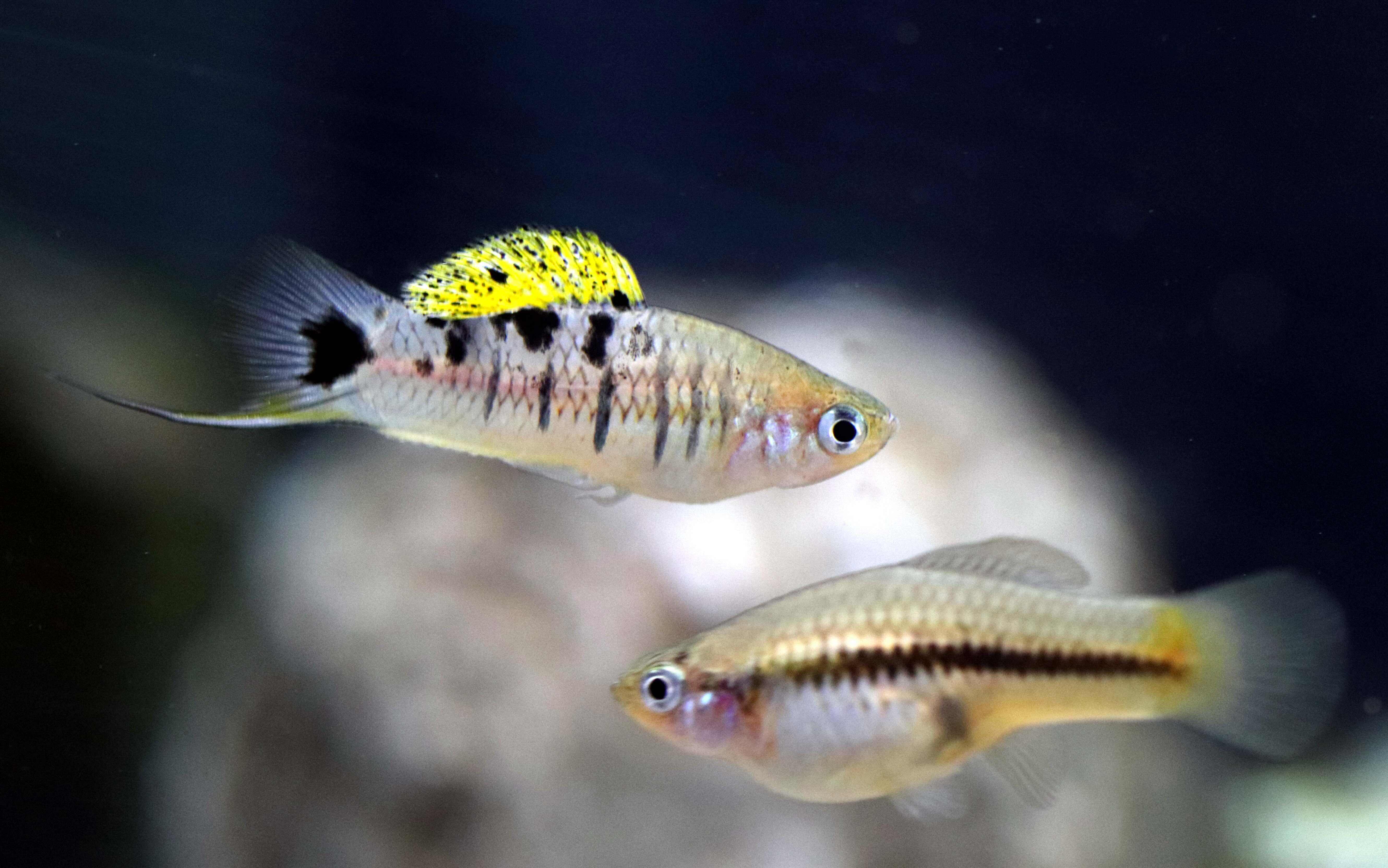
To study this, Powell turns to swordtail fish in central Mexico, where closely related species differ in appearance and behavior but still occasionally interbreed in the wild—making them an ideal system for studying how species boundaries are maintained.
Swordtail fish are known for their striking diversity in color, shape, and courtship displays. Males can carry elongated “swords” on their tails, bold pigmentation, or distinct behavioral patterns—each trying to stand out in a crowded field of suitors.

Assistant Professor Daniel Powell studies a small fish from central Mexico to explore how species form and stay separate—even when they live side by side in the wild.
How do scientists determine which traits matter?
In the lab, researchers recreate mate choice using controlled experiments. A female fish is placed in a tank and given a choice between two potential mates, often separated so only specific cues—like sight or smell—are available. By tracking how much time she spends near each option, scientists can measure her preference.
These setups allow researchers to isolate individual signals. In some cases, Powell removes visual cues entirely to test only chemical communication—essentially asking which side of the tank smells better. To control for differences in male behavior, researchers can also use videos or computer-generated animations, ensuring each “candidate” displays the same level of courtship.
In clean water, the results are clear: females reliably prefer males of their own kind.
That consistency helps keep species separate. By limiting gene flow—a process known as reproductive isolation—mate choice plays a central role in maintaining species boundaries.
When things get complicated
Mate choice depends on signals that can shift with the environment.
“Something we see consistently is that human impacts on the environment strongly influence mate choice in these fish,” Powell said.
When researchers introduce pollution into the system, those signals begin to break down. In water that mimics agricultural runoff or other disturbances, females often lose the ability to distinguish between species based on chemical cues.
In some cases, the effect goes further. Brief exposure to a common chemical pollutant can actually reverse preference, causing females to favor males of a different species. Individuals don’t just get confused—they can begin to prefer the other species.
After just minutes of exposure, that shift can last for several days. That window is enough to produce hybrid offspring.
In the wild, Powell and his collaborators see this pattern most often in disturbed environments. “We tend to see higher rates of hybridization in areas closer to human activity, like villages,” he said.
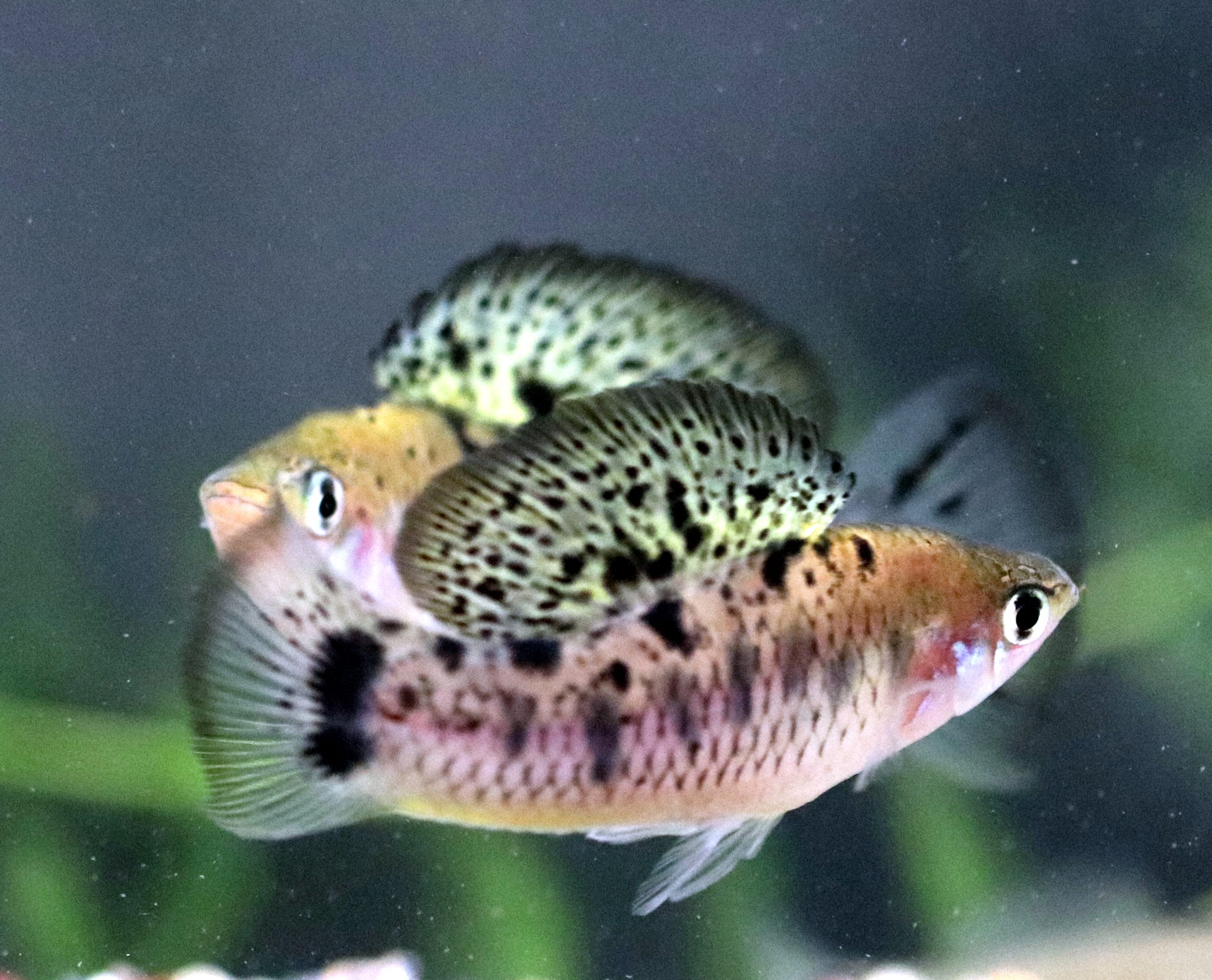
Mexican swordtail fish exhibit a wide range of colors, shapes, and even chemical cues—signals that help them attract the right partner.
So what’s driving these changes?
To answer that, Powell looks to the genome. Once he identifies which traits matter—like color, behavior, or scent—he links those differences to the DNA using a quantitative genetic approach. In simple terms, he looks for patterns: do individuals with a certain trait also share specific genetic variants?
“I literally try to associate variation in traits with variation in alleles in the genome,” he said.
But one of the most powerful tools in this work comes from hybrids themselves.
When two species interbreed, their DNA is shuffled each generation through recombination, creating individuals with a patchwork of genetic material from both species. That variation allows Powell to track which parts of the genome move between species—and which don’t.
Some regions pass easily between species, while others act like barriers, resisting mixing entirely.
Because swordtail fish hybridize in multiple, separate river systems, these comparisons can be repeated across independent populations—effectively creating natural experiments. If the same regions of the genome show up again and again, it suggests those genes play a consistent role in shaping attraction and maintaining species boundaries.
The regions that consistently resist mixing are known as barrier loci—genes that help keep species distinct, even when hybridization occurs.
“So I look at the traits that are important for reproductive isolation… and the genes that are important for either increasing or decreasing gene flow when those barriers break down,” Powell said.
Why this matters
Mate choice doesn’t just shape individual behavior—it shapes how species evolve.
Powell’s work reveals that species boundaries are not as stable as they appear. They rely on a balance between genes, behavior, and the environment. When that balance shifts—even briefly—so do the choices individuals make, opening the door for species to mix.
In a changing world, that means human impacts like pollution can influence evolution itself—altering who mates with whom, and ultimately reshaping biodiversity.