
From Parade Routes to Research Labs: Louisiana Students Rethink Mardi Gras Beads
February 13, 2026
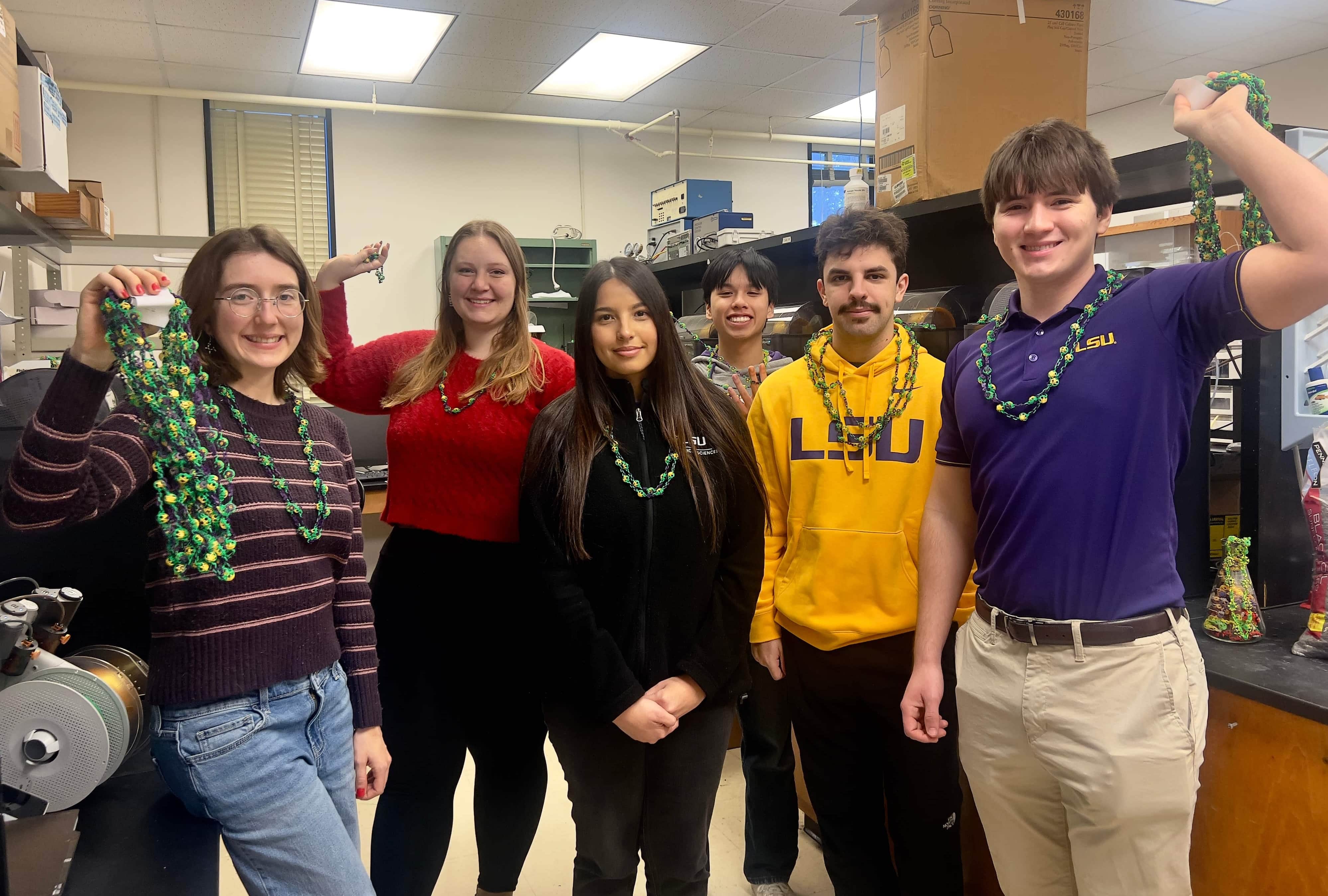
Students from the Kato Research Group (L-R) Alexis Strain, Emily Courtney, Jennifer Cagnolatti, Anh-Tu Nguyen, Felipe del Solar, Tyler Besse.
– Photo Credit: Nicholas Dias
For many LSU students, Mardi Gras is not just a celebration. It is a part of their childhood, culture, and sense of home. They grew up along Louisiana parade routes, catching beads from floats, sharing king cake with family, and learning early what the season means to the communities around them. Today, those same students are bringing those lived experiences into the research lab.
In Dr. Naohiro Kato’s lab, three Louisiana-born and -raised students are working on a project to protect a tradition they love by rethinking one of its most familiar symbols: Mardi Gras beads. Their connection to Mardi Gras is personal, and that perspective drives their work. This research is not rooted in nostalgia alone; it reflects students using science to care for both the culture and the environment that shaped them.
Mardi Gras beads are iconic, but their environmental footprint is less celebratory. Traditional plastic beads can linger in the environment for decades, leaching toxins, clogging storm drains, and piling up in Louisiana’s already fragile ecosystems. Rather than asking people to abandon the tradition altogether, the students in Kato’s lab asked a different question rooted in their own experience: What if Mardi Gras beads could be better?
That question sparked the creation of PlantMe Beads, biodegradable, 3D printed beads designed to break down naturally and even grow plants. From concept to creation, the project reflects the voices, values, and creativity of Louisiana students who understand exactly what Mardi Gras means, because it has always been part of their story.
Catching Tradition, Creating Change
Anh-Tu Nguyen, a senior biochemistry student from Denham Springs, remembers seeing Mardi Gras in a whole new way when she attended the Bacchus Parade in New Orleans for the first time. “I had never seen floats of that size before,” she says. Like many Louisiana kids, Mardi Gras was always about the excitement and spectacle, not what happened after the beads hit the ground.
Working on the PlantMe Beads project connected those childhood experiences with a growing awareness of environmental responsibility. For Nguyen, seeing biodegradable beads thrown at parades would signal something bigger than a new kind of throw. “It shows that our society is becoming more conscious of the environmental effects that our traditions can have,” she says.
"Instead of throwing away our traditions, we can modify them to prevent their maladaptive effects."
Anh-Tu Nguyen, Undergraduate Student
The idea of preservation through innovation resonates deeply with Louisiana natives like Jennifer Cagnolatti, a senior biological sciences major from Gonzales. Her Mardi Gras memories center on family rituals like finding the perfect parade spot, watching new floats roll by each year, and, of course, sampling as many king cake flavors as possible. “Every year it is always fun to see the new floats,” she says, a reminder that Mardi Gras has always evolved while staying rooted in tradition.
Cagnolatti’s role on the project was not in the lab printing beads, but in making sure the science reached the people who could help turn research into real-world change. She presented the PlantMe Beads project to Louisiana state legislators, explaining how biodegradable beads could directly address plastic waste tied to Mardi Gras. “I got to explain the science of how the beads work and how they were produced,” she says. For her, the biggest challenge ahead is not proof of concept, but accessibility. Making the beads available and easy for krewes to adopt is the next critical step.
For Tyler Besse, a graduate from Morgan City, Mardi Gras has always been about atmosphere and community, along with a few slices of king cake along the way. His family made a tradition of attending multiple parades across different towns each year. That sense of shared celebration mirrors his contribution to the project, which focused on the behind-the-scenes logistics of bead production.
Besse handled the 3D-printing process, troubleshooting technical issues and tracking patterns in printing errors using spreadsheets and visualizations. While his role was not research-heavy in the traditional sense, it was essential to making the beads viable at scale. “I would feel honored to see the PlantMe Beads thrown in my hometown,” he says, a full-circle moment where technical problem-solving meets personal pride.
Let the Good Throws Grow
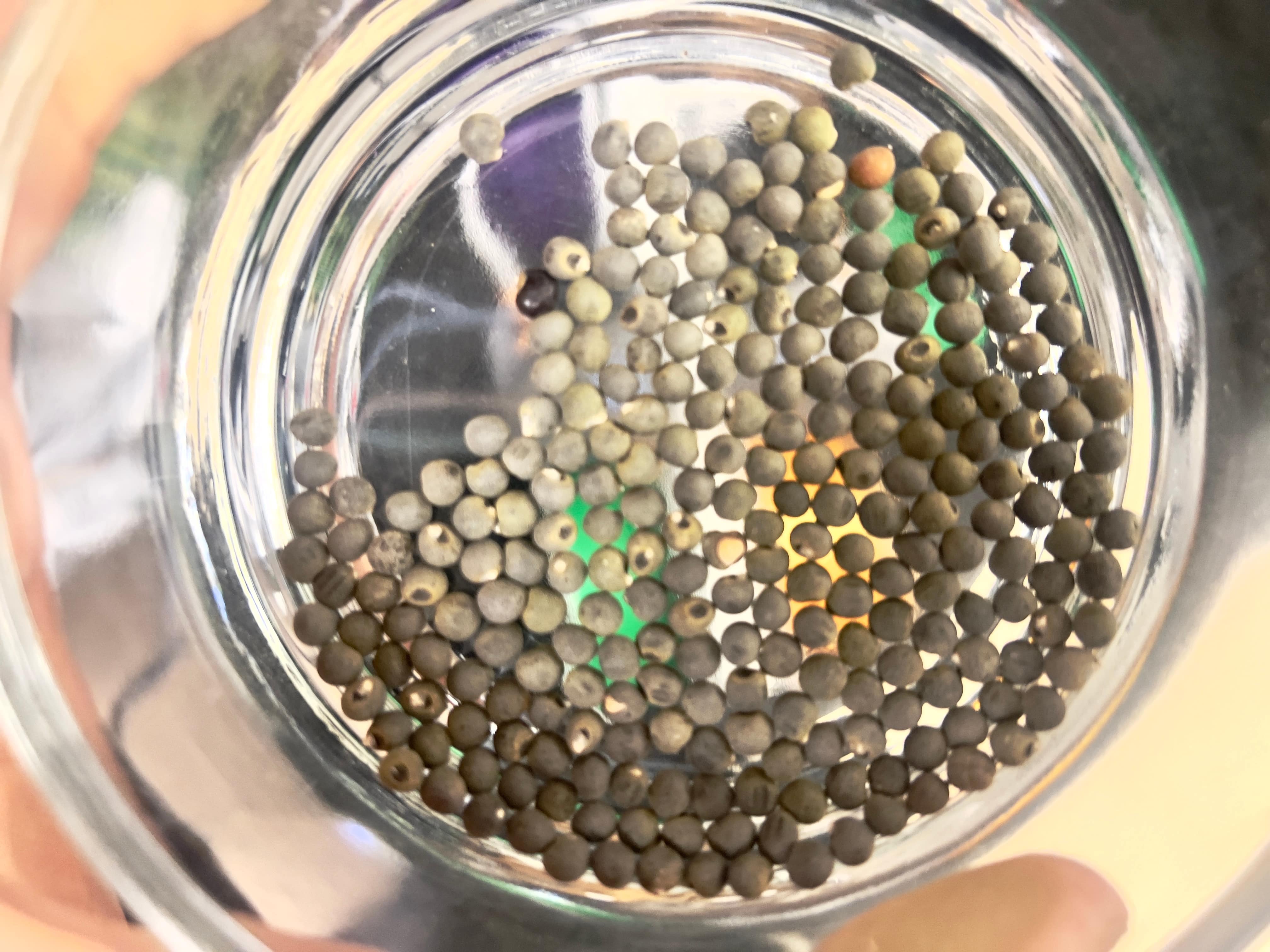
Tiny seeds ready to be placed inside PlantMe Beads.
– Photo Credit: Nicholas Dias
The PlantMe Beads themselves represent a blend of creativity and science. Some designs include small compartments for seeds, allowing the beads to grow into plants once they land in soil. The idea is simple, but powerful. Plant roots may attract bacteria that help break down the plastic faster, while also encouraging parade-goers to take beads home rather than toss them aside.
That connection between lab work and Louisiana landscapes is part of what makes the project so meaningful to the students involved. Many grew up surrounded by wetlands, waterways, and wildlife, environments uniquely vulnerable to plastic pollution. Working on a solution tailored to Mardi Gras feels less like abstract research and more like stewardship.
For Nguyen, Cagnolatti, and Besse, the project’s impact stretches beyond environmental benefits. Each sees the work as a stepping stone toward future careers in medicine, biotechnology, or applied science. More importantly, it reinforces the idea that research does not have to be disconnected from culture, especially in a place like Louisiana.
As plans move forward to scale production and potentially introduce PlantMe Beads at Louisiana parades in the coming years, the students continue to imagine a future where catching beads does not come with environmental guilt. Instead, it comes with a story, one rooted in Louisiana pride, scientific curiosity, and a deep respect for tradition.
After all, in Louisiana, the best solutions often come from the people who know the problem firsthand, the ones who grew up on the parade route and decided to take that experience into the lab.