
One in Three Carry It. Few Get Sick. An LSU Study Explains Why—and How It Could Save Lives
January 12, 2026
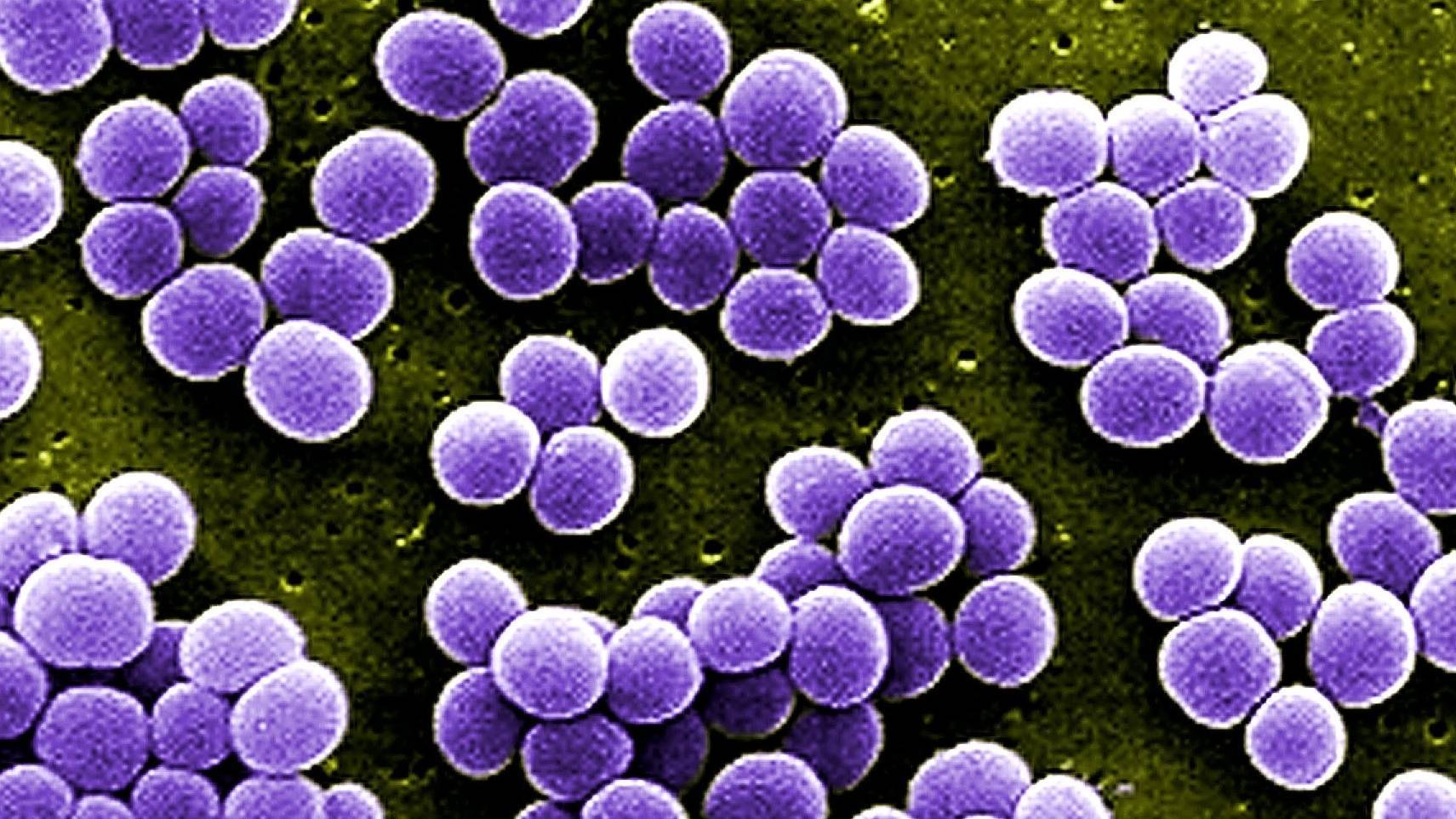
Staphylococcus aureus bacteria, often called “staph,” shown under magnification. Image credit: Janice Haney Carr.
Chances are that you—or one of the two people closest to you right now—is carrying Staphylococcus aureus, even if you’ve never noticed it.
About one in three people harbor the bacterium on their skin or in their nasal passages without any symptoms. Yet in hospitals and other vulnerable settings, this ordinarily harmless microbe can turn dangerous, causing severe infections and pneumonia that are increasingly difficult to treat as antibiotic resistance spreads. Why S. aureus usually coexists peacefully with its human hosts—but sometimes becomes deadly—remains one of the most enduring puzzles in infectious disease research.

Assistant Professor Chen Chen, LSU Department of Biological Sciences, recently received a $2.23 million NIH R01 award to study how Staphylococcus aureus engages with the immune system and to identify potential new therapies for pneumonia.
LSU microbiologist Chen Chen is tackling this question head-on, investigating how S. aureus subtly manipulates the human immune system to maintain a fragile balance with its host—one that can quickly tip from peaceful coexistence into life-threatening disease.
When immune defense becomes immune damage
Each year, S. aureus causes an estimated 50,000 cases of pneumonia in the United States alone, including many ventilator-associated infections in intensive care units. The threat is magnified by the prevalence of methicillin-resistant S. aureus (MRSA) and the emergence of strains resistant even to last-line antibiotics. Despite decades of effort, there is still no approved vaccine.
Part of the challenge, Chen explains, is that S. aureus is not a “classic” pathogen. “Most of the time, this bacterium lives with us without causing disease; we call it colonization” she says. “And this is an evolutionary mechanism of spreading; if it were infectiously aggressive and always killed the host, it would be a dead end for the microbe too.”
The immune system plays a central role in determining which path the interaction takes. Neutrophils—white blood cells that serve as the body’s first responders—are especially important. They migrate rapidly to sites of infection, engulf bacteria, and release antimicrobial enzymes. But that power comes at a cost.
“In the lung, neutrophils are a double-edged sword,” Chen says. “They are essential for clearing bacteria, but if too many arrive or stay too long, they damage healthy tissue. In severe pneumonia, it’s often the immune response itself—not just the bacteria—that causes the most harm.”
So why does the immune system often look the other way, letting S. aureus ride along unnoticed?
Decoding bacterial immune “brakes”
Supported by an NIH R01 grant, the project focuses on a family of S. aureus proteins known as superantigen-like proteins, or SSLs. Unlike true superantigens—which overstimulate the immune system and can trigger dangerous “cytokine storms,” floods of immune signaling molecules that drive excessive inflammation—SSLs do the opposite: they dial the immune response down.
Chen’s team recently discovered that one member of this family, SSL11, can effectively bring neutrophils to a halt. Instead of migrating toward infection signals, neutrophils exposed to SSL11 become overly adhesive, spreading out and sticking in place. The cells are not activated to attack—but they also cannot move.
“It’s almost like putting a stop sign on neutrophil migration,” Chen says.
This insight forms the backbone of the new R01 grant. The project has three interconnected aims. First, the researchers will dissect the molecular mechanism behind SSL11’s effects, identifying how the protein interacts with specific integrins—adhesion molecules on the neutrophil surface—to arrest cell movement.
Second, the team will examine how SSL proteins shape the balance between colonization and infection. Using mouse models, they will compare normal S. aureus strains with genetically engineered strains lacking SSL genes. By tracking bacterial persistence, immune responses, and disease severity, the researchers hope to understand how these immune-modulating proteins help S. aureus quietly colonize hosts without triggering full-blown disease.
Crucially, the project also incorporates a colonization-first model, reflecting the reality that most humans encounter S. aureus early in life and carry it long before any infection occurs. “Most animal infection models start with a completely naïve host,” Chen says. “That’s not how things work in people. We want to mimic the human situation as closely as possible.”
The third aim explores a more translational question: could SSL11—or a modified version of it—be used therapeutically to protect against severe pneumonia?
From bacterial strategy to therapeutic insight
Preliminary data suggest that timing is key. When SSL11 is given before a severe lung infection in animal models, it appears to limit excessive neutrophil infiltration, reduce lung damage, and lower bacterial burden. Administered at the wrong time, however, immune suppression could be harmful.
“That fine balance is exactly what we’re trying to understand,” Chen says. “The goal is not to shut down immunity, but to prevent it from going into overdrive.”
If successful, the research could open the door to an entirely new approach to treating inflammatory lung diseases—one inspired by bacterial evolution itself. Rather than killing bacteria outright, future therapies might focus on modulating the host response, reducing tissue damage while allowing the immune system to do its job more effectively.
Beyond pneumonia, the findings could help explain why decades of vaccine development against S. aureus have struggled. By actively manipulating both innate and adaptive immunity, the bacterium may prevent the immune system from forming durable protective memory.
“This project is really about understanding the rules of engagement between S. aureus and the immune system,” Chen says. “Once we understand those rules, we can start thinking more creatively about how to intervene.”