
Heal or Regrow? LSU Biologist Searches for the Signals That Decide
September 25, 2026
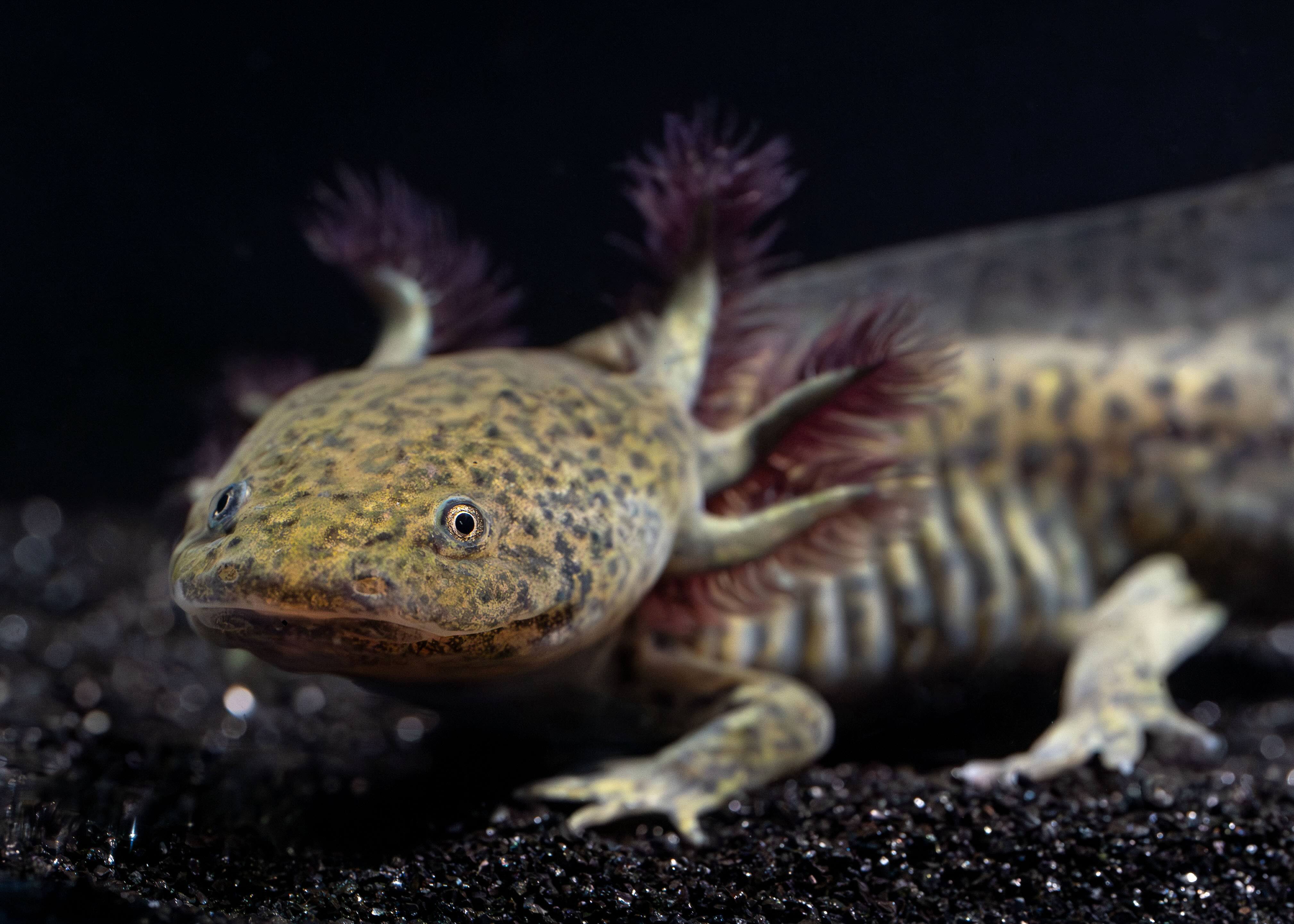
Somewhere in the biology of an axolotl are instructions most vertebrates no longer seem able to follow.
– Credit: Emily Kane.
When the body is injured, it immediately begins the work of repair. Cells respond to the damage, wounds close, and new tissue forms, sometimes leaving a scar. But in a handful of animals, the response to injury goes beyond repair: salamanders can rebuild an entire limb, while certain fish can regrow fins complete with bone, muscle, connective tissue, blood vessels, and nerves.
For LSU biologist Igor Schneider, understanding this ability increasingly comes down to the instructions cells receive after an injury: What signals tell them not just to heal a wound, but to rebuild what was lost?
With $1.875 million in support over five years from a new National Institutes of Health Maximizing Investigators’ Research Award, or MIRA (R35), Schneider and his lab in the LSU Department of Biological Sciences will search for those signals across some of nature’s most capable regenerators and then experimentally test which ones are necessary for regeneration. The long-term goal is to uncover what Schneider calls a “pro-regenerative signaling toolkit”—molecular signals and pathways shared across species that successfully rebuild complex appendages after injury.
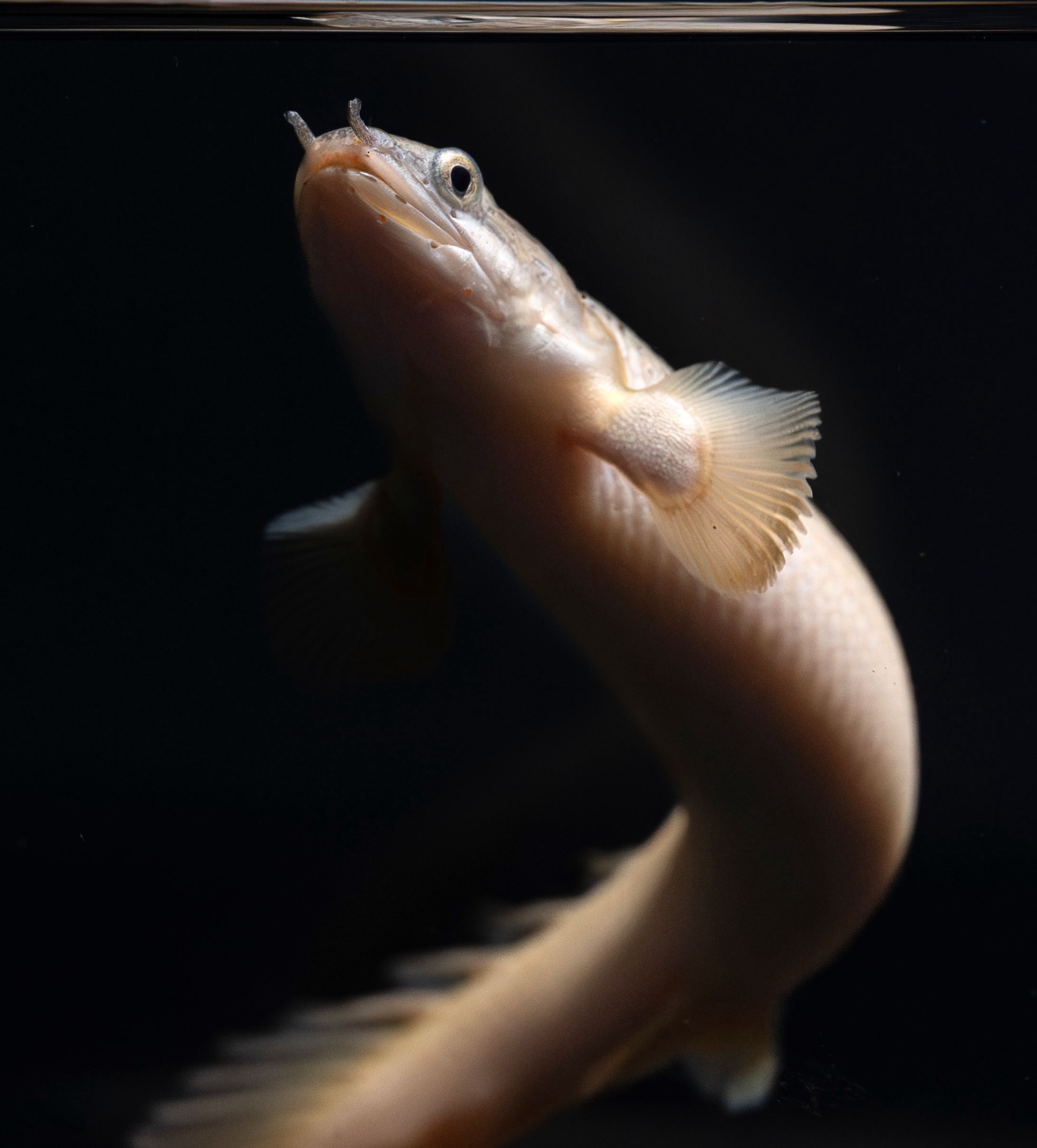
For the Senegal bichir, healing a wound is only the beginning. After injury, it can rebuild an entire fin—making it a powerful model for understanding what pushes cells from repair into regeneration.
– Credit: Emily Kane.
Finding the signals that matter
One challenge is figuring out which molecular signals are responsible for regeneration and which are simply part of the body’s normal response to injury. Even a lizard that cannot regrow its limb will activate genes involved in wound healing, inflammation, and tissue repair—many of the same responses seen in animals that can regenerate. Researchers therefore need to separate the signals involved in healing an injury from those that actually trigger the rebuilding of a limb.
That is where the lizard becomes particularly useful. Schneider’s team will compare its non-regenerating limb with three highly regenerative animals—the axolotl, African lungfish, and Senegal bichir (Polypterus senegalus). Signals that repeatedly appear in the regenerators but not in the lizard can then rise to the top of the list for further study.
The evolutionary distance among these animals is also an advantage. A regenerative mechanism shared across species separated by more than 400 million years of evolution is likely to be deeply conserved—and may represent a fundamental component of vertebrate regeneration.
Humans are another branch of that same vertebrate family tree, so identifying those conserved mechanisms could also help researchers determine what biological machinery we still possess and what may have changed or been lost as our capacity for regeneration became more limited.
One place Schneider’s team will look closely is the wound epidermis, a specialized layer that forms over the injury and helps instruct the cells beneath it to begin rebuilding. To find the signals involved—and determine which cells are producing them—the researchers will map gene activity across regenerating tissues and at different stages after injury. Spatial transcriptomics will show where genes are active within the tissue, while single-nucleus RNA sequencing will help identify the cell populations involved. Together, those molecular maps will help narrow thousands of changes after injury to the candidates most closely associated with successful regeneration.
Putting regeneration to the test
Schneider’s previous comparative studies have already revealed genetic programs shared across regenerative species. The R35 takes the next step, moving from identifying those patterns to experimentally testing the signals within them.
Promising candidates will be functionally tested primarily in the axolotl, a salamander that can regenerate complete limbs and can be genetically manipulated in the laboratory. By interfering with individual genes, including through CRISPR genome editing, the researchers can test whether those genes are necessary for regeneration. They can then watch what happens when a particular signal is disrupted: Does the wound epidermis form? Do progenitor cells accumulate? Does the limb continue to grow—or does regeneration stall?
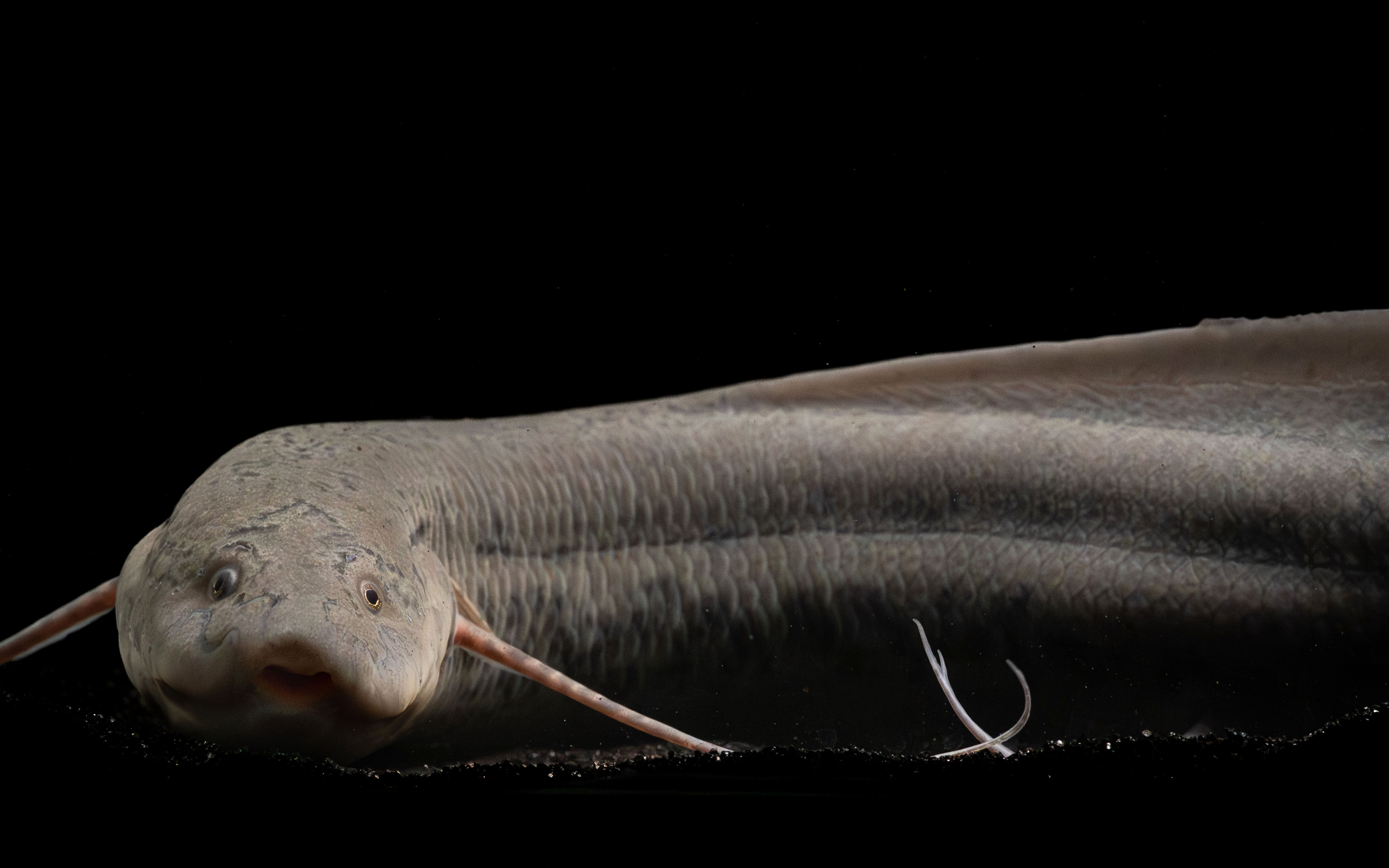
The African lungfish offers another branch of the regenerative family tree. By comparing signals across distantly related species, researchers can look for biological instructions that have persisted for hundreds of millions of years.
– Credit: Emily Kane.
Schneider’s recent work with one candidate pathway offers a glimpse of what that approach can reveal. In a study published in npj Regenerative Medicine, his team investigated mTOR, a signaling pathway involved in fundamental cellular processes including metabolism and protein production, in the Senegal bichir, a fish capable of regenerating its entire fin. They found that mTOR signaling was rapidly activated after fin amputation. When the pathway was blocked, the wound still closed, but the fin failed to regenerate.
Learning nature’s instructions for rebuilding
Schneider is not looking for a single “regeneration gene.” Instead, his team is working to understand the network of signals that allows cells to coordinate something far more complex: rebuilding a functional appendage with the right tissues in the right places.
In the long term, that knowledge could provide targets for studies in animals that normally cannot regenerate appendages, including mammals. But first, Schneider’s team needs to decipher how highly regenerative animals do what most vertebrates cannot: turn the response to an injury into a program for rebuilding.