
Getting to the Root of How Plants Survive Salt Stress
August 26, 2026
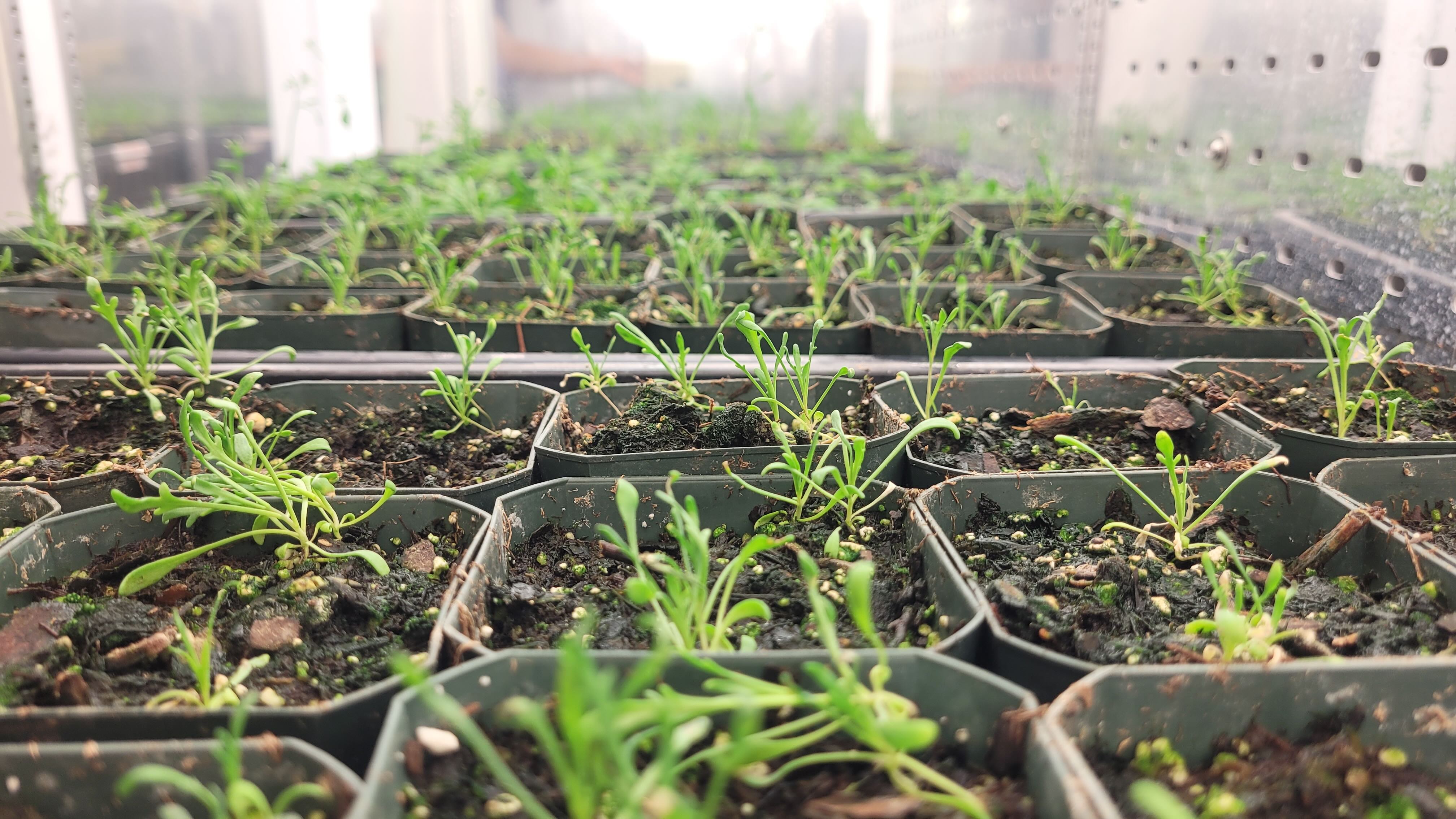
New single-cell atlas explains how salt-tolerant plants survive stress, offering clues for future crops.
– Credit: Richard Garcia.
As freshwater supplies shrink and saltwater spreads into agricultural land, farmers face a growing challenge: how to grow crops in soil that is becoming too salty to sustain them?
Part of the answer may already exist in nature.
Across coastal marshes, deserts, and other extreme environments, wild plants thrive where soybean, rice, and canola would quickly fail. These resilient species have spent millions of years adapting to harsh conditions, but until now, scientists had only a limited understanding of the cellular mechanisms behind that resilience.
To uncover that, researchers at Louisiana State University and an international team created one of the most comprehensive cross-species single-cell maps of plant roots to date, allowing them to compare stress responses one cell at a time. Published in Nature Communications, the study pairs that atlas with a new computational framework for cross-species comparisons.
"Our major crops were developed during a time when freshwater wasn't considered a limiting resource," said LSU Professor Maheshi Dassanayake. "But we're entering a future where freshwater is becoming increasingly scarce. We need to understand how naturally stress-adapted plants survive because nature has already solved many of these problems."
Looking beyond the model plant
Plant biologists have long relied on Arabidopsis thaliana — the plant equivalent of the laboratory mouse — to understand how roots grow and respond to their environment. To look beyond a single model species, Dassanayake's team analyzed more than 200,000 individual root cells from five members of the mustard family (Brassicaceae), which includes important crops such as canola, broccoli, cauliflower, and the emerging oilseed crop Camelina sativa.
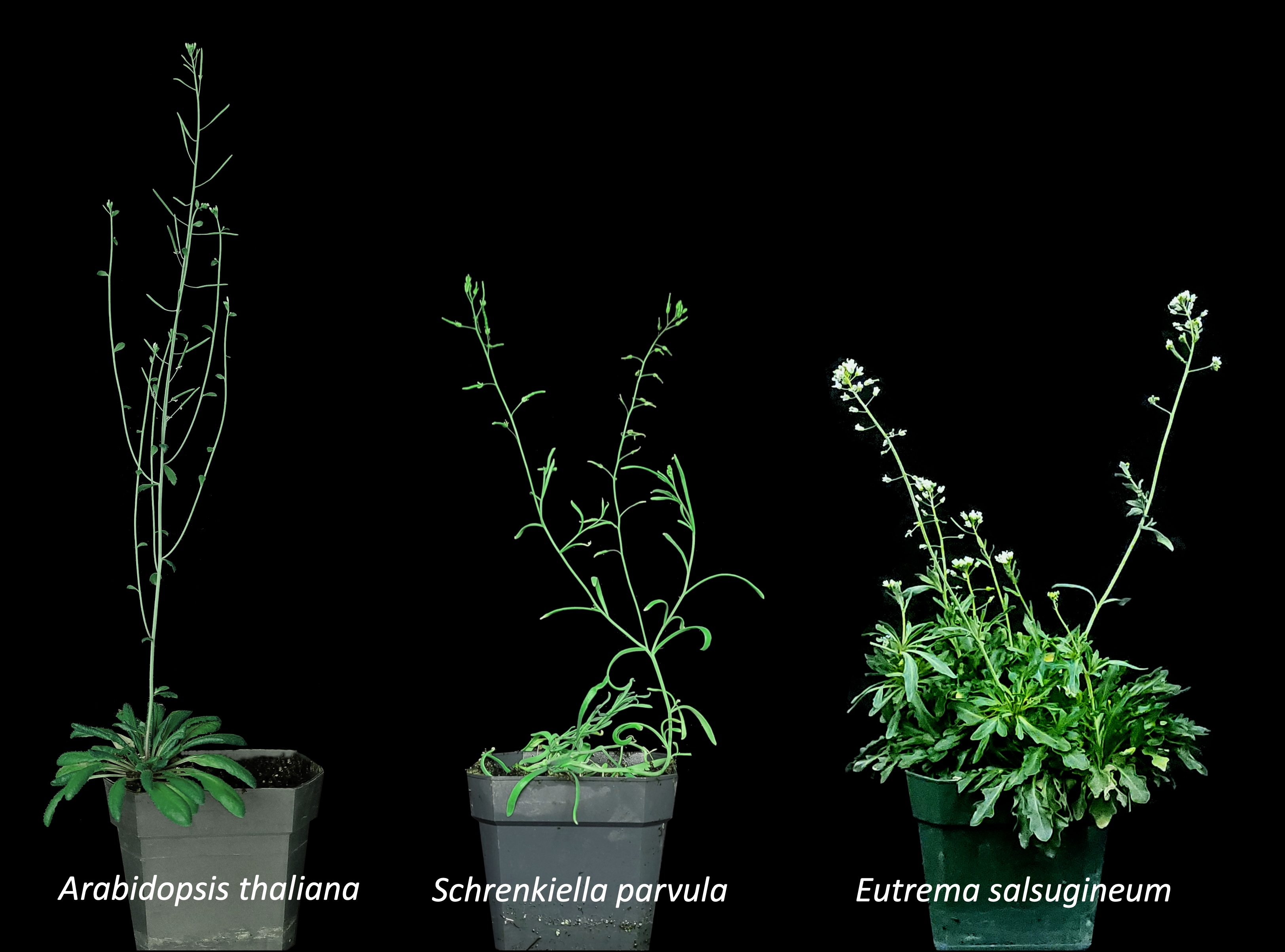
Arabidopsis thaliana alongside the salt-adapted extremophytes Schrenkiella parvula and Eutrema salsugineum, which researchers study to understand how plants survive high-salinity environments.
– Credit: Richard Garcia.
By comparing both stress-sensitive and naturally salt-tolerant species, the team could ask a different question: not simply how plants respond to stress, but how those responses evolved.
"One of the exciting things about comparing these species is that they represent different evolutionary solutions to the same environmental problem," Dassanayake said.
The first surprise came before the researchers even began comparing stress responses. Well-established "marker genes" used to identify root cell types in Arabidopsis did not consistently identify the same cell types across closely related species. Nearly half were no longer expressed in the expected cell types or no longer served as reliable markers.
“We thought we knew which genes defined each cell type," Dassanayake said. "We were very surprised that many of those markers were no longer informative."
To overcome that limitation, the team, led by first author and LSU alumnus Guannan Wang, developed a computational framework for comparing gene expression networks across multiple plant species at single-cell resolution. The framework identifies equivalent cell types while tracing how their genetic programs changed through evolution. It also established a new set of conserved marker genes for identifying root cell types across the mustard family. The framework can also be adapted to other plant groups, extending its use beyond the mustard family.
Different cells. Different jobs.
The researchers profiled root cells under normal conditions and after exposure to salt or the plant stress hormone abscisic acid (ABA), allowing them to distinguish general stress responses from those unique to salinity.
The atlas showed that roots do not respond to stress as a single organ. Instead, different cell types assume distinct roles, with some mounting strong genetic responses while others change very little. Even closely related species recruited different cell types to coordinate their responses to salt stress.
"There isn't one cell that's responsible for stress," Dassanayake said. "All of them respond, but they respond at different levels and in different ways."
The study also revealed that salt stress is not simply a stronger version of a general stress response. While ABA activated many familiar stress-response pathways, salt exposure triggered hundreds of additional genes — including many involved in ion transport and protection against oxidative damage — revealing specialized molecular responses to saline environments.
Together, those findings suggest that future crop improvements could become much more precise. Rather than altering the activity of a stress-response gene throughout an entire plant, future efforts may one day target only specific cell types, helping crops tolerate harsh conditions while minimizing impacts on growth and yield.
"This is basic biology that gives us the knowledge to ask much better questions," Dassanayake said. "Whether through breeding or genetic engineering, we first need to know which genes matter, where they act, and when they should be active."
Nature found more than one answer
One of the study's biggest biological insights is that evolution did not settle on a single recipe for surviving salt stress. Rather than relying on a common set of genes or pathways, the naturally salt-tolerant plants the researchers studied had each evolved distinct cellular strategies for thriving in saline environments.
"There are multiple solutions to the same problem. That gives us many more possibilities to learn from."
Dr. Maheshi Dassanayake, LSU Department of Biological Sciences
For crop scientists, that diversity may prove just as valuable as any single gene, opening new opportunities to improve resilience by drawing on multiple evolutionary strategies.
Another clue to the plants' resilience lay in their readiness.
Many stress-tolerant plants appear to stay one step ahead of harsh environments, with numerous stress-response genes already active before salt exposure begins — a phenomenon known as a "stress-prepared" transcriptome.
That preparedness is not spread evenly throughout the root. Some cell types contribute far more than others, suggesting that resilience emerges from specialized cellular roles rather than a uniform response across the entire plant.
While the findings will not immediately produce a salt-tolerant crop, they identified core stress-response networks, candidate genes, and the specific cell types in which they operate, providing a more precise foundation for future breeding and biotechnology efforts.
The study also demonstrated that the new computational framework can analyze complex crop genomes, including the six-copy genome of the emerging oilseed crop Camelina sativa, extending comparative single-cell biology beyond traditional model plants. That opens the door to studying stress adaptation in a much wider range of plants, including the crops that may need it most.