
From White Blooms to “Hot Lips”: How Flowers Transform in the Tropics
May 06, 2026
Across the tropical Americas, wild coffee plants (Palicourea) span more than 650 species, displaying a striking range of flower shapes and colors. Many of these species have
evolved from small, white flowers pollinated by bees into long, brightly colored blooms
— including the iconic “hot lips” — that attract hummingbirds and butterflies. But
this hasn’t happened just once — these showy, elongated forms have evolved at least ten times independently across the group, raising the question: why do these flowers keep reinventing themselves?
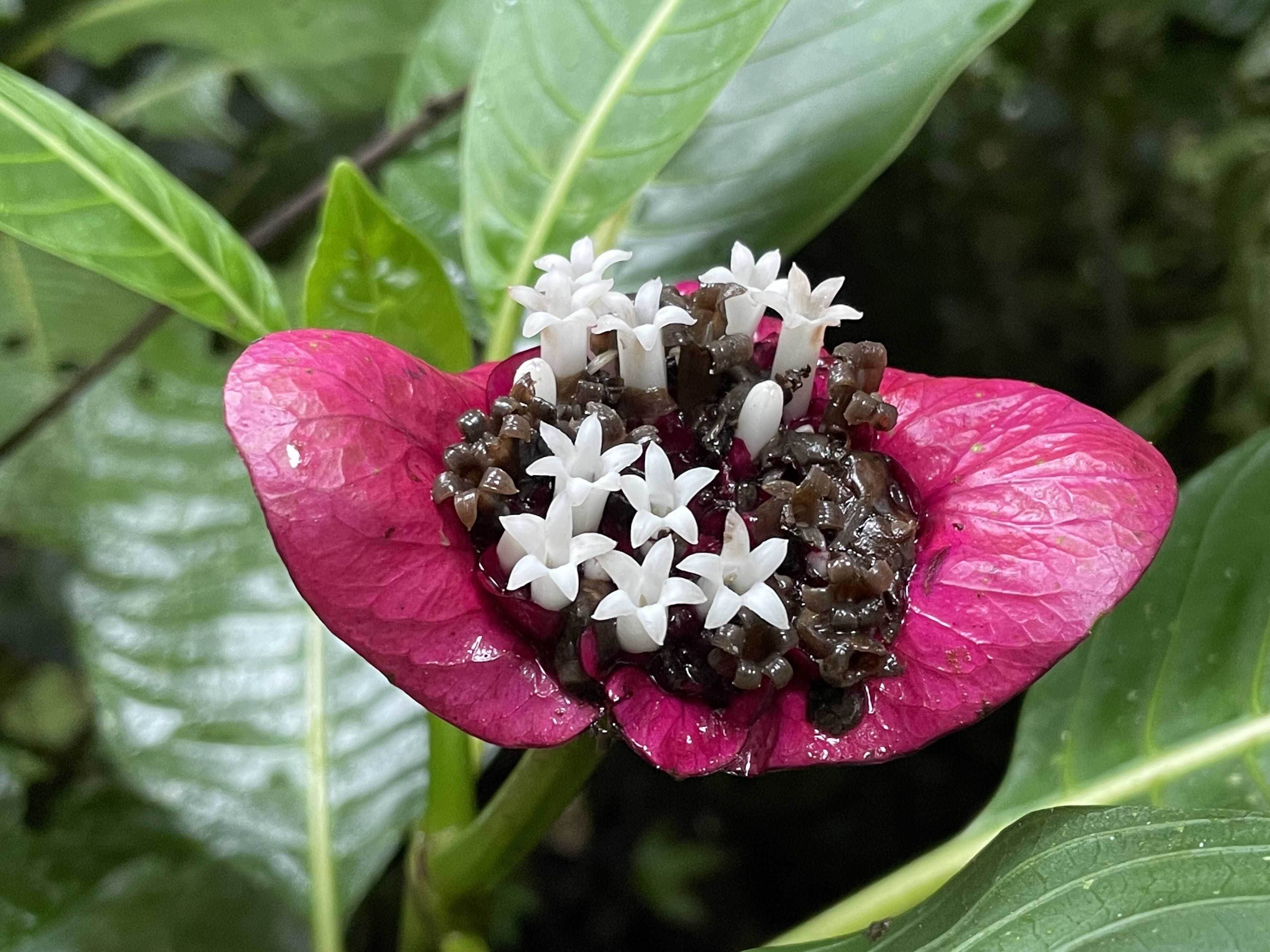
Bright “hot lips” flowers have repeatedly evolved from small, white blooms, at least ten times, likely in response to shifts in pollinators.
– Credit: Laura Lagomarsino.
“That’s what makes this group so exciting to study,” said Associate Professor Laura Lagomarsino. “The repeated evolution of brightly colored, nectar-rich flowers gives this research statistical power, and also suggests that the preferences of cantankerous little hummingbirds in tropical montane forests are inextricably linked to the evolution of wild coffee.”
To answer that question, Lagomarsino will travel to Colombia with support from a prestigious Fulbright U.S. Scholar award. The Fulbright program, one of the U.S. government’s flagship international exchange initiatives, supports scholars working across borders to advance research, teaching, and collaboration. For Lagomarsino, it provides a unique opportunity to study evolution in one of the most biodiverse regions on Earth while building partnerships with scientists and students at the National University of Colombia.
Colombia is the global center of Palicourea diversity, where species occur across environments ranging from cool Andean mountains to warm Amazonian lowlands and some of the wettest tropical forests on Earth. This range of climates exposes plants to very different ecological conditions, creating a powerful natural setting to study how species adapt.
Lagomarsino’s research builds directly on this environmental variation. Combining field expertise with modern evolutionary tools, she will use herbarium collections — preserved plant specimens that document biodiversity over decades — to expand the evolutionary tree of Palicourea. She will then pair DNA data with detailed measurements of flower traits such as size, shape, and color, along with climate data from where each species grows. Together, these data allow her to reconstruct how these plants have changed over time and test a key idea: that shifts from insect pollinators to more specialized visitors, such as hummingbirds, drive the evolution of these striking flower forms.
Building on previous work showing that these shifts in flower arrangement, or inflorescence form, have occurred repeatedly, she will examine whether multiple traits evolve together during these transitions — and whether those changes align with differences in climate and environment. Access to Colombia’s National Herbarium — one of the most important plant collections in the tropics — makes this work possible, providing specimens from across the group’s center of diversity.
“The herbarium brings together an incredible record of biodiversity, and working side by side with Colombian researchers allows us to ask better questions and build a deeper understanding of how these plants evolved,” said Lagomarsino.
Finally, she will use evolutionary models to trace how these traits have diversified over time and determine whether ecological and environmental factors consistently explain why similar flower forms keep emerging.
The project reflects LSU Science’s growing role in global, collaborative research. Beyond advancing knowledge, Lagomarsino will work closely with Colombian researchers and students, offering training in phylogenomics and data analysis while strengthening long-term scientific partnerships.
Prestigious Pathway Award Recognition
This award is designated a Prestigious Pathway Award at LSU. The distinction includes a $5,000 stipend and recognition at the university’s Gold Standard of Excellence event, which honors faculty achievements that advance LSU’s research mission.