
Researchers Identify Mechanism Behind Acquired Immunity to Tick Bites
October 30, 2026
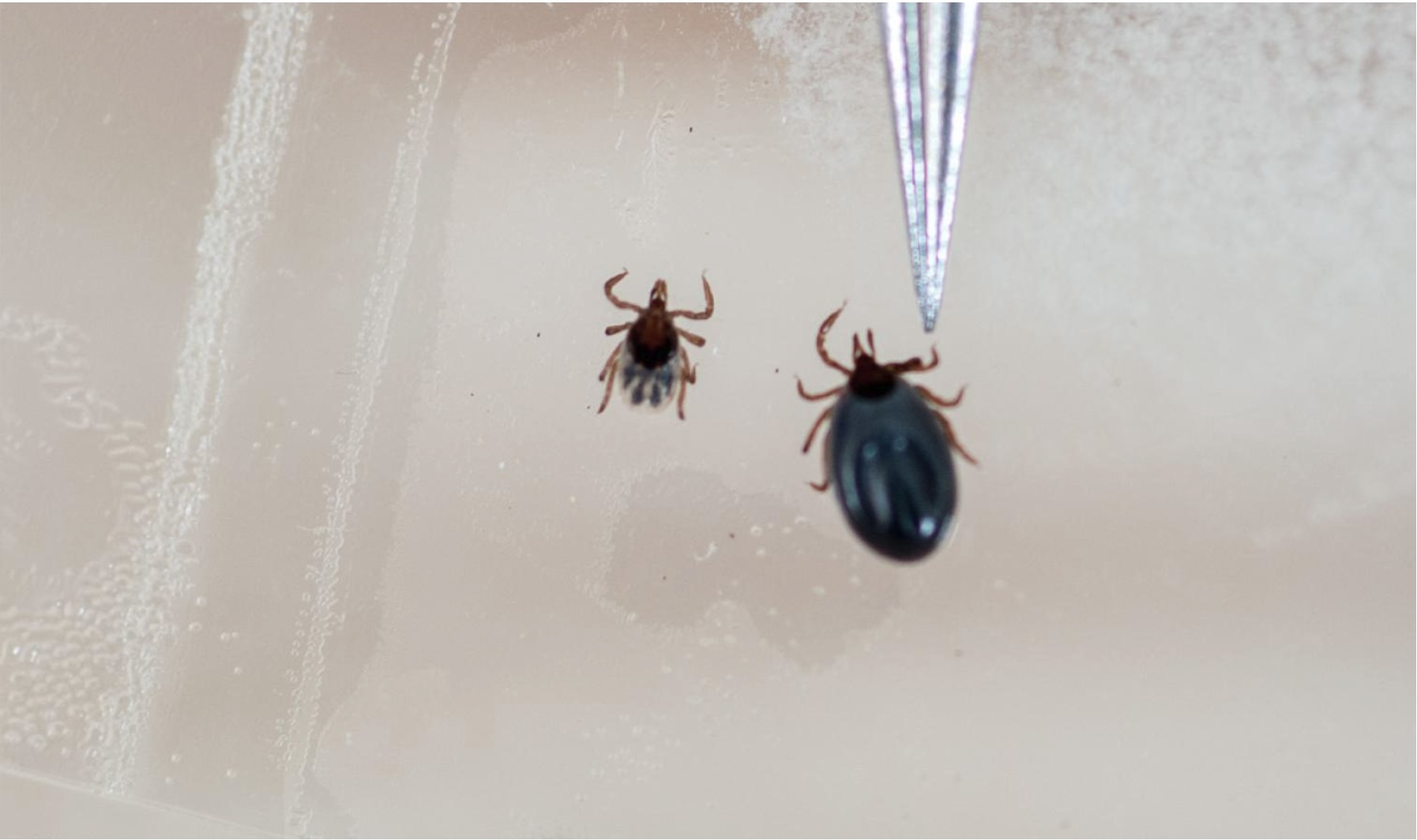
– Image Credit: Edwin Remsberg.
A University of Maryland-led study, conducted in collaboration with LSU and other institutions, identified a specific biological pathway that promotes immunity to tick bites in some animals after repeated exposure. The discovery sheds light on how animals can naturally prevent ticks from feeding and could help researchers develop new strategies to protect against tick-borne diseases.
The research was published October 21, 2026, in the Proceedings of the National Academy of Sciences (PNAS).
“Ticks are remarkably successful blood feeders that can parasitize almost every vertebrate. We are interested to learn how some of the incidental hosts mount protective responses against repeated tick bites, and can these natural defenses be harnessed to prevent vector feeding and reduce the risk of pathogen transmission?” said Chrysoula Kitsou, an associate research professor in the Department of Veterinary Medicine at UMD and the lead author of the study.
Ticks can transmit pathogens that cause diseases such as Lyme disease and can also trigger conditions such as alpha-gal syndrome. While preventing these health threats remains challenging, a strategy that prevents or reduces tick bites in the first place could offer broad protection against multiple tick-associated illnesses.
Previous studies have shown that certain animals, such as guinea pigs and humans, can build resistance to tick bites through repeated exposure. Their skin develops an immune response that can prevent ticks from feeding, causing them to detach before they can transmit pathogens. However, the biology behind this resistance is not fully understood. So, the researchers set out to identify the molecular mechanism at work.
Brant Faircloth, Moreland Family Professor in LSU's Department of Biological Sciences, contributed to the study by assembling an improved version of the guinea pig genome. The updated genome allowed researchers to identify previously unannotated genes and better compare gene activity between guinea pigs exposed to ticks for the first time and those that had developed immunity. This helped the team investigate changes in inflammatory responses, including those involving IL-36γ, a key protein in the newly identified pathway.
Using these and other experimental approaches, the researchers found that the host protein IL-36γ is a primary driver of the inflammatory response that prevents a tick from feeding. They demonstrated that interfering with IL-36γ in guinea pigs reversed the animals' naturally acquired immunity. Finally, the researchers induced immunity in mice, which do not naturally acquire it, by using gene editing and other methods to silence the pathway in their skin that normally blocks IL-36γ.
For Faircloth, the findings point to a potential pathway for developing vaccines that could protect people and other mammals from tick-borne diseases by preventing ticks from feeding in the first place.
“I am particularly excited about our findings that offer a new conceptual framework for understanding the immunological mechanisms underlying acquired tick resistance in mammals,” said Utpal Pal, MPower professor in the Department of Veterinary Medicine at UMD and the corresponding author of the study. “We integrated immunology, genomics, and genome editing to develop several valuable experimental resources. These efforts and resources will facilitate broader investigations into host-vector-pathogen interactions and may ultimately inform innovative strategies to mitigate the burden of vector-borne diseases.”
Adapted from an original story by the University of Maryland.