
Discoveries in Brief
LSU researcher 3D-prints a crack-free nickel superalloy that resists extreme heat
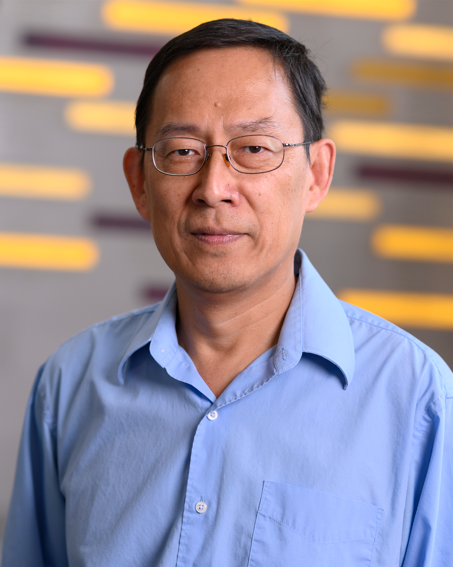
“Getting a crack-free part with this kind of strength has been the sticking point, and the dual-doping route gets us there,”
-Shengmin Guo, Professor, Mechanical Engineering
Shengmin Guo of LSU's Department of Mechanical and Industrial Engineering led work on a 3D-printed nickel superalloy that reached 1,166 megapascals of strength while staying free of the cracks that can develop in metal printed instead of cast.
A tensile strength of 1,166 megapascals with about 12 percent elongation before breaking is a hard combination to reach in a 3D-printed metal, and harder still without cracks. That result comes from work led by Professor Shengmin Guo, reported in Materials Science and Engineering: A. Printing nickel superalloys layer by layer with a laser usually leaves them cracked. This challenge is amplified when they are strengthened with an oxide called yttria. Guo's team included silicon in the process which along with the mix of micron and nanoscale yttria particles produced completely crack-free parts. This approach removes a long-standing barrier to making these oxide-strengthened alloys by 3D printing.
Nickel superalloys are the metals that survive the hottest parts of jet engines, power turbines, and other extreme environments, so being able to print them into complex shapes without cracks matters for how those parts are made and repaired. "Getting a crack-free part with this kind of strength has been the sticking point, and the dual-doping route gets us there," said Professor Guo. In high-temperature tests at 1,200 degrees Celsius, the printed alloy formed the thinnest yet most protective oxide layer of those tested, a titanium-enriched chromium oxide scale over a subsurface mix of aluminum, silicon, and titanium oxides, which shielded it from corrosion. A standard version of the same alloy corroded badly as its key strengthening elements were depleted.
The improvement can be explained by the impact of dual doping on the metal's internal structure. For the first time in a printed alloy of this crystal type, the approach shifted the grains away from the strong directional texture that printing usually imposes, toward a more random arrangement. This preserves the elongated grains known to give parts their integrity and reduces the directional weakness printed metals often display without sacrificing strength. Looking ahead, the same dual-doping route offers a recipe for printing other high-performance nickel alloys for extreme environments, where strength, ductility, and oxidation resistance all must meet stringent conditions.
This work was supported by the Louisiana Materials Design Alliance, the National Science Foundation, and the Louisiana Board of Regents.
AI digital twin predicts which roads stay usable during a flood
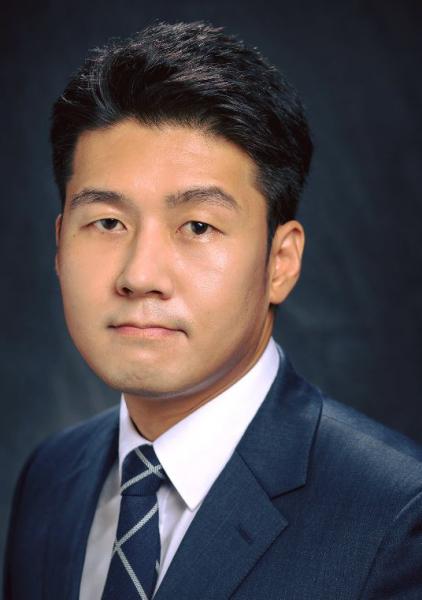
“We want responders to see the whole road network during a flood, not just the handful of points where we happen to have sensors,”
-Yongcheol Lee, Associate Professor, Construction Management
Yongcheol Lee of LSU's Department of Construction Management led work on an AI-enhanced digital twin that forecasts how usable roads will be during extreme flooding, including roads that do not flood directly.
Louisianans know all too well how a big storm can make car travel near impossible. When the 2016 flood inundated the Baton Rouge area, the damage was not limited to the roads that went underwater. Routes far from the high water were cut off, overloaded, or stranded between flooded segments, all of which slowed evacuation and recovery. As another hurricane season opens, that is exactly the problem a new tool from LSU is built to address. Reporting in the Journal of Management in Engineering, Professor Yongcheol Lee and colleagues built a decision-support framework using an AI-enhanced digital twin. This tool forecasts roadway serviceability across a whole network during extreme flooding, not just at the points where information is collected. Conventional flood monitoring leans on a thin scatter of sensors that miss the broader impacts of a flooded road.
For transportation agencies and emergency responders, knowing ahead of time which routes are passable can shape how an evacuation is ordered and where crews go first. "We want responders to see the whole road network during a flood, not just the handful of points where we happen to have sensors," said Professor Lee. The framework pulls together structural conditions, operational disruption, maintenance history, how deep the water may be, and recovery timelines to flag both inundated and indirectly affected segments, giving a fuller picture than sensor readings alone.
The system combines a flood simulation with a graph neural network. This model represents the road network as a web of connected segments so an effect in one place ripples through the rest. It draws on historical traffic volumes, pavement condition, hydrological data, and weather forecasts, and the team showed how it works through a demonstration case. For a state like Louisiana, where hurricanes and heavy rain repeatedly test the road network, a tool like this could give agencies a reliable way to plan response and harden the most exposed routes before the water rises.
This work was supported by the National Oceanic and Atmospheric Administration and the U.S. Department of Commerce.
Big swings in river flow speed up how fast rivers move sideways

“It turns out the swings in flow, not just the average, are doing a lot of the work in moving a river,”
-Frank Tsai, Professor, Civil & Environmental Engineering
Frank Tsai of LSU's Department of Civil and Environmental Engineering co-authored a global study finding that rivers with more variable flow shift their channels faster, with the lower Mississippi as a key example.
Across 64 rivers worldwide, the ones whose flow rises and falls most sharply are also the ones that move sideways across their floodplains the fastest. That finding, reported in Science Advances by a team that includes Professor Frank Tsai of LSU's College of Engineering, takes on a basic but unsettled question in river science: what controls how quickly a river migrates. Lateral migration shapes river landscapes and threatens whatever sits nearby, yet the role of water discharge in driving it had been largely unexplored. Drawing on the global dataset, the researchers found that higher variability in a river's discharge and water level promotes faster channel migration, a relationship that held across very different rivers around the world.
How fast a river wanders matters for anyone living or building near one, from levee design to farmland and property that owners are trying to protect from erosion. "It turns out the swings in flow, not just the average flow, are doing a lot of the work in moving a river," said Professor Tsai. To pin down why, the team focused on the lowermost 500 kilometers of the Mississippi River, where both water-level variability and migration rate change markedly along the channel. That stretch gave them a natural laboratory to test the idea close to home, in a river central to Louisiana's land and economy.
There the researchers showed that swings in water level shape the size of the sediment that builds the riverbanks, which in turn sets how easily those banks erode. Coarser, more fragile banks let the channel move faster, linking the flow record to the river's physical behavior. The relationship is general enough to help predict how rivers will respond to future challenges. The data also provides clues about weather in the distant past from patterns in river sediment, lessons useful both on Earth and, the authors note, on Mars. This work was a collaboration between Professor Frank Tsai and colleagues at Tulane University and Yonsei University.
This work was supported by the U.S. Geological Survey and the National Science Foundation.
AI forecasts a deadly oyster bacterium days ahead using satellite data
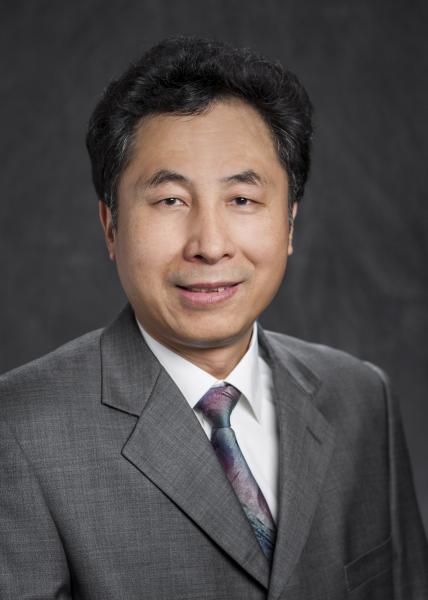
“If we can see the conditions building days in advance, managers have time to act before anyone gets sick,”
-Zhi-Qiang Deng, Professor, Civil & Environmental Engineering
Zhi-Qiang Deng of LSU's Department of Civil and Environmental Engineering led development of machine-learning models that forecast levels of a dangerous bacterium in oysters based on known environmental conditions.
Vibrio vulnificus is a bacterium that lives naturally in warm coastal waters and carries one of the highest death rates of any known foodborne pathogen. What makes it concentrate in oysters has been poorly understood as have the environmental conditions that promote its growth in seafood. Reporting in Water Research, Professor Zhi-Qiang Deng and colleagues set out to get a better handle on this deadly threat. They combined 13 years of field oyster sampling from environmentally distinct coastal waters with satellite remote-sensing data and used machine learning to find patterns. The result is both a clearer picture of the conditions that drive the bacterium and a set of models that forecast its concentration in oysters with enough lead time for managers to respond.
In Louisiana oysters are important to the seafood industry and a reliable early warning system that could signal the potential for contamination would have impact. The tool could allow managers to watch or close harvest areas before contaminated shellfish reach people. "If we can see the conditions building days in advance, managers have time to act before anyone gets sick," said Professor Deng. The study found the bacterium's concentration is governed by a multitude of environmental factors: solar radiation, water level, wind speed, chlorophyll, acidity, water temperature, and salinity. Notably, water level emerged as one of the most important among them, a correlation that earlier work had largely overlooked.
The bigger surprise was that solar radiation, not water temperature, was the single most important factor in contamination. Also surprising was that the bacterium's growth depends on conditions reaching back as far as 80 days. To turn these findings into a usable tool, the team built four forecasting models, using a method called XGBoost, each tuned to a different lead time so managers can choose how far ahead to look. In the future, forecasts like these could give coastal health and fishery agencies a practical basis for protecting both public health and the shellfish industry, with enough response time to act before an outbreak.
This work was supported by the National Aeronautics and Space Administration and the Louisiana Board of Regents.
A clearer way to weigh the full benefits of flood-protection projects


“If the analysis only considers avoided building damage, nature-based projects always look worse than they are,”
-Matthew Brand, Assistant Professor, Civil & Environmental Engineering
-Carol Friedland, Professor, Biological & Agricultural Engineering
Matthew Brand of LSU's Department of Civil and Environmental Engineering and Carol Friedland of LSU's Department of Biological and Agricultural Engineering co-authored a framework for comparing flood-mitigation projects that counts environmental and community benefits, not just avoided damage.
Professors Matthew Brand and Carol Friedland of the LSU College of Engineering contributed to work led by colleagues including Professor Timothy Douthat in the College of the Coast and Environment. The team proposed a clearer way to compare flood-protection projects that captures benefits traditional accounting leaves out. Writing in Environmental Research: Infrastructure and Sustainability, they lay out a step-by-step framework for benefit-cost analysis that brings in ecosystem services and community well-being alongside the usual measure of avoided property damage. The aim is to make these comparisons consistent enough that very different projects can be evaluated on the same terms.
Flood mitigation increasingly includes nature-based options, like restored wetlands, whose value is hard to capture when the only measure that counts is reduced structural loss. "If the analysis only considers avoided building damage, nature-based projects always look worse than they are," said Professor Brand. The framework is built to surface the downstream environmental benefits and how costs and benefits fall on the communities most affected, so decision-makers can see trade-offs that a single benefit-cost ratio would hide.
The framework breaks the analysis into eight steps, from identifying environmental effects and choosing how to value them to characterizing who is affected and adjusting for it, ending in the benefit-cost ratio. To show how it works, the team compares a traditional channelization project against a natural channel design under the same logic. This work was led by Professor Timothy Douthat of LSU's College of the Coast and Environment, engaging College of Engineering faculty as collaborators. Looking ahead, a shared framework like this could let agencies compare built and nature-based flood projects in a way that considers a multitude of human and environmental impacts.
This work was supported by the National Oceanic and Atmospheric Administration and the National Science Foundation.
AI forecasts dissolved oxygen in rural wastewater ponds with under 7% error

“If operators can predict tomorrow's oxygen levels, they can aerate when it actually helps instead of running oxygenation systems around the clock,”
-Mahathir Mohammad Bappy, Assistant Professor, Industrial Engineering
Mahathir Bappy of LSU's Department of Mechanical and Industrial Engineering led development of an interpretable AI model that forecasts oxygen levels in rural wastewater ponds.
An artificial-intelligence model cut forecasting error for oxygen levels in a rural wastewater pond to below 7 percent, down from the 16 to 46 percent that earlier methods produced. That result, reported in Water Research by Professor Mahathir Bappy of LSU's College of Engineering and colleagues, addresses a real world operating problem for treating water. Dissolved oxygen feeds the biological treatment that cleans wastewater, and in small rural ponds oxygen levels can swing unpredictably with nutrient levels, inflows, and seasons. Predicting it well saves energy by timing aeration only when it's needed.
For small communities, aeration is often one of the largest energy costs in treating wastewater, and running blowers without knowing if they are actually needed wastes power. "If operators can predict tomorrow's oxygen levels, they can aerate when it actually helps instead of running oxygenation systems around the clock," said Professor Bappy. The team adapted a transformer-based foundation model, a type of AI built for sequences. They then fine-tuned it on nearly a year of sensor data from a working rural facility, training a separate model for each season.
The model was built to be interpretable, not a black box. Using a method called SHapley Additive exPlanations, or SHAP, the team identified which measurements drove its forecasts in each season, including acidity, conductivity, temperature, turbidity, and ammonium, and ran what-if tests for operators. Tested a day ahead, it beat standard machine-learning and deep-learning baselines by a wide margin. In the future, forecasts like these could let decentralized rural systems plan aeration proactively and run more sustainably.
Physics-informed neural network models size-dependent deformation in micro- and nanoscale metals

“At these scales the material does not behave the way textbook models say, and the neural network lets us describe the physics using the data,”
-George Voyiadjis, Professor and Chair, Civil & Environmental Engineering
George Voyiadjis of LSU's Department of Civil and Environmental Engineering co-authored a study using a physics-informed neural network to model size-dependent behavior in micro- and nanoscale metals.
Professor George Voyiadjis of LSU's College of Engineering, with colleagues, has shown that a physics-guided neural network can capture a stubborn effect in materials at very small scales: metals get stronger as they get smaller, and standard theories struggle to predict it. Reporting in Thin-Walled Structures, the team built a physics-informed neural network, a model that learns from data while being held to the laws of mechanics, on top of a thermodynamically consistent theory of how small-scale metals harden and strengthen.
Getting size effects right matters for designing thin films, coatings, and microscale devices, where the usual bulk rules break down. "At these scales the material does not behave the way textbook models say, and the neural network lets us describe the physics using the data," said Professor Voyiadjis. The model separates the internal drivers of deformation into energy-storing and energy-dissipating parts and introduces four distinct length scales, which together let it represent strengthening, hardening, and the behavior right at the boundary between two material phases.
The team applied the model to a benchmark case, a thin film on an elastic base pulled in tension, and showed it could satisfy the demanding higher-order boundary conditions that trip up conventional methods. They also checked it against torsion experiments on a thin wire. This work was a collaboration between Professor Voyiadjis and colleagues at Bursa Uludag University in Turkey. In the future, the approach could give more reliable predictions for both the bulk and the interfaces of small-scale structures.
An AI model predicts how stretchy materials wear out

“We wanted a model that can discern the physics of polymer wear from a handful of tests while still being relevant far outside of its training set,”
-Guoquiang Li, Professor, Mechanical Engineering
Trained on just three experiments, an artificial-intelligence model learned to predict how a soft, rubbery material behaves across six very different conditions it had never seen. That result, reported in the International Journal of Plasticity by Professor Guoqiang Li of LSU's College of Engineering and colleagues, tackles a notoriously hard modeling problem: soft materials that stretch by up to 200 percent, soften as they are cycled and respond differently as temperature and speed change. Conventional models for predicting these properties need 8 to 12 experiments and many hand-tuned parameters.
Predicting this behavior reliably matters for designing soft robots, seals, and other stretchable parts that have to survive repeated loading. "We wanted a model that can discern the physics of polymer wear from a handful of tests while still being relevant far outside of its training set," said Professor Li. The framework builds temperature directly into how it tracks time, so heat becomes an intrinsic part of the material's response rather than an add-on. That lets the model learn how temperature, rate, and damage interact from the data itself.
The model uses a temporal convolutional network, a type of AI suited to sequences, with thermodynamic limits softly enforced so its predictions stay physically realistic. From three training tests it generalized to six unseen ones spanning higher strain rates, greater stretch, and longer cycling, and it held up even with added noise. Because it plugs into standard engineering simulation software, it can be used directly in design. In the future, this kind of physics-anchored model could replace slower, hand-built models for the soft materials that are hard to describe with equations.
This work was supported by the Louisiana Materials Design Alliance, the National Science Foundation, and the Louisiana Board of Regents.
Self-sensing concrete review of 121 studies maps what controls its strain sensitivity

“Information from self-sensing concretes is difficult to standardize, and a lot of that comes down to how people set up the test, not the material,”
-Yen-Fang Su, Assistant Professor, Civil & Environmental Engineering
Yen-Fang Su of LSU's Department of Civil and Environmental Engineering co-authored a data-driven review of self-sensing concrete, drawing lessons from 121 studies on how reliably it works.
Drawing on 121 peer-reviewed studies, a new review maps how well concrete can be made to sense its own deformation, a property that could turn buildings and bridges into their own strain gauges. Reporting in International Materials Reviews, a team that includes Professor Yen-Fang Su of LSU's College of Engineering takes a data-driven look at self-sensing cementitious materials, which carry conductive fillers so their electrical resistance changes as they are stressed. The review pulls scattered results together to see what actually drives sensing performance.
The promise is continuous structural health monitoring built into the material itself, but the literature has been hard to compare across labs. "Information from self-sensing concretes is difficult to standardize, and a lot of that comes down to how people set up the test, not the material," said Professor Su. The analysis found that the sensitivity of these materials, captured in a number called the gauge factor, depends on the type and amount of conductive filler, the cement matrix, the testing method, and the electrode setup. Nickel powder gave the highest sensitivity among single fillers, and a mix of carbon black and carbon fiber led the multi-filler options.
One clear warning emerged on measurement: the common two-probe testing method produced far more variable results, with some gauge factors exceeding 3,000, while the four-probe method was steadier. That suggests some headline numbers in the field should be treated with caution. Combining results from different electrode setups, the review found, can misrepresent how a material really performs. The authors call for standardized testing protocols so results can be compared and reproduced. In the future, that kind of standardization could move self-sensing concrete from promising lab demonstrations toward dependable field use.
This work was supported by the U.S. Department of Transportation, the National Science Foundation, the Southern Plains Transportation Center, and the Louisiana Transportation Research Center.
Full-scale Louisiana tests measure how long a flexible, jointless concrete overlay can resist early cracking

“If a thin overlay can sustain more traffic usage before it cracks, that stretches every dollar a state spends on its roads,”
-Marwa Hassan, Professor, Construction Management
Marwa Hassan of LSU's Department of Construction Management led full-scale testing of a flexible, jointless concrete overlay designed to outlast ordinary thin concrete repairs on asphalt roads.
Professor Marwa Hassan of LSU's College of Engineering and colleagues have tested a tougher way to resurface worn asphalt roads with a thin layer of concrete. Reporting in Construction and Building Materials, the team built full-scale road sections using an engineered cementitious composite, a concrete designed to bend and resist cracking far better than ordinary concrete, and ran them to failure under heavy repeated loads. Conventional thin concrete overlays work but crack early because plain concrete is brittle, and the flexible composite is meant to fix that.
Resurfacing rather than rebuilding a road is cheaper and faster, so an overlay that lasts longer has real value for a state highway program. "If a thin overlay can sustain more traffic usage before it cracks, that stretches every dollar a state spends on its roads," said Professor Hassan. The team built two jointless sections of the flexible composite at different thicknesses and compared them with a conventional jointed concrete overlay. The materials were evaluated at a pavement research facility in Port Allen, Louisiana, where they were loaded with an accelerated testing machine that simulates years of truck traffic.
A thinner jointless section of the composite carried 76,378 load passes before failing, and a thicker one lasted much longer. The team also built a finite element model to predict how the overlays crack and how long they last. They validated the model against the field results, then used it to derive relationships for stress and fatigue life. In the future, pairing the flexible composite with these prediction tools could help agencies design longer-lasting overlays before they ever pour one.
This work was supported by the Louisiana Transportation Research Center and the Transportation Consortium of South-Central States.