

From Labs to Landfall: Seven Ways LSU Helps Protect Louisiana Communities from Hurricanes
June 18, 2026
Louisiana's coastal wetlands and forests serve as natural buffers against hurricanes, storm surge, and flooding. As Louisiana faces ongoing land loss and increasing hurricane threats, LSU researchers are helping develop solutions that strengthen the state's natural defenses.
Coastal Restoration and Flood Mitigation
1. Coastal Roots
— Video by Callie Boyd
LSU's Coastal Roots program engages K-12 students in hands-on coastal restoration. Students grow native trees and grasses at their schools before planting them in coastal habitats, parks, and wildlife refuges across the state. Since its launch in 2000, more than 35,000 students have participated in the program, planting nearly 250,000 native trees and grasses through hundreds of restoration projects. These efforts help rebuild habitats, absorb floodwaters, reduce erosion, and strengthen the natural systems that protect Louisiana communities from hurricane impacts.
2. Center for River Studies
At the LSU Center for River Studies, researchers use one of the world's largest movable-bed physical models of the Lower Mississippi River to study sediment movement, river management, and coastal restoration strategies. Working in partnership with Louisiana's Coastal Protection and Restoration Authority (CPRA), LSU scientists and engineers evaluate projects designed to rebuild wetlands, sustain barrier islands, and reduce flood risk for vulnerable communities across south Louisiana.
3. Coastal Ecosystem Design Studio
The LSU Coastal Ecosystem Design Studio serves as a worldwide model for addressing coastal resilience. Instead of looking at flooding, hurricanes, coastal erosion, or sea level rise as separate problems, it brings together engineers, scientists, architects, planners, and community leaders to design practical solutions and help communities understand future risks, evaluate protection and restoration projects, and make smarter decisions about where and how people live, work, and build in a changing environment.
Advanced Weather Monitoring and Predictive Modeling
4. Coastal Emergency Risks Assessment
At LSU's Center for Computation & Technology, researchers have spent nearly two decades developing the Coastal Emergency Risks Assessment (CERA) platform, one of the nation's leading storm-surge forecasting tools. Powered by advanced modeling, supercomputing resources, and artificial intelligence capabilities, CERA provides real-time forecasts that help predict where floodwaters will go, how high they will rise, and which communities may be most at risk. These tools allow officials to anticipate impacts before a storm arrives and improve preparedness across Louisiana and the nation.
5. Coastal Meteorology Lab
— Video by Elizabeth Perez
From hurricanes to Saharan dust, LSU’s Coastal Meteorology (COMET) Lab is helping Louisiana predict and prepare for weather on the Gulf Coast. Whether it’s storm surge forecasting, drought analysis, or tracking clouds of dust from Africa, the lab is making Louisiana more resilient. Even better, LSU students are at the heart of the research, learning, collaborating, and shaping the future of meteorology.
Safer, More Resilient Homes
6. LaHouse Resource Center
The LSU AgCenter's LaHouse Resource Center serves as a living laboratory and educational showcase featuring more than 250 exhibits on resilient construction, flood protection, energy efficiency, and disaster preparedness. The facility demonstrates practical solutions that homeowners can use to reduce wind and water damage, including hurricane-resistant building techniques, elevated foundations, continuous roof-to-foundation load paths, and flood-resilient design features. Built to withstand stronger wind and flood conditions than required by standard building codes, LaHouse has become a statewide resource for promoting safer, stronger, and smarter construction practices that can help reduce storm damage, lower insurance costs, and improve community resilience across Louisiana.
7. WISE Lab
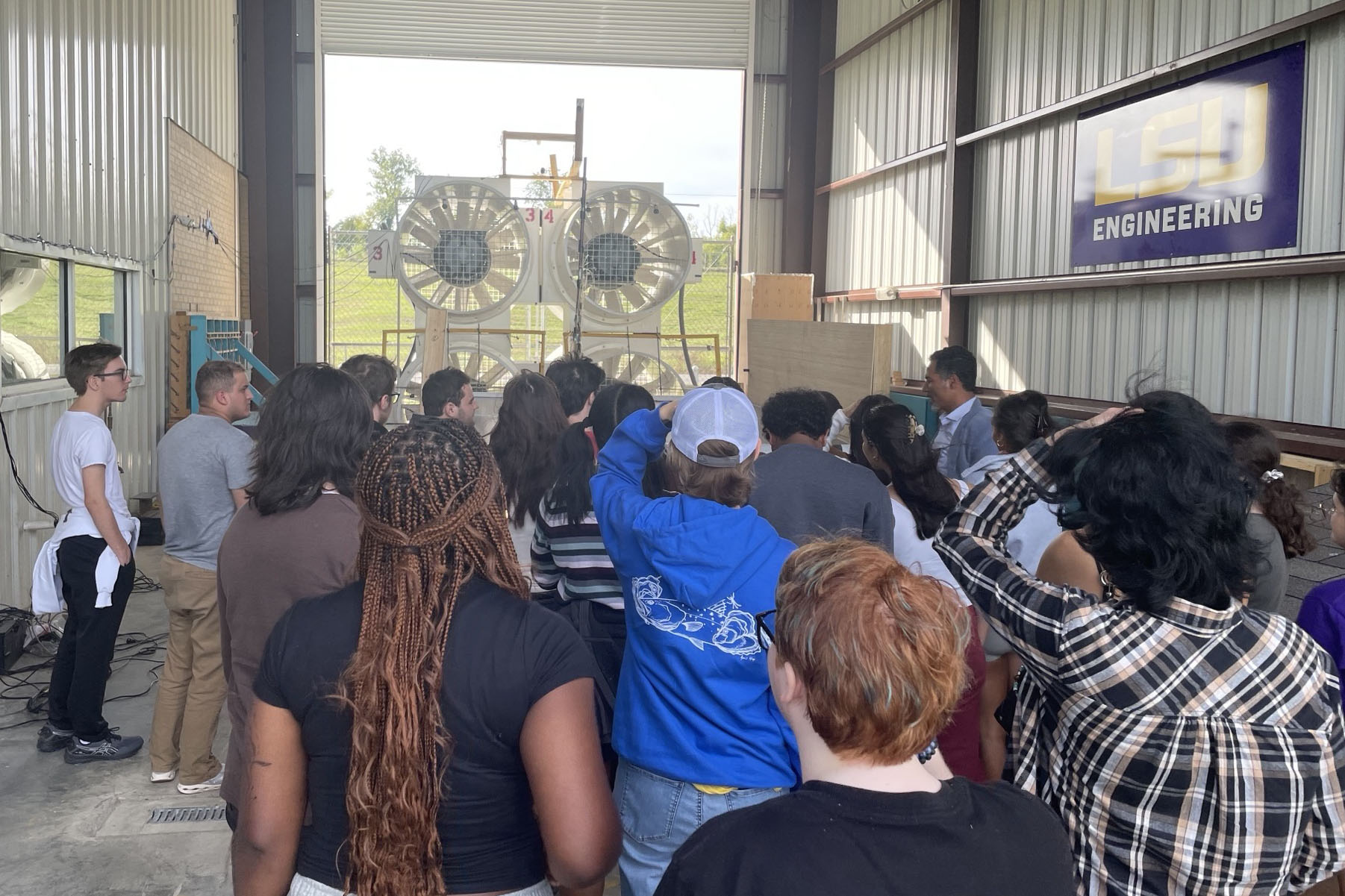
While meteorologists focus on predicting where a storm will go, LSU engineers are studying what happens when it gets here. At the LSU Windstorm Impact, Science & Engineering (WISE) Research lab, researchers test how homes, commercial buildings, power infrastructure, and other structures respond to hurricane-force winds. Their findings help inform building practices and engineering solutions that can reduce storm damage and improve resilience across Louisiana.
A key part of LSU's impact comes through its partnerships with the agencies and organizations responsible for protecting Louisiana during severe weather. Researchers collaborate closely with CPRA, the U.S. Army Corps of Engineers, the National Oceanic and Atmospheric Administration (NOAA), FEMA, the U.S. Coast Guard, and state and local emergency management agencies. These partnerships ensure that LSU research is translated into practical tools and actionable information that support evacuations, floodgate operations, infrastructure protection, and disaster response.