
The Physics Community that Met Online Before Online Meetings Existed
June 18, 2026
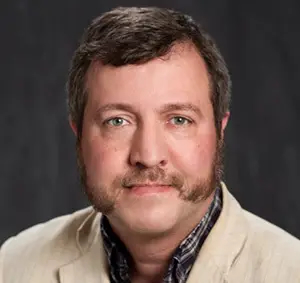
Jorge Pullin, Hearne Chair of Theoretical Physics in the LSU Department of Physics & Astronomy
Long before Zoom transformed scientific collaboration, LSU physicist Jorge Pullin, Hearne Chair of Theoretical Physics in the Department of Physics & Astronomy, was looking for a way to connect researchers scattered across the globe.
Researchers working in loop quantum gravity — a leading approach to reconciling Einstein’s theory of general relativity with quantum mechanics — were spread across continents, but opportunities for regular interactions were limited. In 2006, Pullin recognized that emerging communication technologies could be used to bring the community together through a shared seminar series.
Twenty years later, that experiment has become one of the field’s most enduring institutions. This year, the International Society on Loop Quantum Gravity adopted the International Loop Quantum Gravity Seminar as its official seminar series while also honoring Pullin for creating and stewarding it for two decades.
At the time, virtual meeting technology was still in its infancy. Skype allowed only a limited number of participants, Zoom had not yet been developed, and more advanced systems such as the Access Grid — an early collaborative technology pioneered in part by LSU’s Center for Computation & Technology — required specialized equipment and technical support personnel that many smaller research groups could not afford.
The solution Pullin devised reflected the same practical, hands-on approach he had developed years earlier. Before going to college in the late 1980s, Pullin spent two years attending night school to become a television repair technician, making house calls to fix TVs in family living rooms while customers watched closely — an experience he later described as one of the most challenging jobs he has ever had.
Rather than waiting for better tools, Pullin devised a simpler system. Audio was delivered live through a telephone bridge hosted at LSU, with significant support from Ric Simmons, now Executive Director of Research Education and Technologies/HPC at LSU. Research groups often connected using Polycom or similar speakerphones, while presentation slides were distributed in advance through a website maintained by Pullin. Because reliable live video was still impractical at the time, speakers guided audiences manually through presentations by announcing when to advance to the next slide.
The simple approach worked. Researchers from around the world began joining the seminars, and the series steadily grew into a central forum for the international loop quantum gravity community.
“By becoming an official seminar, the program is now positioned for long-term institutional sustainability rather than relying on the efforts of a single individual,” said Pullin. “What began as a local effort has grown into a global resource for scientific collaboration.”

International Society on Loop Quantum Gravity Recognition
Since launching in June 2006, the seminar has featured more than 350 talks and become the central gathering place for researchers in loop quantum gravity, where major developments and new research results are regularly shared with the international community.
“It is very moving for me to see this seminar, which Jorge Pullin created at LSU in 2006, become the official seminar of the International Society on Loop Quantum Gravity,” said Parampreet Singh, Ball Family Distinguished Professor, Department of Physics & Astronomy. “I was the first speaker in the series when I was a postdoc at Penn State, so this has a personal meaning for me as well. It was also wonderful to see the international loop quantum gravity community come together at the end of April this year to celebrate what Jorge built over two decades and thank him for his pioneering work. What began as a practical way to connect a scattered community across the world has now become one of the central institutions of our field.”
The Society’s recognition extended beyond the seminar itself. Pullin was also honored for what the award citation described as the “visionary and pioneering” creation of the seminar series, which “forged international bonds to keep the loop quantum gravity community united.”
Today, the seminar is hosted on Zoom, with its scientific direction guided by an international committee of researchers from the loop quantum gravity community. Under the new arrangement, that structure will remain in place while administrative responsibility for the series transitions to the International Society on Loop Quantum Gravity, which will also ensure the long-term preservation of the seminar recordings.
Recently, leading figures in the field — Professors Abhay Ashtekar, Carlo Rovelli, and Thomas Thiemann — participated in a special panel commemorating the seminar’s 20th anniversary and celebrating its impact on the international research community. Recordings of the anniversary panel and past seminars are available at ilqgs.org.