
In Memoriam: Jerry Paul Draayer (1942–2026)
September 16, 2026
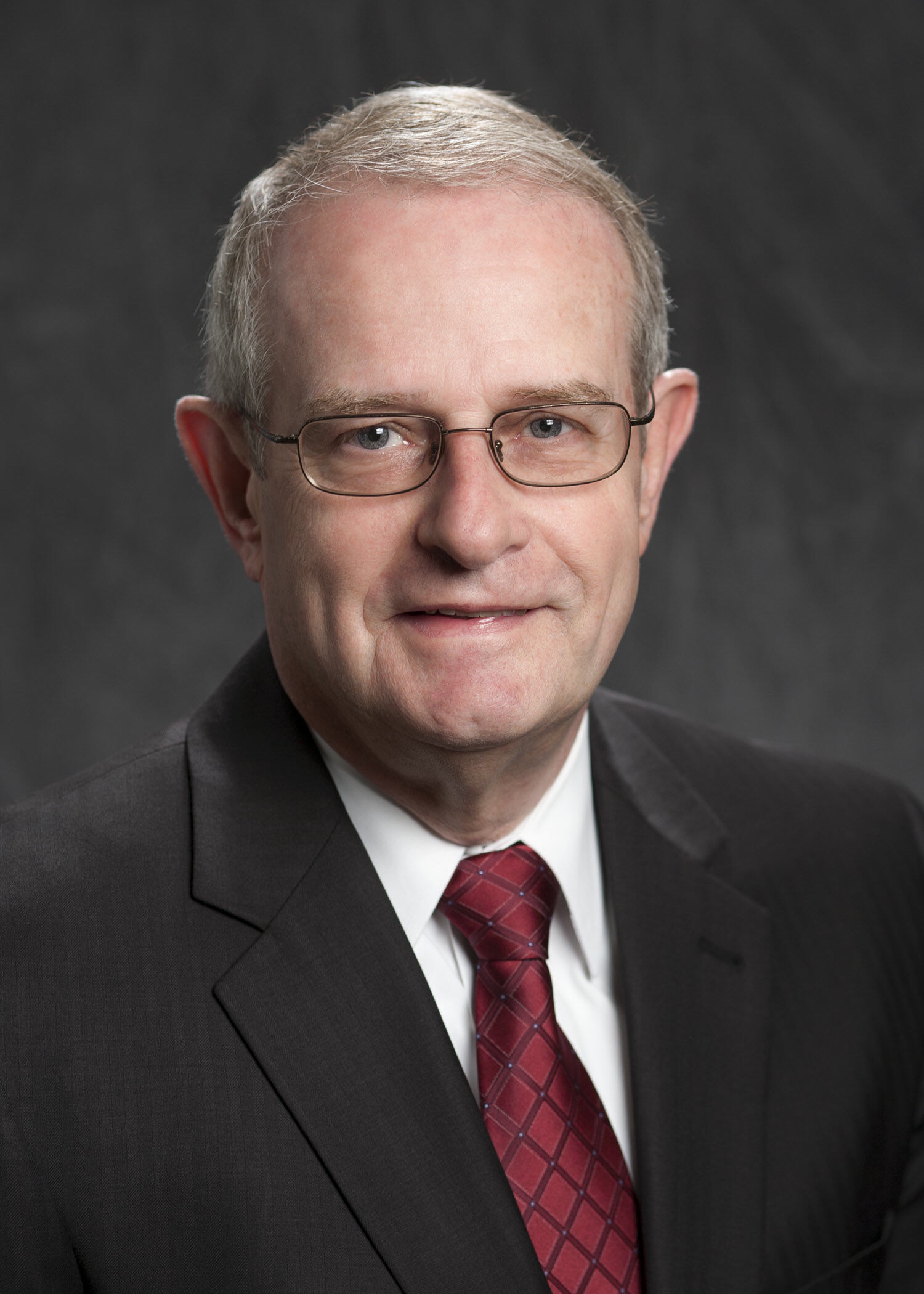
The Department of Physics and Astronomy at Louisiana State University mourns the passing of Jerry Paul Draayer on September 13, 2026. Jerry was the Roy P. Daniels Professor of Physics, LSU Distinguished Research Master, and a towering figure in nuclear theory and computational physics for more than fifty years.
Jerry was born on August 18, 1942, in Hollandale, Minnesota. He earned his B.S. in Physics in 1964 and his Ph.D. in Physics in 1968, both from Iowa State University. His doctoral work launched a lifelong pursuit of understanding the structure of atomic nuclei through symmetry principles.
After completing his Ph.D., Jerry held research appointments at the Niels Bohr Institute in Copenhagen (1968–69) as an NSF Fellow, at the University of Michigan (1969–73) where he was first an NSF Fellow and then a Research Associate and Instructor, and at the University of Rochester (1973–75) as a Research Associate. In 1975, he joined LSU as an Assistant Professor. He was promoted to Associate Professor in 1978 and to Professor in 1983. He also held a joint appointment as Professor of Computer Science from 1988.
Jerry served as Chair of the Department of Physics and Astronomy from 1985 to 1994, across three terms. His chairmanship was consequential for the department. He negotiated with the Hearne family to bring their endowment to the department, establishing the Hearne Institute of Theoretical Physics. He brought the computational group of Priya Vashishta and Rajiv Kalia from Argonne National Laboratory to LSU, which had a lasting impact on the Hearne Institute even after the group later moved to USC. He oversaw the start of the Medical Physics program, with two faculty from Nuclear Science moving into the department as its initial core. He played an important role as CAMD was built, including in the hiring of its first two directors and in adding Stockbauer and Kurtz to the department. He also led the Council of Chairs for the College of Basic Sciences (1987–93) and chaired the Chancellor's Committee on Supercomputing (1985–89). Colleagues who served alongside him remember a leader who was steady, fair, deeply caring for everyone including staff, and always willing to listen. The collegial culture the department enjoys today owes much to his leadership.
In 2002, Jerry was named the Roy P. Daniels Professor of Physics. In 2007, he was recognized as an LSU Distinguished Research Master. He was elected a Fellow of the American Physical Society in 2000 and a Fellow of the American Association for the Advancement of Science in 2016. He was also a Francis G. Slack Fellow of the APS Southeastern Section (2006) and a Corresponding Member of the Mexican National Academy of Science (1998). He held visiting professorships at the Universität Tübingen in Germany (1992–95) and the Université Louis Pasteur in Strasbourg, France (1990–93), and served as Associate Editor of Physical Review C (1991–93).
Jerry built the nuclear theory group at LSU from the ground up. This includes his pioneering work in harnessing group theory as a powerful tool for computing the structure of nuclei, and in exploring how the interplay of deformation with other degrees of freedom, including the underlying relativistic dynamics, give rise to complex nuclear spectra. In addition, it includes pioneering contributions to the understanding of deformation and symmetries of nuclei rooted in the underlying fundamentals. His research was continuously funded by the National Science Foundation from the 1970s onward, and he also led major EPSCoR grants that brought significant resources to LSU and to the state of Louisiana. Over the course of his career, Jerry published more than 550 scientific articles and delivered over 200 invited lectures worldwide. He also facilitated the participation of Chinese and other Asian students in the T.D. Lee program, making recruiting trips to Asia and arranging for colleagues to do the same. He brought Beverly Rodrigues to the department office staff, where she became a beloved mainstay for decades.
Over the decades, Jerry trained many Ph.D. students and postdoctoral researchers who went on to distinguished careers. To mention a few: Jutta Escher (Ph.D., 1997), a Staff Scientist at Lawrence Livermore National Laboratory, was elected a Fellow of the American Physical Society in 2019 for her work on surrogate nuclear reaction methods. Chairul Bahri (Ph.D., 1994), currently an Assistant Professor at Kennesaw State University, whose work focuses on symplectic and pseudo-symplectic nuclear modeling. Gabriela Popa (Ph.D., 2001), a Professor at Ohio University, and Vesselin Gueorguiev (Ph.D., 2002), currently at University of California Merced, who continue work on SU(3)-based approaches to nuclear structure. Tomas Dytrych (Ph.D., 2008), now at the Nuclear Physics Institute of the Czech Academy of Sciences and an adjunct faculty member at LSU, who has co-authored highly cited papers in Physical Review Letters on the role of symplectic symmetry in nuclear structure. Kristina Launey (Ph.D., 2003), an Associate Professor at LSU, who is honored to continue the symmetry-adapted nuclear theory program that Jerry founded. David Kekejian (Ph.D., 2021), who is the Founder and COO of Quantum CodeX. His most recent doctoral student, Phong Dang, was selected as a 2025 Quad Fellow, one of only 37 worldwide, and was elected the International Representative of the APS Forum on Graduate Student Affairs.
His group fostered international collaborations across Europe, Asia, and the Americas, hosting long-term visitors from Bulgaria, China, Romania, Egypt, Mexico, Germany, France, and Lithuania. Among his most prolific collaborators was Professor Feng Pan of Liaoning Normal University and Huzhou Normal University in China, with whom Jerry co-authored 198 papers in academic journals. From 2003 to 2021, he funded international collaborative research there through his research project funds, supporting 10 postdoctoral researchers and facilitating exchange doctoral students between LSU and China. The research program he established continues to thrive today through his students and colleagues.
Jerry's service went well beyond the department. He served as Vice President of the LSU Faculty Senate (1996–98), as Associate Commissioner for Research and Development at the Louisiana Board of Regents (1998–2000), and as Director of the Office of Federal Programs at the Louisiana Board of Regents (1995–98). He served on several committees of the APS, including the Committee on International Affairs and the Forum on International Physics.
Nationally, Jerry played a significant role in the Southeastern Universities Research Association (SURA). He served as President and CEO of SURA from 1999 onward, having previously served as Chair of its Board of Trustees (1998–2000), Chair-elect (1995–97), and Chair of the New Projects Committee (1988–95). He was a member of the SURA Board of Trustees from 1985 to 2000. Under his leadership, SURA played a key role in establishing the electron accelerator at Jefferson Lab. Jerry moved to Washington, D.C. for this role, commuting back to LSU regularly to continue supervising his theory group.
Jerry was married to Lois Van Wyk Draayer for 45 years, and together they raised three daughters, Leah, Sarah, and Martha. Jerry and Lois were known for their warmth and hospitality. For many years, they hosted faculty parties and gatherings at their home, especially welcoming new members of the department. Many colleagues, including those recruited to LSU during Jerry's chairmanship, remember the sense of department family that Jerry and Lois created. Lois passed away unexpectedly in 2009, a loss deeply felt by Jerry and the department. He later married Hortensia Teresita Valdes and embraced her family as his own. He is survived by Hortensia, his three daughters and their families, and his two sisters. Jerry also counted his 25 doctoral students as family and took great pride in their accomplishments.
Jerry was a true scholar of physics. Even as his health declined, he remained very actively involved in research and in mentoring his students. He never stopped. His passion and energy for physics never faded, even to the end.
He will be deeply missed by all of us.