
LSU CSE Professors Awarded $257,000 from Board of Regents for AI System, Quantum Computing
August 04, 2026
Reza Ghaiumy Anaraky—$183,668—Develop AI Career Support System for Older Adults
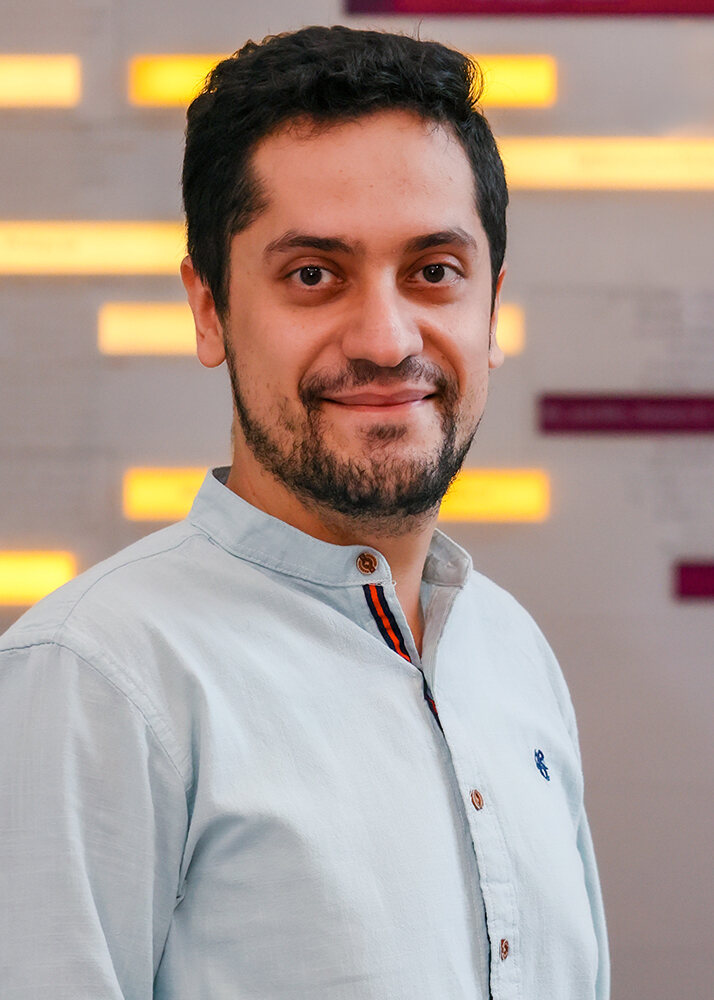
LSU Computer Science Assistant Professor Reza Ghaiumy Anaraky
LSU Computer Science Assistant Professor Reza Ghaiumy Anaraky has been awarded a $183,668 grant from the Louisiana Board of Regents to develop an innovative artificial intelligence-powered career support system designed to help older adults re-enter the workforce.
The one-year project, "AI-Powered Multi-Interface Career Support System for Older Adults in Louisiana," received full funding through the Board of Regents after reviewers recommended the proposal for its strong scientific merit, societal impact, and potential to attract future federal research support.
As more adults choose or need to remain in the workforce later in life, many face barriers when navigating modern job searches and digital employment tools. Anaraky's research aims to address these challenges by creating an inclusive AI-driven career platform specifically designed for adults ages 65 and older.
"Our goal is to make career support more accessible and empowering for older adults," Anaraky said. "Many existing employment technologies are not designed with their needs in mind. By combining artificial intelligence with human-centered design principles, we hope to create tools that help older adults confidently prepare for and pursue meaningful employment opportunities."
The platform will support multiple ways of interacting with the system—including a smartphone application, a web interface, and text messaging—to ensure accessibility for users with varying levels of digital experience.
Beyond providing practical career assistance, the system will incorporate principles from self-determination theory, a well-established psychological framework that emphasizes autonomy, competence, and relatedness as essential components of motivation and well-being. By integrating these concepts into the AI platform, the research team aims to promote resilience and sustained engagement throughout the job search process.
During the project, researchers will design, develop, and evaluate a working prototype while collecting preliminary data to support future large-scale research efforts. The project is expected to advance the fields of human-computer interaction, artificial intelligence, and gerontechnology by establishing a new socio-technical framework for AI-assisted career support tailored to older adults.
Early findings from Anaraky’s team show that, for older adults, meaningful work is about much more than earning income.
“It can provide purpose, independence, connection, and an opportunity to continue contributing,” Anaraky said. “The team’s goal is to design an AI system that helps older adults find work that fits their lives while keeping them, and not the technology, in control.”
The research also positions LSU to pursue future funding opportunities from federal agencies, including the National Institute on Aging and the National Science Foundation through its Human-Centered Computing and Science of Learning and Augmented Intelligence programs.
Anaraky, whose research focuses on human-computer interaction, artificial intelligence, and technologies that improve quality of life across the lifespan, brings extensive experience in designing interactive systems for diverse populations. The project will also leverage partnerships with local community organizations to recruit participants and ensure the technology reflects the needs and experiences of older adults in Louisiana.
As part of the project, the research team will collaborate with technology transfer organizations, including Nexus Louisiana, to explore commercialization opportunities that could extend the impact of the technology beyond the research setting.
Tasnuva Farheen—$73,926—Advance Security for Quantum Computing
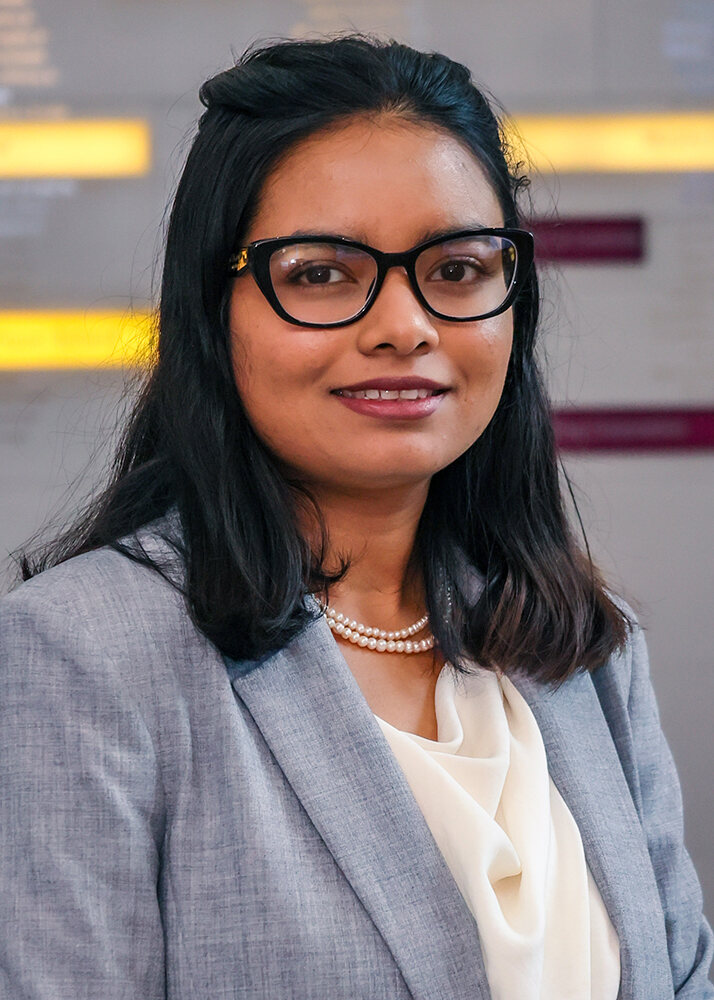
LSU Computer Science Assistant Professor Tasnuva Farheen
LSU Computer Science Assistant Professor Tasnuva Farheen has been awarded a $73,926 grant from the Louisiana Board of Regents to conduct research aimed at strengthening the security and reliability of next-generation quantum computing systems.
Farheen's one-year project, "Pulse-to-Circuit Security: Characterizing and Mitigating Crosstalk Attacks in Multi-Tenant Superconducting Quantum Hardware," was praised by reviewers for the proposal's scientific rigor, innovative approach, and strong potential to position LSU for future federal research funding.
As quantum computing continues to evolve, cloud-based quantum platforms are expected to allow multiple users to share the same hardware simultaneously. While this model expands access to powerful computing resources, it also introduces new cybersecurity challenges. Farheen's research investigates how malicious users could exploit interactions between neighboring quantum bits—or qubits—to intentionally disrupt another user's computations.
"Quantum computing has enormous potential to transform fields ranging from medicine and materials science to national security," Farheen said. "As these systems become more widely shared through cloud services, it is essential that we understand and address emerging security risks before they become real-world vulnerabilities."
The project will focus on superconducting quantum hardware, one of the leading technologies used to build quantum computers. Researchers will study how carefully crafted microwave pulses can interfere with nearby qubits, creating predictable computational errors known as crosstalk attacks. By developing a physics-based understanding of these interactions, the team will design techniques to detect and mitigate attacks in real time.
The research combines expertise in quantum computing, computer security, and hardware modeling to develop new methods for identifying suspicious interference and automatically compensating for it before it affects quantum computations.
Building on promising preliminary research, the project will create models that connect physical interference within quantum hardware to logical errors observed by users. Those models will support the development of adaptive security mechanisms that improve the integrity and reliability of multi-tenant quantum computing platforms.
The work addresses a growing national priority as government agencies and industry invest heavily in secure quantum technologies. The project is expected to strengthen LSU's competitiveness for future funding opportunities from organizations including the National Science Foundation, the U.S. Department of Energy, the National Institute of Standards and Technology, and the Defense Advanced Research Projects Agency. It also aligns with research priorities of major technology companies advancing quantum computing, including Amazon, Google, NVIDIA, and Cisco.
The award highlights LSU's expanding leadership in quantum computing and cybersecurity research while supporting innovations that will help ensure the next generation of computing technologies is both powerful and secure.
By advancing fundamental understanding of quantum hardware vulnerabilities and developing practical defense strategies, Farheen's research will contribute to building more trustworthy quantum computing systems for scientific discovery, industry, and national security.
Like us on Facebook or follow us on LinkedIn, Instagram, Bluesky, and X.