
LSU CSE Professor Kaiser Awarded $500,000 NSF Grant to Advance AI-Enabled Software
August 03, 2026
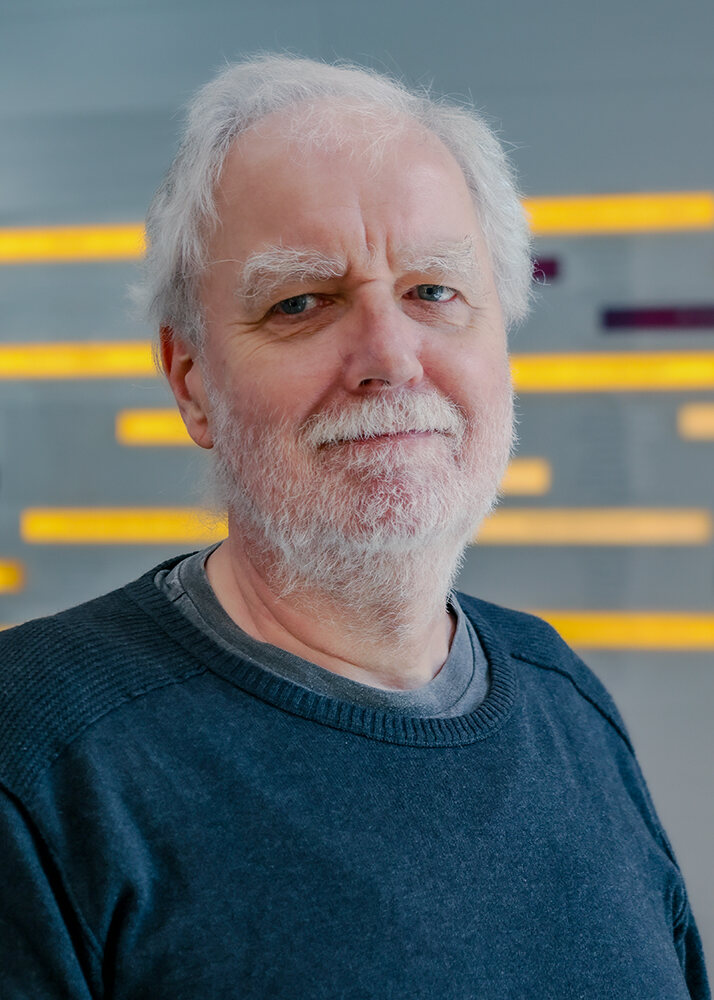
LSU Computer Science Professor Hartmut Kaiser
LSU Computer Science Professor Hartmut Kaiser received a $499,896 grant from the National Science Foundation (NSF) to help transform how future supercomputers are programmed, making them more efficient, adaptable, and accessible for scientific discovery.
The collaborative research project titled "CSR: HeliX: Co-Designing Integrated AI-Enabled Compiler-Runtime Systems for Future HPC Architectures," brings together Kaiser (principal investigator) and University of Washington Computer Science Affiliate Professor Andrew Lumsdaine to address one of the most significant challenges facing high-performance computing (HPC)—enabling increasingly complex supercomputing systems to work together seamlessly.
Modern supercomputers combine a wide range of processing technologies, including traditional central processing units (CPUs), graphics processing units (GPUs), and specialized accelerators, but the software used to program these systems remains fragmented across multiple programming models and runtime systems. As a result, scientists and engineers must manually coordinate computing resources, memory management, and data movement, creating unnecessary complexity and limiting performance.
The HeliX project seeks to eliminate these barriers by developing an integrated software framework that intelligently coordinates scheduling, memory placement, and communication across the entire hardware and software stack. Rather than requiring researchers to rewrite existing applications for each new computing architecture, the system will allow existing software components to connect through a unified coordination layer built on HPX, an established open-source runtime system for high-performance computing.
"Future scientific breakthroughs will depend not only on faster hardware, but on software that can fully harness increasingly heterogeneous computing systems," Kaiser said. "Our goal is to fundamentally rethink how compilers, runtime systems, and artificial intelligence work together so applications can automatically adapt to changing hardware while delivering portable, high performance."
The research will explore how programming models, compilers, runtime systems, and heterogeneous computing backends can exchange information continuously to make coordinated decisions about workload scheduling, memory allocation, communication, and code optimization. By incorporating machine learning into this process, the HeliX platform will enable systems to dynamically select optimized code variants and adapt execution strategies when traditional heuristics no longer perform effectively.
All software developed through the project will be released under a permissive open-source license, with contributions made to both the HPX runtime system and the LLVM compiler infrastructure. The research team will also publish migration guides, tutorials, reference implementations, and performance analysis tools to help scientists and engineers transition existing applications to more adaptive execution environments.
Beyond advancing computing technology, the project includes a strong educational and workforce development component. Researchers will develop classroom modules and tutorials focused on compiler-runtime co-design and data-movement-aware execution while providing training opportunities for undergraduate students, graduate students, and postdoctoral researchers. The project also emphasizes inclusive mentoring, outreach, and broadening participation in high-performance computing research.
“Hartmut Kaiser is one of the true pioneers of modern high-performance computing,” LSU Division of Computer Science and Engineering Chair Ibrahim Baggili said. “For nearly two decades, he has challenged the fragmented way supercomputers are programmed and has helped build HPX into an internationally recognized platform for scalable, asynchronous computing. HeliX represents the next bold step in that vision.
By unifying compilers, runtimes, artificial intelligence, and increasingly complex hardware, this project could fundamentally change how scientists build and optimize applications for the world’s most powerful computing systems. This grant is a recognition not only of an outstanding idea, but of Hartmut’s sustained leadership in defining the future of computing.”
As the lead institution in an NSF EPSCoR state, LSU will play a central role in expanding national research capacity while helping prepare the next generation of computational scientists and engineers. The HeliX team will also engage with the broader high-performance computing community through organizations such as the High-Performance Software Foundation to promote sustainable, interoperable software standards and accelerate adoption of the project's technologies.
The NSF-funded research positions LSU at the forefront of efforts to develop the intelligent software infrastructure that will power the nation's next generation of supercomputers and enable advances across science, engineering, artificial intelligence, energy, and national security.