
Three LSU Computer Science Faculty Members Receive NSF Awards Totaling More Than $1.3 Million
July 09, 2026
Three faculty members in the LSU Division of Computer Science and Engineering have received National Science Foundation (NSF) awards totaling more than $1.3 million to advance research in quantum computing, cybersecurity, and artificial intelligence, further strengthening LSU Engineering's position as a national leader in emerging technologies.
Assistant professors Umar Farooq, Phani Vadrevu, and Tasnuva Farheen will lead projects that address some of the most pressing challenges facing the nation's digital infrastructure, from protecting computer systems against future quantum cyberattacks to disrupting online scams and building more resilient quantum communication networks.
"These awards demonstrate the exceptional talent we've recruited to LSU and the growing national recognition of our faculty's research," said Ibrahim Baggili, chair of LSU's Division of Computer Science and Engineering. "Collectively, these projects address critical challenges in cybersecurity and quantum technologies while creating new opportunities for student training and innovation."
Preparing Computer Systems for the Quantum Era
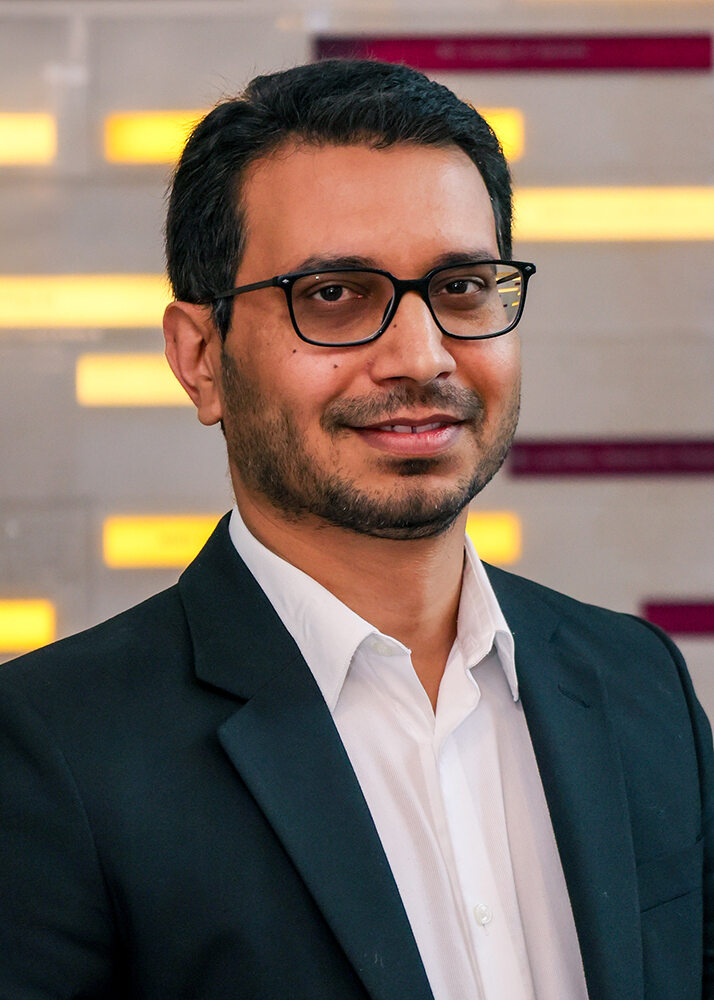 Farooq received a five-year, $506,020 NSF CAREER Award, one of the nation's most prestigious
honors for early-career faculty, to develop tools that help organizations prepare
for the arrival of quantum computers.
Farooq received a five-year, $506,020 NSF CAREER Award, one of the nation's most prestigious
honors for early-career faculty, to develop tools that help organizations prepare
for the arrival of quantum computers.
Quantum computers are expected to break many of today's cryptographic systems, threatening the security of banks, hospitals, power grids, and other critical infrastructure. Upgrading federal computer systems alone is expected to cost billions of dollars before a 2035 deadline.
Farooq's project will develop three integrated tools: a Quantum-Readiness Index to identify cryptographic risks hidden within software, a Cryptographic-Dependence Graph to map how vulnerable code affects surrounding systems, and an AI-driven migration pipeline to automate the transition to quantum-resistant cryptography while minimizing disruption.
The CAREER Award also supports new curriculum and student training in post-quantum software engineering, an emerging workforce need.
Farooq joined LSU in 2023 after earning his doctorate from the University of California, Riverside, and working at ByteDance. This marks his second NSF award as principal investigator in two years.
Combating the Rise of Social Engineering Scams
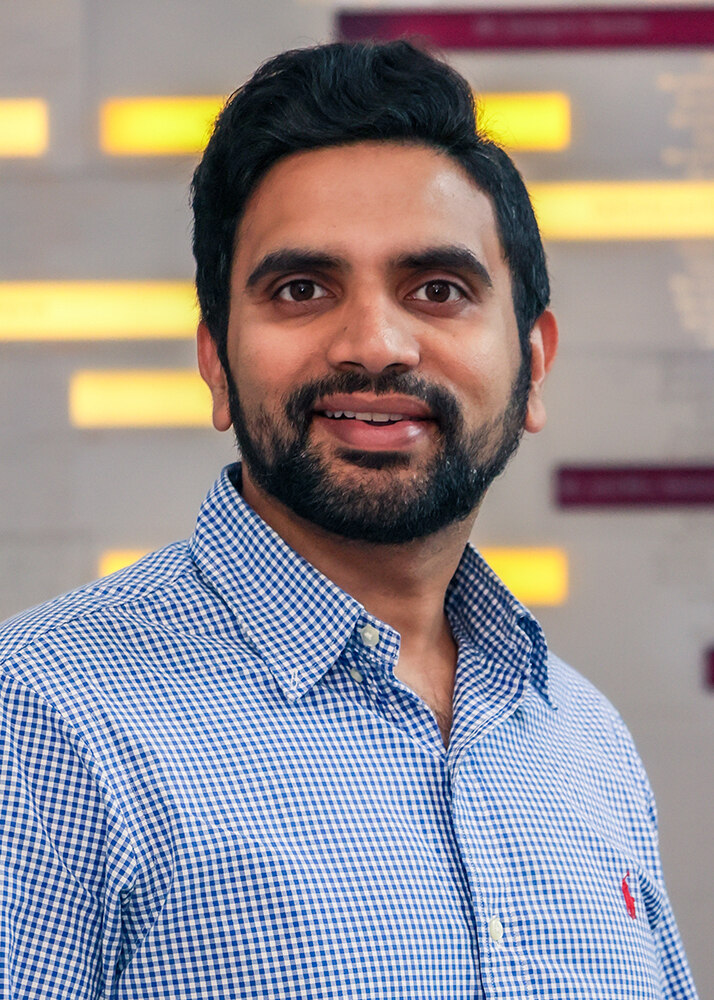 Vadrevu received a $630,000 NSF CAREER Award to develop the first systematic defense
against interactive social engineering attacks, in which scammers manipulate victims
through phone calls, text messages, video chats, and online conversations to steal
money and personal information.
Vadrevu received a $630,000 NSF CAREER Award to develop the first systematic defense
against interactive social engineering attacks, in which scammers manipulate victims
through phone calls, text messages, video chats, and online conversations to steal
money and personal information.
His research will leverage a worldwide community of "scam-baiters"—volunteers who deliberately engage scammers—to better understand how these criminals operate. Using ethically collected scam conversations, Vadrevu's team will train artificial intelligence systems to detect fraud by analyzing conversation transcripts, victim computer behavior, and scammers' voice characteristics.
The project also includes a public education initiative that will develop AI-powered scam simulations for workshops designed to help Louisiana residents recognize and avoid increasingly sophisticated fraud attempts. Researchers will partner with law enforcement agencies in the United States and abroad to support these efforts.
Vadrevu joined LSU in 2023 after earning his Ph.D. from the University of Georgia and serving on the faculty at the University of New Orleans. He also holds a joint appointment in LSU's Center for Computation and Technology.
Building More Reliable Quantum Communications
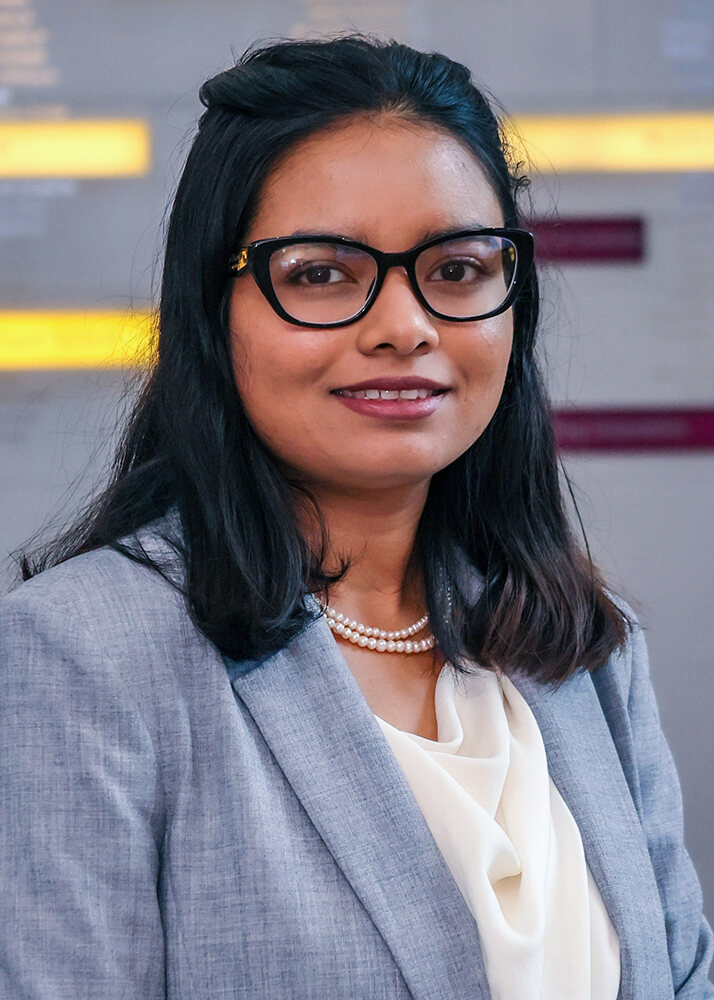 Farheen's $194,596 NSF-funded project addresses one of the central obstacles to building practical quantum communication
networks: protecting fragile quantum information from environmental noise without
sacrificing valuable quantum resources.
Farheen's $194,596 NSF-funded project addresses one of the central obstacles to building practical quantum communication
networks: protecting fragile quantum information from environmental noise without
sacrificing valuable quantum resources.
Her research focuses on improving superdense coding, a quantum communication technique that allows more information to be transmitted using fewer communication resources. Existing methods often require discarding quantum connections to improve reliability, limiting the scalability of future quantum networks.
Farheen's team will develop adaptive techniques that combine quantum error correction with a new pair-preserving purification approach that strengthens communication while preserving shared quantum resources. The project will also produce open-source simulation software and educational materials to expand access to quantum networking research and train future scientists and engineers.
The research has potential applications in secure satellite communications, distributed quantum computing, critical infrastructure protection, and next-generation cybersecurity.
"Dr. Tasnuva Farheen's project is bold, timely, and deeply important to the future of secure communication," Baggili said. "Her work tackles a central challenge in quantum networking, making communication more reliable in noisy real-world environments while also producing open-source tools that will support research, education, and the next generation of quantum technology leaders."
Together, the three NSF awards underscore LSU Engineering's growing national prominence in cybersecurity, artificial intelligence, and quantum information science while providing students with opportunities to participate in cutting-edge research that addresses critical national priorities.