
LSU Computer Science Professor Receives $194,596 NSF Award to Advance Reliable Quantum Communication
July 08, 2026
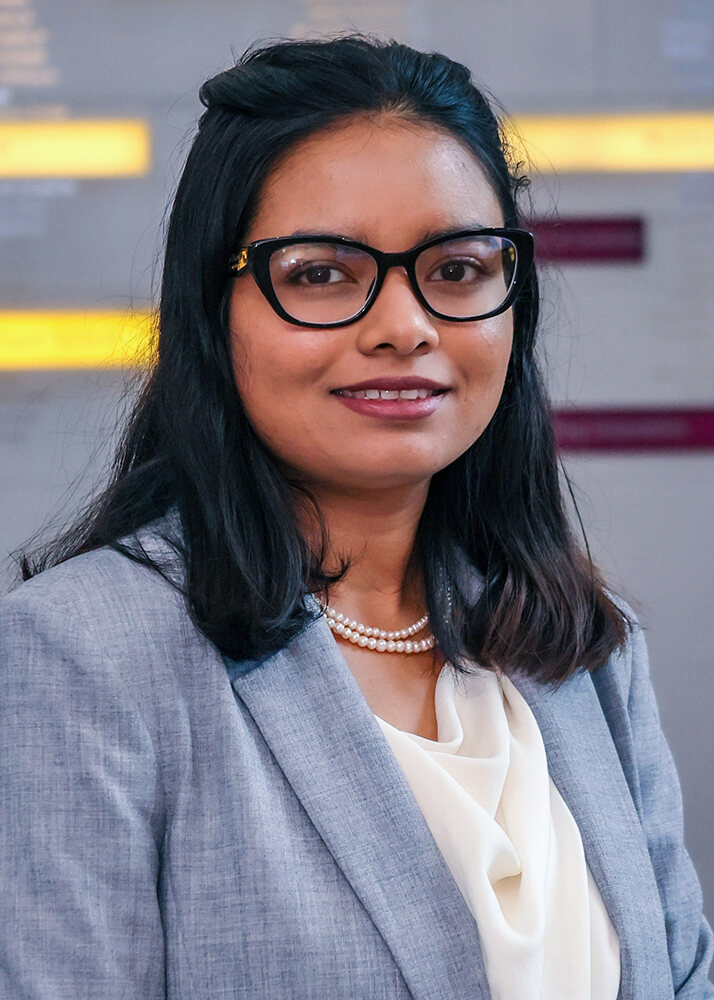 Quantum communication is expected to play a foundational role in the future quantum
internet, enabling information to be transmitted with greater efficiency and security
than today's communication systems. One promising technique, known as superdense coding,
allows more classical information to be transmitted using fewer communications by
leveraging shared quantum connections between users.
Quantum communication is expected to play a foundational role in the future quantum
internet, enabling information to be transmitted with greater efficiency and security
than today's communication systems. One promising technique, known as superdense coding,
allows more classical information to be transmitted using fewer communications by
leveraging shared quantum connections between users.
However, quantum systems are extremely sensitive to environmental noise, which can degrade these shared quantum connections and reduce the reliability and capacity of communication. Existing approaches to managing this noise often require discarding valuable quantum resources, limiting the scalability of future quantum networks.
Farheen's NSF-funded project will investigate a new approach that strengthens quantum communication while preserving these critical resources. The research has the potential to support national priorities in secure communications, advanced computing, and emerging quantum technologies, with future applications in secure satellite communications, distributed quantum computing, critical infrastructure protection, and next-generation cybersecurity.
"This project addresses one of the fundamental challenges in building practical quantum communication systems," Farheen said. "By developing adaptive techniques that preserve valuable quantum resources while improving communication reliability, we hope to move closer to scalable quantum networks that can support the technologies of the future."
The project will develop an adaptive protocol to improve superdense coding in noisy quantum networks by combining quantum error correction with a novel pair-preserving adaptive purification approach. Unlike conventional purification methods that discard quantum pairs during the process of improving communication quality, the new technique seeks to enhance the quality of shared quantum states while preserving linked quantum pairs.
The research will evaluate whether advanced measures of quantum correlation—including quantum discord and entanglement of formation—can more accurately characterize communication channel noise than traditional fidelity-based methods. The project will also develop efficient techniques for estimating these correlations, create tunable purification circuits that adapt in real time, integrate the approach with a five-qubit quantum error correction code, and measure improvements in throughput, latency, communication fidelity, and bit accuracy under realistic noise conditions.
In addition, the project will design lightweight adaptive controllers that automatically adjust purification strategies based on measured quantum correlations. The expected outcome is a comprehensive framework for noise-resilient superdense coding that can improve the performance of future quantum networks.
Beyond the research itself, the project will produce open-source simulation software
and educational materials to promote reproducible research, broaden access to quantum
networking tools, and enhance student training in quantum information science.
“Dr. Tasnuva Farheen’s project is bold, timely, and deeply important to the future
of secure communication,” LSU Division of Computer Science and Engineering Chair Ibrahim
Baggili said. “Her work tackles a central challenge in quantum networking, making
communication more reliable in noisy real-world environments, while also producing
open-source tools that will support research, education, and the next generation of
quantum technology leaders.”
The NSF award underscores LSU's growing leadership in quantum computing and quantum information research while preparing the next generation of scientists and engineers to contribute to one of the nation's fastest-growing technology fields.