
LSU Researchers Advance Robotic Inspection Technology for Industrial Equipment
June 05, 2026
 Researchers affiliated with LSU’s Center for Innovations in Structural Integrity Assurance
(CISIA) are advancing a new robotic inspection technology designed to help industries
inspect difficult-to-reach areas inside industrial equipment without costly disassembly.
Researchers affiliated with LSU’s Center for Innovations in Structural Integrity Assurance
(CISIA) are advancing a new robotic inspection technology designed to help industries
inspect difficult-to-reach areas inside industrial equipment without costly disassembly.
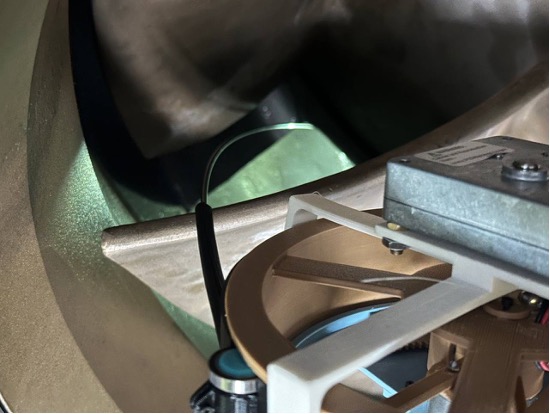
Originally inspired by robotic systems developed for medical procedures, the technology has evolved into a portable inspection tool capable of navigating confined spaces inside industrial machinery, piping and other complex infrastructure commonly found in chemical and petrochemical facilities.
The small-diameter robotic device that is roughly needle-sized allows operators to visually inspect areas that previously required equipment shutdowns or complete disassembly to access.
“This technology has the potential to significantly reduce downtime and inspection costs for industry,” said Hunter Gilbert, LSU Mechanical Engineering Associate Professor and researcher involved in the project. “If operators can verify equipment condition without taking machinery apart, that can translate into substantial savings in both time and resources.”
While the original robotic concepts were motivated by medical applications, LSU researchers adapted the system to meet the demands of industrial environments. Unlike surgical robots that travel only short distances inside the human body, industrial inspections often require navigating longer pathways inside large-scale equipment while remaining portable enough for field use.
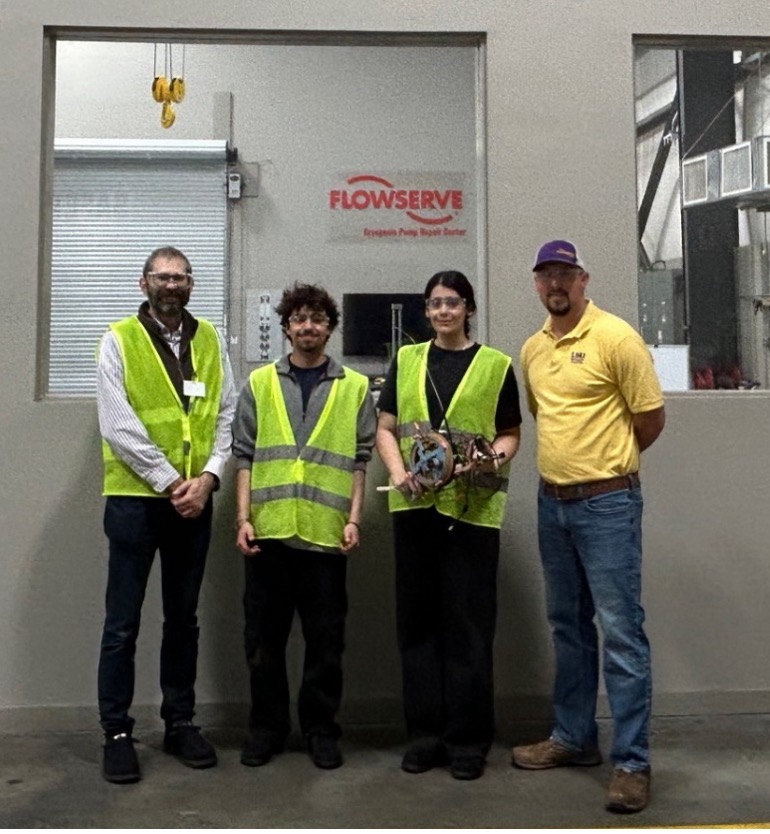
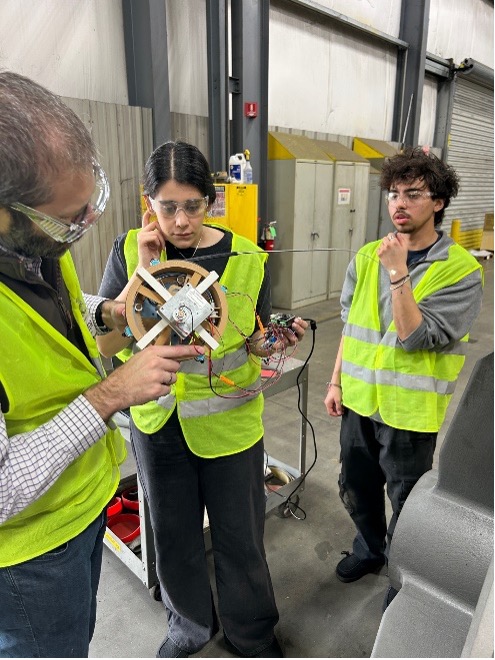
Over the past several years, the research team has transitioned the technology from laboratory development into field testing on real industrial equipment in collaboration with industry partners. Field trials were conducted successfully at a Flowserve Regional Pump Repair Facility located in Baton Rouge. The tests were conducted successfully on several different types of Centrifugal Pumps to ensure the repeatability of the results.
“The capability of this tool was impressive. It would give us a level of precision maneuverability in the equipment that is currently not available in a shop environment. This could be a major assistance for non-intrusive inspections for troubleshooting, performance verification, and improving the overall repair experience.”
Robert Barrilleaux, Flowserve Regional Business Development Manager
“The capability of this tool was impressive,” said Robert Barrilleaux, Flowserve Regional Business Development Manager. “It would give us a level of precision maneuverability in the equipment that is currently not available in a shop environment. This could be a major assistance for non-intrusive inspections for troubleshooting, performance verification, and improving the overall repair experience.”
“This is an exciting example of how university research can evolve into practical tools for industry,” said Charles Mart, industry liaison for CISIA and retired ExxonMobil executive. “There is strong potential for this technology not only in the energy and petrochemical sectors, but also in other industries where inspections in hard-to-reach spaces are critical.”
Researchers say the technology could eventually expand beyond inspection capabilities to include advanced sensing and even targeted maintenance or repair applications inside equipment.
The LSU team is also working with the university’s technology commercialization office to explore pathways for bringing the technology into broader commercial use.
CISIA is a research center focused on developing innovative technologies and solutions to improve structural integrity, inspection methods and reliability across industrial systems.
Like us on Facebook or follow us on LinkedIn, Instagram, Bluesky, and X.