
LSU Biological Engineering Students Advance Breast Cancer Research
June 03, 2026
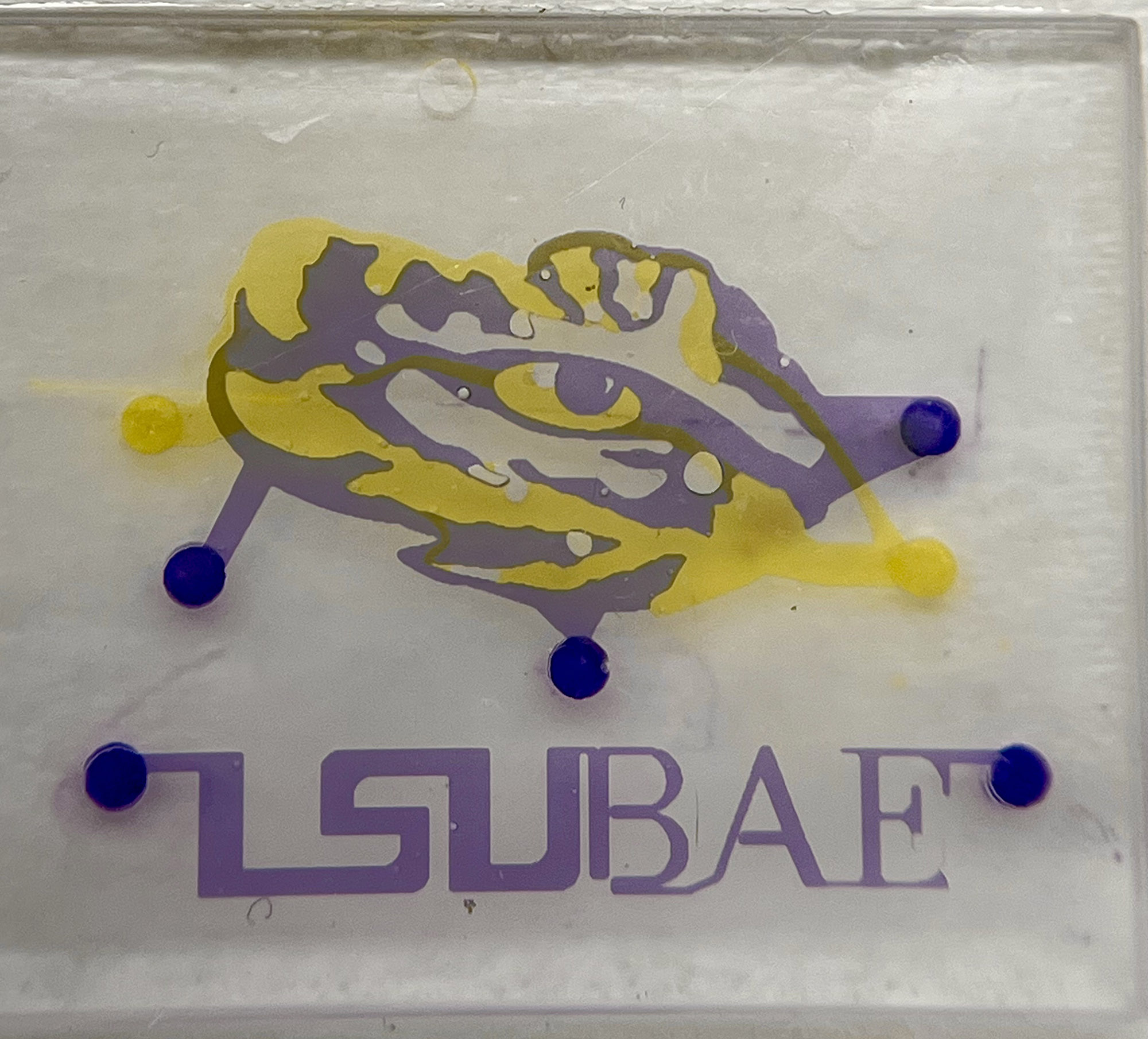 A team of five LSU Biological Engineering seniors is developing a cutting-edge microfluidic
device designed to improve how researchers study breast cancer cells and test potential
treatments. The research combines engineering, biology, and medical research into
what is called an Impedance Monitor Microphysiological Platform, or IM Chip, for triple-negative
breast cancer.
A team of five LSU Biological Engineering seniors is developing a cutting-edge microfluidic
device designed to improve how researchers study breast cancer cells and test potential
treatments. The research combines engineering, biology, and medical research into
what is called an Impedance Monitor Microphysiological Platform, or IM Chip, for triple-negative
breast cancer.
The BE senior team is comprised of James Balart, Brennan Comeaux, Dylan Rousselle and Gerard Lorio, all of Baton Rouge, and Luke Lissard of New Iberia, La.
“The overarching idea of this research is to design a sensing model for detecting the impact of drugs on triple negative breast cancer cells,” said LSU BE senior Gerard Lorio. “This is a model where you can tune the viscosity to match a patient’s breast tissue’s mechanical properties and see how different drugs impact those cells.”
Traditional cancer research often requires multiple pieces of laboratory equipment, large incubators and two-dimensional cell cultures grown on flat plastic dishes. The LSU BE students are working to miniaturize that process while creating a more realistic environment for studying how cancer behaves inside the human body.
“We’re trying to shrink an entire laboratory bench into a small microfluidic device,” said LSU BE Professor Todd Monroe who is working closely with the senior group. “The goal is to create a better system for studying cancer cells in conditions that more closely mimic what happens in the body.”
Instead of growing cells on flat surfaces, the students developed a three-dimensional hydrogel system capable of supporting living cancer cells in a more physiologically accurate environment. The team also designed fluidic systems that continuously deliver nutrients to the cells and maintain healthy growth conditions within the device.
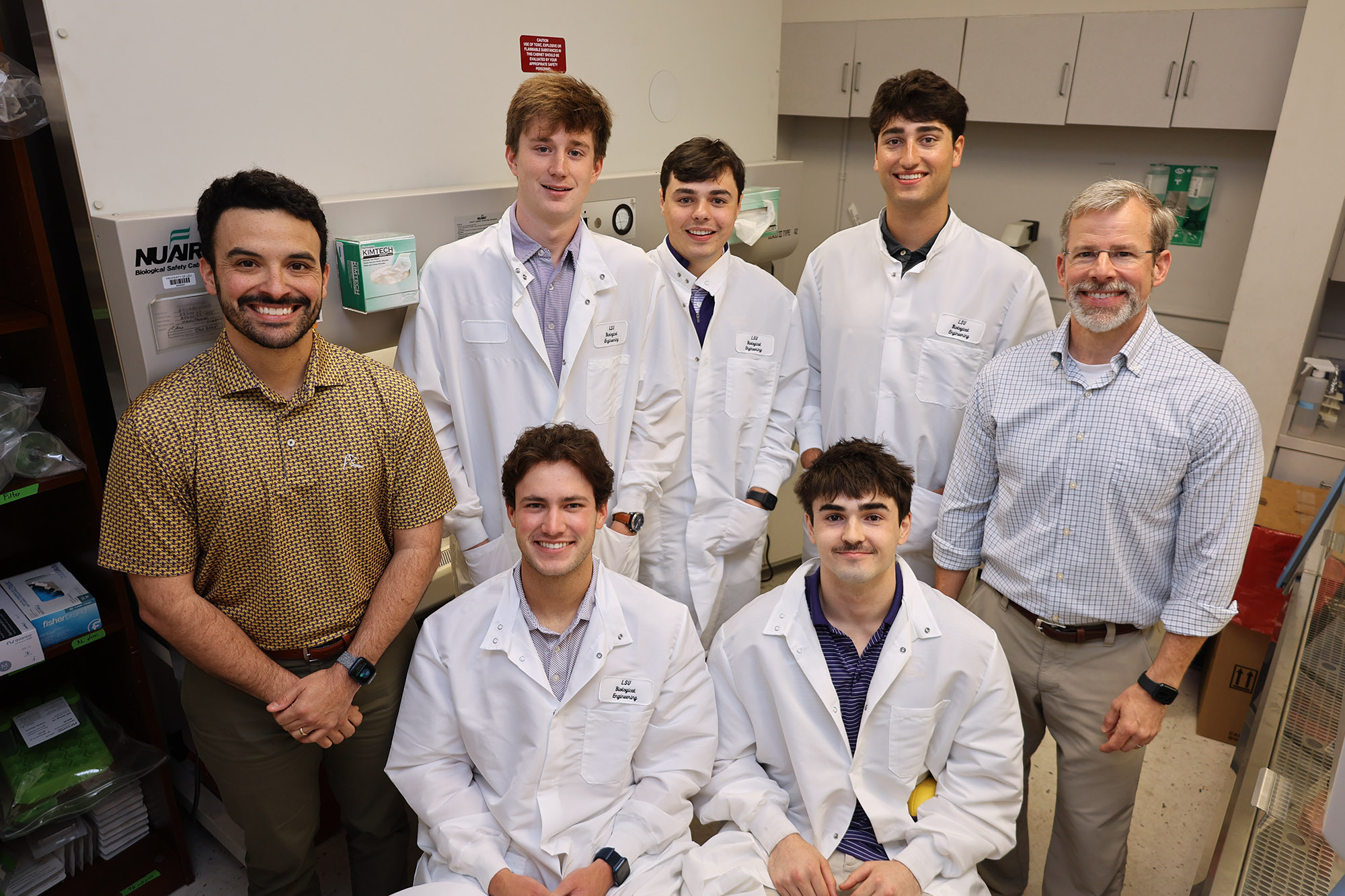
From L to R: Jorge Belgodere, Luke Lissard, Dylan Rousselle, Brennan Comeaux, Gerard Lorio, James Balart, Todd Monroe
One of the project’s most innovative features is its ability to monitor cancer cell behavior electrically and in real time.
Current laboratory testing methods often require researchers to stop experiments and destroy cell samples to analyze results. The LSU team’s approach allows researchers to observe whether cells are growing, surviving, or responding to chemotherapy without interrupting the experiment.
“The exciting part is the ability to measure cell responses continuously and noninvasively,” Monroe said. “That gives us real-time insight into how cells react to treatments.”
The device also allows researchers to compare traditional laboratory-grown cancer cell lines with patient-derived tumor cells obtained through a collaboration with Tulane University.
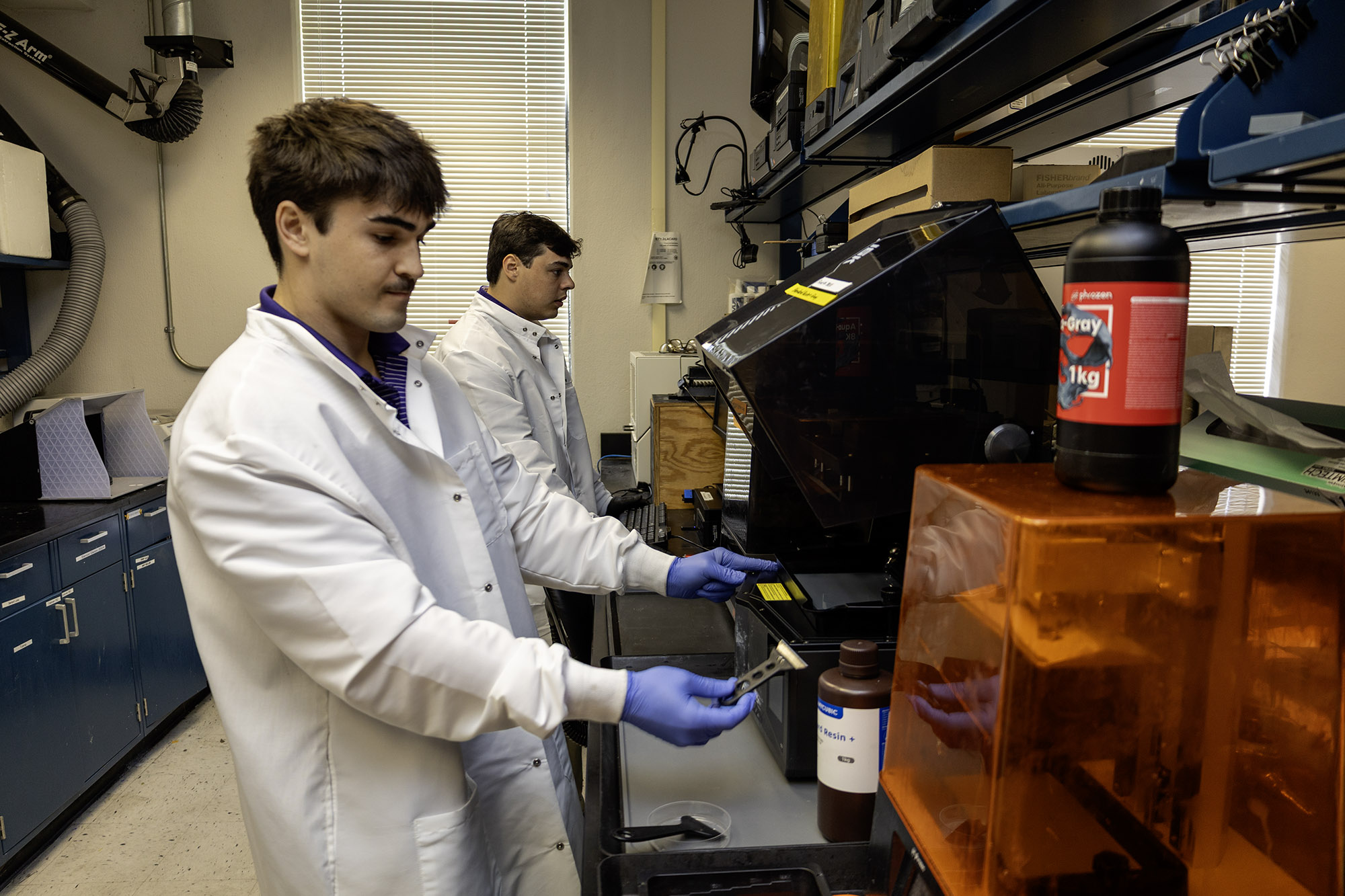
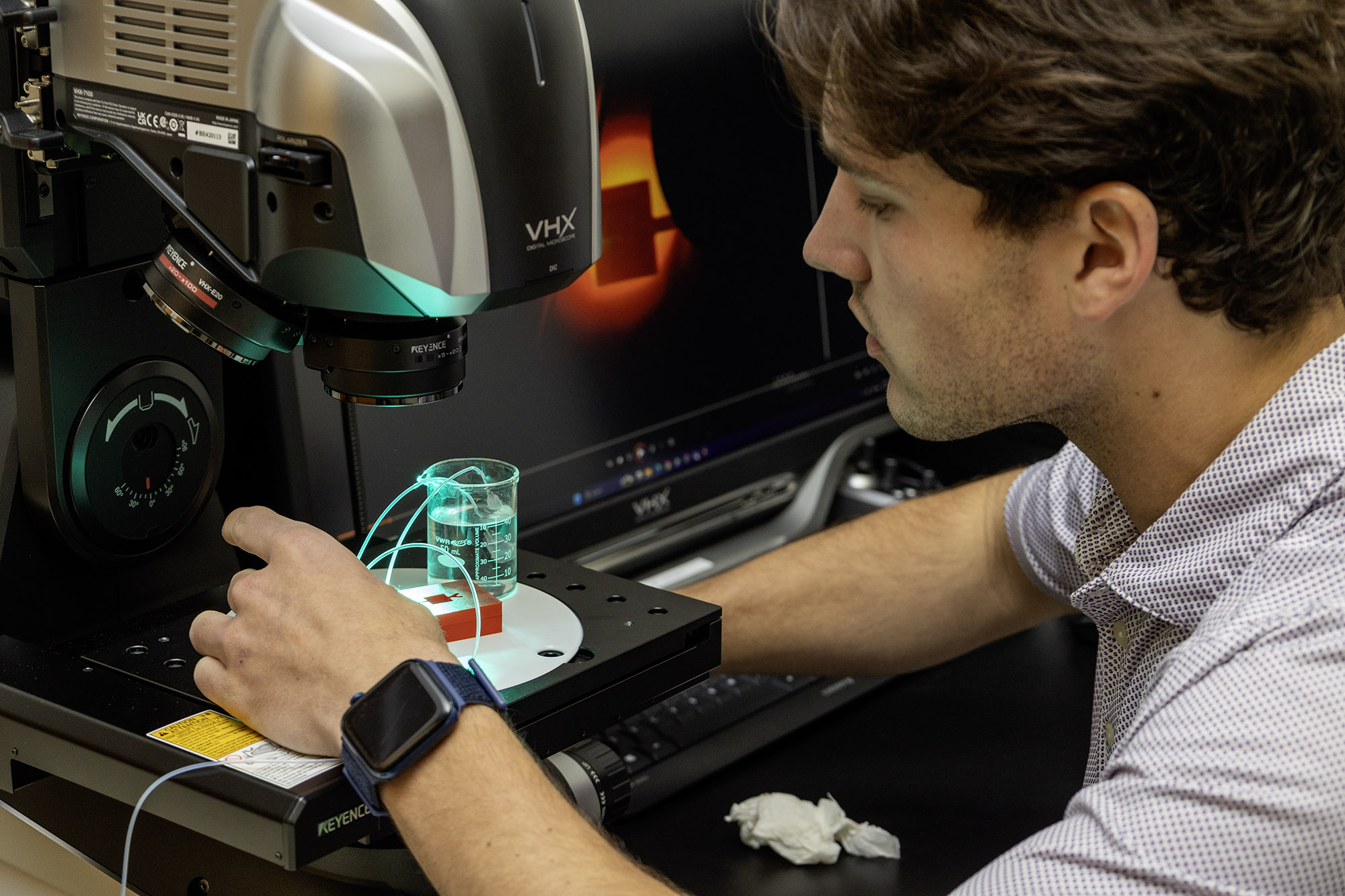
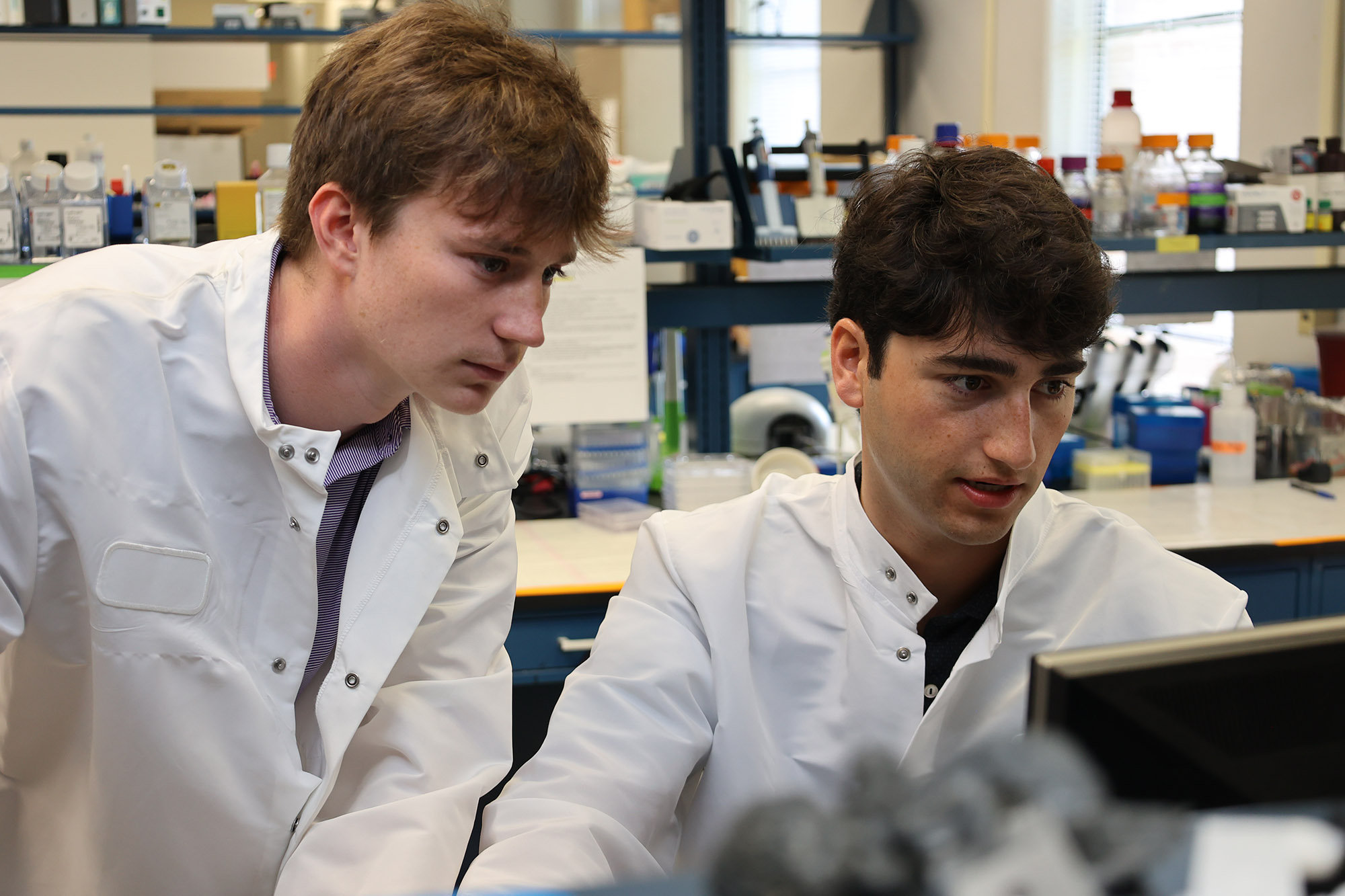
“The connection to Tulane allows us to have access to not only the patient-derived cells, but actual tissue that we can then process in a way that we can use,” said LSU BE graduate Jorge Belgodere who is now part of the research faculty at Tulane University School of Medicine and assisting LSU BE students with their research.
“What LSU brings is the ability to fundamentally use them in a sense where we can bio-print, which is 3D printing but using biologically friendly materials to create what we call scaffolds or hydrogels that have been imparted with the ECM we received from the patient.”
Belgodere says this could help create more regionally relevant cancer models, particularly for aggressive cancers such as triple-negative breast cancer, which disproportionately affects women in the Deep South.
“The exciting part is the ability to measure cell responses continuously and noninvasively,” Monroe said. “That gives us real-time insight into how cells react to treatments.”
Todd Monroe, professor in the LSU Biological & Agricultural Engineering department
“When it comes to being in Louisiana, what we have is a patient pool that has the most aggressive and deadliest forms of triple negative breast cancer,” said Belgodere who is also a member of both Tulane Cancer Center and the Louisiana Cancer Research Center. “Cancer is bad, but in South Louisiana, it is horrendously bad.”
Researchers attribute this high rate of cancer in Louisiana to appointment accessibility and socioeconomic differences. According to the National Institutes of Health, Louisiana ties with Mississippi for the highest rates of new triple negative breast cancer in the U.S., and Black women in Louisiana are twice as likely to be diagnosed with it as white women in the state.
LSU Health New Orleans studies show that per 100,000 Louisianans, 31.5 Black women and 14.6 white women will be diagnosed with TNBC each year. The five-year survival rate for Louisiana women of all races is 75% with 73% of Black women and 78% of white women surviving at least five years. Risk factors for TNBC include being under 40 years of age, carrying the BRCA-1 gene mutation, and being of African American or Hispanic descent.
Each year in the U.S., nearly 2.1 million new cases are diagnosed with up to 40,000 of those being triple-negative breast cancer (TNBC). This aggressive subtype accounts for 10-15% of the nearly 300,000 breast cancer diagnoses each year.
“Breast cancer is especially prevalent in Louisiana, so this research has direct relevance to our communities,” Lorio said.
Like us on Facebook or follow us on LinkedIn, Instagram, Bluesky, and X.