
Umar Farooq Wins NSF CAREER Award to Secure Software for the Quantum Era
May 22, 2026
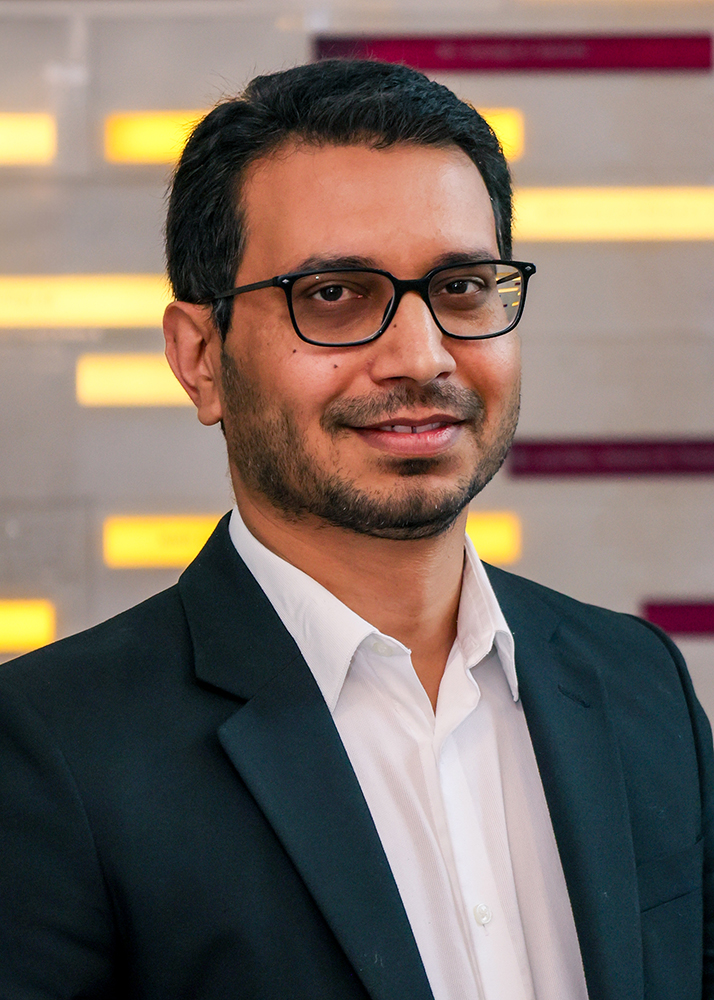
Umar Farooq, Assistant Professor from the LSU Division of Computer Science and Engineering
When quantum computers hit the market, they’ll give users the power to crash through cryptography protecting banks, online businesses, hospital records, the power grid. Upgrading federal systems alone is expected to cost $7.1 billion – with a 2035 deadline.
Protecting digital data from quantum cyberattacks will be daunting. The process will require digging up every bit of old cryptography buried in computer code, then replacing it with quantum-resistant cryptography – all without breaking the systems that depend on it.
LSU Engineering’s Umar Farooq is working to solve this problem. Farooq, an assistant professor in the Division of Computer Science and Engineering, has won a five-year, $506,020 National Science Foundation CAREER Award to manage quantum security risk. CAREER Awards are among America’s most prestigious grants for early-career scientists.
Farooq will use the grant funding to build three tools that work together: a Quantum-Readiness Index that scores where the risk lives inside computer code, a Cryptographic-Dependence Graph that maps how vulnerable code connects to everything around it, and finally an AI-driven migration pipeline that makes and tests post-quantum patches against real code constraints. Every business sector in Louisiana, from construction to energy to healthcare, will need the tools built by this program.
Farooq is the kind of high-performing young scientist the college and university has been actively recruiting. He joined the Division of Computer Science and Engineering in fall 2023 after earning his PhD at the University of California, Riverside and working at ByteDance, the parent company of the social media platform TikTok.
The CAREER Award is his second National Science Foundation award as the lead researcher in just two years, and he serves as co-leader of a Department of Homeland Security project focused on Android memory forensics. Farooq’s paper on quantum software repositories took the “best paper” prize at IEEE’s International Conference on Quantum Software (QSW) in 2025, and his research group published preliminary results on post-quantum readiness as a poster paper in IEEE Security & Privacy (S&P) that same year.
The CAREER Award also funds curriculum development and student training in post-quantum software engineering, an emerging skillset.
Under Chair Ibrahim Baggili, the Division of Computer Science and Engineering is building a deep bench in cybersecurity and artificial intelligence.
“This prestigious CAREER award is proof that our recruiting is paying off,” Baggili said.