
LSU Alumni Launches Music Literacy App
October 05, 2026
BATON ROUGE, LA — Josh Meade, an alumni of the LSU Lutrill & Pearl Payne School of Education’s MA in educational technology program, co-directs a middle school band and jazz program serving 230 students in
Connecticut daily. Drawing on his experience as a music educator and what he learned
in the ed tech program, he recently developed and launched Battle Staff, a music literacy app for iPhone and iPad. 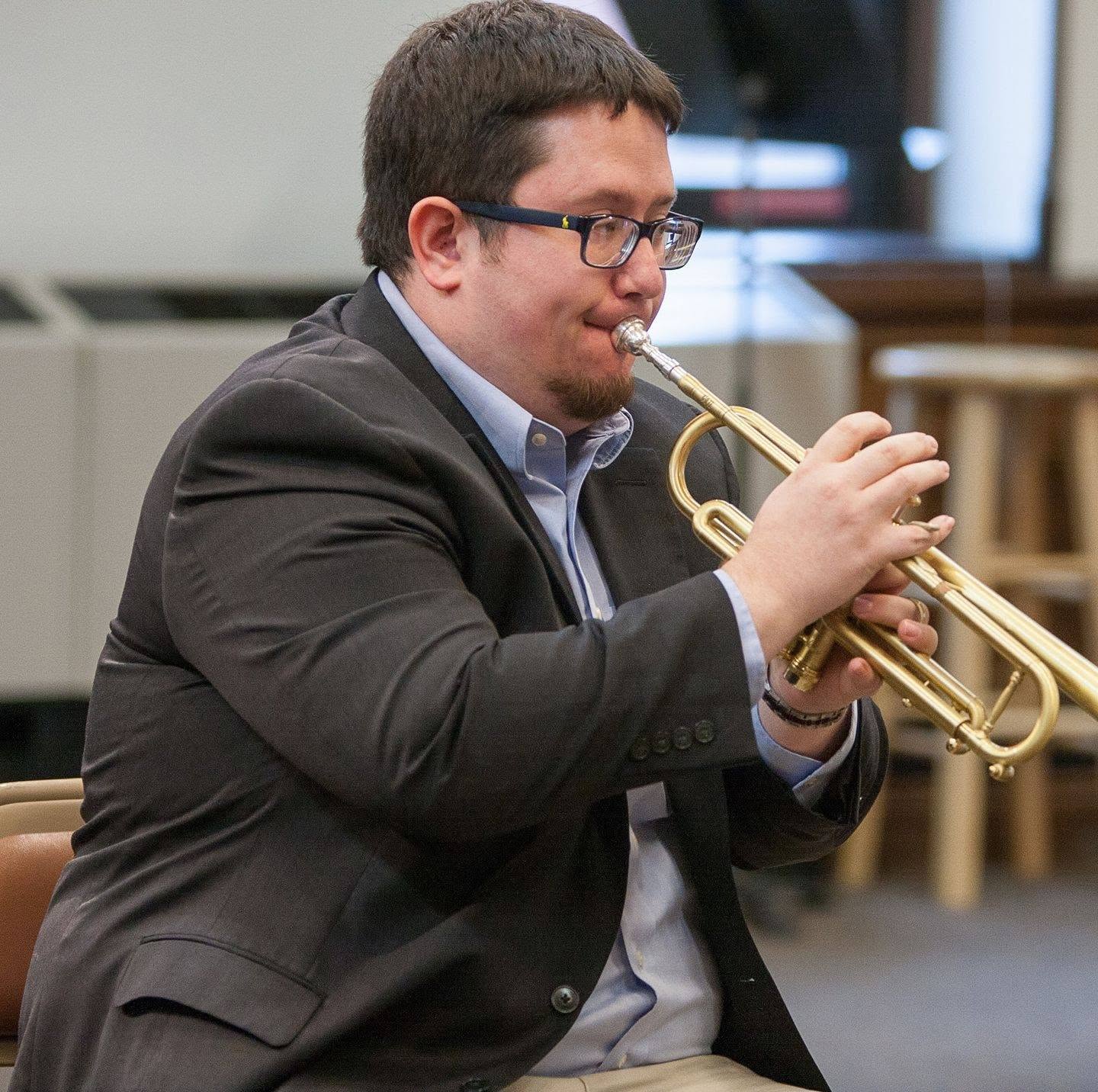
"I fondly remember Josh Meade’s weekly coursework, often infused with joyful music and always reflecting his passion for music education," Jennifer Qian, EdD, who leads the graduate programs in educational technology, said. "It is wonderful to see him bring that expertise to Battle Staff, addressing a need he knows firsthand as a teacher. LSU’s graduate educational technology programs bring together talented and dedicated educators and professionals from across the country. As program lead, I find it deeply rewarding to work with students like Josh as we explore the opportunities and challenges of using technology to support learning and workforce development."
We caught up with Josh to learn more about his journey as a teacher, his experience in the educational technology program and what it was like developing Battle Staff:
Can you tell us a little about your current role as a music educator and the students
you serve?
Currently, I co-direct a seventh and eighth grade middle school band program in Connecticut.
We have 230 students in our band program. Our middle school band program offers a
seventh-grade band and an eighth-grade band that rehearse during the school day. In
addition to that, we offer a CMEA Regionals Club, which prepares students for an auditioned
musical solo competition that can earn them a spot in the Connecticut Music Educator’s
Southern Region Middle School Band, Jazz Band, or Orchestra. This club meets after
school. In addition to that, we offer an auditioned jazz band where students can try
out to make the band. We also have a bucket ensemble, which is a bucket band where
students can sign up to learn how to play the drums with Home Depot buckets, drumsticks,
and we have a blast.
What led you to pursue LSU’s MA in educational technology program, and what were you
hoping to gain from the experience?
I was looking for an affordable master’s program where I could use the information
that I would learn in my everyday life. I was also looking specifically for a graduate
program that was completely online because I did not want to add another commute to
my life. I already have an almost two-hour daily commute and a wife and two kids who
I want to see!
How did your experience in the Educational Technology program shape the way you approach
teaching and learning?
When it came to the aspect of technology, the point that the program drove home, time
and time again, was that technology is a wonderful tool but should only be used when
appropriate or as supplementary material to the content that you are teaching. At
the time of the master’s program, I was already 12 years into my teaching career and
already knew that. However, it was still very nice to hear from the current professors,
and they would say that to pass on to future educators and professionals in the field.
In my world as a band director, technology can be an asset to a student’s music education
but is not the end-all-be-all by any means. Students must put the work in on their
specific instrument to improve.
As a music educator, what opportunities or challenges did you see that led you to
think there was a need for a tool like Battle Staff?
When students are first taught how to read notes on the staff at the elementary school
level, most teachers start with labeling the lines and the spaces on each clef and
then give pneumonic devices to help students memorize where the notes fall, and that’s
great, but what happens next? How do students practice these skills? They can complete
work sheets multiple times; you can play note reading classroom style games that take
20 minutes with the entire class, or you can play an app like “Battle Staff” that
is a great example of micro learning. “Battle Staff” is a note reading application
where a lot of information can be practiced and learned in a very short amount of
time!
For someone who may not be familiar with it, how does Battle Staff work, and what
does it help users achieve?
Battle Staff is a musical literacy app that students can play in a gamified style
of learning against the clock! Users can choose from three different levels that range
from giving them anywhere from three seconds up to ten seconds to guess the note on
the musical staff depending on their experience and ability level. There are also
additional game modes where you can practice music reading in multiple clefs and even
try to guess two and three notes at a time.
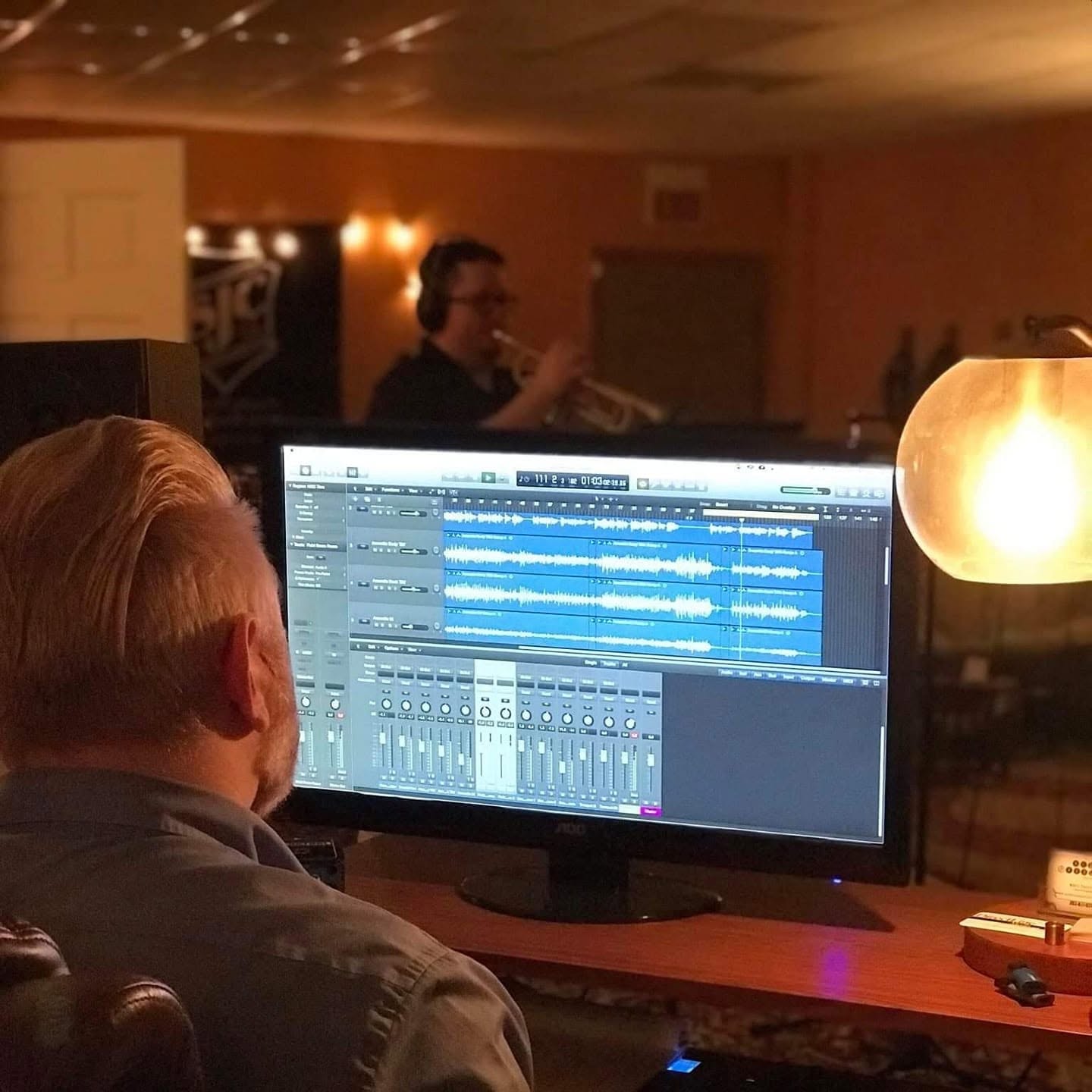 What was the process like for taking Battle Staff from an idea to a finished app available
on the App Store?
What was the process like for taking Battle Staff from an idea to a finished app available
on the App Store?
As usual, toward the end of the summer, I was starting to feel the pressure of the
upcoming school year, so I was already starting to prepare for that. I was also already
aware that there were multiple musical literacy apps out there in the Apple App Store,
but I thought that I could bring something new to the conversation. Regarding the
app itself, I started to investigate multiple AI app-building programs that were available
and found Replit. Because I had little to no knowledge of coding at the time, this
seemed like the best way to start the process. Seven hours later, the app was ready
to be submitted to Median.co, another program that turned the web-based app into an
application that would be accepted into the App Store and eventually the Google Play
Store as well (summer 2027). The other 24 hours of work were dedicated to creating
all the app screenshots, preview videos, privacy policy and all the legal and financial
information that Apple required to get Battle Staff into the App Store. I did have
to learn a little bit of coding in Xcode to create preview videos that were in the
correct format for the App Store and then edited them in Final Cut.
How did your background in music education and your training in educational technology
come together as you developed the app?
As you move forward in your teaching career, you tend to be more efficient as you
get older and want things to move at a faster pace to keep up with your students,
so creating this app really fits the bill for that concept. In terms of the ed tech
side, I was really inspired by one of my classes that spoke a lot about AI and how
it could be an enhancement to learning rather than hindrance. The quote “With great
power comes great responsibility” comes to mind. As we can all tell by this point
in our lives, AI is here to stay, and it’s not going away. Rather than letting all
the negative press consume us, why not try and use it to enhance our learning as humans?
Were there specific skills, concepts or projects from your LSU program that you found
yourself drawing on while developing Battle Staff?
It wasn’t really any of the skills that I drew from the LSU program while developing
Battle Staff. It was more about inspiring dialogue that stuck with me when one of
my classes started to dig deep into the concepts of AI regarding our own teaching.
This helped to keep the “light bulb moment” bright to move Battle Staff towards completion.
What have you learned from introducing the app to students and seeing how they interact
with it in a real classroom setting?
They love the app and keep asking to “play it.” If only we had more iPads to go around!
This app is great for teachers and students in the beginning of the school year because
it is great at driving home the fundamentals of music literacy.
What has been the most rewarding part of creating a technology tool that can be used
to support music education?
To be honest, just talking to students daily and hearing them ask, “You can do that?”
My response is always yes, and some day you can too! At the end of the day at year
15 in the classroom, my greatest feeling is always when students get that light bulb
moment. It really doesn’t get much better than that when it comes to teaching!
What challenges did you encounter while developing Battle Staff, and how did you work
through them?
Because I had little to no coding knowledge, I would spend one day researching and
one day putting that research into practice for the app. Building the app itself did
not take that long because I used an AI app-building program; however, the additional
24 hours was truly dedicated on how to use Xcode and Test Flight to truly make sure
that Battle Staff worked before production.
What Apple doesn’t tell you is that users are submitting upward of 250k apps a month, and they approve around 40k apps per month. The review process can seem tedious and time-consuming. It was obvious that Apple put AI filters in to weed out some of the developers who either didn’t have the patience to fix things in a professional manner or to literally just slow the pipeline down because there aren’t enough humans to keep up with the 250k monthly app submissions to the App Store. I just had to be patient and go with the flow at that point.
How do you see educational technology continuing to change the way music educators
teach music literacy and other foundational skills?
As the MA in Educational Technology at LSU program spoke about many times, technology
is a phenomenal supplementary tool with any content that you want/need to teach, but
at the end of the day, it shouldn’t be your go to for everything when it comes to
teaching and learning.
Ed tech is there to enhance learning, not inspire learning. Teachers inspire students to learn, not the screen.
What advice would you give to current LSU College of Human Sciences & Education students
who are interested in using technology to solve problems in their own fields?
I would investigate ways that technology can make your work life more efficient. Solve
a problem that you have and start there.
Looking back at your time at LSU, is there a particular experience, professor or lesson
from the Educational Technology program that has stayed with you?
I will keep referring to the conversation about AI in education, and that was with
Dr. Jennifer Qian. It was a very refreshing and inspiring conversation to have because
I teach in a Title 1 district where more than 90% of students are at or below the
poverty line, and I was able to create an app that they can use for free in school!
At the end of the day, I created Battle Staff to be an affordable option for anyone
to learn how to read music, not just kids in school. Adults wanting to try something
new, Battle Staff is priced at $2.99 which is a one-time fee. It is not a monthly
subscription! There are no in-app purchases or pay wall traps either inside the app.
Battle Staff just works and is a great way to increase music literacy for all!
What’s next for you and Battle Staff? Are there any new features, projects or ideas
you’re excited to pursue?
At this point, my goal for when I have time is to submit and publish Battle Staff
into the Google Play Store. Because I am not a trained web developer by trade, this
will most likely happen in the summer of 2027 when I can make sure the finished product
is what I want the Google Play Store to see and put it into production for Google
Chromebooks as well!
I am also starting to slowly push out more content for Battle Staff on multiple social media channels. Battle Staff is now on Facebook, YouTube, TikTok and X.
About the LSU Lutrill & Pearl Payne School of Education
A school of the LSU College of Human Sciences & Education, the Lutrill & Pearl Payne
School of Education (SOE) offers undergraduate programs for students who want to pursue
a career as a pre-kindergarten through 12th grade teacher or acquire dual certification
in both traditional elementary and special education classrooms. In addition, SOE
offers 3 graduate certificates, 17 master’s degree program areas, 9 EdS certificate
programs, and 2 PhD degrees in 11 areas of focus. SOE’s focus is not only on preparing
highly qualified teachers but also in preparing educational leaders, curriculum studies
scholars, educational technology experts, applied researchers, higher education professionals,
school counselors, and clinical mental health counselors. SOE specializes scholarly
expertise regarding pressing educational and wellness issues across the entire lifespan.
Visit the LSU Lutrill & Pearl Payne School of Education website.