
Showing Up Matters: LSU SREC and Attendance USA™ Work to Improve School Attendance
August 11, 2026
BATON ROUGE, LA — In collaboration with the LSU College of Human Sciences & Education, Attendance USA™ held its inaugural Research to Practice: Research to Results Summit at the Huey P.
Long Field House on LSU’s Baton Rouge campus from June 5-7, 2026. The summit brought
together national, state and local experts committed to improving evidence-based approaches
to improving school attendance and reducing chronic absenteeism. Recognized for its
longstanding commitment to improving school attendance in Louisiana, LSU Social Research & Evaluation Center (SREC) was invited to deliver the plenary address at the summit. 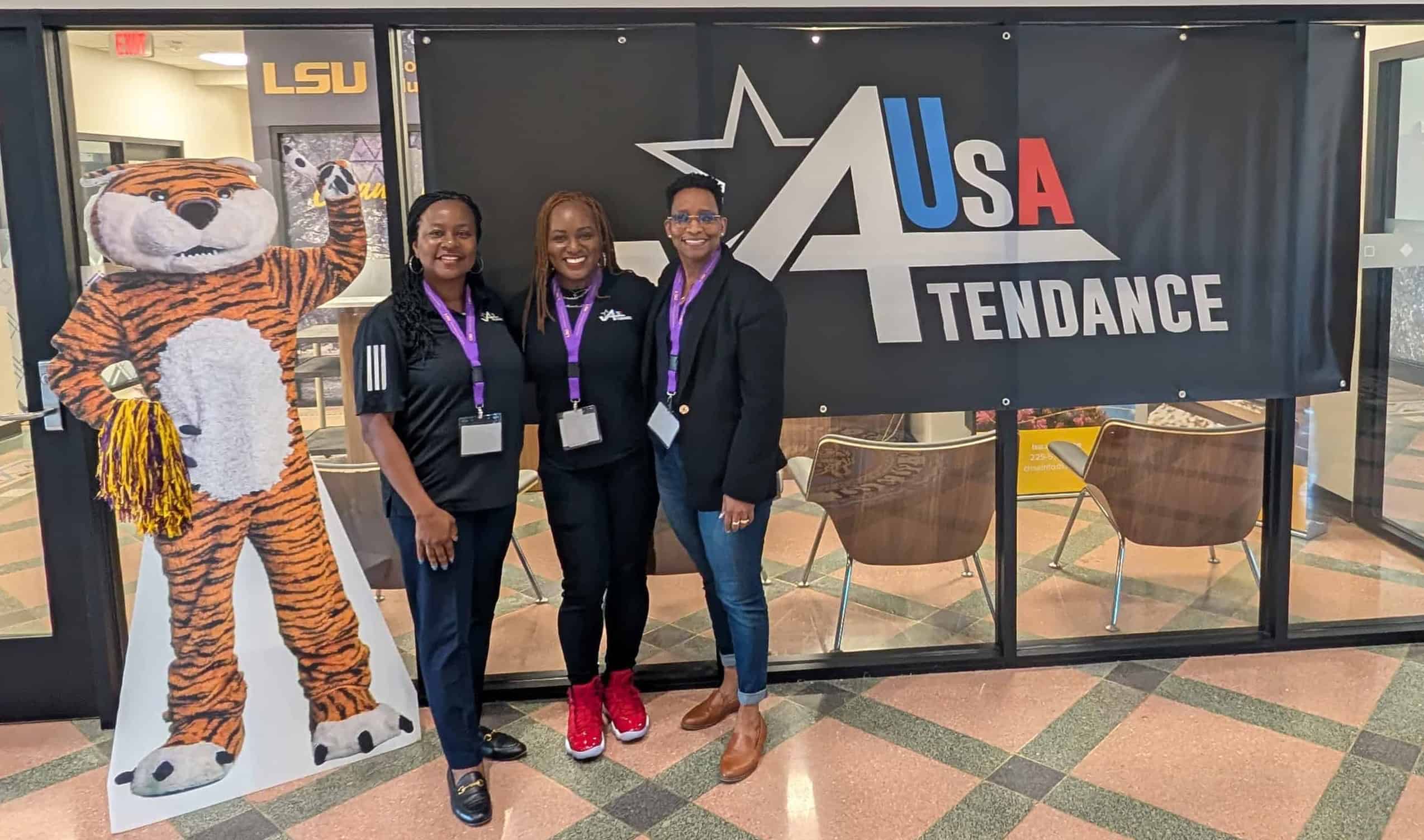
Attendance USA™ is at the forefront of the national conversation on student attendance and chronic absenteeism. First of its kind in the United States, Attendance USA™ unites scholars, practitioners and other organizations to engage in meaningful exchange across a centralized platform. With a vision to reunite education, wellbeing, and other aspects of school-going culture, Attendance USA™ uses its platform to share evidence-based practices, actionable strategies to implement these practices, and a shared set of standards to address chronic absenteeism while promoting student engagement.
SREC’s Director Judith Rhodes, PhD, LMSW, and faculty member Gwen Murray, PhD, shared insights on SREC’s partnership with Attendance USA™, outcomes from school attendance research and how that research can be translated into practice.
Can you tell me about SREC's mission and how student attendance became a focus area
for your work?
At SREC, our work is driven by our mission of improving the lives of individuals,
families and communities. We accomplish this through our research, evaluation, professional
services and partnerships. This commitment orients our micro (school-level) and macro
(district and community levels) approaches to improving PK-12 school attendance. We
move beyond investigating the challenges impacting education today, partnering with
schools, districts and organizations to address emergent contextualized needs with
an emphasis on sustainability and shared vision of success.
 SREC is a leader in attendance improvement work in Louisiana and beyond, frequently
working with school districts around the state. Beginning in 1999, SREC collaborated
with the Louisiana legislature to develop the Truancy Assessment and Service Center
(TASC) as an early intervention program addressing barriers to daily attendance by
working with schools, families and students. Since 2021, SREC has worked directly
with the Louisiana Department of Education (LDOE), community agencies, districts and
schools, providing data support, attendance improvement coaching and professional
learning to build sustainable multi-tiered systems of support (MTSS). This effort
has enhanced knowledge of chronic absenteeism and introduced evidence-based prevention
and intervention strategies. Together, Dr. Judith Rhodes and Dr. Gwen Murray designed
a model to address chronic absenteeism holistically at micro and macro levels. This
model is based on a successful attendance improvement pilot conducted during the 2013-2014
school year with a local urban school district. In 2024, based on the pilot’s success,
SREC joined governors, superintendents and researchers at the Every Day Counts Summit:
Addressing Chronic Absenteeism and Increasing Student Engagement at the White House
sponsored by the U.S. Department of Education and Johns Hopkins University.
SREC is a leader in attendance improvement work in Louisiana and beyond, frequently
working with school districts around the state. Beginning in 1999, SREC collaborated
with the Louisiana legislature to develop the Truancy Assessment and Service Center
(TASC) as an early intervention program addressing barriers to daily attendance by
working with schools, families and students. Since 2021, SREC has worked directly
with the Louisiana Department of Education (LDOE), community agencies, districts and
schools, providing data support, attendance improvement coaching and professional
learning to build sustainable multi-tiered systems of support (MTSS). This effort
has enhanced knowledge of chronic absenteeism and introduced evidence-based prevention
and intervention strategies. Together, Dr. Judith Rhodes and Dr. Gwen Murray designed
a model to address chronic absenteeism holistically at micro and macro levels. This
model is based on a successful attendance improvement pilot conducted during the 2013-2014
school year with a local urban school district. In 2024, based on the pilot’s success,
SREC joined governors, superintendents and researchers at the Every Day Counts Summit:
Addressing Chronic Absenteeism and Increasing Student Engagement at the White House
sponsored by the U.S. Department of Education and Johns Hopkins University.
How did SREC become a partner/start a relationship with Attendance USA™? And how long
have you worked together?
Shelneka Marsalone, Attendance USA™’s Executive Director is a longtime collaborator
with SREC. Previously, she worked with LDOE and was SREC’s partner spearheading the
creation of the 2021 Louisiana Attendance Alliance, a cross-sector monthly convening
offering training, peer learning, strategic planning and more. As part of the Louisiana
Attendance Alliance, SREC created Improving Student Attendance: An Action Planning Workbook, which has been downloaded more than 1,700 times nationally and internationally.
The success of the partnership endured after Marsalone departed the LDOE, and as soon
as she came aboard Attendance USA™, was looking for ways to continue the partnership
with SREC.
How has SREC worked with Attendance USA™?
SREC serves as a research thought partner and participates in the Attendance USA™
network to strengthen collaborations and outreach. Dr. Judith Rhodes and Dr. Gwen
Murray wrote the plenary address, and Dr. Rhodes delivered it at the June 2026 summit.
Dr. Rhodes has also contributed to the Attendance USA™ podcast.
What inspired the Research to Practice Summit?
In preparation for the 2026 International Network for School Attendance (INSA) conference
in Alicante, Spain, Attendance USA™ wanted to convene researchers and practitioners
in the U.S. to strengthen and build collaboration nationally. Members of Attendance
USA™ are working with schools in Europe to ensure good attendance and school engagement
to reverse chronic absenteeism. LSU was asked to provide the first setting for the
biennial research-to-practice summit. The plan is to hold this summit at a different
university every other year.
"Attendance improvement happens when we stop treating research and practice as separate
conversations," Marsalone said. "Our partnership with LSU’s Social Research & Evaluation
Center represents exactly what Attendance USA envisioned for the Research to Practice:
Research to Results Summit, bringing researchers and practitioners together to move
evidence into action. It also reflects the foundation of Attendance Science: the evidence-based
study of why students attend school and how to improve it. SREC’s decades of work
demonstrate that attendance is more than a number on a dashboard; it is an early indicator
that can help us understand what students and families may need to remain connected
to school. As Attendance USA expands this work nationally, partnerships with universities
like LSU will be critical to advancing the research, preparing practitioners, and
building sustainable, evidence-informed approaches that help students not only show
up, but belong, engage, and succeed." 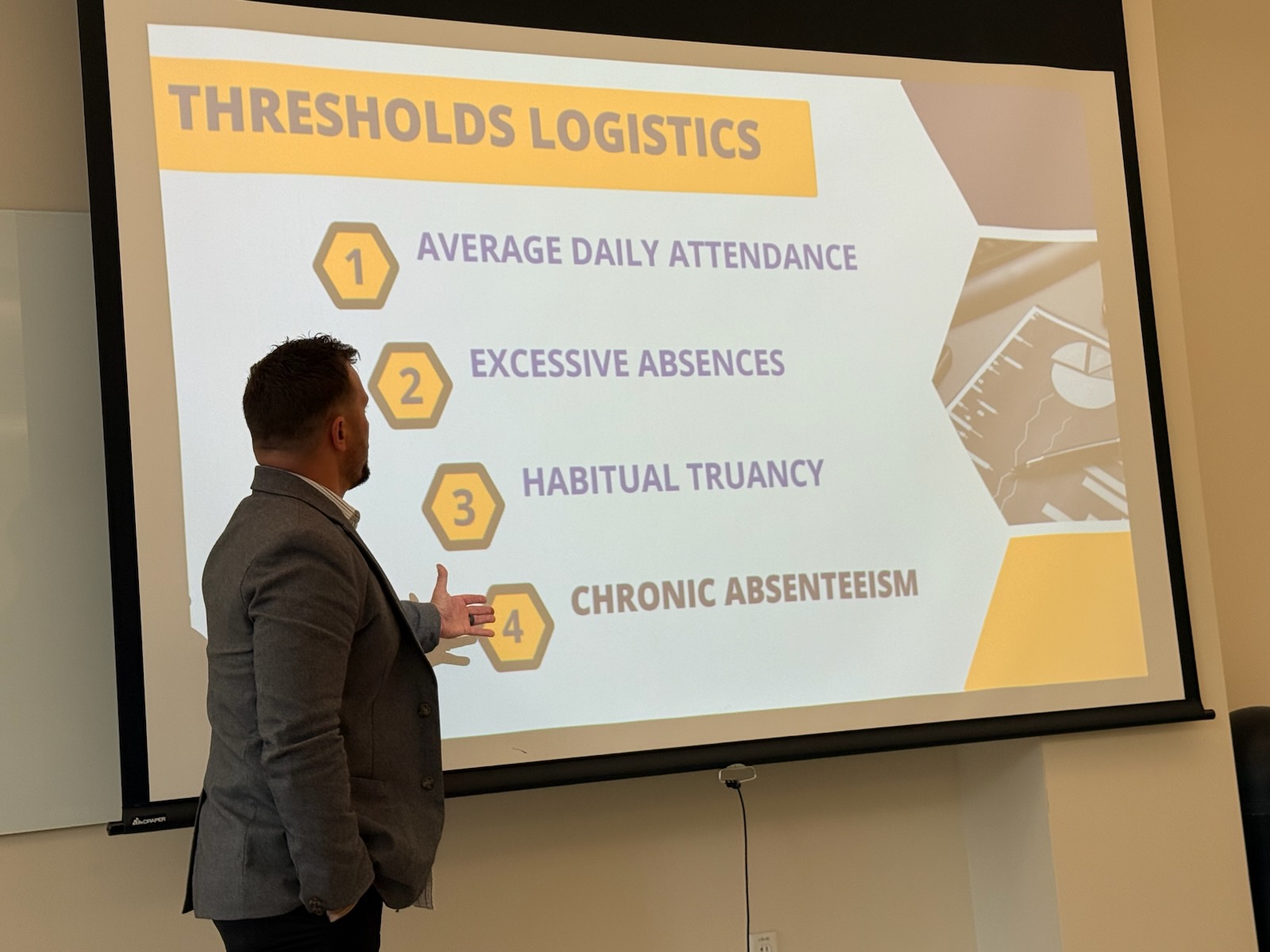
The summit focuses on translating research into action. What does that process look
like in practice for SREC?
Research and evaluation are core SREC service offerings. We believe reliable data
should drive any improvement work. Our work with education projects is multidisciplinary,
bringing together research and practitioner experience from school counselors, social
workers, teachers and school administrators. Individually and collectively, we strive
to stay current on evidence-based practice and our collective acumen of what it takes
to change systems in schools and districts. Most of our projects have formal evaluation
activities. However, much formative evaluation work goes into the life cycle of a
project. For example, prior to designing the Improving Student Attendance: An Action Planning Workbook, SREC administered surveys to Child Welfare and Attendance professionals across Louisiana
to better understand the localized needs of schools and the barriers that impede system
change.
Can you share any of the findings or outcomes from your work on school attendance?
During the 2023-2024 school year, SREC partnered with LDOE and an urban school district
to pilot LAGEAUX. The LAGEAUX pilot was successful, and after 10 months of collaborative
work, daily attendance rates improved, and total absences decreased. Efforts at the
high school were most effective, with positive change in daily attendance rates from
83.9% to 86.7%, and a significant reduction in chronic absenteeism from 50% to 37%.
This is due in part to SREC’s partnership with the school principal, who stated in
a 2025 front-page feature in The Advocate, “When someone comes in and gives you structure,
it relieves a whole lot of stress.”
SREC’s work has also been presented at local and national peer-reviewed conferences. Dr. Rhodes presented to the 2026 LA Families in Need of Services annual conference, “Changing the Narrative” in May of 2026 sharing evidence-informed practices on supporting good attendance in K-12 schools.
How can schools use attendance data more effectively to support students before attendance
issues become chronic?
Ideally, schools should use attendance data as part of an early warning system. The
key is to look for attendance patterns early enough to respond before a student becomes
chronically absent. Schools should routinely review data, watch for patterns, connect
attendance data to likely causes of missing school and connect patterns of attendance
to tiered supports. Schools should monitor their attendance interventions to determine
if they are working.
Can you share a success story from a Louisiana district where research-driven attendance
strategies led to measurable improvements?
One example is from the TASC site that served Iberia, St. Mary and St. Martin schools. From 1999-2012, the program served 5,846 students,
developed 5,203 family service plans, linked families to 4,941 services and showed
a measurable attendance improvement: average unexcused absences dropped from 7.9 days
at referral to the program to 4.7 days after the TASC intervention. This amounts to
missing 3.2 fewer days of school. Importantly, the improved attendance was among the
districts’ students who were at the most risk of continuing a pattern of absences.
If you could leave educators, researchers, and community leaders with one message
about improving student attendance and engagement, what would it be?
I would encourage schools to build belonging first. When students and their families
feel supported and connected to meaningful learning, they are more likely to attend
and engage with school consistently. The most effective strategies treat attendance
not as a compliance problem to punish, but as a relationship and opportunity to work
together for students to attend school, stay in school and succeed in school.
About the LSU Social Research & Evaluation Center (SREC)
The LSU Social Research & Evaluation Center, or SREC, advances social initiatives
to improve the lives of individuals, families, and their communities through our research,
evaluation, and partnerships. SREC’s interdisciplinary team of expert faculty and
staff work in projects among four areas of impact: strengthening communities, education,
public safety, and health and wellbeing. SREC is a research center of excellence in
the LSU College of Human Sciences & Education.
Visit the Social Research & Evaluation Center website.
About Attendance USA™
Attendance USA™ is the first national platform of its kind uniting scholars, practitioners
and organizations to advance evidence-based school attendance practice. Founded by
Dr. Carolyn Gentle-Genitty, Attendance USA™ is home to Attendance Science™, a field
established around a validated body of research, frameworks and instruments including
the PSSB (Perceptions of School Social Bonding) and the Tiered Attendance Threshold
model. Learn more at attendanceusa.org
Media Contact: Attendance USA™ | info@attendanceusa.org | PO Box 39271, Indianapolis, IN 46239