
Smart Tech, Wise Elders: LSU Researcher Leads IMLS-Funded Study on AI Literacy for Older Adults in Rural Communities
January 22, 2026
Dr. Kristina Shiroma, faculty member in the LSU School of Information Studies (SIS), has been awarded a prestigious Early Career Research Development Grant from the Institute of Museum and Library Services (IMLS). This three-year research project, supported by a grant of $393,233, will focus on artificial intelligence (AI) literacy among older adults living in rural Louisiana.
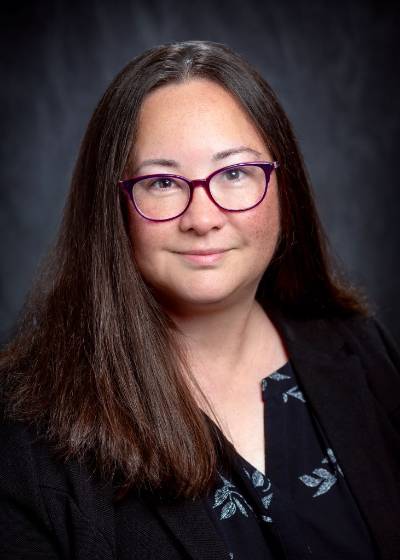
Titled Smart Tech, Wise Elders: An Educational Partnership in Understanding AI Literacy With and For Rural Older Adults, the project will investigate how older adults in rural communities understand, perceive, and engage with AI, particularly in the context of healthcare. This will culminate in the development of a tailored AI literacy workshop framework for libraries and other community partners across the state.
The grant is funded through the Laura Bush 21st Century Librarian Program, an IMLS initiative that supports education and professional development for librarians and information professionals. For Dr. Shiroma, receiving recognition from within the information science field is especially meaningful. “This recognition is from within our field,” she said. “I love that that’s where I’m getting this support from.”
The Early Career Research Development Grant is designed to support emerging scholars in establishing independent research programs. Unlike many grants, Dr. Shiroma serves as the sole project director, a structure that underscores the award’s competitive and prestigious nature. “This is designed to set me off on my career,” Shiroma said. “It’s really building my portfolio of research and what I bring to the research community.”
Dr. Shiroma views the project as a natural progression of her previous research in eHealth literacy, which focused on helping older adults assess and access health information online.
“With the boom of AI and the challenges that it represents, I see this as a natural progression of my work,” she said. Through that work, she observed the wide range of digital experience among older adults, from those who had never used a mouse to those with extensive technical backgrounds.
Rural older adults, in particular, face layered barriers related to access, literacy, and trust in digital systems. Additionally, many rely on libraries as their primary point of contact for technology support, making libraries central partners in the project. “Libraries are seeing the needs in their communities,” Dr. Shiroma said. “This is a way to give back to the libraries themselves by providing something they can, in turn, provide to their communities.”
The three-year project is organized into three phases: Launch, Learn, and Leverage.
In the first year, Dr. Shiroma and her graduate research assistant, Brooke Stafford, will focus on participant recruitment and data collection. The goal is to interview approximately 100 older adults (defined as individuals age 65 and older) living in rural parishes across Louisiana. Using IMLS’s Search and Compare Tool, Shiroma identified 13 rural parishes and 34 town parishes, with plans to recruit participants from a representative sample of five to ten rural parishes across the state.
Recruitment, she noted, is one of the project’s greatest challenges. “Recruitment of older adults in rural communities is challenging enough,” Dr. Shiroma said. “Recruitment of older adults in rural communities to talk about AI is even more daunting.” To address this, Dr. Shiroma will work closely with community partners, especially libraries, to shape outreach strategies that reflect local needs and concerns.

In year two, the project will continue data analysis and begin sharing early findings at academic conferences. In year three, Dr. Shiroma will use participant feedback to develop an AI literacy workshop series specifically designed for older adults in rural communities.
The project’s “with and for” framework is intentional, emphasizing that workshops will be created not just for participants, but in collaboration with them. “I see ‘wants’ and ‘needs’ as different things,” Dr. Shiroma said. “‘Needs’ is me telling them, “you need this”. ‘Wants’ is them saying, “hey, I want this”.”
A central focus of the project is how AI is already shaping healthcare behind the scenes, from medical decision-making tools to insurance systems, often without patients’ awareness. “Even if you don’t see it, AI does have access and is informing your medical decisions,” Dr. Shiroma said. She also emphasized the importance of representation in AI systems, noting that algorithms trained on limited populations may fail to account for the experiences of rural or marginalized groups. “If older adults in rural communities are not represented in the algorithms, that matters,” she said. “Representation matters when these systems are being used in practice.”
Dr. Shiroma hopes the project will lead to greater engagement between older adults and their local libraries, as well as broader awareness of AI’s role in healthcare. Rather than promoting AI adoption, Shiroma’s goal is to foster awareness and informed decision-making.
“My goal is not to simply increase AI use,” she said. “My goal is to make better informed people when it comes to their health.”
As Dr. Shiroma begins the first steps in her project, she is more than anything, just excited to get started. “This is my passion project,” she said. “It’s a natural progression of my work, and I’m excited to be able to do this.”
For more information on this project, please visit SIS's research page.
About the LSU School of Information Studies
The LSU School of Information Studies (SIS) provides a 100% online prestigious education in library & information science. It is the home of the Master of Library & Information Science, which is the only program accredited by the American Library Association in the state of Louisiana. SIS also offers a dual degree with the Department of History, an undergraduate minor, and three graduate certificate options. SIS is a member of the iSchools, a group of Information Schools dedicated to advancing the information field. SIS is part of the LSU College of Human Sciences & Education.