
Going IRL: The LSU School of Information Studies Brings LSU Online Students to the UK for Its First Study Abroad Program
September 10, 2026

For four weeks this summer, LSU School of Information Studies students traded their usual classrooms for historic libraries, archives and cultural institutions across Scotland and England.
Led by Dr. Jennifer Steele, the Libraries in the UK study abroad program began in Edinburgh, Scotland, where students spent a week before traveling by train to London for three weeks. Along the way, students visited academic and public libraries, archives, museums and specialized collections while earning six hours of transferable library and information science credit.
But for the students who participated, particularly those enrolled through LSU Online, the experience offered something beyond academic credit. It gave them the opportunity to experience their field firsthand while building connections with classmates they had previously known primarily through a screen.
“I thought it was really important to offer this opportunity to online students,” Steele said. “We really pride ourselves on offering the same opportunities and experiences for our main campus students, as well as our online students.”
The program’s typical schedule included a morning site visit or guided tour,
followed by afternoons for students to explore on their own. The group also took day trips to Oxford and Cambridge.
The itinerary was designed to expose students to a range of information institutions and approaches to librarianship. Visits included the Signet Library,
the National Archives, the British Library, the British Museum, the Barbican Library, the London Library, University College London’s library, Oxford’s Bodleian Library and Trinity College’s Wren Library in Cambridge, among others.
For Ken Sullivan, an MLIS student graduating in Fall 2026, one of the most memorable experiences was visiting the Royal Geographical Society. “It was so cool to learn the history of the RGS and see artifacts from their archives,” Sullivan said. “It is important to learn the origins of a place and trace the history to see what the future holds for that same place.” Sullivan was particularly interested in the organization’s evolution from a society for empire to one focused on sustainability, as well as its efforts to find and showcase the histories of lesser-known people involved in historical expeditions. “We really experienced that at the RGS,” Sullivan said. “The staff really focus on finding and showcasing the histories of the minor characters in previous expeditions, which is something I find very important.”
The experience also gave students an opportunity to examine familiar information science concepts from a different cultural perspective. “I didn't realize how many problems the UK faces in terms of libraries, museums, and archives that are similar to our problems,” Sullivan said. “It really puts into perspective that these information organizations need our help globally, but it starts at the local level.” Students also encountered differences in cataloging, classification and access practices. Those observations became part of their academic work, with students writing research papers examining topics such as information access and cataloging systems.
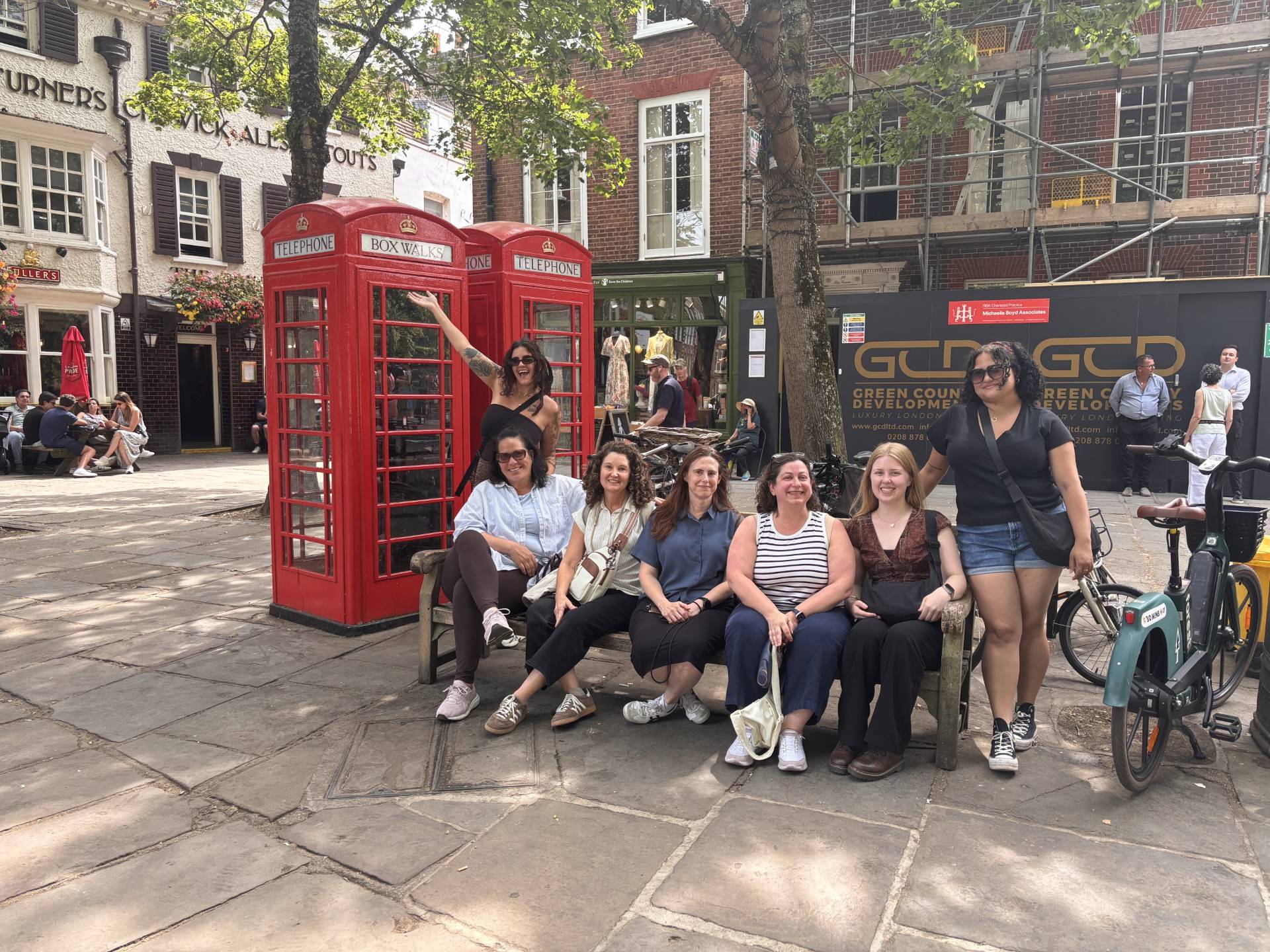
Some of the program’s most memorable experiences were not originally on the itinerary.
While the group was scheduled to be in Cambridge, one student reached out to a librarian
at Trinity College to ask whether the group could visit the Wren Library. Although
the library was heavily booked with tours, an opening happened to become available
on the day the students were already going to be there. For Steele, the visit became
one of the clearest examples of why the program was worthwhile.
The library pulled several historical artifacts for the group, including letters from U.S. presidents and a comb belonging to Henry VIII. “Just seeing their excitement, I guess, is what really kind of stood out to me,” Steele said. “They were really geeking out over all of this and just getting so excited.” One student even asked the librarian whether all of his groups made him feel like such a celebrity. His response: “Well, it's really the books that are the celebrity.”
The Wren Library visit was also the program’s final guided tour, prompting some students to tell Steele that they had “kind of saved the best for last.” “It really kind of made it all worth it,” Steele said. “They're really having this beneficial experience, and that is really why I put in the work beforehand to make the program happen.”
The hands-on nature of the program was a consistent highlight for students. At the
British Library, students toured the Conservation Centre and learned about the process
of conserving historic manuscripts. At the British Museum, they explored archival
materials and artifacts. At other institutions, they saw firsthand how different libraries
organize, preserve and provide access to their collections.
For Sullivan, those experiences reinforced the importance of skills such as cataloging.
“Something that was consistently different was how many places we visited that do
not have much of the collection cataloged, and that was shocking to me,” Sullivan
said. “I think it makes me have more of a will to learn how to catalog, as that is
a skill that many do not have in the LIS world.” Although Sullivan hopes to become
a health science or medical librarian, the trip broadened their understanding of the
many directions an information studies degree can take them. “This program really
showed me a lot of
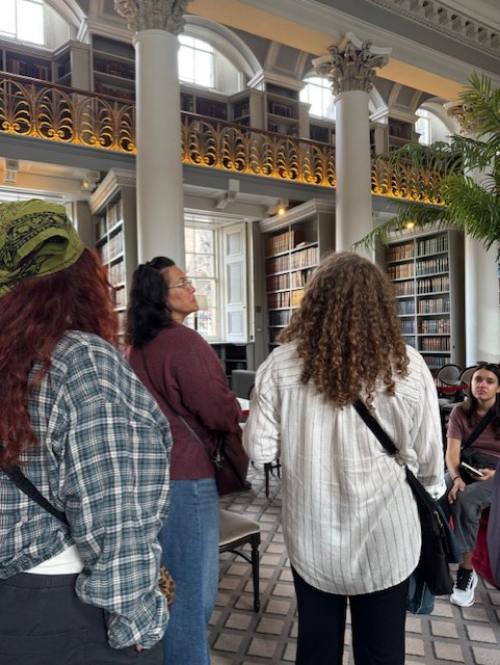
different things I can do with my degree,” Sullivan said. “Even though I want to be a health science/medical librarian, and none of our itinerary sites were those, I have more knowledge of the LIS world beyond what I know in the US. I learned small things that are beneficial to my career and have a new perspective as well.”
For Steele, exposing students to those different perspectives was an important part of the program’s academic value. “I think it's definitely beneficial for them to be able to see the cultural differences in terms of the approach to different things, whether it's information access,” Steele said. “Just seeing the cultural differences of how they approach things like that, like information access, or even the procedures of classification and cataloging and different procedures like that.”
The program also marked an important milestone for LSU Online: It was the first time LSU Online students were able to participate in an LSU study abroad program. For students who typically complete their coursework remotely, the opportunity to travel internationally with their classmates created a new kind of connection. Steele said the online students frequently talked with her about how meaningful it was to finally meet their classmates in person.
“In their regular online classes, they can still, of course, interact with each other virtually,” Steele said. “But to have that opportunity to build those connections in person, this was that opportunity for online students to be able to have that experience.”
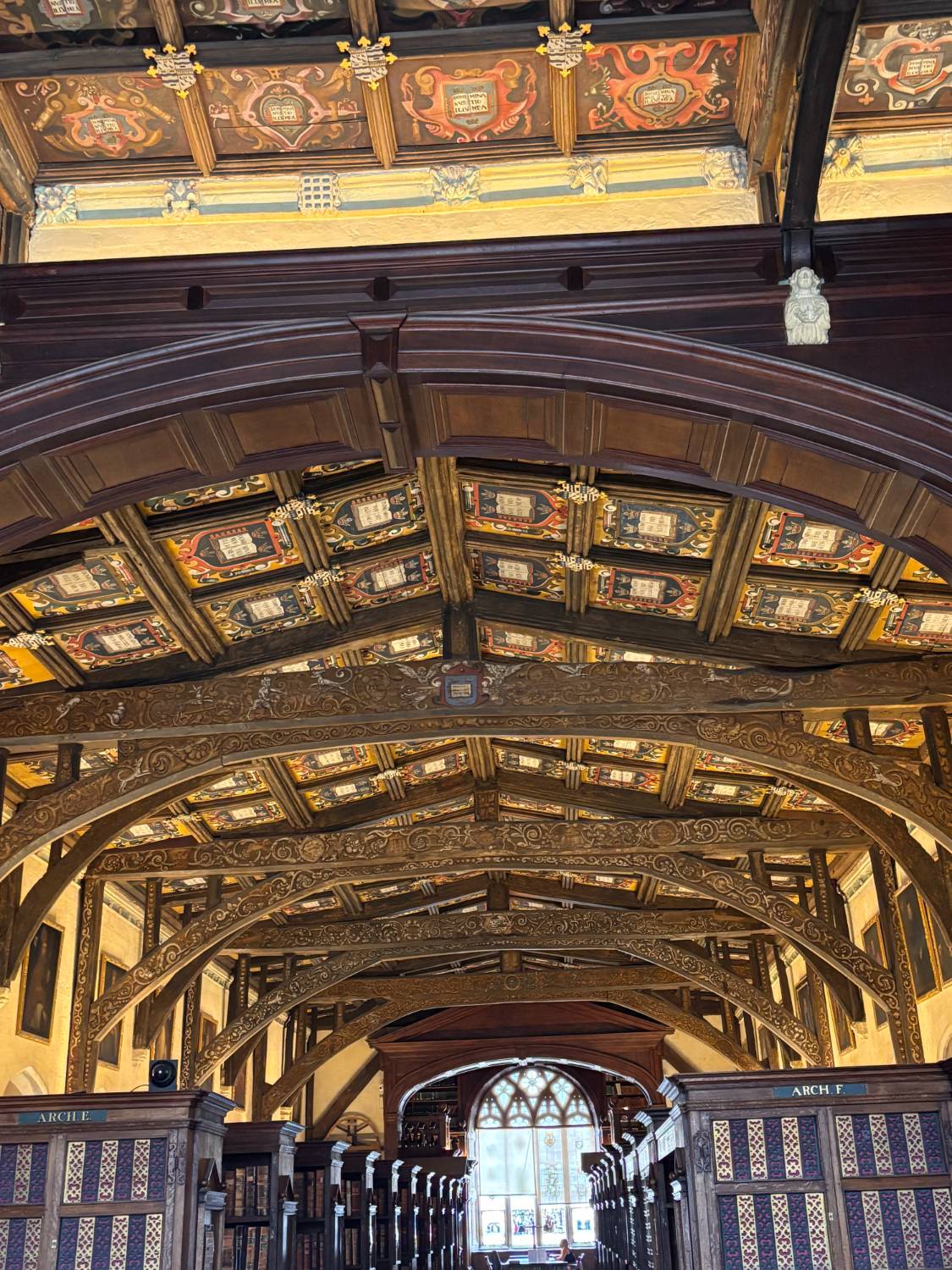
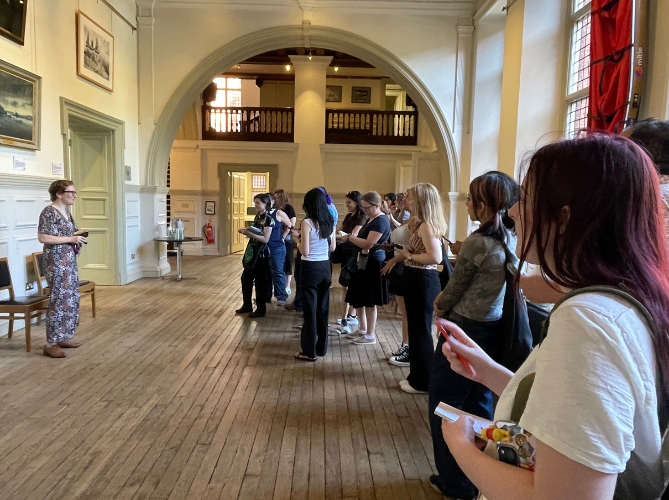
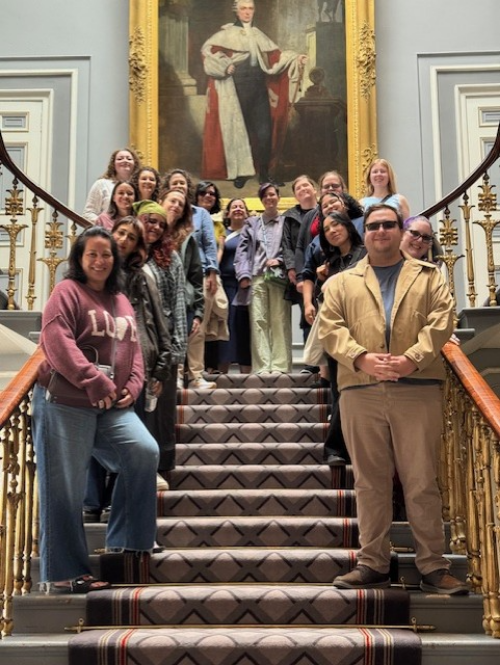
Over four weeks of traveling, learning and exploring together, those became a close-knit community. “I could not have asked for a better group of MLIS students to be on a study abroad trip,” Sullivan said. “I did not have a great study abroad experience with my classmates in undergrad, but everyone got along and we all nerded out together. It was wonderful.”
By the end of the program, Steele could see how much the group had changed. At the farewell dinner, she watched students make plans to visit one another and promise to stay in touch. “Just seeing the connections they've made there at the end, like, in comparing that to our big welcome dinner that we had at the beginning,” Steele said. “Seeing the comparison there, and the friendships and the bonds that they've made over the past month, I think was a big standout for me.”
Sullivan said that the opportunity to connect in person was one of the most meaningful parts of the experience. “It was nice to have an in-person experience in this online program,” Sullivan said. “I think we can all say we will be lifelong friends.”
The experience also gave Steele an opportunity to learn from the students themselves. As the first group to participate in the program, their feedback will help shape future iterations. “They really liked more of the guided tours and the hands-on experiences,” Steele said. “For the future, I’m going to try to incorporate more of that.”
Steele hopes to continue expanding the number of libraries, museums, archives and information centers students can experience firsthand.
“I definitely hope that the program continues in the future, continues to grow, and continues with more of our online students taking this opportunity and having this experience.”
For Sullivan, the experience reinforced the importance of stepping outside of a familiar academic or professional path. “I think it is always important to explore outside your comfort zone because you'll learn things you never thought would have existed,” Sullivan said. “All our site visits have a lasting effect on me, so I am so glad I made things work to go on this study abroad program.”
Steele offered similar advice to students who may be hesitant to take the first step toward studying abroad. “Don't be afraid to take that leap of faith,” she said. “Definitely reach out and talk to different resources. Reach out and talk to me about the experience, or previous students.” And, she said, students should not be afraid to simply ask questions and find out whether an opportunity is right for them. “Don't be afraid to ask and find out more, just to see if it could be a good fit for you,” Steele said. “It can definitely be a life-changing experience.”
About the LSU School of Information Studies
The LSU School of Information Studies (SIS), a member of the iSchools consortium, is a dynamic and growing school within the College of Human Sciences & Education. For over 90 years, SIS has been at the forefront of information studies, and today, we are a research-intensive school with a strong commitment to interdisciplinary collaboration and addressing complex challenges. Our faculty are engaged in cutting-edge research, with over $2 million in active research grants from funding agencies including the Institute of Museum and Library Services (IMLS), the National Science Foundation (NSF) and the National Institutes of Health (NIH).
SIS is home to a vibrant community of more than 1,000 graduate students enrolled in our nationally-recognized, ALA-accredited Master of Library and Information Science (MLIS) program. In addition to the MLIS, SIS offers a range of graduate certificates and an undergraduate minor in Digital Studies, reflecting our commitment to preparing students for various professional contexts. Our strategic vision focuses on expanding our research and academic programs, with plans to launch new undergraduate and doctoral programs and grow our faculty in key areas such as data science, artificial intelligence and health information.
For more information, visit the School of Information Studies.