
Efthymios Papadopoulos, PhD, Receives LCRC Grant for Head and Neck Cancer Care Study
April 09, 2026
BATON ROUGE, LA — In 2024, more than 71,000 Americans were estimated to be diagnosed with head and neck cancers. In recent years, Louisiana
has consistently had higher cancer incidence and mortality rates than the national average. Clinicians have long sought better ways to predict what
the short- and long-term outcomes are for patients before they enter the operating
room—but traditional assessment tools often miss critical indicators hidden beneath
the surface. 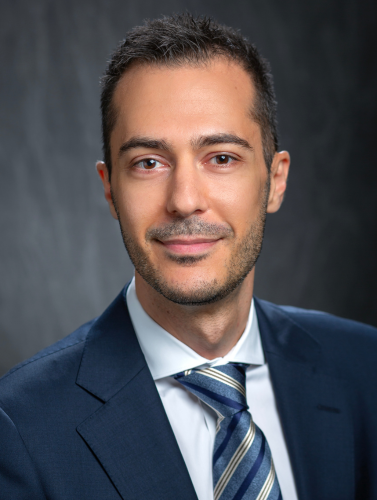
That gap in prediction, precision and preparation is exactly where Efthymios “Makis” Papadopoulos, PhD, assistant professor in the LSU School of Kinesiology, saw an opportunity to make a difference. With the support of a newly awarded $21,269 Louisiana Cancer Research Center (LCRC) New Investigator Grant, Papadopoulos is leading a team studying the role of preoperative CT scan-derived skeletal muscle characteristics in predicting short- and long-term postoperative outcomes after surgery for head and neck cancer. Along with co-investigator Dr. Sagar Kansara, MD, FACS, Our Lady of the Lake surgeon and assistant professor in the Department of Otolaryngology at LSU Health Sciences School of Medicine, this retrospective cohort study will leverage clinical data to answer clinician-centered questions.
Papadopoulos and his team hope their findings will help surgeons better predict which patients are at a higher risk before surgery, figure out which patients would benefit most from personalized exercise and nutrition programs before surgery to help them recover better, and make more informed treatment decisions.
“I am deeply grateful to the LCRC for its generous support in making this study possible,” Papadopoulos said. “I also want to extend my sincere thanks to Dr. Kansara for his collaboration and instrumental contributions as a surgeon to the study. Through this study, we hope to better understand whether CT-based muscle characteristics can improve risk stratification prior to head and neck cancer surgery. This will be important for clinicians in identifying high-risk patients who may benefit from targeted interventions and closer monitoring to improve outcomes.”
The LCRC 2026 Pilot Awards will support work in new research areas and allow award recipients to develop the preliminary data required to apply for larger funding from significant external sources. These awards recognize innovative, high-impact projects that advance the LCRC's mission and strengthen their collaborative research community.
“The LCRC’s Pilot Award Program provides critical seed funding for projects that will hopefully expand into significant advances in cancer research,” Sven Davisson, LCRC Chief Administrative Officer, said. “Funds are awarded through a robust peer review process involving leaders of LCRC’s research programs and allow these cancer scientists to take the next step in their pursuit of an innovative theory or hypothesis.”
“The research of Dr. Papadopoulos is a great example of the LSU School of Kinesiology’s fulfillment of its mission to advance knowledge about the positive impact of physical activity and sport on health and well-being,” Arend Van Gemmert, PhD, LSU School of Kinesiology director, said. “It also exemplifies the close ties our school has with the surrounding community, and I strongly believe that this collaborative effort will enhance the quality of life of all residents in our state since so many people in Louisiana are indirect or direct affected by cancer.”
About the LSU School of Kinesiology
The LSU School of Kinesiology (SOK) advances the understanding of physical activity,
sport, and health to optimize the quality of life for diverse populations through
excellence in teaching, learning, discovery, and engagement. SOK offers a BS, MS,
Online MS, PhD, and two certificate options. Graduates go on to successful careers
in the health and fitness industry, corporate wellness, sport agencies and businesses,
athletic administration, and K-12 educational settings. SOK is part of the College
of Human Sciences & Education.