
School of Education Launches Learning Lab for Dyslexia & Reading Research to Support Children, Families, and Future Literacy Specialists
October 07, 2026
New community-based learning lab connects literacy research, graduate education, and free reading support for children and families.
BATON ROUGE, LA – The LSU Lutrill & Pearl Payne School of Education launched the LSU Learning Lab for Dyslexia & Reading Research, a new community-based initiative that brings together graduate education, literacy and dyslexia research, hands-on teaching experience, and free literacy services for children and families.
Beginning September 22, LSU graduate students will work with elementary-age children who experience persistent reading difficulties or demonstrate characteristics of dyslexia. The six-week Fall 2026 program provides evidence-based reading support at no cost to participating families.
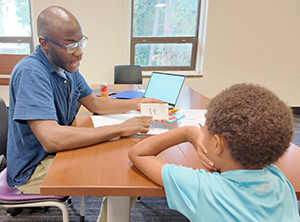 “Our goal is simple. We want to help more children become confident, successful readers
while preparing highly skilled literacy specialists to serve them,” said Laura Piestrzynski, PhD, assistant professor in reading/literacy, elementary education
and early childhood. “The learning lab creates a unique opportunity to connect research, practice, and
community impact. We are excited to grow that opportunity over time.”
“Our goal is simple. We want to help more children become confident, successful readers
while preparing highly skilled literacy specialists to serve them,” said Laura Piestrzynski, PhD, assistant professor in reading/literacy, elementary education
and early childhood. “The learning lab creates a unique opportunity to connect research, practice, and
community impact. We are excited to grow that opportunity over time.”
Connecting LSU Expertise with Community Needs
The Learning Lab for Dyslexia & Reading Research will initially serve approximately 20–25 children, providing literacy screening, individualized and small-group reading instruction, evidence-based structured literacy intervention, and ongoing progress monitoring.
Children will participate in an initial intake and literacy assessment process to help identify their specific reading needs, allowing instruction to be tailored to each child.
“Every child deserves the opportunity to experience success as a reader,” said Kim Skinner, PhD, associate professor in reading/literacy and elementary education. “The LSU Learning Lab for Dyslexia & Reading Research allows us to use the expertise and resources we have at LSU to serve children and families in our community, while giving our literacy graduate students meaningful, hands-on experience helping struggling readers.”
Skinner sees the Lab's combined mission as central to LSU's contributions to the community.
“That combination of community service, teacher development, and literacy research is really at the heart of what I hope this Lab will become,” said Skinner.
Preparing Literacy Professionals Through Hands-On Experience
For graduate students pursuing LSU's Reading Specialist Add-On Endorsement, the Learning Lab for Dyslexia & Reading Research provides an opportunity to put graduate-level study into practice while working directly with children experiencing reading challenges.
Graduate students enrolled in LSU reading specialist courses will complete a supervised practicum in the Lab under the guidance of the School of Education literacy faculty. Their work will include literacy assessment, evidence-based reading instruction, structured literacy practices, approaches informed by the science of reading, individualized and small-group intervention, and progress monitoring.
The experience connects graduate coursework with evidence-based practice and research, preparing literacy professionals to bring these approaches into schools, classrooms, and communities.
Creating a Place to Learn What Works
The Learning Lab for Dyslexia & Reading Research is also designed to advance research on literacy and dyslexia at LSU.
LSU literacy faculty and graduate students will use the Lab as a research site to study literacy assessment, evidence-based reading instruction, structured literacy, and reading intervention. The goal is to better understand how research-informed approaches can support children with persistent reading difficulties and characteristics of dyslexia.
That connection creates a cycle in which research informs practice, practice creates opportunities for continued learning, and new knowledge can ultimately improve literacy instruction and outcomes.
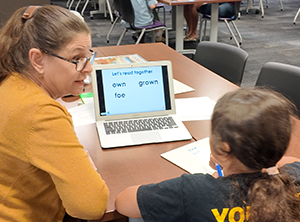 “Translational research is about making sure knowledge doesn’t stop in a journal or
a laboratory, but rather that it reaches people and improves lives,” said Roland Mitchell, dean of the LSU College of Human Sciences & Education. “The LSU Learning Lab for Dyslexia & Reading is a powerful example of that mission
in action. We are bringing LSU’s research and expertise directly into the lives of
children and families in our community, while preparing the next generation of literacy
specialists to carry evidence-based practices into schools and classrooms. What we
learn here can strengthen outcomes first for children and families in Louisiana, then
inform practice across our state and, ultimately, contribute to solutions that can
make a difference far beyond Louisiana.”
“Translational research is about making sure knowledge doesn’t stop in a journal or
a laboratory, but rather that it reaches people and improves lives,” said Roland Mitchell, dean of the LSU College of Human Sciences & Education. “The LSU Learning Lab for Dyslexia & Reading is a powerful example of that mission
in action. We are bringing LSU’s research and expertise directly into the lives of
children and families in our community, while preparing the next generation of literacy
specialists to carry evidence-based practices into schools and classrooms. What we
learn here can strengthen outcomes first for children and families in Louisiana, then
inform practice across our state and, ultimately, contribute to solutions that can
make a difference far beyond Louisiana.”
As Louisiana's flagship university, LSU is uniquely positioned to bring those pieces together. Knowledge generated through the Learning Lab can inform the preparation of future educators and literacy specialists while reaching classrooms, schools, families, and communities across Louisiana and beyond.
The Fall 2026 Learning Lab will meet Tuesdays and Thursdays from 4:45–5:45 p.m., September 22 through November 5, at 225 Peabody Hall on LSU's campus. Participation is free, and space is limited.
About the LSU Lutrill & Pearl Payne School of Education
A school of the LSU College of Human Sciences & Education, the Lutrill & Pearl Payne School of Education (SOE) offers undergraduate programs for students who want to pursue a career as a pre-kindergarten through 12th-grade teacher or acquire dual certification in both traditional elementary and special education classrooms. In addition, SOE offers 3 graduate certificates, 17 master’s degree program areas, 9 EdS certificate programs, and 2 PhD degrees in 11 areas of focus. SOE’s focus is not only on preparing highly qualified teachers but also in preparing educational leaders, curriculum studies scholars, educational technology experts, applied researchers, higher education professionals, school counselors, and clinical mental health counselors. SOE specializes in scholarly expertise regarding pressing educational and wellness issues across the entire lifespan.