
Reflecting on 35 Years at LSU: Carol Barry Looks Back on a Career of Leadership and Service
May 07, 2026
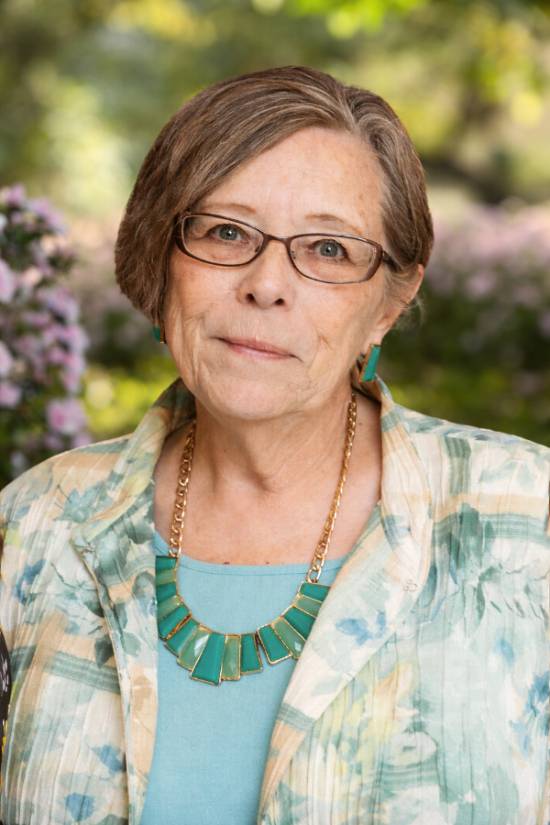
For 35 years, Carol Barry has helped shape the School of Information Studies through dedication to the university and a committment to student wellbeing. Since joining LSU in 1990, Barry has served as a professor, researcher, mentor, and administrator, leaving a lasting impact on both the university and the broader field of information studies. Her work has spanned teaching, faculty governance, curriculum development, and university leadership, including years of service in the LSU Faculty Senate and a decade leading the school as director during a period of significant transition and growth.
Throughout her career, Barry became widely respected not only for her leadership, but for her dedication to students and her belief in the evolving importance of information work. Under her leadership, the school expanded its programs, strengthened its online presence, broadened its focus beyond traditional librarianship, and officially transitioned from the School of Library & Information Science to the School of Information Studies in 2023. Colleagues and alumni alike have credited her steady guidance, thoughtful perspective, and commitment to ensuring the school remained positioned for the future while continuing its longstanding mission of preparing information professionals to serve communities across Louisiana and beyond.
As Barry prepares to retire, she leaves behind a school that is growing, evolving, and positioned for continued success. In the following Q&A, she reflects on her path to LSU, her passion for teaching, the challenges and transformations that shaped the school over the past three decades, and the people who made those years meaningful.
Q: You’ve been part of this program since 1990. What first brought you to this field of library and information science and to LSU?
A: My bachelor’s degree was in British literature and psychology, and I spent about ten
years working as a typesetter, a proofreader, a bank teller, a store clerk. It was
a great degree, but I was living in Syracuse, New York, and decided I wanted a grown-up
job. So I went to the placement office and said, “here’s my background, I’m ready
to do a master’s, who has really good placement numbers?”, because I wanted a job
when I got out. They said I should go talk to the School of Information Studies, and
I said, “the School of what?” But I went, and they seemed like very nice people, and
it sounded interesting. I took one class and was absolutely hooked.
Syracuse had two tracks, library science and information management, and I was in
information management. I don’t have a library degree, and I’ve never worked in a
library; that’s not my background at all. I went straight from the master’s into the
PhD because I was a teaching assistant and realized teaching was what I wanted to
do. In a one-week period, I interviewed at UCLA and LSU, and the people at LSU were
just incredible, so friendly, so gracious, so interested. When I got back to New York,
I had a postcard from every faculty member in my mailbox saying, “please don’t go
to UCLA.” That’s how I ended up at LSU.
Full disclosure, almost any PhD student will tell you that you don’t expect your first
position to be the one you stay in for your entire life. But once I was here, I never
wanted to leave. I loved the program, and I loved the students.
Q: Your research focuses on human information seeking and user-centered design. What
drew you to that area, and why has it remained important to you?
A: At Syracuse, there was a group of faculty working on relevance, because we were always
evaluating database searches by whether they were getting the relevant information.
The question was, how do you measure that? It turned out nobody really knew how to
define relevance. I got to work with that group, and then with a much larger group
through the American Society for Information Science.
My PhD focused on how people look at information and decide, “yes, this is going to
help.” I did searches for participants and then had them review the results, circling
anything positive and crossing out anything that wasn’t, and then we talked through
everything they had marked. From that, I identified about 26 factors, beyond just
being on the right topic, that mattered to people. I worked with college professors,
while others did similar studies with scientists, doctors, and other groups, and we
merged the findings.
My basic tenet is that if you want to know what users are doing, you need to talk
to the users. They’re the only ones who can tell you.
Q: In 2015, you stepped in as interim director during a time of major transition.
What do you remember most about that experience?
A: In 2010 or 2011, we had a university president who basically decided to close the
school, and the way we found out was through a headline in the newspaper on a Monday
morning. At the time, we were an independent school and very small, so it was an easy
argument to say that if we got rid of it, nobody would really miss it. Not surprisingly,
our enrollment dropped drastically. Who wants to go to a school that might close?
As a result, we also started losing faculty. We lost about half the faculty in a couple
of years, including many of the most senior people.
The good news was that the Board of Regents was on our side. They published all the
letters they received arguing against closing the school, which helped. Obviously,
it didn’t come to pass, but it led to us becoming part of a new college alongside
other relatively small, independent schools, what is now the College of Human Sciences
and Education. We were very clear that we would remain schools, not departments under
the college. It took time to figure out how everything would work, but I think it
ultimately worked out well for all of us.
Around that time, the dean, who had become director, left, and there weren’t many
of us left. I had been informally acting in an associate role, so it made sense for
me to step in, although it wasn’t something I had ever planned to do. There was some
reluctance, and the first year was tough. It was a steep learning curve, figuring
out what everything required. But it turned out I enjoyed it. And once we became involved
with LSU Online, things really started to turn around.
Q: At that time, you emphasized that the school was more than a library school, which
led to changing the school’s name. Why was it important to redefine that identity?
A: Part of it was that we were interested in developing undergraduate courses, and it
became clear fairly early on that undergraduates would hear “library school” and think,
“that’s not what I’m interested in”. At the same time, we were already doing work
that was more technology-related, so we really had to do two things simultaneously:
expand the curriculum beyond preparing students to be public or school librarians,
and change the image of who we were.
Changing the name to the School of Information Studies was a big part of that. It
was a hard fight, there were voices across campus that felt we were treading on some
toes, but we made the argument and made it successfully. We weren’t getting rid of
anything; we were expanding, and the new name reflected that. Expanding is growth
and growth is good. Over time, with the growth of areas like archives, records and
information management, and now health informatics, we’ve continued along that path.
It’s been a long process, but I think we’re very well positioned now.
Q: When you became director, how did your vision for the school take shape in terms
of growth, visibility, and new opportunities for students?
A: Given the shape we were in at the time, honestly, the first goal was survival. That’s
really what it came down to. We were also already deeply engaged in online education.
We had been offering fully online courses for years and were actually one of the first
units on campus where you could complete a degree without ever coming to campus.
Eventually, once LSU Online became more fully integrated into the university, things got easier. In terms of expansion, a lot of credit goes to Dr. Benoit, our current director, who really pushed forward the archives program, which became one of our first major areas of growth. Over time, those kinds of expansions helped shape where the school is now.
Q: You’ve taught generations of students. What has mattered most to you in the classroom?
A: I think the most important thing to me was making sure I was presenting material
in a way that students would understand, especially because our students come from
so many different backgrounds. You really can’t start with the assumption that they’re
going to know what you’re talking about.
I began my teaching career face-to-face, so it was about developing material that
made sense and building it in a structured way. I’m a real proponent of building blocks,
that you don’t move on to the second block until everybody understands the first.
And, as with anything else, getting feedback from students is essential. You have
to know whether it’s working or not.
Q: When you think about your former students and their careers, what brings you the
most pride?
A: There’s always an impulse to focus on the outliers, the real stars, and they are incredible.
But more than that, what stands out to me is the number of our graduates working in
school libraries, public libraries, and academic libraries. That’s especially meaningful
to me. I don’t have a library degree and never worked in a library, but when I was
about six years old, my grandfather started taking me to the library every week, and
the school librarian, Mrs. Barnes, was my favorite person in the world. She introduced
me to the Little House on the Prairie and it was the best day of my life. Every librarian
impacts the community and its patrons in this way, and I'm so proud to have been a
part of forming that impact.
When I think about our graduates in those roles, especially in school and public libraries,
I see them on the front lines of so much that’s happening today. They’re being incredibly
courageous in standing up for freedom of information and literacy. I think librarians
are heroes, and it brings me so much pride to have had a little bit of a hand in creating
those heroes.
Q: You’ve also taken on extensive service and leadership roles across the university,
like the Faculty Senate. What motivated you to stay so deeply involved in that work?
A: On many levels, I really enjoyed it, or I wouldn’t have done as much as I did. It’s
gratifying to be asked to serve on university committees, because then you have a
say in the conversation about what’s about to happen. I think that was a big part
of it, being involved in those conversations.
It also gave me the opportunity to bring our perspective to what was going on across
campus and make sure we were heard. And by that, I don’t just mean our program, I
mean the broader humanities and social science perspective. It was important to me
to make sure that voice was part of the conversation, not just the hard sciences and
the business school.
Q: Over the course of your career, how have you seen the field evolve, and what do
you think people still misunderstand about it?
A: I do think there’s been a lot of evolution in the field as a whole. I was in school
for this in the 1980s, and at that time it was, “The internet? What are you talking
about?” But so much of the technology has to do with information. It really is that
simple.
A lot of the evolution came from people in the field getting involved in how databases
are created, how algorithms are developed to solve problems, and how information systems
are built. It was a fairly natural progression where people didn’t just adopt technology,
they also helped shape it.
In terms of misunderstandings, I’m not sure this is as strong now as it was when we
were more explicitly a library science program, but there is still a public perception
that librarians are simply the people putting books on shelves and checking things
out. You don’t need a master’s degree for that, so it can be hard for people to understand
why the profession requires advanced training.
What people don’t always see is all the work happening behind the scenes that makes
those services possible. The systems, the organization, the ethics, the information
infrastructure. That work is extensive. At the same time, we still have many students
coming in who want to be school, public, or academic librarians, and increasingly
others coming for technology, archives, and records management.
And I’ll say, especially when I was responsible for admissions, I saw so many statements
from applicants saying, “If there was ever a time the world needed librarians, it’s
now.” That really stood out to me.
Q: Looking back, what are you most proud of in your career, particularly in your role
guiding the school through change, or as a professor?
A: I don’t suppose “staying open” is the appropriate answer, is it? But in some ways,
that really was part of it. It wasn’t like I was going after the director’s position
with a big vision for how everything should look, it was more that I believed our
school deserved to continue, no matter what others thought.
And ten years as director is not a long time, but it went by very quickly. I think
what I’m most proud of is that, although I can’t take all the credit for this, as
it really includes the faculty and the support Dr. Benoit gave me, we are positioned
right now in an incredible moment. We’re seeing expansion, we’re evolving, and there’s
a clear path forward.
Maybe that’s the most important thing: it’s not just “we need to grow somehow,” but
that the faculty and everyone involved have come together and said, “here’s the direction
we need to go, and here’s how we’re going to accomplish it.” So leaving with a sense
that there is a clear vision and a strong path forward, that’s what makes me happiest.
Q: As you retire, what do you hope for the future of the School of Information Studies,
and what advice would you offer to those who are continuing in the school?
A: My first thought, which may sound almost trite, is simply: keep up the good work.
Keep up the momentum. Keep doing exactly what you’re doing. I think the school is
already positioned in a really strong place right now, and the most important thing
is not to lose that vision moving forward.
Q: Are there any final thoughts you want to share?
A: I’ve been thinking about this, and I think what I would say is that, 35 years later,
I am so pleased with my past self for choosing LSU. It has given me, on the whole,
a really fulfilling 35 years, and I have genuinely enjoyed all of the people I’ve
worked with during that time, the faculty, staff, and students. Because without the
people, what is it?
About the LSU School of Information Studies
The LSU School of Information Studies (SIS) provides a 100% online prestigious education
in library & information science. It is the home of the Master of Library & Information
Science, which is the only program accredited by the American Library Association
in the state of Louisiana. SIS also offers a dual degree with the Department of History,
an undergraduate minor, and three graduate certificate options. SIS is a member of
the iSchools, a group of Information Schools dedicated to advancing the information
field. SIS is part of the LSU College of Human Sciences & Education.