
LSU Lutrill & Pearl Payne School of Education Alumna LaKeitha Poole, PhD, Named to Baton Rouge Business Report 40 Under 40
December 19, 2025
BATON ROUGE, LA – LSU Lutrill & Pearl Payne School of Education alumna LaKeitha Poole, PhD, was named to the Baton Rouge Business Report’s 40 Under 40 for 2025. Poole, who
earned a Master of Arts degree in educational leadership & research in 2012, currently serves as Assistant Athletic Director of Sport Psychology & Counseling for LSU Athletics. We asked Poole about her journey from therapist to educator to
entrepreneur. 
What is the power and possibility behind a human sciences degree?
A human sciences degree is a foundation in understanding people—their behaviors, their
motivations and the systems that shape their lives. Its power lies in its ability
to equip us to create meaningful change, whether through counseling, research, community
work or leadership. The possibility is limitless because human sciences prepare you
not just to do a job, but to transform environments, elevate well-being and advocate
for equity in every space you enter.
What motivated you to work in athlete mental health?
I was motivated by a deep belief that athletes deserve the same level of holistic
care as anyone striving for excellence under pressure. Growing up in Louisiana sports
culture and later working with collegiate and professional athletes, I saw firsthand
how mental, emotional and identity-based challenges often went unseen. I wanted to
create a space where athletes could be fully human—where performance, purpose and
well-being could coexist. Supporting athletes became my way of shaping healthier systems
and nurturing stronger, more empowered individuals.
What is the significance behind an athlete prioritizing their mental health along
with their physical health?
Mental health is performance health. When athletes invest in their emotional resilience,
focus and self-awareness, they strengthen the very foundation of their physical abilities.
Prioritizing mental health helps athletes recover faster, navigate adversity, manage
public pressure and maintain a healthy sense of identity beyond their sport. It’s
not a luxury—it’s essential to longevity, leadership, and life after competition.
When athletes care for their whole selves, they don’t just win in sport; they win
in life.
Can you tell me more about your journey of being a therapist to becoming an educator?
My journey from therapist to educator was really a journey from serving individuals
to shaping systems. After years of clinical work, I realized that the impact I wanted
to make extended beyond the therapy room, a passion first ignited by my professors
in the CHSE program and their continued mentorship. Teaching allowed me to pour into the next generation
of counselors, healers and advocates—people who would go on to touch thousands of
lives. Becoming an educator felt like a natural extension of my calling: to expand
access, deepen understanding and normalize conversations about mental health in every
space we occupy. 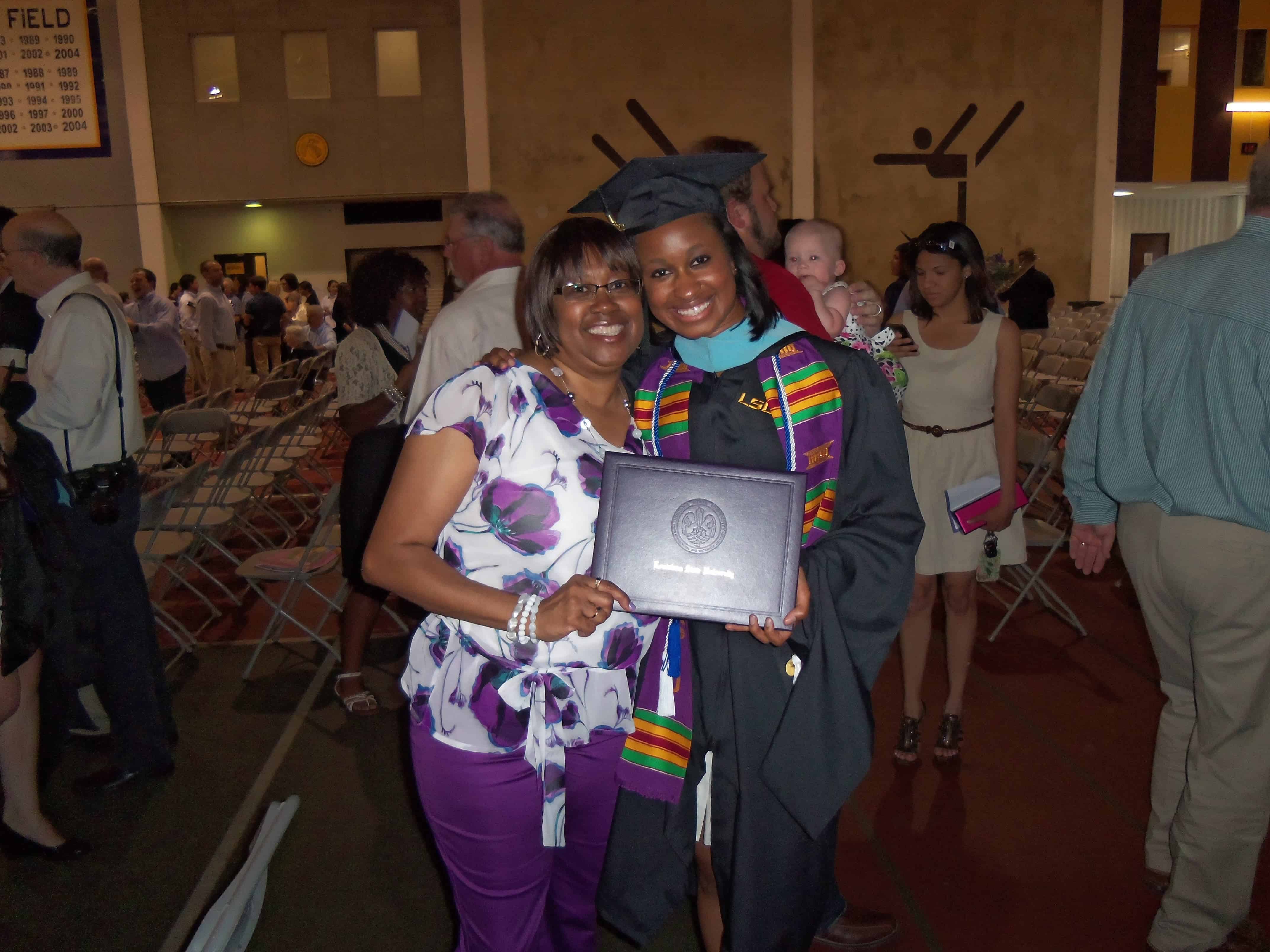
What inspired you to become an entrepreneur and start your own practice?
I became an entrepreneur because I wanted to build the type of mental health practice
I wished existed when I first moved to Baton Rouge more than 15 years ago—a practice
rooted in cultural responsiveness, community care and accessible, authentic healing.
I wanted the freedom to design services that honored the complexities of people’s
lived experiences, especially those who have historically been overlooked or underserved.
Entrepreneurship gave me the opportunity to shape my own vision, create jobs for other
clinicians of color and offer care that aligns with my values and the needs of my
community.
You’ve worked in many different places; what brought you back to LSU?
In many ways, I’ve never really left LSU since starting my master’s program in 2010.
I’ve just always worked across several areas and in different capacities at once.
Always coming back to LSU is both personal and purposeful. LSU shaped my early development,
and remaining allows me to contribute to a community that helped raise me. I wanted
to continue to use my expertise to elevate mental health conversations within athletics,
collegiate life and the broader university system. LSU gave me the platform to build
programs, mentor students and collaborate across disciplines in ways that deeply aligned
with my commitment to equity, wellness and service. It felt like coming home to do
the work I was meant to do.
About the LSU Lutrill & Pearl Payne School of Education
A school of the LSU College of Human Sciences & Education, the Lutrill & Pearl Payne
School of Education (SOE) offers undergraduate programs for students who want to pursue
a career as a pre-kindergarten through 12th grade teacher or acquire dual certification
in both traditional elementary and special education classrooms. In addition, SOE
offers 3 graduate certificates, 17 master’s degree program areas, 9 EdS certificate
programs, and 2 PhD degrees in 11 areas of focus. SOE’s focus is not only on preparing
highly qualified teachers but also in preparing educational leaders, curriculum studies
scholars, educational technology experts, applied researchers, higher education professionals,
school counselors, and clinical mental health counselors. SOE specializes scholarly
expertise regarding pressing educational and wellness issues across the entire lifespan.
Visit the LSU Lutrill & Pearl Payne School of Education website.
About the College of Human Sciences & Education
The College of Human Sciences & Education (CHSE) is a nationally accredited division
of Louisiana State University. The college is comprised of the School of Education,
the School of Information Studies, the School of Kinesiology, the School of Leadership
& Human Resource Development, and the School of Social Work. CHSE has two model demonstration
schools, the Early Childhood Education Laboratory Preschool, enrolling birth to age
four and the University Laboratory School enrolling Kindergarten through grade 12.
The college also has four centers and institutes: the Early Childhood Education Institute,
the Healthy Aging Research Center, the Leadership Development Institute, and Social
Research & Evaluation Center. The college is committed to achieving the highest standards
in teaching, research, and service and aims to improve quality of life across the
lifespan.