
LSU School of Information Studies Faculty Member Leads NSF Grant Supporting Early Computational Thinking Through Play
January 09, 2026

Dr. Katie Campana, the Patsy H. Perritt Chair in Youth Services at the LSU School of Information Studies (SIS), is leading a three-year research project that explores how libraries and museums can support computational thinking for young children and families through playful, story-based tinkering activities. Funded by a grant with the National Science Foundation, the project brings together museums, libraries, caregivers, and educators to make foundational STEM concepts accessible, developmentally appropriate, and engaging for early learners.
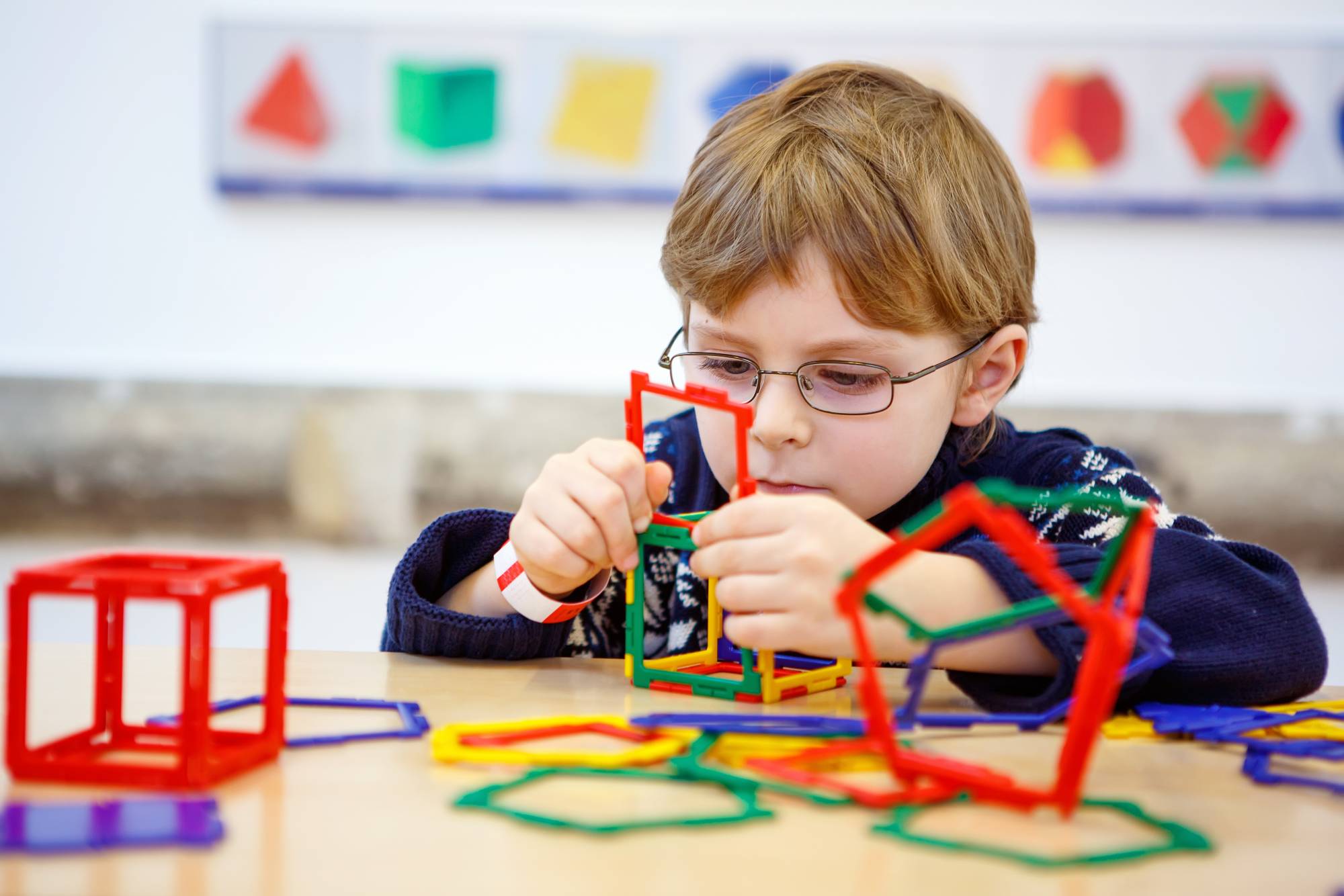
At the core of the project is an approach Campana and her collaborators call “tinker-telling,” which pairs children’s stories with hands-on tinkering challenges. For example, after reading Goldilocks and the Three Bears, children may be challenged to build a chair that can support a bear or doll using simple materials like cardboard and tape. Through this process, children practice problem-solving, sequencing, pattern recognition, and design iteration without the use of digital technology.
While computational thinking is often associated with coding, Campana emphasizes that many of its foundational skills can be nurtured through analog, unplugged activities that are especially suitable for young children. This approach also makes the learning more approachable for parents and caregivers, who may feel uncertain about how to support STEM learning at home. Libraries and museums play a critical role in this work, as they serve children alongside their caregivers and can model activities families can continue beyond the program setting.
The project will unfold over three phases. In the first year, Campana and her team will conduct case studies with two children’s museums and two libraries located in large urban areas, observing programs and gathering feedback from educators, children, and families. These partner institutions will participate in collaborative design cycles to develop and refine tinker-telling activities and practices. In the second year, the project will expand to include additional library and museum educators, particularly from smaller and rural communities, through design forums that further refine resources and contribute to the development of a comprehensive toolkit. In the final year, the toolkit and accompanying professional development will be tested in rural and small libraries and museums, with researchers examining how the resources impact educator practice and family engagement. The ultimate goal is to help close STEM opportunity gaps by equipping under-resourced communities with affordable, effective strategies to support early computational thinking.
Campana collaborates on the project with Dr. Jacqueline Kociubuk, assistant professor at the University of Rhode Island, and Dr. J. Elizabeth Mills, an independent researcher. Together, the team aims to ensure that playful, creative learning experiences are available to children regardless of geography or access to formal STEM institutions.
“Children spend most of their time learning in informal environments, especially at home,” Campana said. “By supporting caregivers and community institutions like libraries, we can create long-term, meaningful learning experiences that grow with families.”
To learn more about the project or to find the team’s contact information, please visit the SIS Research page on our website.
About the LSU School of Information Studies
The LSU School of Information Studies (SIS) provides a 100% online prestigious education
in library & information science. It is the home of the Master of Library & Information
Science, which is the only program accredited by the American Library Association
in the state of Louisiana. SIS also offers a dual degree with the Department of History,
an undergraduate minor, and three graduate certificate options. SIS is a member of
the iSchools, a group of Information Schools dedicated to advancing the information
field. SIS is part of the LSU College of Human Sciences & Education.
Visit the School of Information Studies website.
About the College of Human Sciences & Education
The College of Human Sciences & Education (CHSE) is a nationally accredited division
of Louisiana State University. The college is comprised of the School of Education,
the School of Information Studies, the School of Kinesiology, the School of Leadership
& Human Resource Development, and the School of Social Work. CHSE has two model demonstration
schools, the Early Childhood Education Laboratory Preschool, enrolling birth to age
four and the University Laboratory School enrolling Kindergarten through grade 12.
The college also has four centers and institutes: the Early Childhood Education Institute,
the Healthy Aging Research Center, the Leadership Development Institute, and Social
Research & Evaluation Center. The college is committed to achieving the highest standards
in teaching, research, and service and aims to improve quality of life across the
lifespan.