
Inside ALISE's Internship: Kristina Shiroma Shares Inside Tips on the Program's Inaugural Year
October 23, 2025
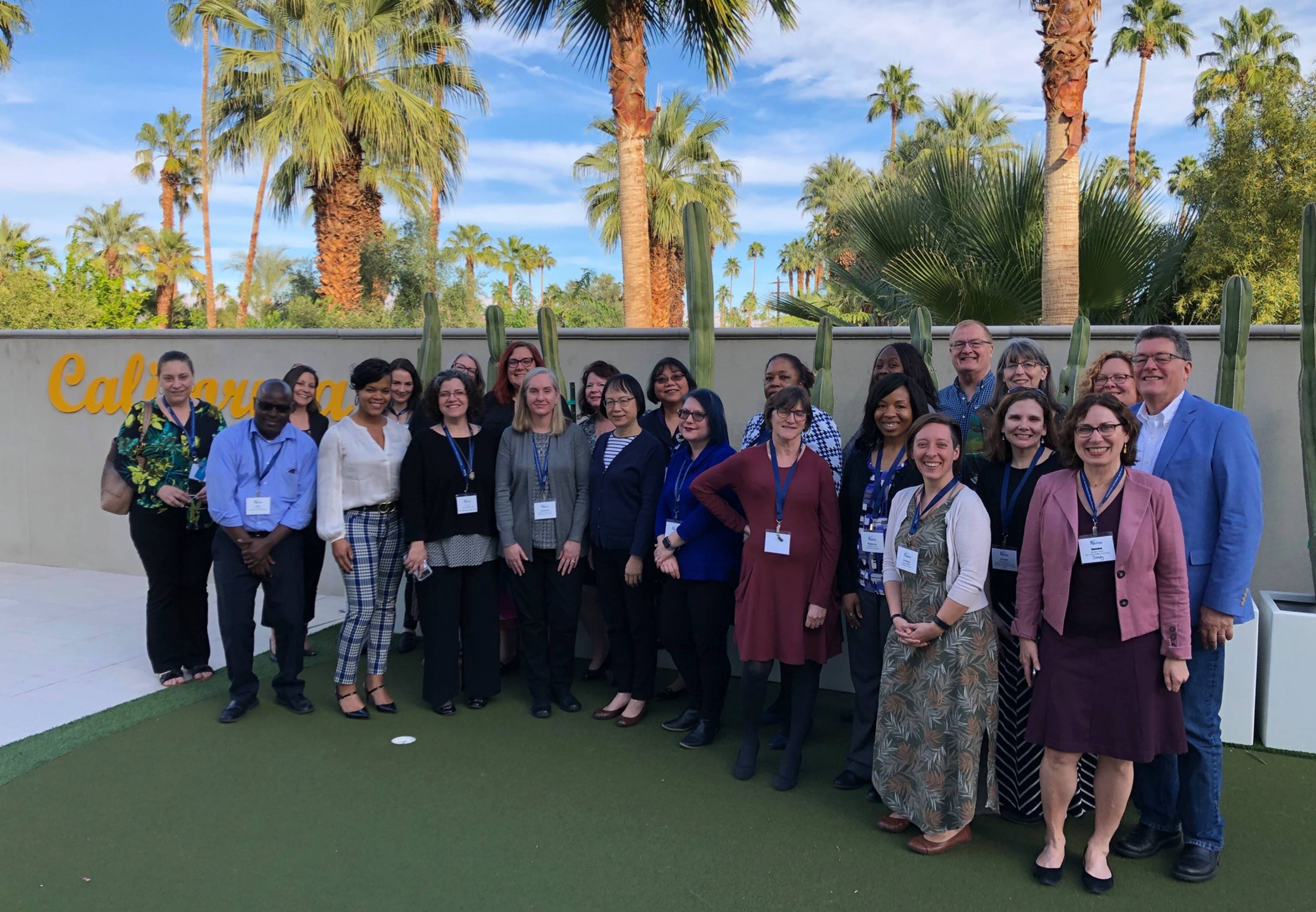
ALISE via Facebook
In 2024, LSU School of Information Studies (SIS) Assistant Professor Kristina Shiroma, PhD, became one of the first-ever participants in the ALISE Leadership Development Internship, a new national initiative by the Association for Library and Information Science Education (ALISE). The yearlong program supports early-career library and information science (LIS) professionals through mentorship, conference participation, and a collaborative intern project.
As LSU SIS proudly joins the initiative this year by sponsoring 2025 intern Amanda Shelton, Shiroma shares what it was like to help shape the inaugural experience, how it impacted her development as a scholar, and why she hopes others will say “yes” to this opportunity.
Q: How did you first hear about the ALISE Leadership Development Internship?
I actually heard about it pretty late. It came through an email on JESSE, the library science educators listserv. The deadline was in April, and you usually hear back by June or July. I almost didn’t apply because some of the questions asked about my existing leadership within ALISE, and I had never been a member. But I emailed a few of my mentors, and they encouraged me to go for it.
Q: What did the internship involve, and how did it begin?
It’s a yearlong program that kicks off at the ALISE annual conference in the fall. The sponsorship covers registration, hotel, and provides a $1,500 travel stipend. Each intern’s costs are sponsored by a university—mine was the University of South Carolina.
When we got to the conference, we received medals to wear so people would know we were the interns. While at first I was a little apprehensive about wearing a medal, it actually helped a lot. People at the conference were so excited about the program and our involvement, so they were eager to speak to us. The medal was one way to break the ice. I’m an introvert, so the fact that people would come up to me and start conversations made networking easier, especially since it was my first ALISE conference.
Q: What was it like working with the other interns?
We immediately clicked. My fellow interns were Dr. Amanda Harrison from the University of Central Missouri and Sarah Appedu, a PhD student at Syracuse. We had different backgrounds, which led to great collaboration. We’d check in every day at the conference, kind of move around as a group, and, at the end of the day, just reflect on everything we were experiencing. Even after the conference and through our year-long project, we have continued a great relationship and support system for each other.
Q: Tell us more about the research project. What did you end up creating?
Our conversations with each other and with ALISE members eventually turned into our research project. At the outset, we hadn’t planned on anything specific, but as we kept hearing the same themes come up—from attendees and from ALISE leadership—our project idea came together naturally.
We started asking: What does ALISE membership mean to people? One of the things that was coming up for us was this idea of the Mission, ALISE’s mission. And better understanding people’s perception of ALISE. And really thinking about membership.
So we designed a qualitative interview study. We looked at three different constituencies - members and non members, international and local LIS communities, and then practitioners and educators. We conducted over 40 interviews and used thematic analysis to identify patterns in the data. We’re currently preparing to present this work at the 2025 ALISE Conference in Kansas City.
It was honestly incredible that we formed the project in just a few afternoons at the conference. It felt so organic—no one told us what to research. They just gave us the space to follow what we were hearing. That kind of trust and flexibility was empowering.
Q: Did you have a mentor through the internship?
Yes, and it was one of the most meaningful parts of the experience. My mentor wasn’t there to tell me how to do my job—I already have professional mentors for that. This was someone I could just sit with and talk honestly about what it means to be a woman of color, to be new to academia, to feel overwhelmed and unseen at times. It wasn’t about instructions—it was about connection.
I also have to give a shout out to Dr. Lucy Santos Green, who created this internship program. Her mentorship meant so much. I don’t think I could have managed the past year without Lucy and my mentor, Dr. Vanessa Irvin. They’ve had a lasting impact on me.
Q: What leadership skills or growth do you feel you gained?
For me, leadership is about being able to use your voice. If you can’t walk up to someone at a conference and say, “Hi, I’d love to talk about my work,” then it’s hard to build those opportunities to “be at the table,” let alone lead.
This internship helped me do that. I now feel more confident introducing myself, reaching out to people, following up on conversations. It also showed me how important it is to find—and help build—supportive communities in our field. I left the internship feeling not just more capable, but more connected.
Q: What advice would you give to someone thinking of applying?
Don’t disqualify yourself. Even if you haven’t been active in ALISE, you can still bring valuable leadership experience. Think about how you’ve contributed in other ways—through teaching, organizing, mentoring, research teams, anything. What I came to realize is that leadership looks different for everyone. I had led a doctoral writing group, participated in research teams, and served on committees. I framed my experience that way—and I also said I could bring a fresh perspective because I wasn’t already embedded in the ALISE community.
Also, attend the info session. It’s usually in early April and gives you a good sense of what to expect.
Finally, when asking for a letter of support (which is a requirement for the application), especially from someone you don’t know well, offer to write a draft for them. It’s a professional courtesy—and it makes it easier for them to advocate for you effectively.
Q: This year, LSU SIS is sponsoring a 2025 intern for the first time. What does that mean to you?
I’m so excited! I actually brought it up to Dr. Benoit, and I when I told him about the opportunity, he was on board immediately.
This year, LSU is sponsoring Amanda Shelton, a PhD student from the University of Missouri, as one of the three 2025 interns. I think it’s an important step for our school—it shows that we’re committed to supporting early-career scholars and national leadership in LIS. I hope it becomes a tradition.
Q: Now that you’re finishing the internship, how do you hope the program evolves in the future?
I’d love to see more continuity between cohorts, year to year.
We’ve also asked if we can help select the next round of interns or maybe even mentor them in some way—just something to “pass the torch.” I think building a community across cohorts could be really powerful.
Q: Final thoughts—what’s the biggest thing you’re taking away from this experience?
Honestly? The relationships. With my fellow interns, with my mentors, with the people I interviewed. I met people I never would have otherwise. Now, when I see their names on a conference schedule, I’ll know who they are—and I’ll go to their talk, say hi, and keep building those connections.
This internship helped me find my voice and reminded me that leadership isn’t just about having a title. It’s about showing up, being curious, and building something meaningful with others.
About the LSU School of Information Studies
The LSU School of Information Studies (SIS) provides a 100% online prestigious education
in library & information science. It is the home of the Master of Library & Information
Science, which is the only program accredited by the American Library Association
in the state of Louisiana. SIS also offers a dual degree with the Department of History,
an undergraduate minor, and three graduate certificate options. SIS is a member of
the iSchools, a group of Information Schools dedicated to advancing the information
field. SIS is part of the LSU College of Human Sciences & Education.
Visit the School of Information Studies website.
About the College of Human Sciences & Education
The College of Human Sciences & Education (CHSE) is a nationally accredited division
of Louisiana State University. The college is comprised of the School of Education,
the School of Information Studies, the School of Kinesiology, the School of Leadership
& Human Resource Development, and the School of Social Work. CHSE has two model demonstration
schools, the Early Childhood Education Laboratory Preschool, enrolling birth to age
four and the University Laboratory School enrolling Kindergarten through grade 12.
The college also has four centers and institutes: the Early Childhood Education Institute,
the Healthy Aging Research Center, the Leadership Development Institute, and Social
Research & Evaluation Center. The college is committed to achieving the highest standards
in teaching, research, and service and aims to improve quality of life across the
lifespan.
Visit the College of Human Sciences & Education website.