
How DNA Helps Researchers Understand Life on Louisiana's Coast
April 23, 2026
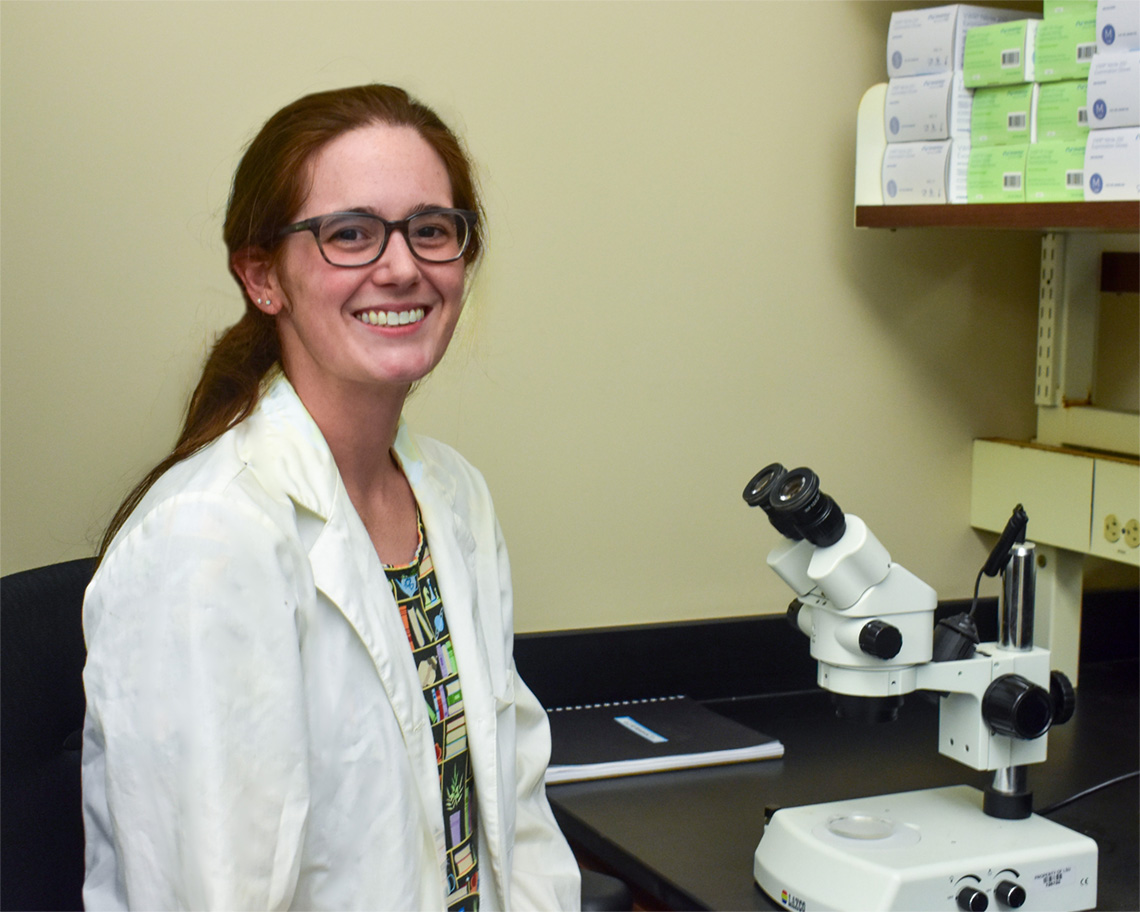
DOCS Masters student Emily Savoie works in Cassandra Glaspie's Marine Community Ecology Lab.
There is no such thing as leaving without a trace. That’s what the science behind eDNA tells us.
Every creature that passes through an area leaves something behind, in the form of microscopic amounts of genetic material. Increasingly, researchers are learning how to find this material, called eDNA, or environmental DNA, and use it to understand the biodiversity of an area, tracking what animals went where, and when.
Oceanography & Coastal Sciences Masters student Emily Savoie is doing just this to get a grasp of life in the benthic communities of Louisiana’s estuaries - the worms, mud crabs, snails, clams and other small bottom dwellers that help form the basis of the food web on the coastline and in the northern Gulf.
These creatures shed DNA in a variety of ways, Savoie said. “That can be from excretions, that can be from mucus sloshing off, that can be from what would be dead skin cells equivalent for us.” Materials containing these pieces of DNA remain floating in the water column for days after the organism has gone.
Savoie collects water samples, and extracts potential sources of DNA through filtering – a lot of filtering, she says, due to the sediment-heavy Louisiana waters. Then she sends the extracted material to a DNA sequencing facility where they process it and return the data. Savoie then compares the list of DNA sequences found to a database of available DNA sequence data belonging to Gulf organisms, looking for a match. When she finds one, she knows that species has been there, relatively recently.
She is combining her eDNA research with information drawn from an accompanying set of sediment cores as she works to paint a picture of the communities of tiny benthic organisms in the Gulf’s murky waters.
These worms, clams and snails may be small, but their presence – or absence – can tell scientists a lot about the health of the ecosystem.
“They're an important food source for a lot of fisheries,” she says. “And they can be used as good assessments of an ecosystem health because of their mobility limitations. They can't swim away when there's a problem. Who is and isn't present can help us with assessing more long-term stability and health of a system.”
Savoie’s work is part of LSU’s contributions to the Marine Biodiversity Observation Network, an effort to monitor the biodiversity of coastlines and oceans around the world.
Learn more about the history of DNA analysis
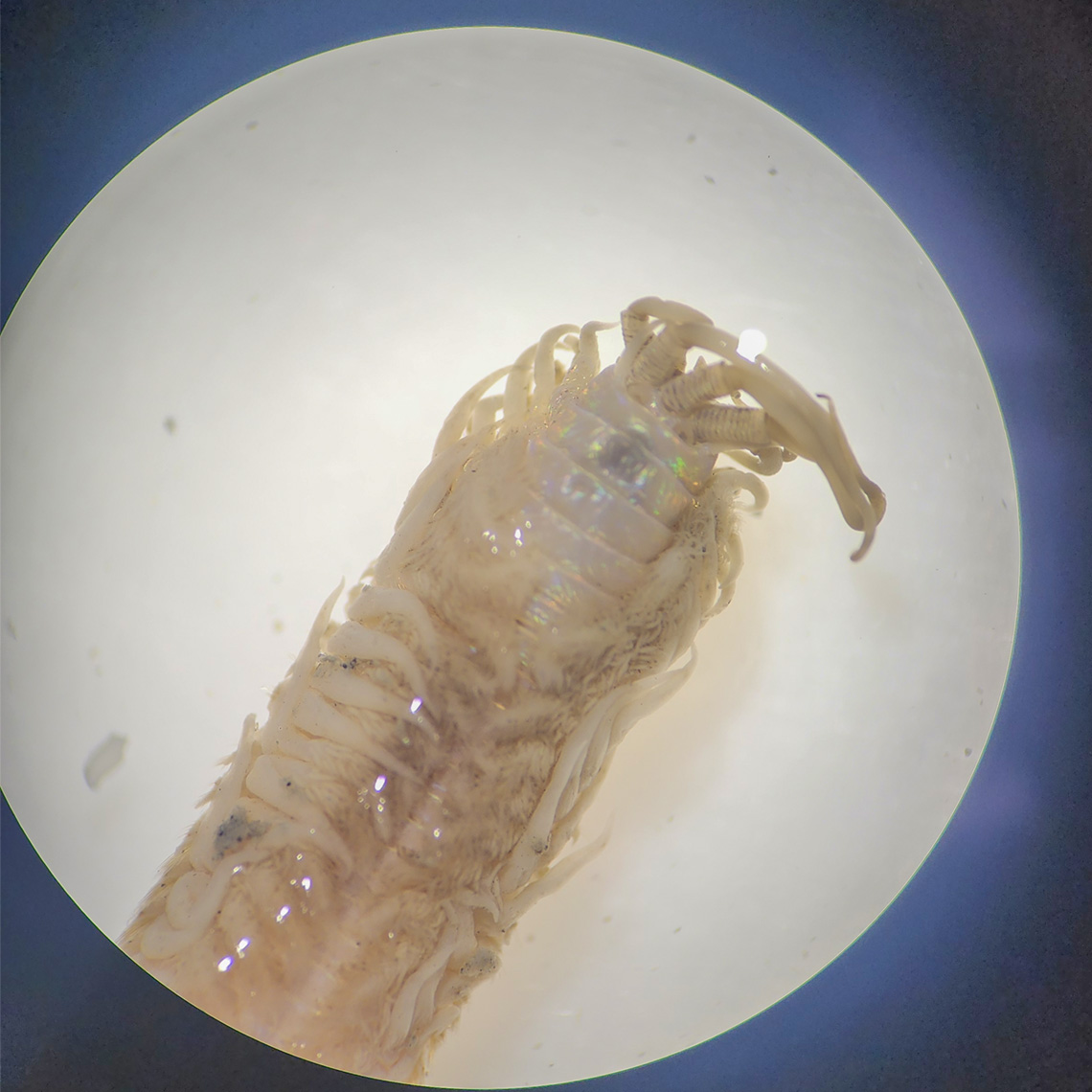
Savoie uses environmental DNA as part of her work studying the bottom dwelling organisms of Louisiana's coastal estuaries, like this worm Onuphidae sp
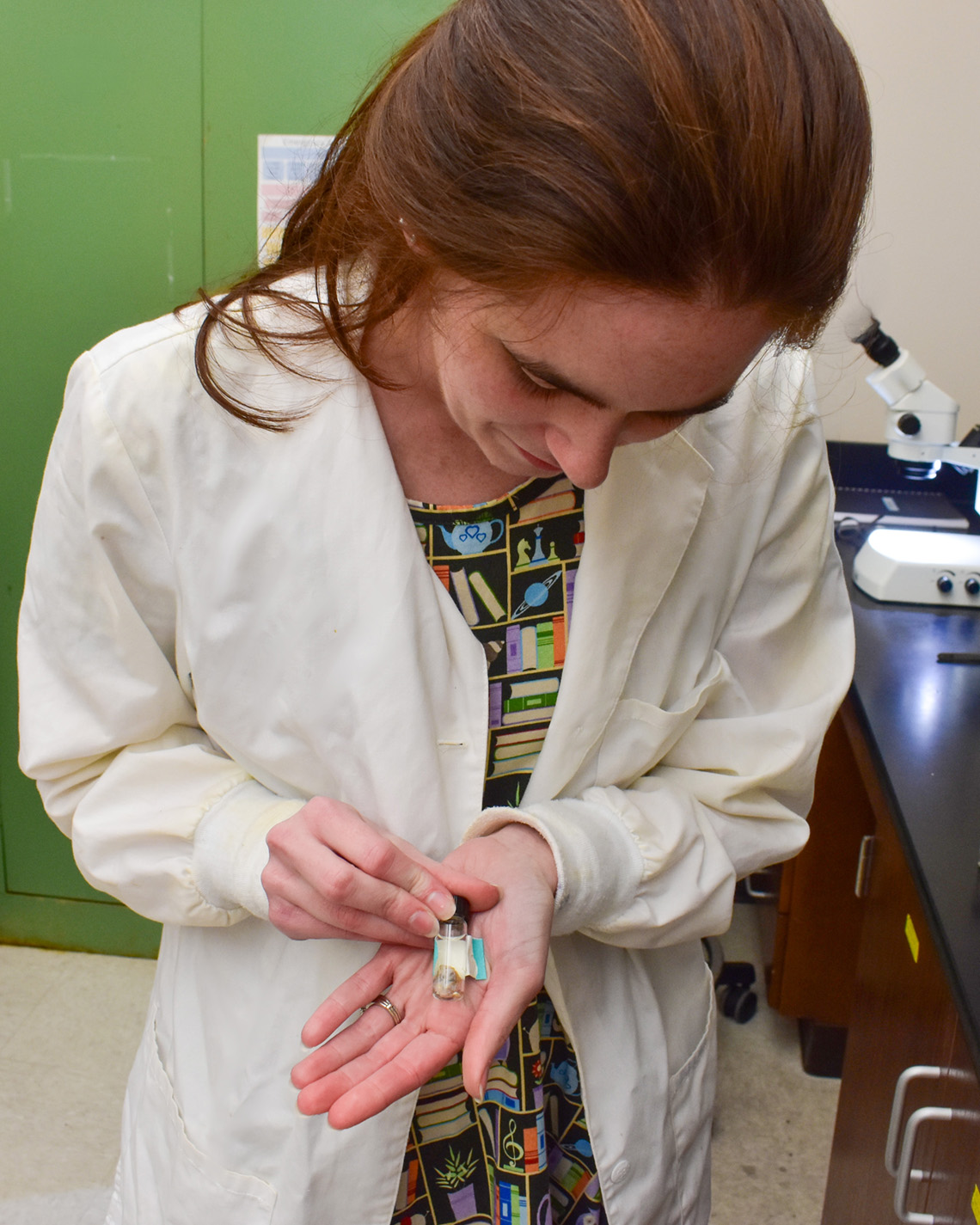
Savoie holds a specimen of a sea cucumber, a denizen of coastal Louisiana.