
Wetlands: Nature’s First Line of Defense for Our Coast and Communities
February 02, 2026
Since the 1930s, Louisiana’s coastline has been reshaped by the relentless advance of the Gulf, with over 2,000 square miles of land disappearing beneath its waters and representing the largest loss of coastal land anywhere in the continental United States.
This dramatic transformation has far-reaching consequences, threatening local economies, delicate ecosystems, and heightening the state’s exposure to hurricanes. In the face of these urgent challenges, LSU’s College of the Coast & Environment (CC&E) stands at the forefront, leading pioneering research and bold initiatives that not only protect Louisiana’s coast, but also build stronger, more resilient communities. Below are just a few examples of how CC&E is driving meaningful solutions for our coastal future.
 Wetlands are vital to protecting our coast, and CC&E researchers are actively investigating
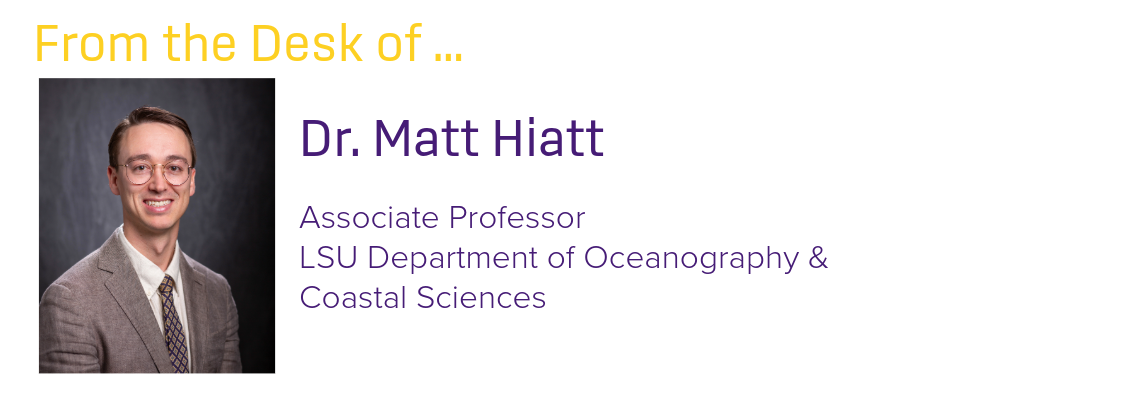
the role of both constructed and natural wetlands in reducing coastal flooding hazards. Through several projects funded through the US Army Corps of Engineers, Drs. Robert Twilley, Matthew Hiatt, and CC&E
Dean Clint Willson, along with collaborators across campus, are conducting research
on coastal ecosystem design - a framework that leverages the benefits of natural
and nature-based coastal features, such as wetlands, environmental levees, and flood
control gates – and how that could be integrated into engineering design and urban
planning.
Wetlands are vital to protecting our coast, and CC&E researchers are actively investigating
the role of both constructed and natural wetlands in reducing coastal flooding hazards. Through several projects funded through the US Army Corps of Engineers, Drs. Robert Twilley, Matthew Hiatt, and CC&E
Dean Clint Willson, along with collaborators across campus, are conducting research
on coastal ecosystem design - a framework that leverages the benefits of natural
and nature-based coastal features, such as wetlands, environmental levees, and flood
control gates – and how that could be integrated into engineering design and urban
planning.
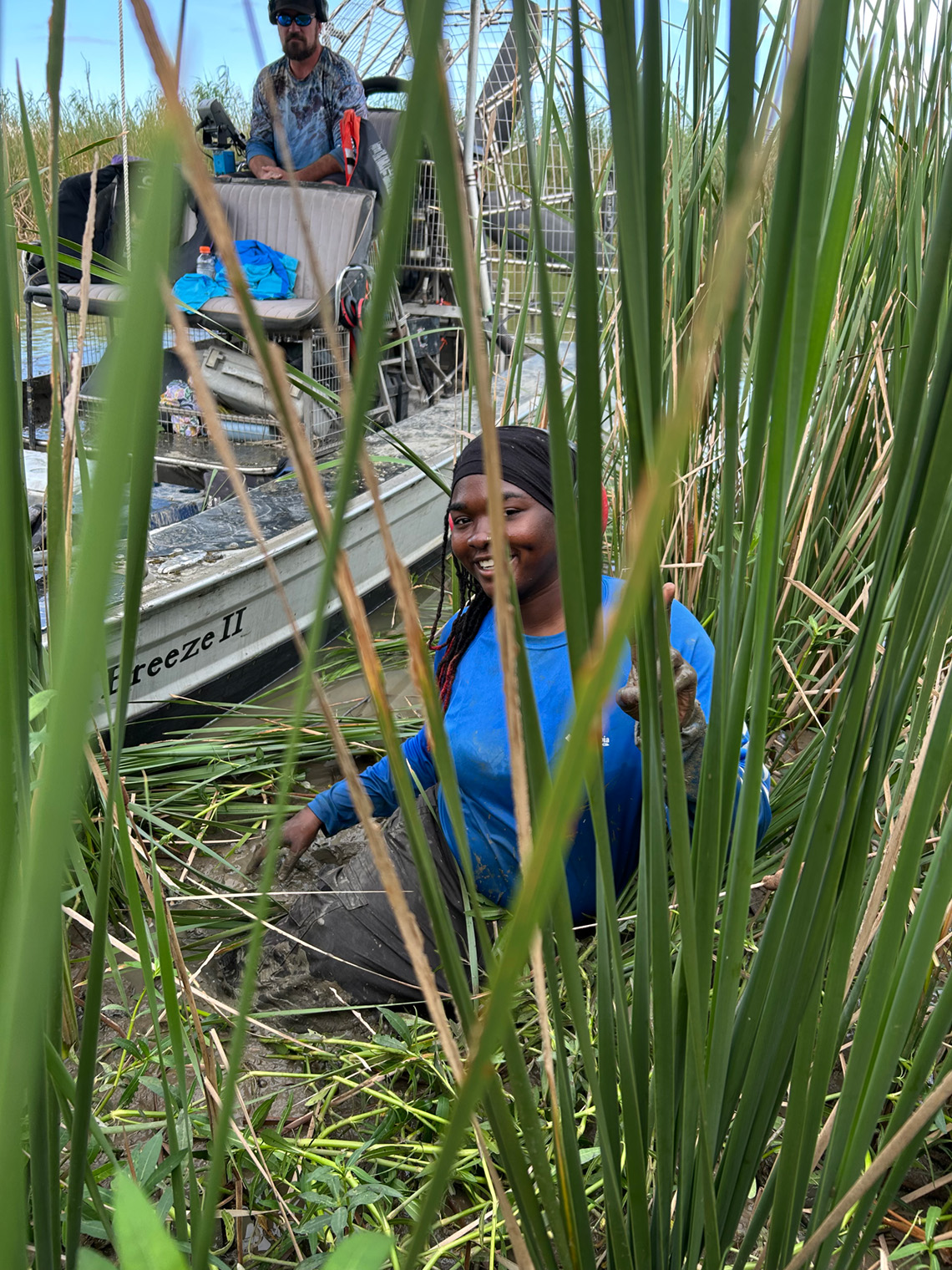
Through the State of Louisiana’s ambitious Coastal Master Plan, administered by the Louisiana Coastal Protection and Restoration Authority, wetland construction and restoration play a huge role in managing the Louisiana coastal region. Such innovative techniques leveraging natural and nature-based features require evaluation to determine the success of such projects, and CC&E researchers are using cutting-edge science to advance this endeavor. Dr. Tracy Quirk and her students are investigating the success of marsh restoration by comparing structural and functional characteristics (e.g., vegetation, elevation, hydrology, accretion, and denitrification) between two created marshes and an adjacent natural reference marsh along the north shore of Lake Pontchartrain, Louisiana.
 Wetlands not only serve as a buffer from storms and sea level rise but also play a
major role in regulating greenhouse gas emissions and contribute to productive vibrant
ecosystems. In large collaborative project funded by the National Science Foundation,
Dr. Giulio Mariotti is using computer models to forecast how coastal marshes may change
in size, shape, and salinity in the future, and how these changes could affect methane
emissions.
Wetlands not only serve as a buffer from storms and sea level rise but also play a
major role in regulating greenhouse gas emissions and contribute to productive vibrant
ecosystems. In large collaborative project funded by the National Science Foundation,
Dr. Giulio Mariotti is using computer models to forecast how coastal marshes may change
in size, shape, and salinity in the future, and how these changes could affect methane
emissions.
As part of the same project, Drs. Haosheng Huang and Dubravko Justic are creating high resolution hydrodynamic and biogeochemical models to predict changes in methane emissions in coastal Louisiana.
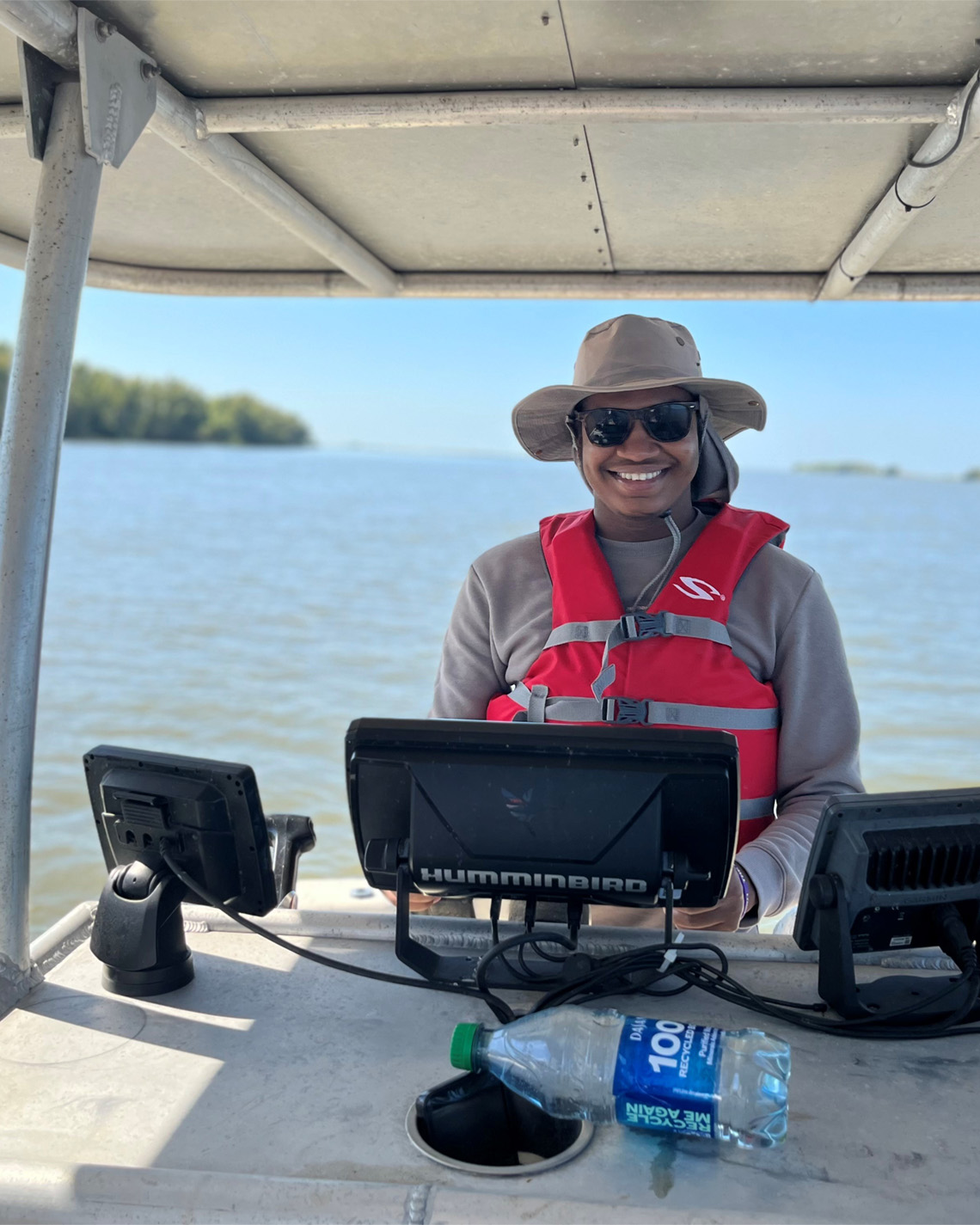
In another project, with funding from Louisiana Center of Excellence, National Science Foundation, Louisiana Sea Grant, and the National Oceanic and Atmospheric Administration, Drs. Matthew Hiatt and John White have established a network of sensors to measure water levels and salinity throughout the wetlands in Barataria Bay, Louisiana, a region that has experienced significant land loss and storm impacts. The goal is to establish an understanding of the drivers of saline intrusion in marsh soils, and to ultimately determine what this means for the ecological resiliency of wetlands experiencing rapid change.
 CC&E’s leadership in wetlands science is recognized nationwide. It is the only college in the United States to have six faculty members—Drs. John
White, John W. Day, Jr., Robert Twilley, William Patrick, James Gosselink, and R.
Eugene Turner—honored with the prestigious National Wetlands Award. No other institution
has had more than one recipient. Presented annually by the Environmental Law Institute,
this award celebrates individuals whose work demonstrates exceptional innovation,
dedication, and impact in wetlands conservation and education. CC&E’s unmatched record
reflects decades of pioneering research and a deep commitment to safeguarding the
nation’s most vulnerable coastal landscapes.
CC&E’s leadership in wetlands science is recognized nationwide. It is the only college in the United States to have six faculty members—Drs. John
White, John W. Day, Jr., Robert Twilley, William Patrick, James Gosselink, and R.
Eugene Turner—honored with the prestigious National Wetlands Award. No other institution
has had more than one recipient. Presented annually by the Environmental Law Institute,
this award celebrates individuals whose work demonstrates exceptional innovation,
dedication, and impact in wetlands conservation and education. CC&E’s unmatched record
reflects decades of pioneering research and a deep commitment to safeguarding the
nation’s most vulnerable coastal landscapes.
Every day, CC&E channels this expertise into action—protecting Louisiana’s coast and, in turn, the communities, wildlife, and ecosystems that depend on it. Through bold research, collaborative partnerships, and a vision grounded in science, the college is shaping a more resilient future for coastal regions everywhere. CC&E is building teams that win in Louisiana, for the world.