
Research Spotlight: Tracking the Silver Carp
September 30, 2026
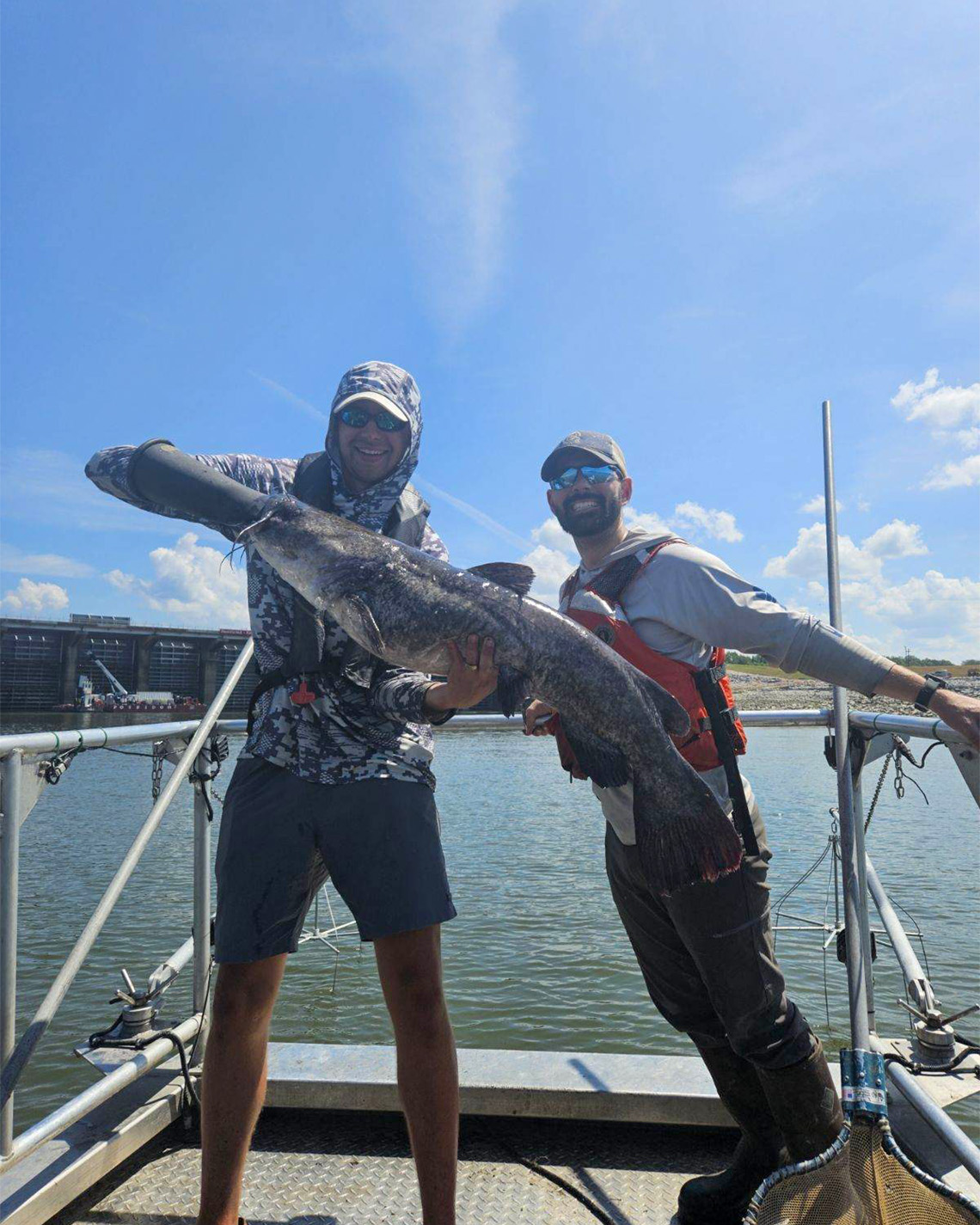
Oceanography & Coastal Sciences PhD candidate Christian Walker has tagged carp across the state as part of the research for his dissertation.
The list of invasive species making their homes in Louisiana is long and familiar: nutria, feral hogs, fire ants, just to name a few.
Christian Walker, an LSU PhD candidate, is trying to understand more about the habits of one of the most infamous names on the list - the silver carp. The silver carp is one of the species of Asian carp that have plagued waterways up and down the Mississippi River for the past 50 years.
Though the fish is present across Louisiana, little is known about its behavior and movement, says Walker, who is part of a team of researchers studying the fish with Oceanography & Coastal Sciences Associate Professor Mike Dance.
North to South, Not East to West
Walker says the carp can be found through the Mississippi River basin, although they do have their preferences.
“In Louisiana, they have spread through all our major rivers. We've got them in the Ouchita, we've got them in the Red River, in the Mississippi, and in the Atchafalaya” he said.
Dance’s lab tracks the carp using acoustic telemetry – they catch the fish, put an acoustic tag in it, then release it. Underwater listening stations are set up in rivers across the state, and tagged fish ping the stations as they pass, allowing the researchers to track the movement patterns of individual animals.
“We are learning that they’re pretty migratory. They’re migrating up rivers hundreds of kilometers,” Walker said. In the spring they may travel all the way up to the Ouchita River in the northern part of the state, and then back down to the Atchafalaya throughout the rest of the year.
The team has found carp seem to be moving up and down the waterway, from north and south through the center of the state. Movement from east to west is not as pronounced. “Basically, if you work from the east and the west, from the Pearl River to the Sabine, as you work your way in, they get more dense - really dense in the Mississippi and Atchafalaya Basin,” Walker said.
While they can tolerate salinity, and have been found in the Intracoastal Waterway, the carp tend to avoid overly saline environments like Lake Ponchartarain.
Bigger Fish, Smaller Population
Comparatively, the carp have not dominated in Louisiana the same way they have in other states.
“In Louisiana, our environment is really good for growth. They grow really fast and they're very big, and there's not as many of them,” Walker said. “Many fish have some sort of density dependence on their growth, so in Louisiana our average fish size is very large, but in other states they all stay smaller… we don't have quite the numbers that other states have.”
“I think we have successful reproduction in certain rivers in Louisiana, and we do not in other rivers,” he continued. There may be something in the environment preventing them from reproducing in some places, he said.
That doesn’t mean carp don’t pose a problem. “The most the most obvious issue is when they're startled by boat traffic. They jump out of the water, and so if you're running at 30 miles an hour and a fish jumps out of the water and you run into it, it will break your boat.”
“If you want to manage any fish, whether it's invasive or endangered, you need to understand how the use the environment they are in. We hope this research will help managers effectively address this growing problem,” Walker said.
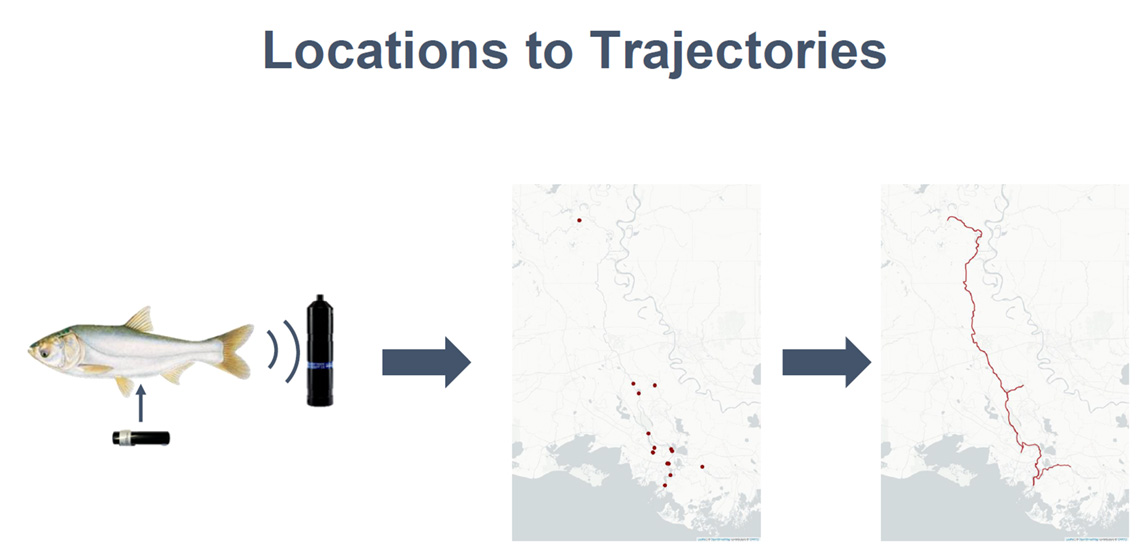
Walker and his fellow researchers put acoustic tags on the carp. Those tags ping sensors placed in waterways, and this data is used to map the movement of the fish.
– Credit: Christian Walker