
"This Project was a Huge Milestone for Me" - CES Students Talk about their Summer Projects
August 11, 2026
From crayfish burrows to improving underwater glider predictions, summer research and internships have brought a bounty of new learning opportunities to students in Coastal & Environmental Sciences.
Here are a few examples of what they've been up to!
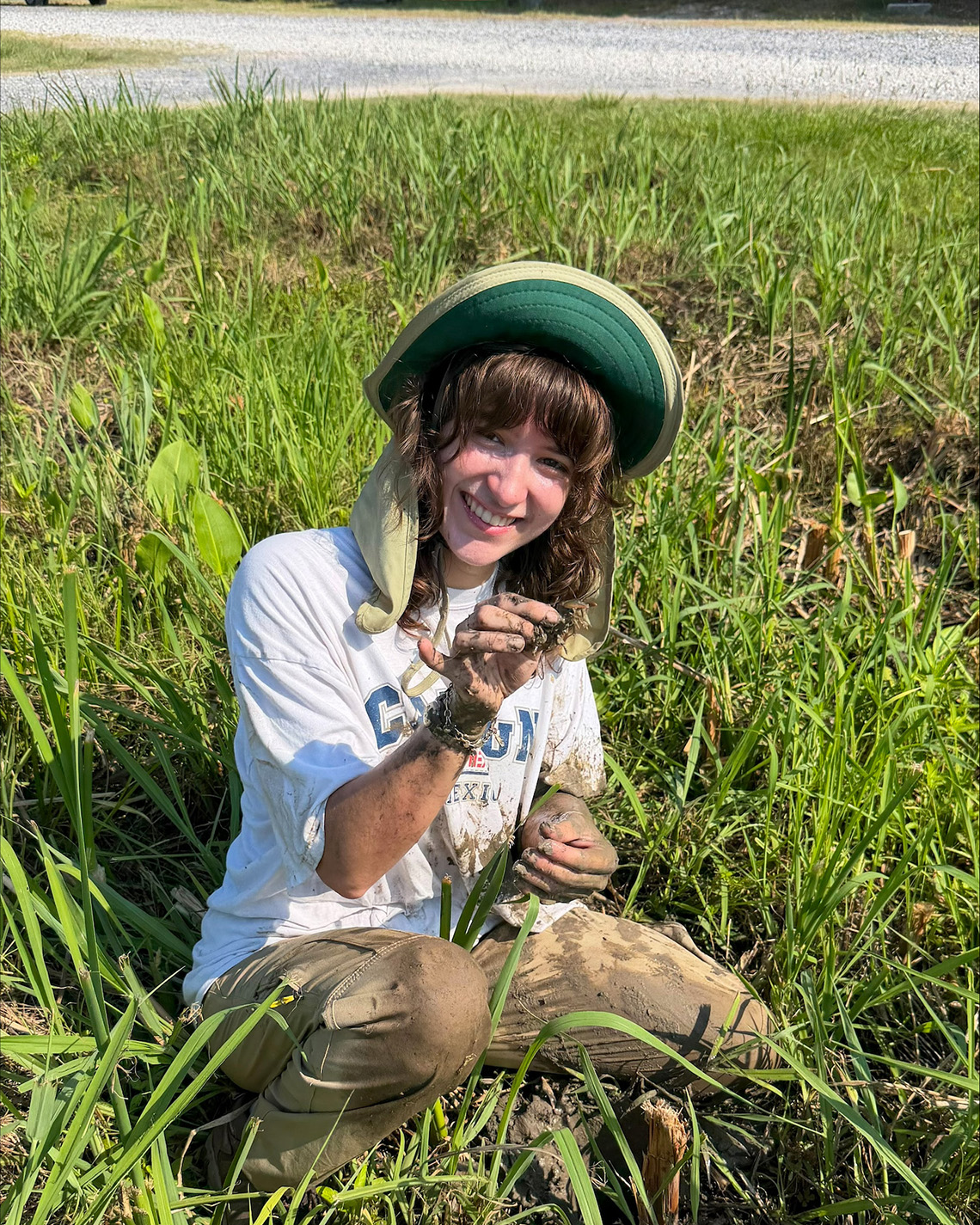 CES student Emily Shapiro spent her summer with the LSU Gulf Scholars, working on a project called "Hypoxia Tolerance of the Painted Devil Crayfish (Lacunicambarus
ludovicianus) under Varying Salinity Levels"
CES student Emily Shapiro spent her summer with the LSU Gulf Scholars, working on a project called "Hypoxia Tolerance of the Painted Devil Crayfish (Lacunicambarus
ludovicianus) under Varying Salinity Levels"
What brought her to the research: "My passion for restoring Louisiana's coastline led me to this research. I have spent the past few years working with wetland plants and wanted to broaden my experience by studying an important coastal animal species. I enjoy that the project combines fieldwork, laboratory experiments, and conservation research."
How it's been going: "The research has been challenging but very rewarding. One of the biggest challenges was designing and building the experimental system, including constructing and assembling PVC manifolds. Overcoming those challenges has taught me valuable problem-solving and laboratory skills that I hadn't expected to learn."
How this research fits in with her CES degree: "This project directly connects to my Coastal Environmental Science coursework by exploring how salinity changes affect Louisiana's freshwater and coastal ecosystems. It has given me a deeper understanding of the salinity gradients found throughout our state and allowed me to apply concepts from the classroom to real conservation research. I am seeing firsthand how environmental changes can impact native species and their habitats."
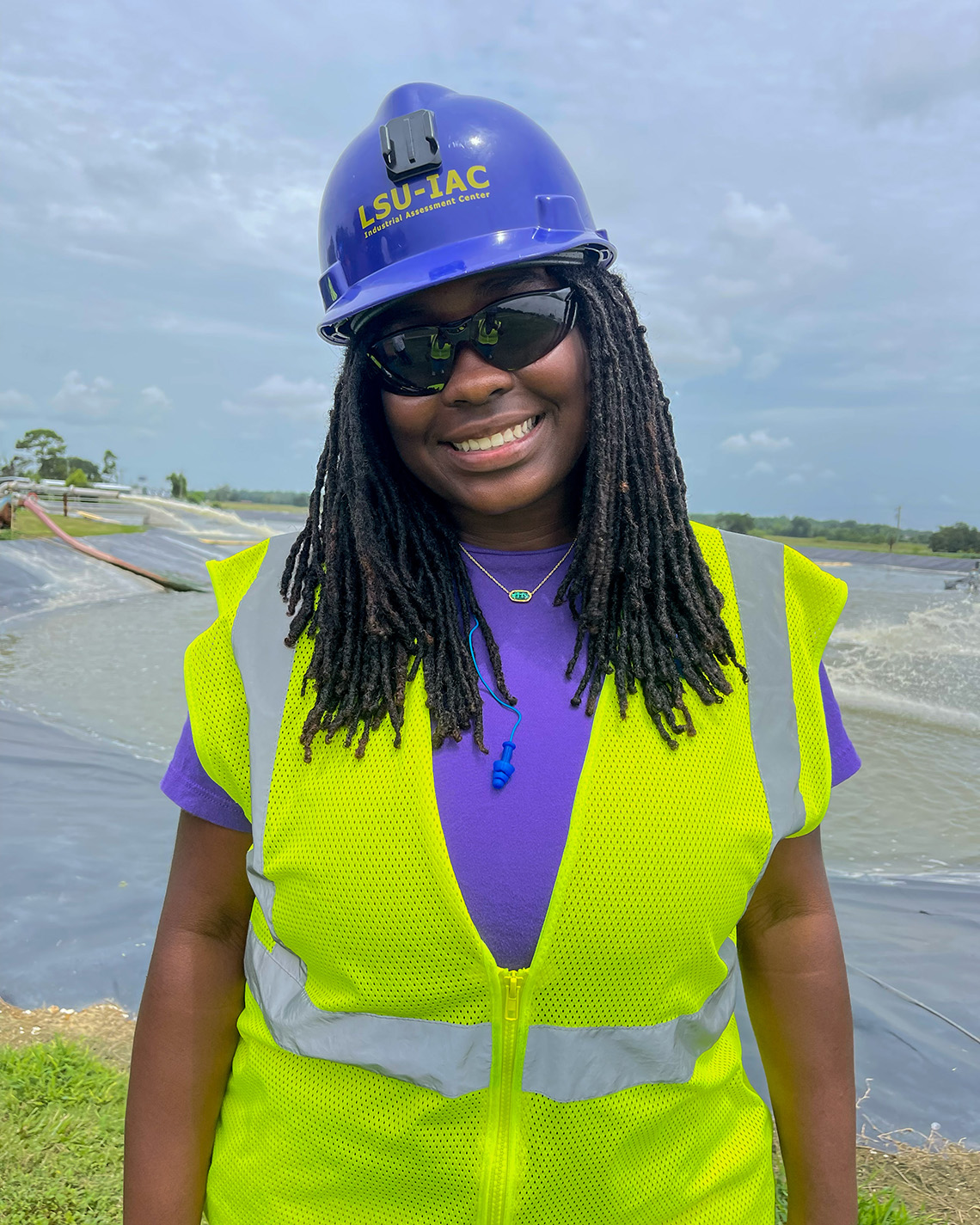 CES major Nevaeh Barriere also spent her summer with the Gulf Scholars. Her project? "The Pace of Recovery:
Analyzing Anthropogenic Impairment Progressions in Louisiana Waterways."
CES major Nevaeh Barriere also spent her summer with the Gulf Scholars. Her project? "The Pace of Recovery:
Analyzing Anthropogenic Impairment Progressions in Louisiana Waterways."
What it's about: "To manage pollution from industrial, agricultural, and residential sources, the LDEQ uses Integrated Report Category (IRC) codes to track threatened waters. These codes range from heavily impaired (IRC 5) down to fully recovered (IRC 1). For my summer research, I analyzed historical water quality data dating back to 2014 to see if waterways actually recover on schedule with state regulations or if compliance lags behind."
What interests her about this: "Since I want to go into environmental law, this project was a huge milestone for me. Getting to look at whether current regulations actually work gave me a much better grasp of how these policies are built and why they matter."
How it relates to her CES major: "In some of my classes, we talk about environmental regulatory frameworks, so digging into the data myself showed me how those ideas work or struggle in the environment. It definitely gave me a new perspective on how much time and data it takes to know if a policy is actually making a difference."
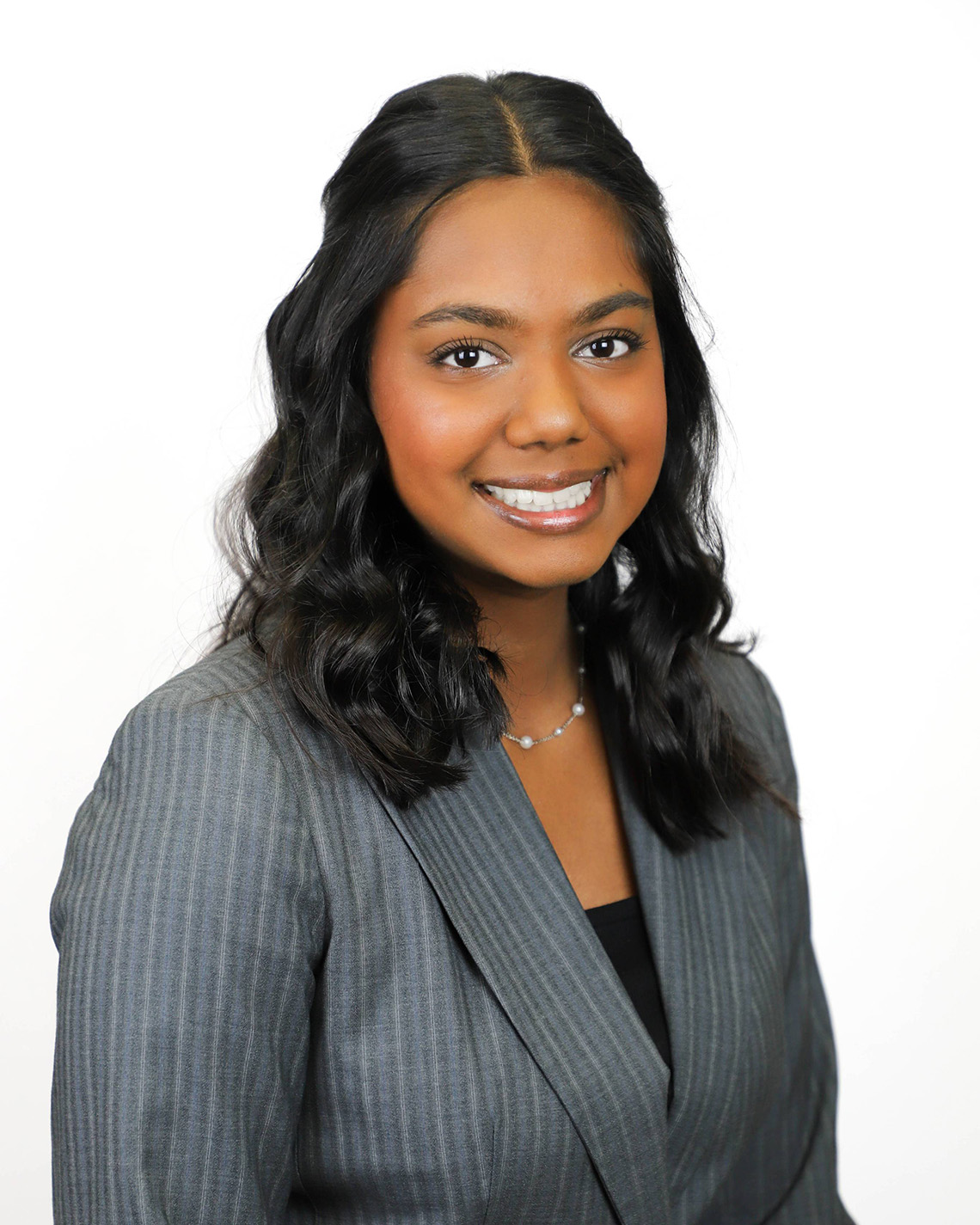 CES student Paris Ally spent her summer interning at the Naval Research Laboratory, focusing on developing
machine learning methods to improve underwater glider prediction.
CES student Paris Ally spent her summer interning at the Naval Research Laboratory, focusing on developing
machine learning methods to improve underwater glider prediction.
"My project involved analyzing a PyTorch-based reinforcement learning script originally built around a simple pendulum system and figuring out how to adapt its core components to represent an ocean state environment instead. From there, I helped design a system that uses GHOST glider predictions as a reference point, working on things like depth average velocity calculations and helping build out the reward function that trains the model to stay close to that reference path. Outside of my main project, I've also had the chance to sit in on meetings and presentations from other teams, which has given me a broader look at the different kinds of work happening across the Naval Research Laboratory."
She says the experience is not only pushing her technical skills, it's teaching her professional problem solving.
"This internship has really pushed me to grow my technical skills, especially when it comes to coding and understanding machine learning frameworks like PyTorch. Going in, I had some classroom exposure to programming and basic machine learning concepts, but this experience has taken that knowledge much further by forcing me to apply it to a real life situation. Probably the biggest thing I've learned is how much problem solving and adaptability goes into research like this. A lot of the work isn't just writing code but figuring out how to take a concept built for one purpose, like a pendulum simulation and reshape it to fit a completely different space. It's been a wonderful experience to do something so unique and outside my comfort zone," she says.