
CC&E Research Efforts Help Meet Coastal Challenges Around the World
June 10, 2026
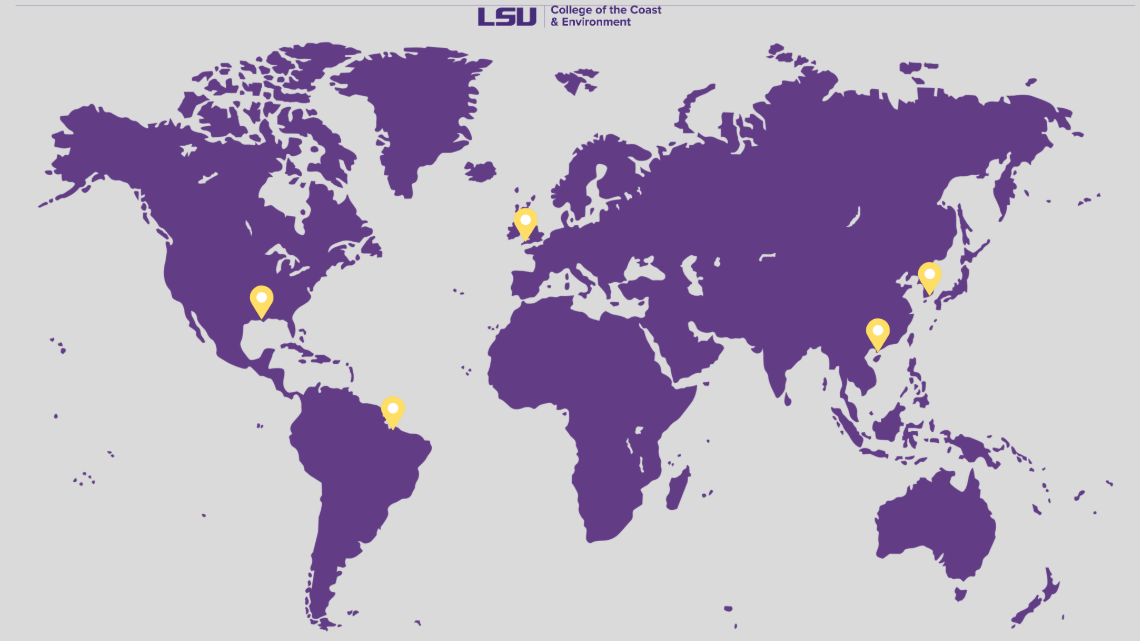
The LSU College of the Coast & Environment has signed coastally-focused MOUs with universities in Hong Kong, Brazil and South Korea, in addition to one already held with the United Kingdom.
Rising sea levels are a growing challenge worldwide. However, their effects – vulnerable coastal infrastructure, wetland collapse, endangered drinking water, just to name a few – can change with the landscape.
The same can be said for many of the challenges faced by coastlines across the globe face. The impacts may differ, but the root causes remain the same.
LSU CC&E is working to find a way to meet these challenges through an investment in innovative international partnerships, which are designed to facilitate scientific collaboration about shared coastal issues, and create innovative solutions.
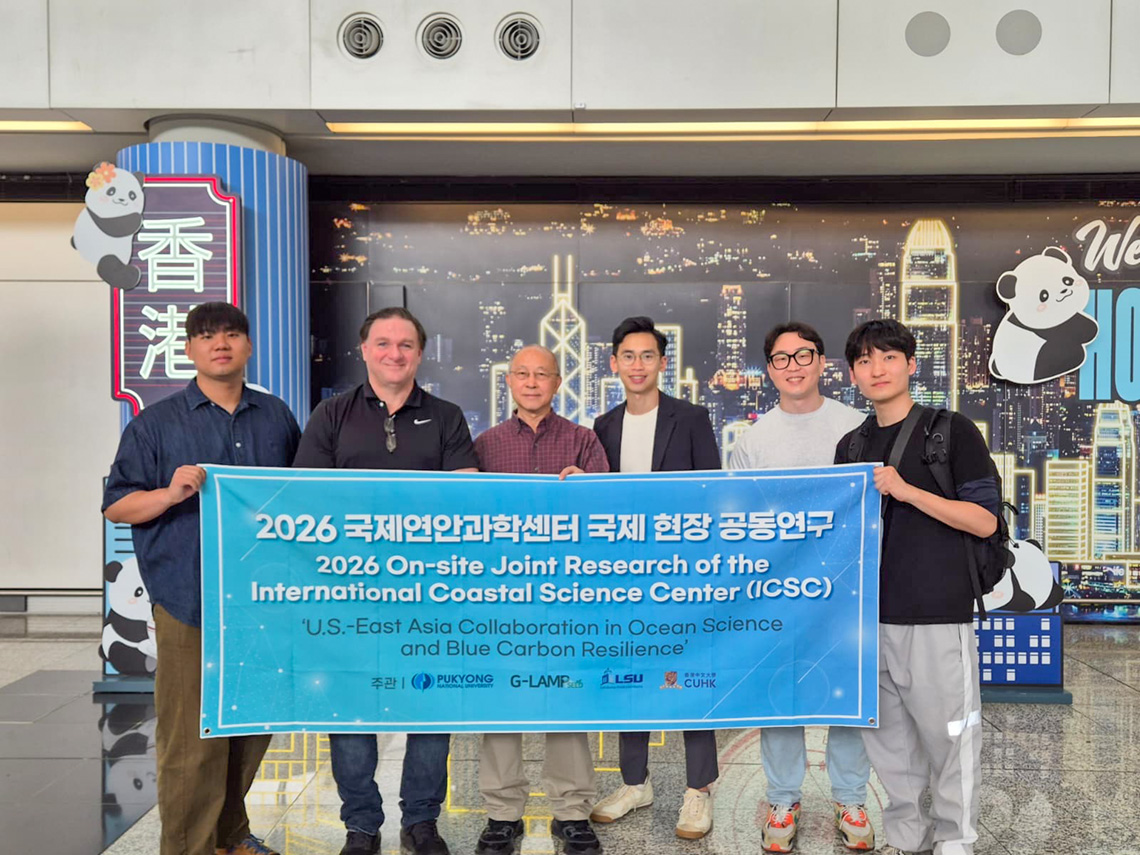
The MOU will facilitate the creation of advanced monitoring and modeling systems and innovative nature-based solutions, as well as cultivate the next generation of researchers
In 2025, LSU signed a research MOU with four institutions from around the world. The partnership includes Pukyong National University, or PKNU, in South Korea, the Chinese University of Hong Kong in Hong Kong, and the Federal University of Pará in Brazil. It is designed to shed light on the connections between coastlines, said CC&E Associate Dean John White.
This agreement is CC&E's second, coastally focused MOU. The college also holds one with the University of Plymouth in the United Kingdom.
“Coastal problems are a global phenomenon, but different coastlines have variable issues due to coastline shape, tides, winds, and storm impacts,” White, who is a professor in the Department of Oceanography & Coastal Sciences, or DOCS, said. “We at the College of the Coast & Environment are working to create a global hub with university partners around the world to identify these major issues and to engage and learn from one another on potential solutions.”
One topic of investigation: extreme weather and its impacts, which are felt on coasts around the world.
“Hong Kong and Louisiana are both subtropical coastal areas vulnerable to strikes by tropical cyclones,” said Kam-biu Liu, of the Chinese University of Hong Kong. Liu is an emeritus professor of LSU’s DOCS. “But Hong Kong, being in the Western North Pacific basin, is affected by typhoons more frequently than Louisiana in the less active Atlantic basin.”
South Korea has also been affected by escalating storm activity. “While Louisiana routinely faces intense hurricanes, South Korea is experiencing unprecedented typhoon patterns—such as Typhoon Khanun, which historically cut entirely across the Korean peninsula, causing severe beach erosion and devastating coastal damage,” said Johnny Jung-hyung Ryu, an assistant professor in the Department of Oceanography at PKNU.
Marcelo Cohen, a professor at the Federal University of Pará, is working to better understand how coastal wetlands in different regions respond to climate stress.
In Louisiana’s wetlands, black mangroves are expanding across parts of the Mississippi River Delta, because of warming temperatures, but remain vulnerable to freezes and extreme weather. In Hong Kong, mangroves grow more densely, but can be damaged by typhoons. And in tropical Brazil, mangrove forests form a massive canopy but are still threatened by shifting shorelines.
“The most notable difference is the structural scale and climate setting of the mangrove forests,” said Cohen, who is also adjunct faculty DOCS.
Other topics of collaboration include coastal protection and management, tropical cyclones and other extreme weather events, the development of smart monitoring systems, and comparative analyses of coastal ecosystems worldwide.
White said, “Working together, we hope to form an ‘International Center on Global Coastal Resilience’ which will identify and study different mechanisms of coastal erosion and wetland loss and ultimately provide potential solutions to the world’s coastal communities.”
Ryu said the partnership hoped to create advanced monitoring and modeling systems, find innovative nature-based solutions, generate high-quality data, and cultivate the next generation of researchers.