
LSU Study Finds PFAS ‘Forever Chemicals’ in Waterways Following Petroleum Facility Fire
June 12, 2026
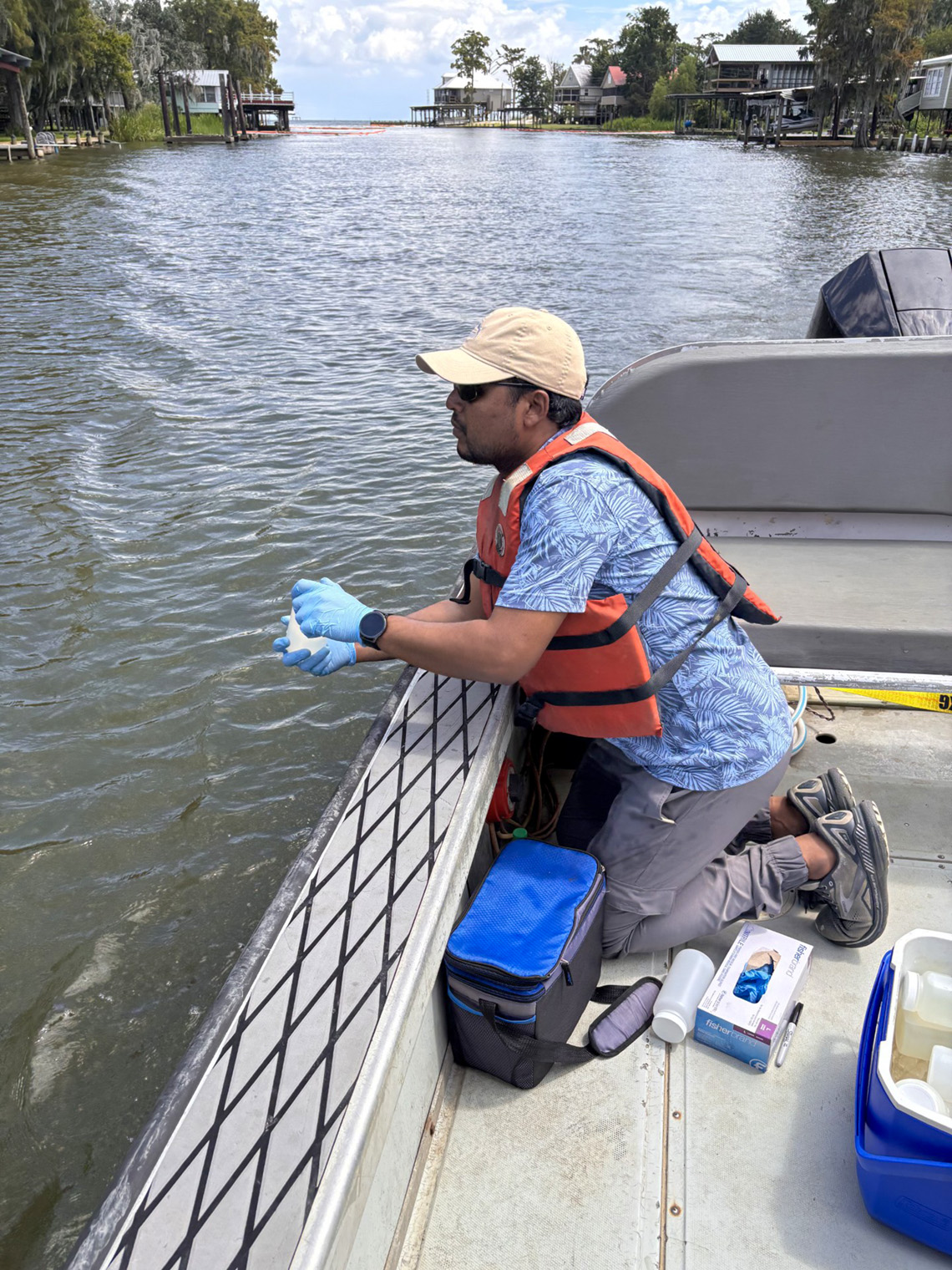
Subedi's lab found 13 PFA chemicals in the Tangipahoa River after the explosion.
– Photo Credit: Bikram Subedi
When a fire broke out at Smitty’s Supply, a petrochemical facility in Roseland Louisiana, last August, it released 11.3 million gallons of residual oil and lubricants into the surrounding waterways.
Thousands of gallons of firefighting foam used to extinguish the blaze streamed with them.
Two days after the fire was extinguished, Environmental Sciences Assistant Professor Bikram Subedi began sampling along the Tangipahoa River, looking for a significant, but poorly understood, result of the explosion: the presence of PFAS, the so-called forever chemicals, which are increasingly linked to long-term health impacts.
Of the 29 different PFAS chemicals he tested for, he found thirteen, all among the US Environmental Protection Agency priority PFAS compounds for.
“PFHxA concentrations reached up to 398 ng/L and PFOS level surpassed the US EPA enforceable maximum contamination level in drinking water in multiple sites,” said Subedi.
Settling in Sediment
The team traced the path of the chemicals as they traveled down the river to the lake. They collected samples seven times, over the course of four months, at eight different locations.
Subedi found short-chain PFAS were the most common, with PFPeA, PFHxA and PFHpA predominating.. Short-chain PFAS can move quickly through rivers and sediments, which means they can spread over larger areas and are harder to remove from the environment.
Even though the Tangipahoa does not provide drinking water – a major concern when it comes to forever chemicals – it is a destination for fishers and other recreational uses, which means the presence of PFAs potentially create a different set of risks.
“They like to settle and stick to the sediment,” Subedi said. “If they settle in the sediment, then they will eventually be exposed to bottom-dwellers and bottom-feeder fish and will travel higher up the food chain.”
In other words, fish consume the organisms that are consuming PFAs, leading higher concentrations further up the food chain, a phenomenon known as biomagnification. Once PFAS enter the body, they tend to stay there for a long time, accumulating faster than the body can remove them. Eventually humans may consume the concentrated PFAs via fish caught in the river.
Additionally, Subedi noted, there is little information about what will happen as PFAs accumulate in the sediment over time.
“They’re not degrading, they’re not being transferred easily, that’s why they’re called forever chemicals,” Subedi said. “We are interested in looking at the long-term risk assessment of these chemicals.”
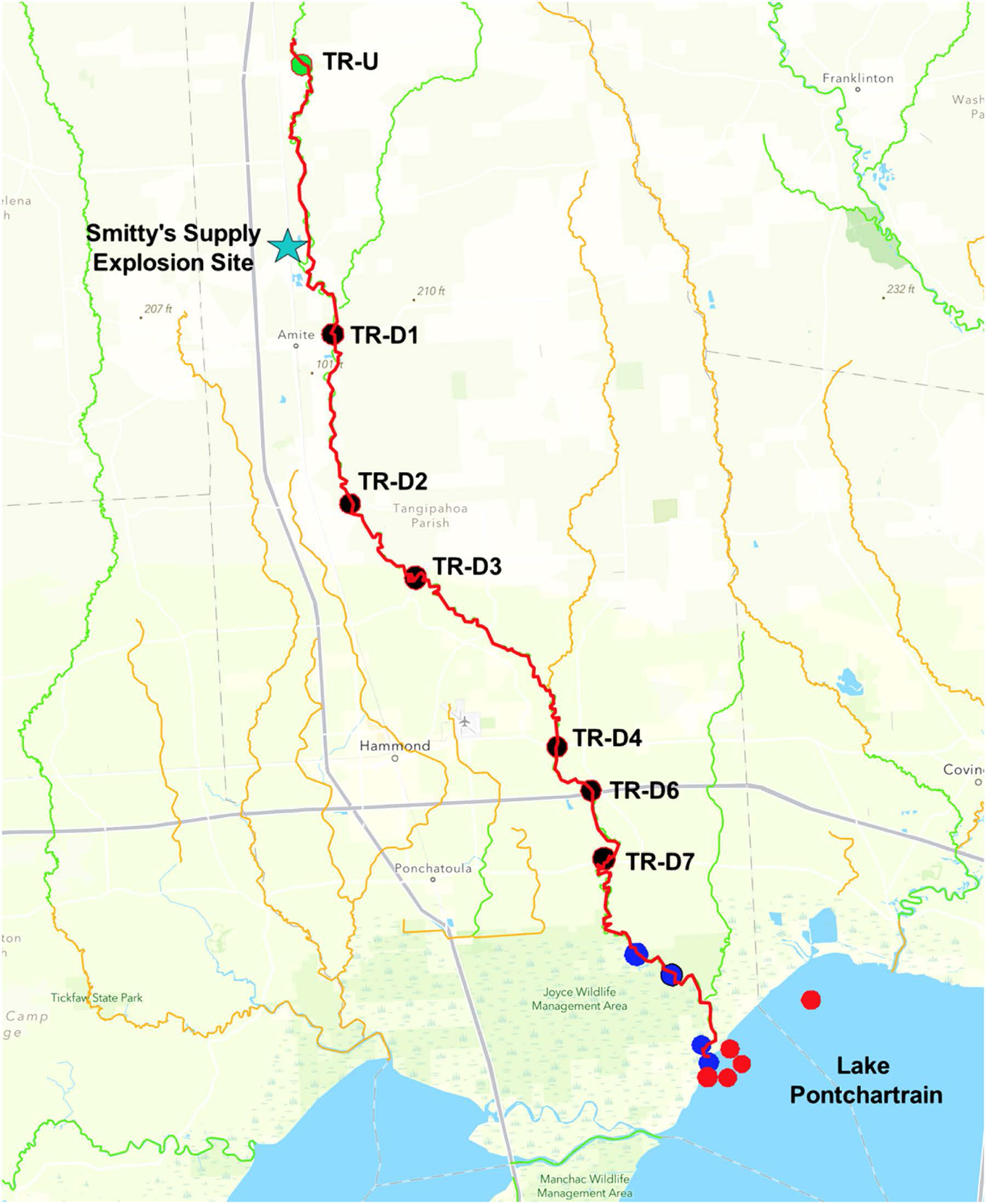
A map of sampling locations on the river
An Understudied Area
Subedi’s study marks one of the first attempts to track the impacts of PFAs in a coastal system, following an explosion or fire at a petroleum facility.
It’s an understudied area, he noted, given the frequency of fires and explosions at these types of facilities. “In our coastal areas, these things happen very frequently,” he said. “We barely monitor these chemicals, and [an explosion or fire] can raise the levels significantly.”
The firefighting foams used to put out the actively burning petroleum-based fires are known to be a major source of PFAs. However, Subedi also said the lubricants themselves may also have contributed, a potential source that would require more study to untangle.
PFA exposures over time have been associated with certain cancers as well as endocrine disruption. It’s estimated about 95 percent of the US population has PFAs in their bloodstream, and they are detectable in 45 percent of the country’s tap water.