
Research Spotlight: ‘Living Fossil’ Helps Student Understand Environmental Changes
June 08, 2026
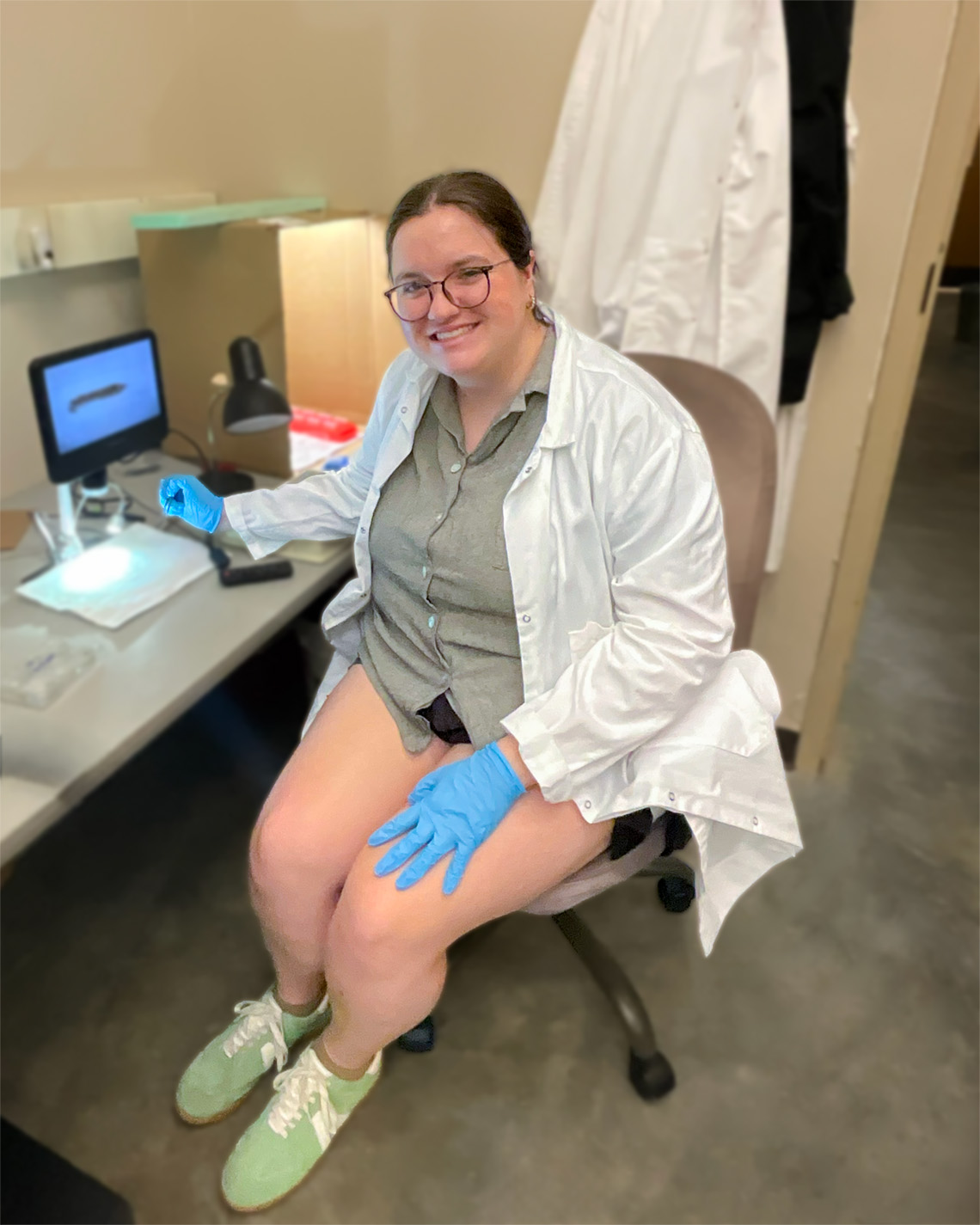
Eagon uses alligator gar because of they undergo a rapid, dramatic metamorphosis.
BATON ROUGE - Just how sensitive can a fish that weights up to 300 pounds – and is known as a ‘living fossil’ – be to changes in its environment?
Lauren Eagon, a PhD candidate in Environmental Sciences, aims to find out. She is working with just such a creature – Louisiana’s own behemoth, the alligator gar –as she investigates how changes in water temperature and the presence of endocrine disrupting chemicals in the water affect the development of fish.
It’s an investigation intended not only to unlock the secrets of the alligator gar, but to shed light on the impacts of environmental change on fish development in general.
A dramatic transformation
Alligator gar have a rapid, dramatic growth sequence, as they go from fry less than an inch long to a fish six feet long or more. This complex transition makes them an ideal candidate for a study about development.
Eagon is focused on the critical 30-day period when the fish goes from its larval stage to a full juvenile.
“I am looking at disruption to metamorphosis, the transition from larval to juvenile stage. It's critical for their growth, their survival, and population maintenance,” she says. “We know chemicals and environmental factors like temperature can disrupt the progression of metamorphosis.”
She says disrupted metamorphosis can have long lasting effects on populations. “If they don't transform correctly, they're probably going to die or get eaten.” Growing too quickly means the fish may not be able to find sufficient food; too slow of growth make the fish more vulnerable as prey.
Right now, most studies about environmental changes focus on amphibians, or zebrafish, a much smaller species.
“Zebrafish have a really simple metamorphosis, especially compared to other fishes like gar or like flounder or eels,” Eagon said. “Those are really dramatic transformations, and we don't know if they are closer in sensitivity to something like an amphibian or our model species.”
A study of combined effects
Eagon tracks their growth throughout her study, documenting how the fishes are in higher or lower temperatures of water, and with different exposures to thyroid hormone, the chemical that largely controls metamorphosis.
“Warmer temperatures will speed it up, colder will slow it down, and then the same thing can happen with chemicals,” she said. “Chemicals can accelerate it or delay it or prevent the transformation altogether.”
She already knows that fish exposed to thyroid hormone or warmer temperatures will grow faster, she said. “But what we don't know is if the combined effects are stronger. We know that separately they would both accelerate it, but when you have both present, is that a stronger effect?”
Down the road, this research may have other benefits as well, including helping fisheries managers. “My research could help identify ideal growth conditions for developing alligator gar for stocking, especially since I am looking at how temperatures impact development,” Eagon says.
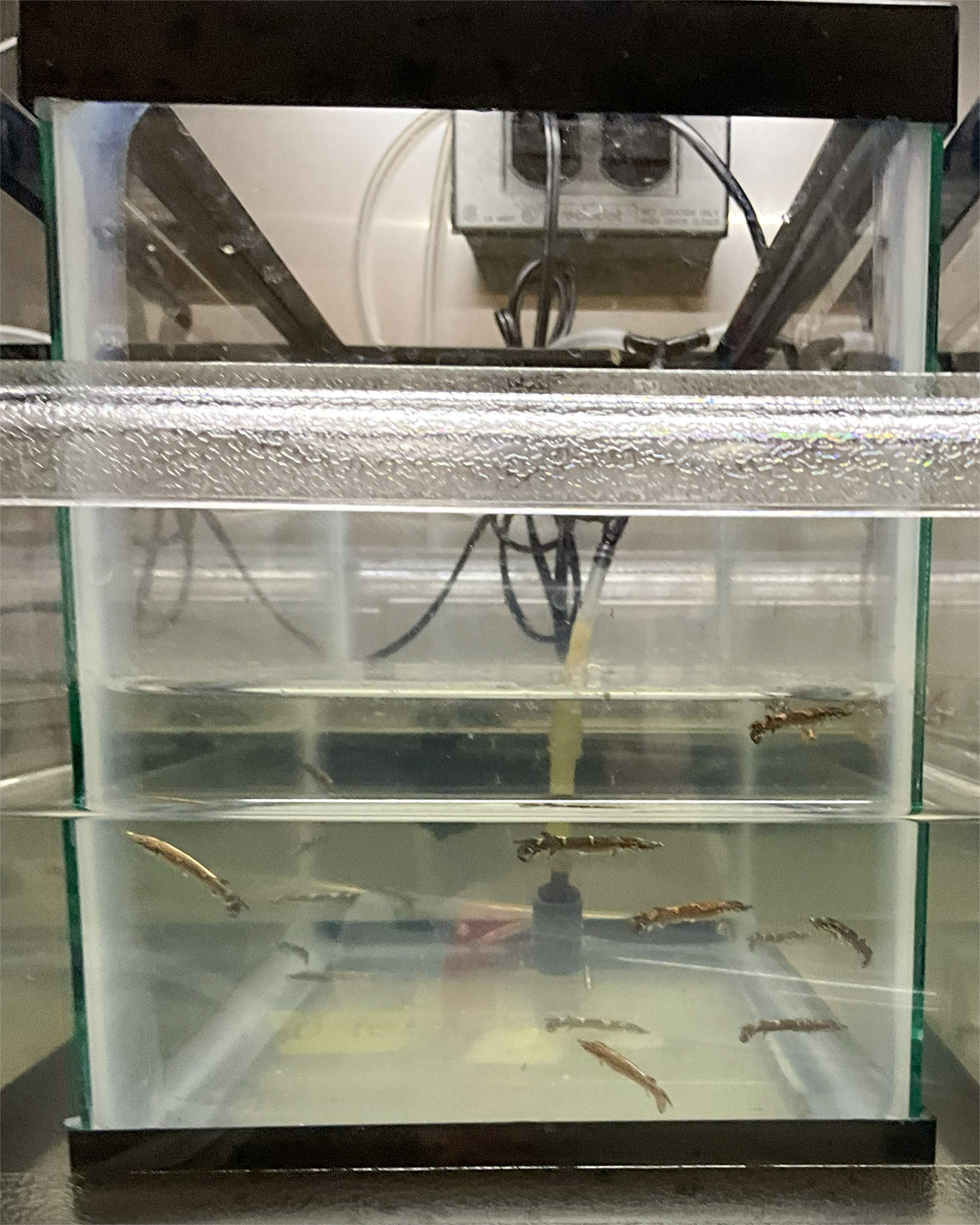
Eagon studies the gar during their critical 30-day period when the fish goes from larval stages to a full juvenile.

Alligator gar can grow past 6 feet in the wild.