
DOCS student builds a better river forecast using AI
May 05, 2026
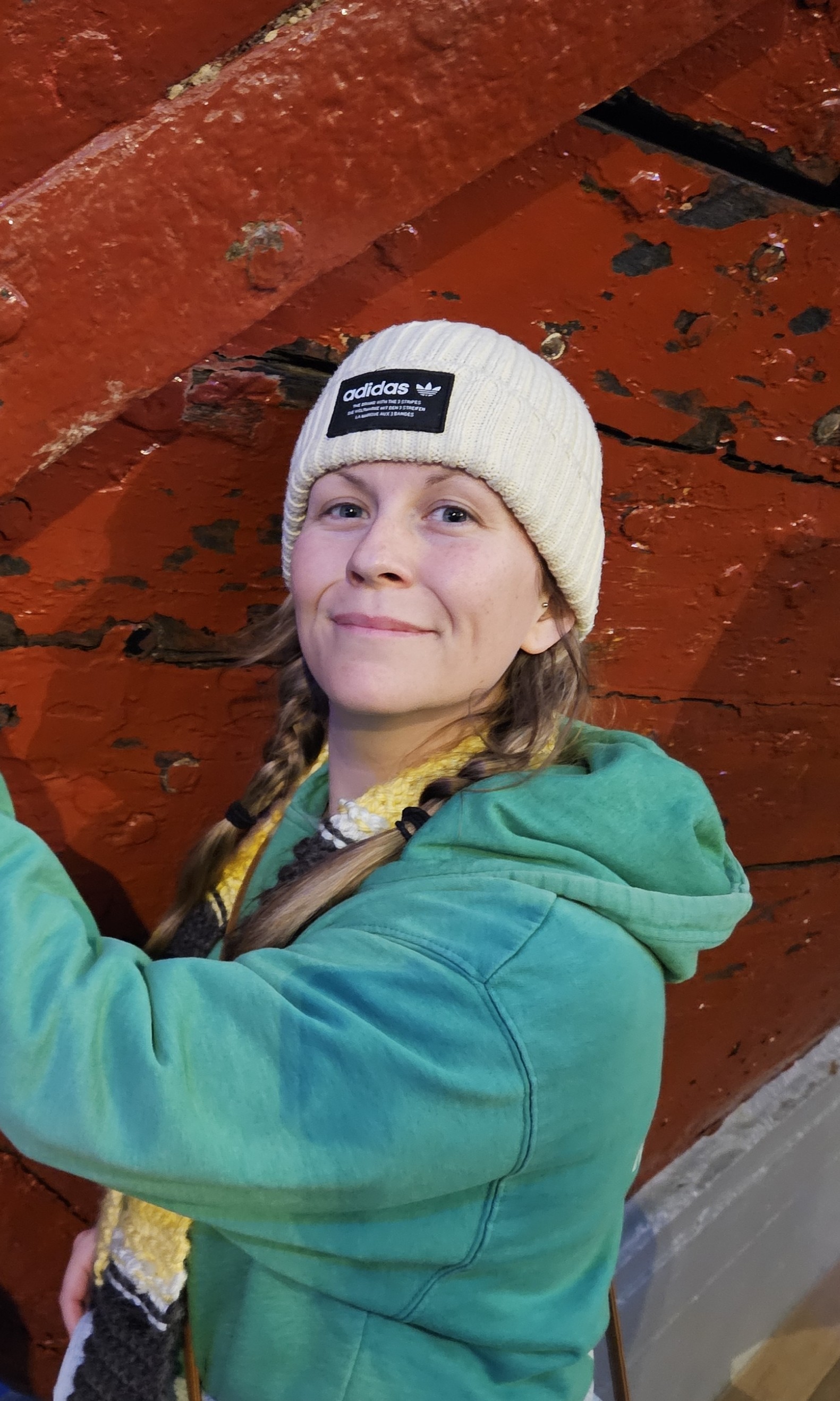
Caitlin Turner studied with Associate Professor Matt Hiatt in his Coastal Hydrology and Hydrodynamics Lab.
– Photo credit: Caitlin Turner
BATON ROUGE - What will happen to the Mississippi River in Baton Rouge after a rainstorm in Minnesota?
Forecasting the behavior of a river as complicated as the Mississippi is challenging, requiring even the most experienced modelers to take into account complex water flows, varying landscapes, and a lot of human engineering.
But Caitlin Turner, who will be receiving her doctorate in Oceanography & Coastal Sciences next week, has just provided another option for river forecasts with her new, open-source model, GaugePredict. She recently won the Syvitski Student Modeler Award for her work.
GaugePredict operates on a simple premise: that river managers can predict water levels downstream days or even weeks in advance, using only information from stream gauges run by US Geological Survey. And while Turner trained the model on the lower Mississippi River, she and her team are applying to other river systems as well.
The model runs the data from the USGS gauges through two complementary AI systems. The first captures short-term conditions, like heavy rainfall, and the second provides background context, things like time of year, or longer-term water levels. The system generates predictions based on that information.
The model also includes a third step to help scientists interpret the data. Called SHAP, or Shapley Additive Explanations, it’s an explanation of which gauges most heavily influenced the results. This allows users to understand the model’s results, and even trim gauges whose data doesn’t impact the models from being included.
Turner tested the model, first predicting levels and leakage flows at the Bonnet Carre Spillway, and then to fill in missing information from river gauges in Baton Rouge.
“GaugePredict uses statistical machine learning to support research and operational decision making alongside the physical models we already rely on. In a lot of cases, when you are running a physical model, the input data has gaps, and that is where GaugePredict can really help. It is also pretty flexible,” Turner said.
“While it works well for water level and discharge, it can handle a wide range of time series data, including biological data as well as physical measurements. It can pull from USGS or NOAA gauges, or from your own datasets, and it can be set up for different monitoring sites and sensor types. Since it is open source, it can really be tailored to fit a wide range of environments and research questions.
As a part of her award, Turner will be featured as a keynote speaker at the 2026 CSDMS Spring Meeting: Modeling Landscapes in Motion in Minneapolis, Minnesota in May.