
Gulf Sturgeons and Artificial Intelligence: DOCS Student Wins Graduate Research Fellowship
May 01, 2026
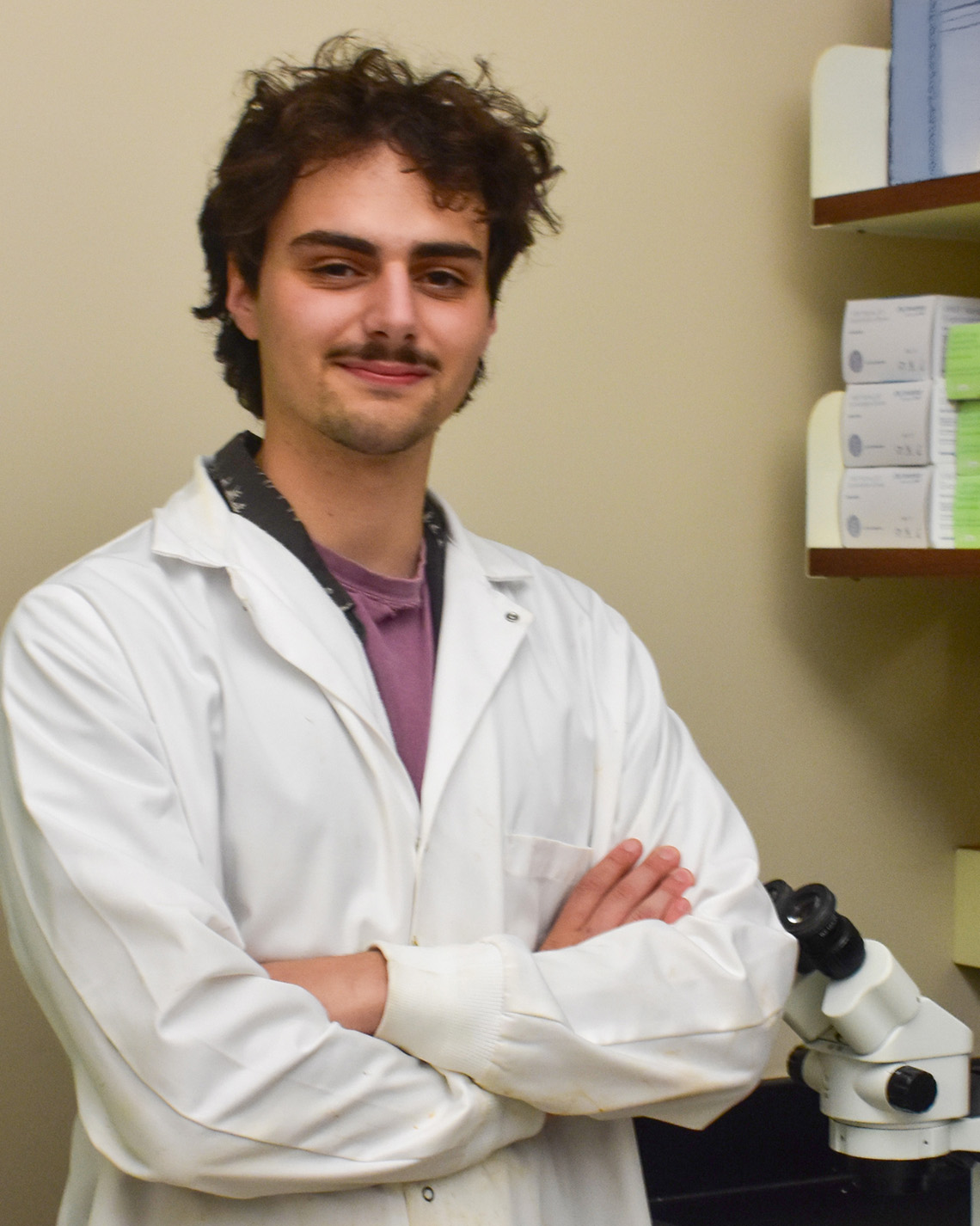
Masters student Max Newman is in Dr. John White's Wetland Aquatic Biogeochemistry Lab and Dr. Cassandra Glaspie's Marine Community Ecology Lab.
BATON ROUGE - To the human eye, sand dredged from one spot might look the same as sand dredged from another. But it can make a big difference for marine life in the area, including species like the Gulf sturgeon, a bottom feeding fish whose diet includes sand-dwelling organisms like worms and crabs.
That’s why Oceanography & Coastal Sciences Masters student Max Newman is working to help ensure these threatened fish don’t have their feeding habits affected by coastal restoration efforts. And he’s using artificial intelligence to make efforts like this a little easier in the future.
This research has earned him a prestigious Graduate Research Fellowship from the National Science Foundation. This highly competitive, three-year fellowship is designed to support outstanding students in science, engineering, mathematics and technology fields.
A Sedimental Question about the Gulf Sturgeon
Newman, who is co-advised by John White and Cassandra Glaspie, both of Oceanography & Coastal Sciences, conducts his research on Lake Ponchartrain, where marsh restoration projects may affect the habitat of the Gulf sturgeon. The main goal of his research project is to discover the best place to dredge the needed sediment, so the Gulf sturgeon can feed on its favorites – clams, but also smaller invertebrates, like polychaetes.
He said: “What I'm looking at is how the sediment characteristics, the chemical and physical properties, correlate with the invertebrate community that lives in the sediment, and support the diet of the Gulf sturgeon. [I’m also] looking at, do those things correlate? Is any place that's going to be good for dredging, also going to be good for the Gulf sturgeon?”
Using Artificial Intelligence to Make Research Easier
But Newman’s fellowship grant expands his research question beyond the practical implications of dredging on habitat. He wants to devise a way to make the kind of sediment sampling the project requires more manageable in the future.
Lake Ponchartrain is huge, and the make-up of sediment on its lakebed can be very different, depending on the location. Some regions may be consistent for miles, while other might have highly variable structural and chemical composition within the distance of just a few feet. He aims to develop a machine-learning model that harnesses this uncertainty, using environmental characteristics to predict where these heterogeneous sediments may be. This will help scientists and managers understand what drives this change and help better manage fisheries and restoration efforts.
“For any project, ideally, you would take a million samples and process them all, and you would have a perfect picture of what you were studying. But you're limited by your time in the field and your time processing, and so you do have to figure out, ‘Okay, how many is a reasonable number of samples for me to have a good picture of what I'm looking at?’ Knowing how much variability you expect is important for determining that number of samples,” he said.
Science in the Real World
This research sees Newman working with the Louisiana Coastal Protection and Restoration Agency, or CPRA, and other state and federal science agencies. This means he gets the opportunity to see his research interact with the real world, and see how science can help people and the environment.
“That's part of why I really love my work here. I'm working hand in hand with CPRA. I've gotten to talk to people from NOAA,” he concluded. “I've gotten to talk to people from US Fish and Wildlife. And it is really impactful to see that these people at the federal level care about the work that I'm doing.”
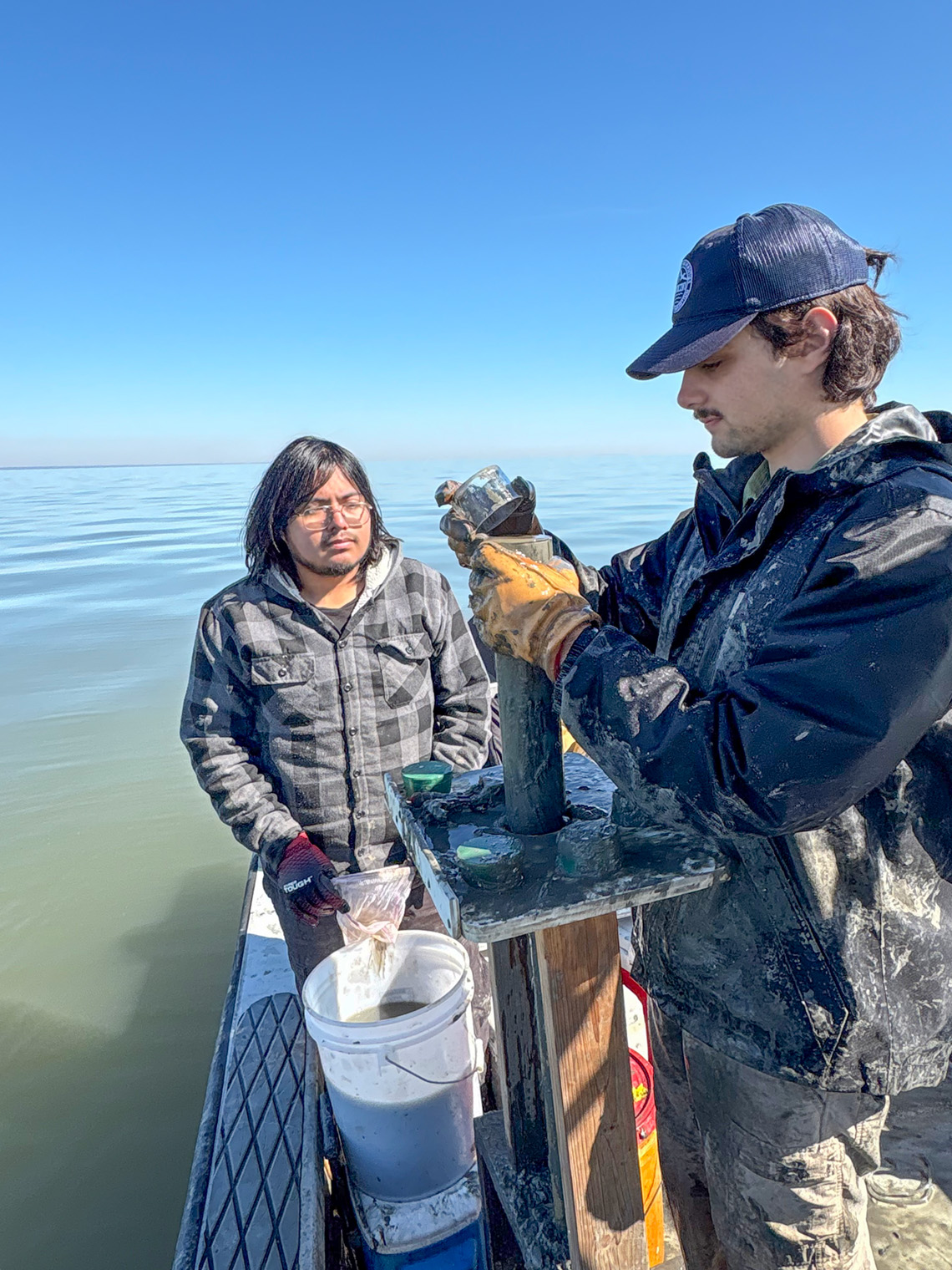
Newman collects sediment on Lake Ponchartrain
– Photo Credit: John White
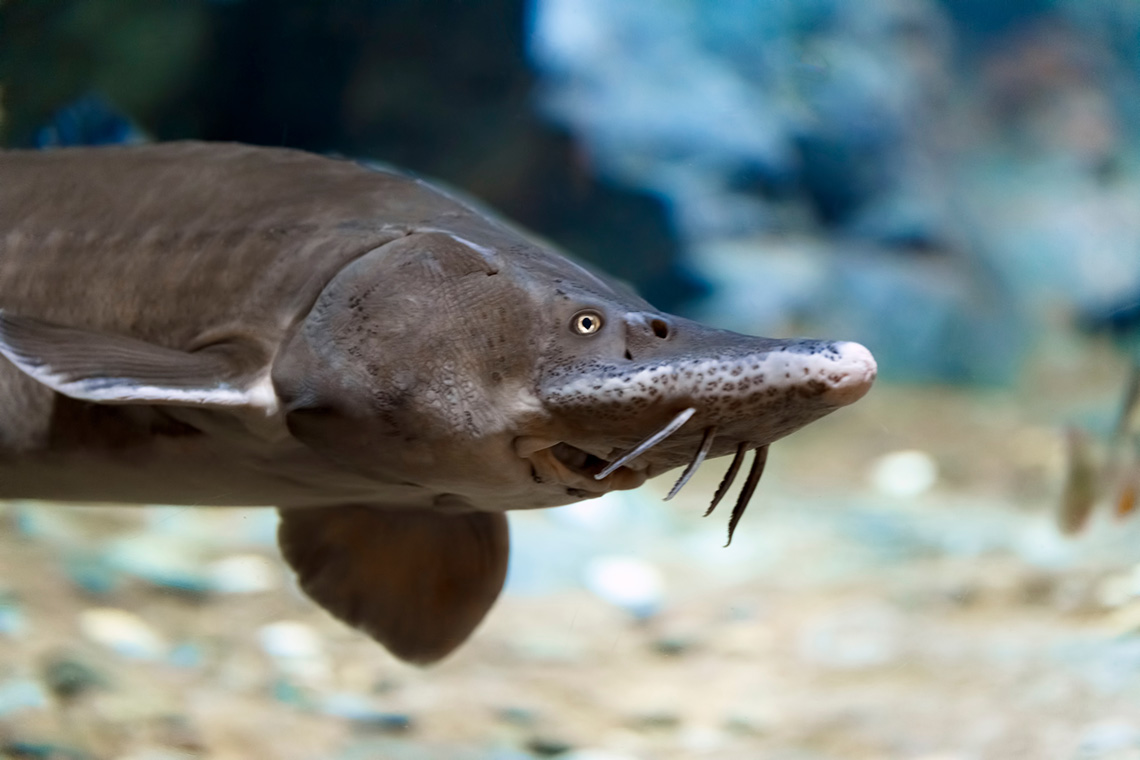
The Gulf sturgeon is classified as a threatened species.