
Preparing Communities for the Future of Energy
February 18, 2026
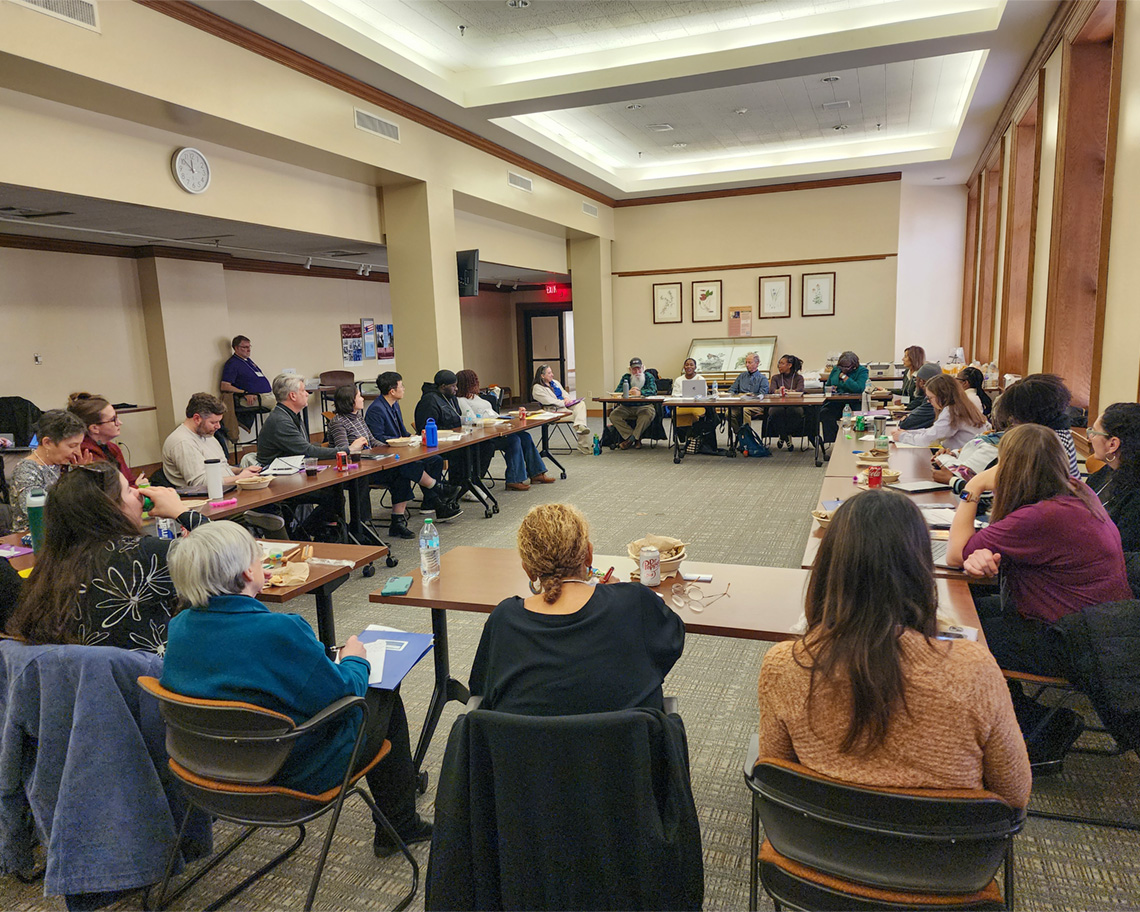
SCEFA's inaugural workshop took place at LSU in January
BATON ROUGE - Many Louisianians are familiar with the term "carbon capture."
However, they may not know as much about the way the process works, and its potential benefits and drawbacks. And as the state sees a boom in proposed projects, this lack of information can become a major stumbling block, as the communities being asked to house carbon capture facilities don’t know much about them.
This is not a situation unique to Louisiana, or to carbon capture technology, says Environmental Sciences Professor Margaret Reams.
Across the Southeast, communities are being asked to approve facilities designed for a range of activities related to the energy industry, often on short timelines, with little information.
Reams is working with Georgia Tech’s Jennifer Hirsch to spearhead a new initiative to address this problem. It's called the Southeast Community Energy Futures Academy, or SCEFA. Sponsored by the US Department of Energy, it's a year-long effort aiming to fill some of the information gaps associated with carbon capture and other so-called emerging energy transition technologies, or EETTs.
"This is an effort to develop a train the trainers kind of approach – [create] information tools that can be deployed quickly in communities in these four states"
Margaret Reams, Professor of Environmental Sciences
SCEFA pairs community leaders from Louisiana, Mississippi, Georgia and Alabama with scientific experts. Their goal is to put together a set of reliable resources for decisionmakers to use when considering a potential proposal, whether it’s for a solar farm or a direct air capture facility.
“Two of the most pressing socio-technological challenges involved in the implementation of EETTs are how to communicate technical information, and how to enhance community capacities for collaborative, long-term planning for a lower carbon future,” Reams said. “The current context of political polarization and skepticism of science further complicates these challenges.”
“This is an effort to develop a train the trainers kind of approach – [create] information tools that can be deployed quickly in communities in these four states,” Reams said. “LSU is very happy to partner with colleagues from Georgia Tech and other institutions to build this program."
Associate Environmental Sciences Professor Brian Snyder and Engineering Professor Richard Hughes are also working on the project.
First Steps
SCEFA kicked off at LSU in January, with a two-day long workshop. Participants learned about energy and energy transition technologies, heard the concerns other communities have raised about them, and began to determine what communities may need to know.
“What are the pressing questions and information needs? What are the barriers for an association of churches to find technical information to start answering the questions?” Reams said.
Attendees toured LSU’s Petroleum Research Testing and Training (PERTT) lab, visited a carbon injection site and heard from researchers and community organizers about their work.
Leigh Rachal, the chair of the Louisiana Interfaith Conference, was one of the attendees from Louisiana. After the tour of the PERTT lab, she said, “I've never been to an oil rig or seen a well, so just beginning to have a visual framework to connect the pieces of the puzzle of what we're talking about in terms of technology… was really helpful for me. To hear the ways in which they try to teach safety and already work in the different failsafe mechanisms to prevent environmental disasters was really insightful.”
Although the SCEFA project is just in its nascent stages, Rachel said it had already been helpful. “What I really like about this opportunity is, it really says, Okay, let's learn about this together. Let's talk with the researchers, let's talk with the technologists, let's talk with the scientists, and let's hear the costs...the benefits...the impact to the community.”
New Demands
Rachal also noted another eye-opening discussion held on the first day of the workshop – that of our society’s growing energy needs. “One clarification made yesterday that was really helpful for me… was our energy use is not going to go backwards. We're not going to use less energy as a world.”
Snyder said these growing energy demands, combined with concerns about carbon in the atmosphere, make the introduction and integration of new technologies critical. “If we want to limit climate change to the point where it doesn't negatively impact our food supply, we are going to need new, low-carbon technologies like solar and wind, but also some that people may be unfamiliar with like CCUS [carbon capture, utilization and storage], bioenergy, and carbon dioxide removal. SCEFA is about working with communities to understand both the risks and the need for these technologies.”
The next step for the LSU team comes in March, when Reams, Snyder, Hughes, Rachal, and CC&E graduate student Naya Black will address the Louisiana Inter-church Conference in New Orleans.