
James Coleman: In Memoriam
November 18, 2026
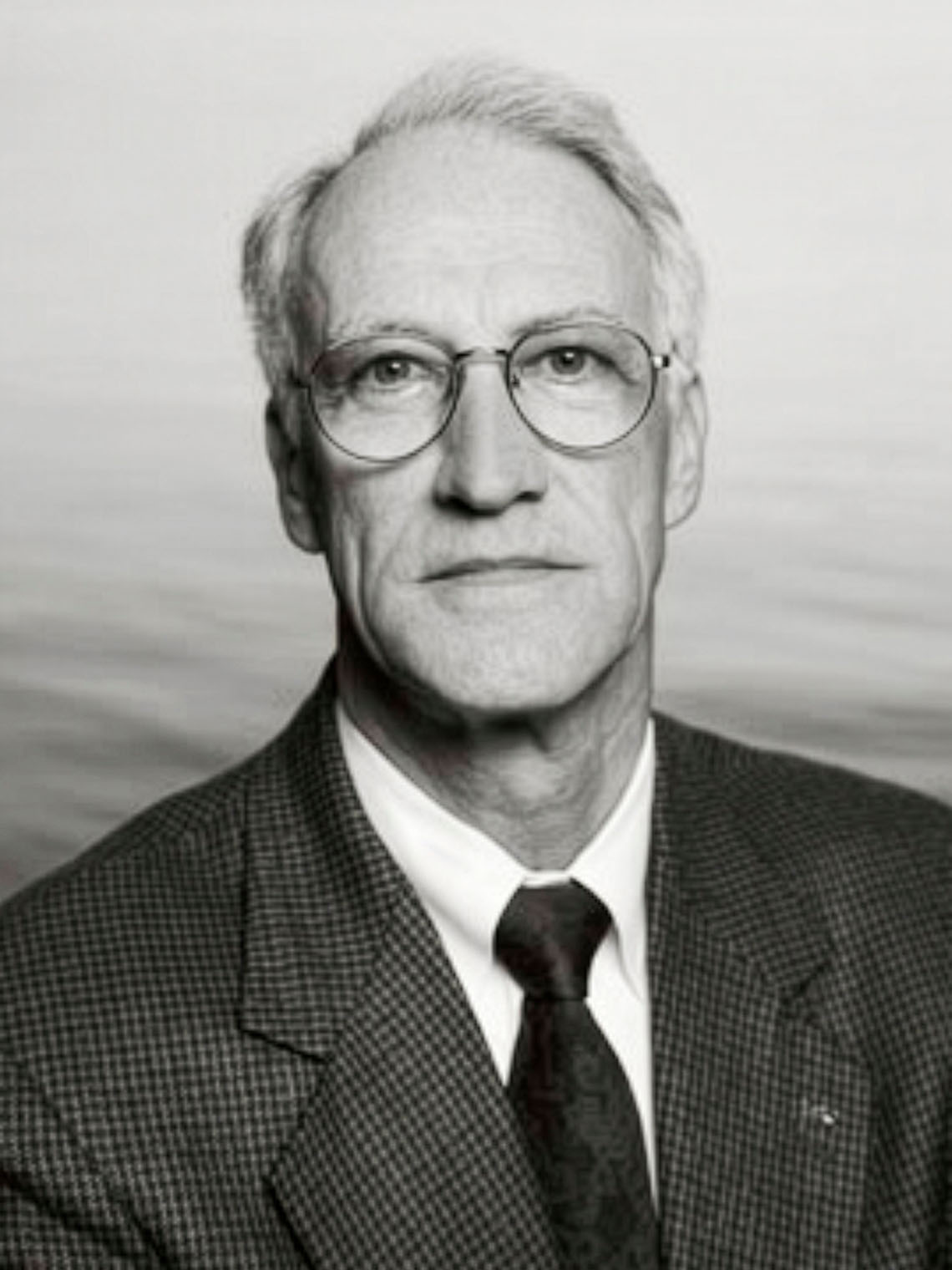
Dr. James M. Coleman was named an LSU Boyd Professor in 1980.
LSU Boyd Professor James Malcolm Coleman, a native of Vinton, Louisiana, produced a body of marine geological research that fundamentally changed our understanding of how rivers and oceans interact to build our coastlines and entire continental margins from seasonal to millennial timescales.
His visionary research and leadership spanned over a half century at Louisiana State University from his PhD research in the early 1960s. During his career, he was appointed an LSU Boyd Professor (LSU’s highest academic honor), inducted into the National Academy of Engineering and the Russian Academy of Natural Sciences, received the Shepard Medal for Marine Geology from the Society for Sedimentary Geology, and served on the U.S. Commission on Ocean Policy under President George W. Bush, among other honors. As director of LSU’s Coastal Studies Institute, Coleman also strengthened LSU’s reputation as a world leader in coastal and deltaic science.
When most of us go to the beach or the coast, we see it as a static boundary with land on one side and water on the other, mainly a place to relax and recreate. Coleman’s work, meanwhile, showed us most coastlines are dynamic features, formed in large part due to the delivery of sediment from rivers, which is then reworked over time into coastal river deltas, continental shelves, and deep-sea sedimentary fan deposits; features that tell the tales of rising and falling seas, migrating rivers, and shifting deltas and coastlines. While much of his research was conducted to help inform the growing oil and gas industry, we now know Coleman’s insights can help us better understand coastal, deltaic, and seabed processes and products—and how these settings will evolve under the impacts of humans and a changing climate. His work also provides a geological guidebook to better understand Earth’s history recorded in ancient sedimentary rocks.
Any evaluation of a great scientist’s long career is bound to be subjective. From my perspective, Coleman’s massive body of research made great contributions in three broad areas.
From first to last and from wetlands to the offshore seabed, he greatly increased our understanding of how the Mississippi River Delta came to be, what processes presently control it, and—given that understanding—how it may evolve in the future. This is no trivial undertaking, because of the vast energy, marine navigation, and cultural and natural resources the Mississippi Delta hosts, and because the delta itself is disappearing rapidly. Several of our prospects to improve the longevity of this internationally important coastal resource exist because of Coleman’s work.
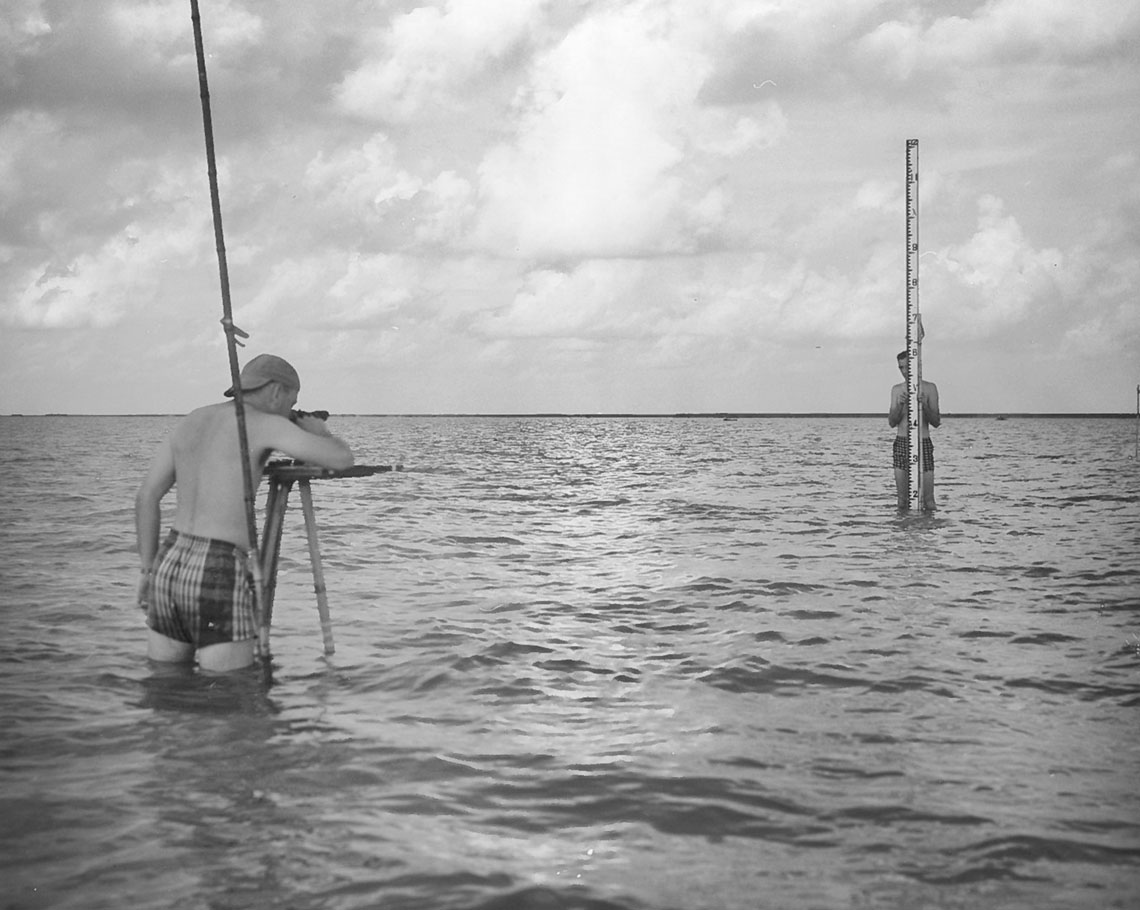
Sherwood (Woody) Gagliano, left, with James Coleman, right, surveying in West Bay in 1961; part of the field work they did for their “Cyclic Sedimentation in the Mississippi River Deltaic Plain” paper in 1964.
During his doctoral research, Coleman worked closely with doctoral classmate Sherwood (Woody) Gagliano to identify the processes and building blocks for the lowermost 100 miles of the Mississippi Delta. Together, Coleman and Gagliano published a landmark study, “Cyclic Sedimentation in the Mississippi River Deltaic Plain” (Transactions of the Gulf Coast Association of Geological Societies, Vol. 14, pages 67–80, 1964). My own students have cited that paper multiple times this year, 63 years since its publication. (Like Coleman, Gagliano also became a legend in deltaic research.) Many of us only dream that our research works will have such longevity.
A decade later, Coleman’s research interests moved offshore to the submarine portions of the delta, south of the major historical outlets that define the “Birdsfoot Delta” of the lower river. He was asked to design and conduct a study of the submarine delta, which was and remains controlled by the actions of submarine landslides. These mudflows range from thin sheets to massive catastrophic landslides weighing millions of tons, reshaping the seabed and carrying any human infrastructure away with them (for instance, entire oil platforms and miles of pipeline). He assembled an impressive team of geologists and engineers, funded by the Minerals Management Service (MMS, now the Minerals Management Agency), to use sediment cores and cutting-edge seabed-mapping sonar to figure out how the seabed evolved, what the hazards were, and where the seabed risks were greatest. An MMS report published by this team in 1980 remains a benchmark publication on the processes and hazards of submarine landslides.
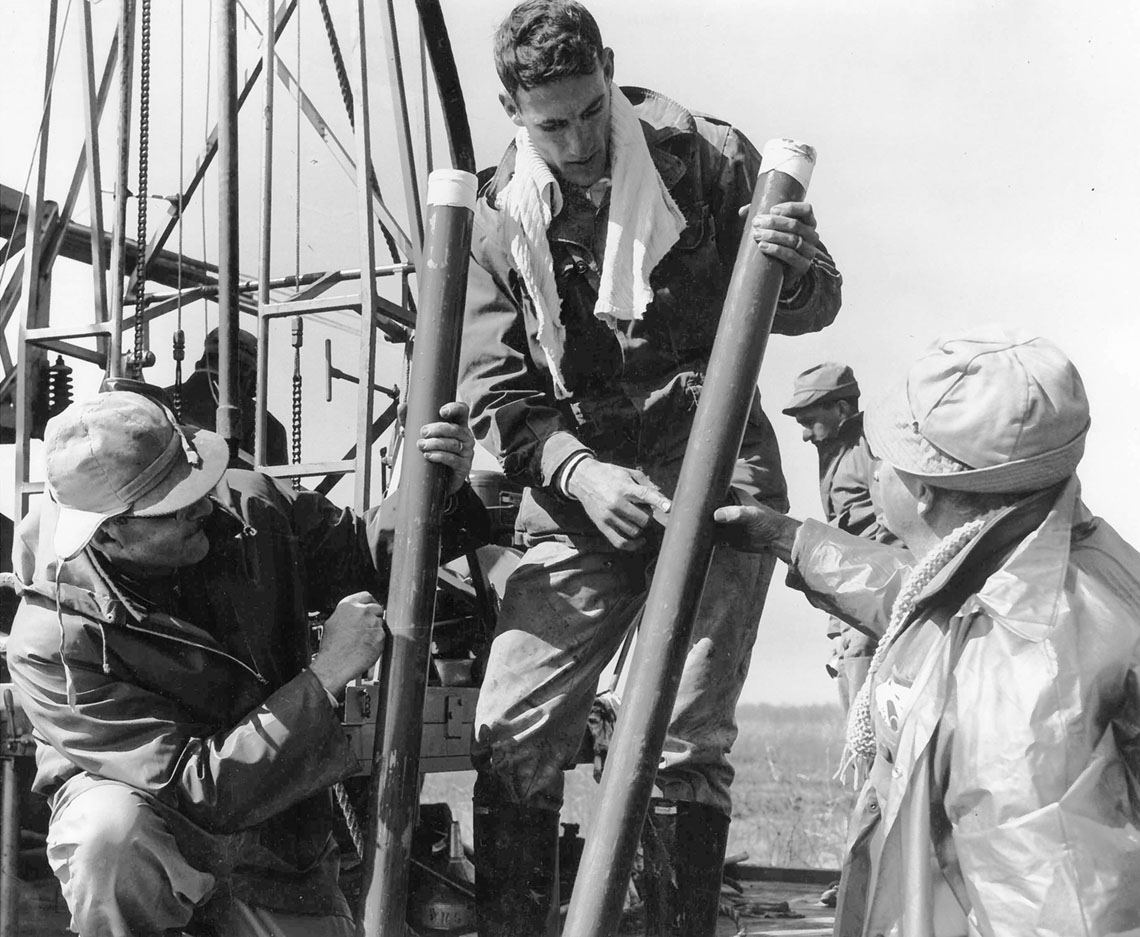
James Morgan, James Coleman, and Marcus Hanna in West Bay in 1960. Morgan, left, was Coleman’s PhD supervisor and one of the founders of the LSU Coastal Studies Institute. Hanna, right, was chief paleontologist and staff geologist at Gulf Oil Company.
The second major contribution of Coleman’s is in providing the foundation for a global understanding of what processes shape river delta morphology and water flows. During the years 1970-1977, Coleman was principal investigator for Office of Naval Research studies of deltas worldwide to determine the major processes and interactions that shape them, such as flows from river, wave, and tidal currents. Coleman’s PhD student L.D. Wright worked on, and later led, many of these studies as a research professor at LSU. This work has become a set of benchmark studies that hold water a half century later, beginning with Coleman and Wright’s 1971 “Analysis of major river systems and their deltas: procedures and processes, with two examples”—built on early computer models they developed to quantify deltaic processes—and culminating with Wright’s 1978 “River Deltas,” which grew out of the Coleman-Wright collaboration.
Coleman’s third major contribution is his work to expand our understanding of continental margins, from the inland extent of tidal flows to the floors of the deep ocean basins enveloping the coasts, continental shelves, and continental slopes. For this work, Coleman teamed up with his friend and colleague of many decades, LSU Boyd Professor Harry Roberts, to decode interactions among the changing climate, rising and falling seas, and the resultant trapping of sediment near the coast when sea level is high (forming deltas) or exporting sediment to the deep ocean basins when sea level is low (forming deep-sea fans). The pinnacle of these studies—led by marine geologist Arnold Bouma, Coleman, Roberts, and others—was to drill into the Mississippi Deep Sea Fan in the 1980s. Their work documenting the morphology and formation of extensive deep-sea sand deposits built from Mississippi River sands provided the fundamental knowledge needed to drive the deep-sea oil exploration that began in the Gulf of Mexico in the 1980s and has expanded globally since then.
A theme throughout Coleman’s career is his ability to conceive of an extensive study and build the team necessary to solve a major geological problem. His leadership, built on human connections with colleagues, students, and other cultures, enabled the synthesis of complex results into accurate and accessible stories. John Wells, a doctoral student of Coleman’s a half century ago who came to lead the Virginia Institute of Marine Sciences, recounts: “I still recall walking past Jim’s office on numerous occasions along the narrow corridor of the Coastal Studies Institute and hearing through his open door: ‘Have you got a minute? I want to show you something…’ Not only did he want to pass along what he was working on, but he also wanted to see if I had any insight that might be relevant.”
I have spent the last thirty years of my own career trying to come up with—and answer—questions not already solved, decades ago, by Coleman and Roberts. They laid the foundation we stand on today, and Coleman’s legacy endures far beyond the coasts he helped explain and the countless careers he inspired, including my own.