
After the Great Flood: Students Learn New Lessons from One of US History’s Biggest Disasters
November 11, 2026
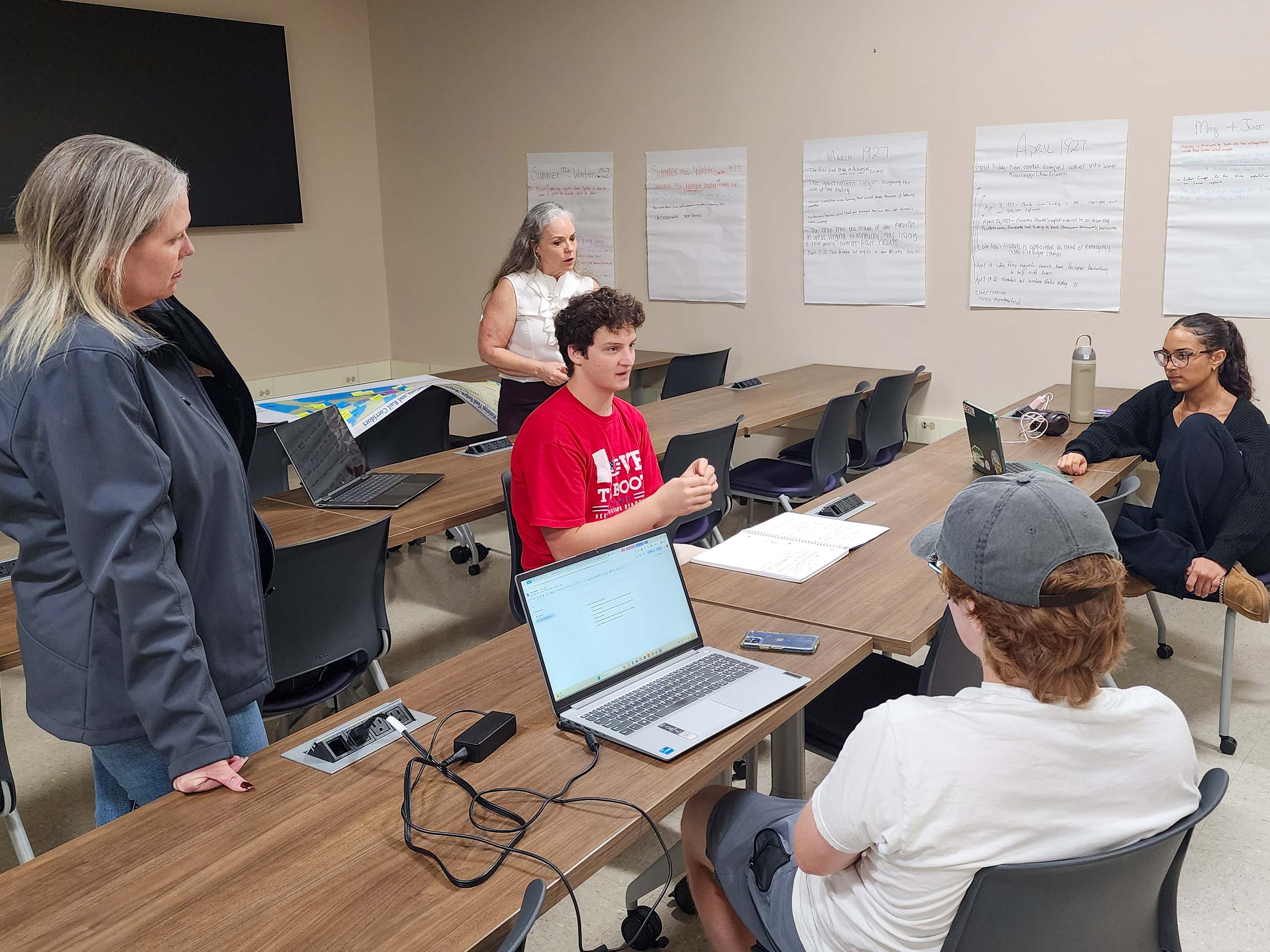
DES Professor Linda Hooper-Bùi (right) and Information Studies Professor Daena Carrillo listen as students discuss flood mitigation measures.
BATON ROUGE - Environmental Sciences Professor Linda M. Hooper-Bùi stands in front of the class, talking about priorities when designing flood control systems.
“What are the new risks? Who does it hurt? Who does it help?” she asks.
This isn’t a standard lecture; Bùi and her co-teacher, Daena Carrillo of LSU’s School of Information Studies, are getting ready to let the students take over for a discussion about flooding that, while steeped in history, has real ramifications for today.
Creating Transdisciplinary Understanding
The class is Environmental Thought, ENVS2021, and it’s centered around the Mississippi River Flood of 1927 - one of the country’s seminal, and most devastating, natural disasters.
But the course is more than a survey of what happened during the flood. It melds two disparate fields, Environmental Sciences and Archival Studies, to create a transdisciplinary exploration of the disaster. Students learn historical events while also examining how history was written, and what we can learn from it today.
“One hundred years later, the 1927 flood still has a great deal to teach us. Students can trace how confidence in engineering, unequal access to power, environmental change, and decisions about recovery shaped the disaster, then use those lessons to think critically about Katrina, coastal Louisiana, and flood-prone communities around the world.”
Linda Hooper-Bùi, Professor of Environmental Sciences
“This course is providing our students with an opportunity to engage with history and understand environmental science through a lens many have never experienced until now. We are discussing events within a timeline, while in real-time, interacting with primary source materials such as photographs, letters, and oral history transcriptions,” said Carrillo. “The impact of first-person narratives and perspectives are powerful. Seeing our students evolve as researchers through this 15-week experience, while building a community of learning amongst each other, has been incredible.”
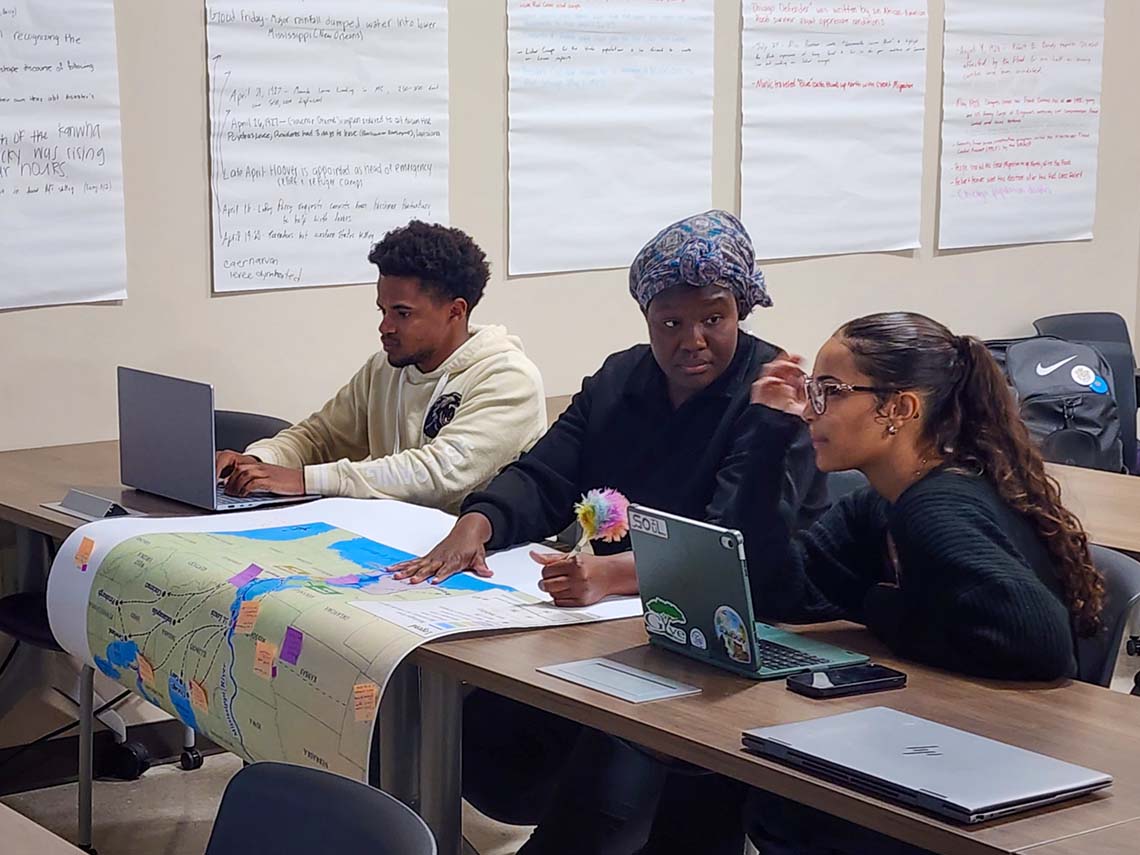
Understanding the Great Flood
The course’s curriculum examines how engineering, race and public policy all shaped the events of the great flood, which spread over 27,000 miles, killed as many as a thousand people, displaced hundreds of thousands more, and caused approximately $1 billion dollars in damage. This was 1/3 of the total federal budget at the time. The flood led to major changes in disaster policies in the US and altered the political landscape of the country.
Students approach the flood from a variety of perspectives: a scientific examination of its causes, a social understanding of the people who were most impacted, and how decisions were made, and an archival perspective – how the stories of the flood were told, and what lessons they hold for us today.
Lessons for Today
Lessons come from books and a variety of other sources: one day, records of rainfall patterns in the Mississippi River Basin, another, a Blues playlist on Spotify, that helps them gain a deeper understanding of the Black sharecroppers whose lives were upended by the waters.
They are expected to learn from each other, discussing events and hashing out ideas.
“In taking ENVS 2021, I've learned not only the logistics of the disastrous Great Mississippi Flood of 1927, but also the extremity of the systemic discrimination that contributed to so much loss and suffering of vulnerable communities,” said Naveya K Lofton, a Coastal & Environmental Sciences student who is taking the class. “These crucial pieces of information are not widespread, but I feel it's important to highlight even the ugliest parts of our history to learn and implement change.”
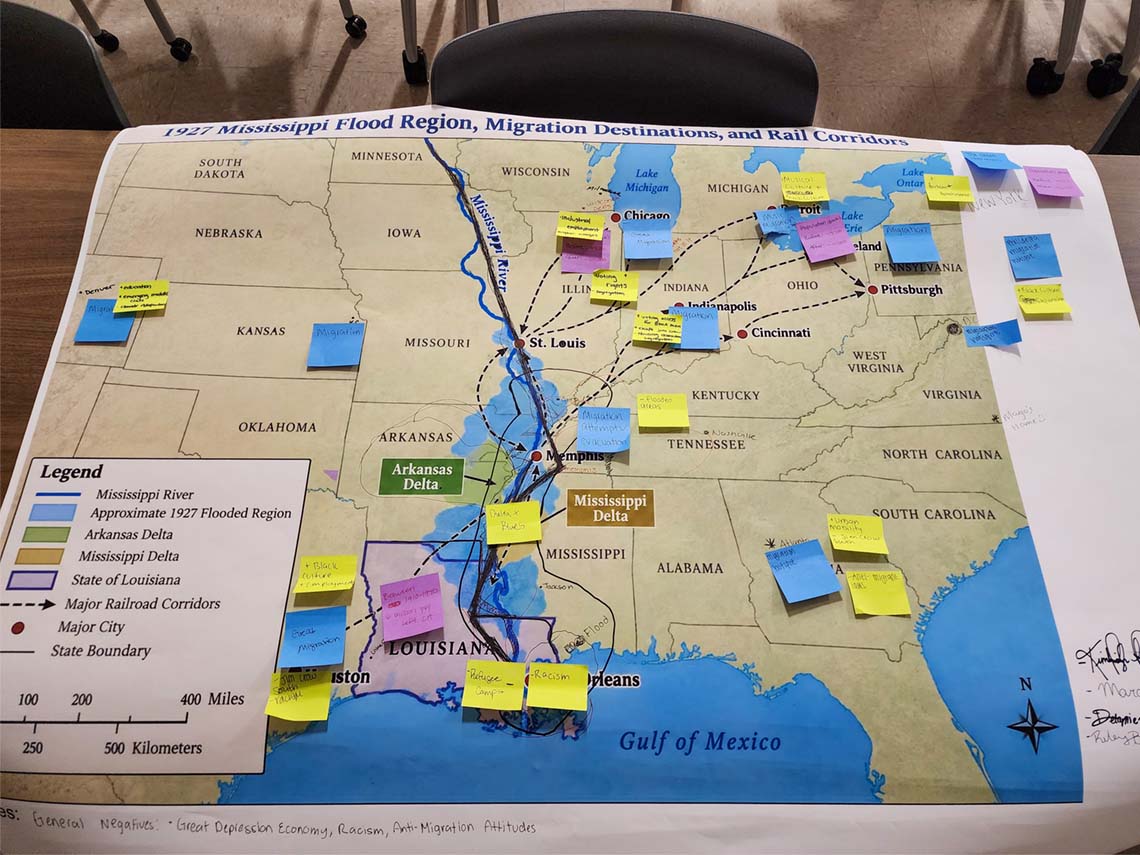
At the end of the group discussions on flood design priorities, one set of students wanted to address the lack of communication on the part of the government. Evacuation plans needed to be announced, and followed through on, she said.
Other students wanted to put out more flood mitigating measures – materials to absorb flood water, or restored coastal marshes that could better absorb flood waters.
Later in the class, Bùi expanded the discussion, giving each group of students a map of the United States and a section of the Mississippi River to manage. They were asked to prioritize what actions they would take, and why. The challenge was further complicated by cards Bùi and Carrillo distributed, bearing further impediments like “the river behaving naturally impedes navigation.”
This activity too was designed to help students thoroughly understand how historical understanding can be shaped by priorities of the time. “The federal decision-making exercise supports the capstone archive project by helping students understand that archives do not simply preserve events—they preserve decisions, priorities, conflicts, and the evidence used to justify them,” Bùi said.