
Sharks in the Water: LSU Researchers Find Sharks in Marine Sanctuary for the First Time
October 26, 2026
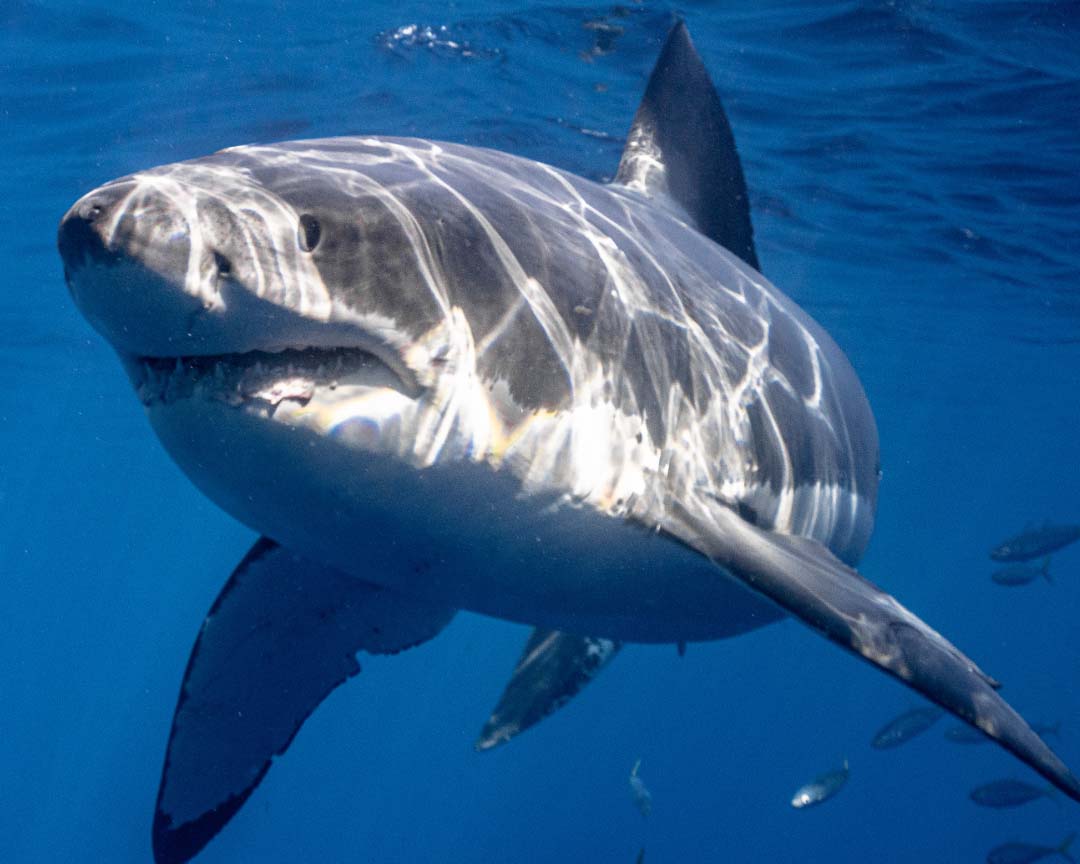
Dance and his collaborators used acoustic telemetry to detect nine sharks over the course of three years.
In a first for the northern Gulf, LSU researchers have documented great white sharks in the Flower Garden Banks Marine Sanctuary.
Oceanography & Coastal Sciences Associate Professor Mike Dance and collaborators from multiple universities published a paper detailing the visits of nine sharks to the area, over the course of three years.
Not only does this mark the first time the species has been documented in the sanctuary, it provides a rare example of the animals venturing west of the mouth of the Mississippi.
The findings not only provide scientists with more information about the activity of sharks in the area, they demonstrate the importance of the Flower Garden Banks, a marine sanctuary spanning hundreds of miles across a series of salt domes that function similar to seamounts. These features are home to a large, healthy population of invertebrate species like stony coral, sponges and black coral.
The array detected three males and six females, all tagged along the eastern United States between Massachusetts and South Carolina. They were detected at 14 different reef sites along the outer shelf of the northern Gulf.
Over the course of three years, the team observed that:
- Sharks showed a lot of variety in their movement, and in their philopatry, which is their tendency to return to the area within a year of tagging
- The distances they traveled also varied by a lot, ranging from 5.8 km (about 3 and a half miles) per day to 58 km (36 miles)
- One male made the trip to the Flower Garden Banks from the Gulf of St. Lawrence in Canada, a journey of 9200 km in one year!
Dance heads the Fisheries and Movement Ecology Lab, which documented the shark visits after establishing an acoustic receiver array in partnership with collaborators at Texas A&M University in 2022. Their ongoing project helps researchers understand how the reef habitat is being used and the degree to which these reefs are connected as one large ecosystem.