
Why do marshes fail during a hurricane? CC&E scientists may have found the answer.
January 21, 2026
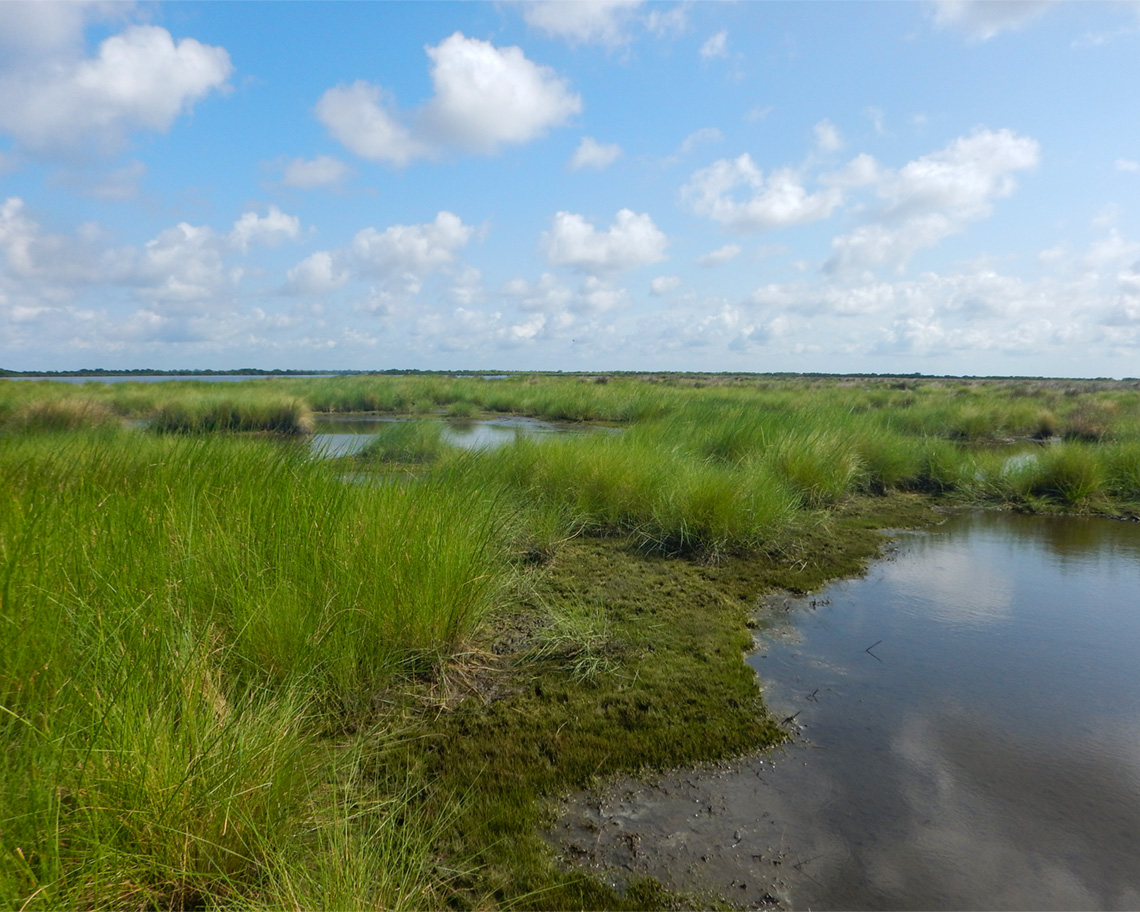
An Sporobolus pumilus marsh
– Photo credit: Tracy Quirk
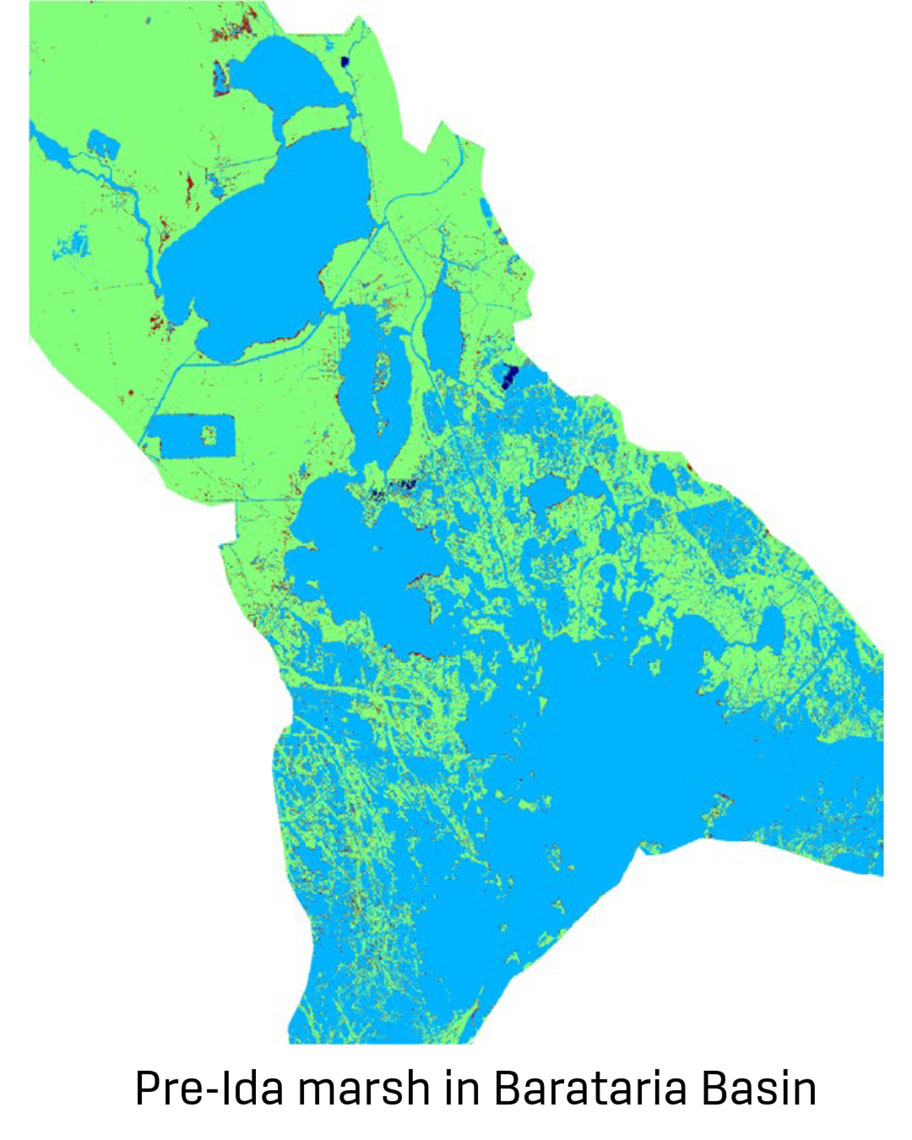
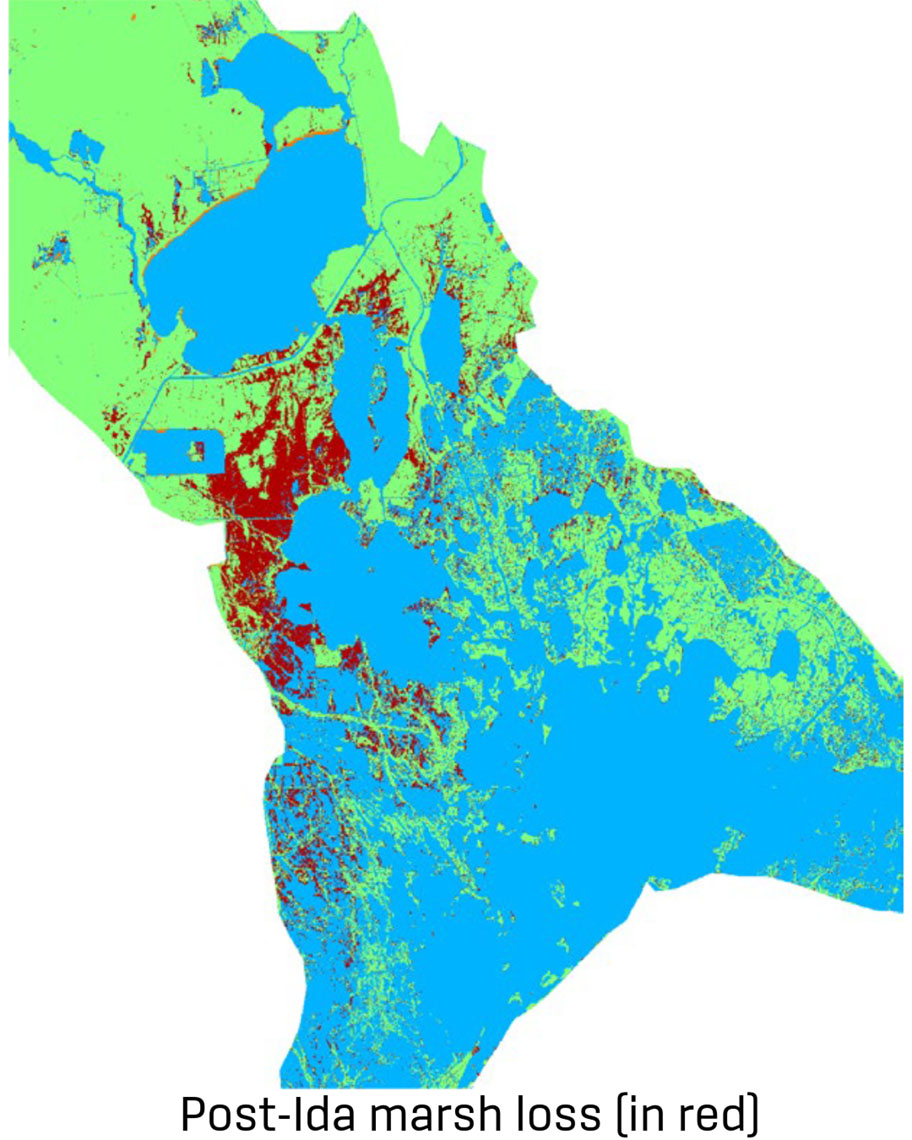
BATON ROUGE - 32 years of coastal erosion. That’s the equivalent of how much damage Hurricane Ida caused when it hit the Barataria Basin on Louisiana’s coast in 2021. That’s about 100 square miles, or 260 square kilometers, of wetlands.
Destruction was not equal across the marsh, however. Assessments of satellite imagery show certain types of wetlands bore the brunt of the storm’s wrath, found Oceanography & Coastal Sciences Associate Professors Giulio Mariotti and Tracy Quirk. They recently published a paper on their findings.
82 percent of destroyed marshes were categorized as intermediate, meaning they had a mix of salt and fresh water, and were dominated by the plant Sporobolus pumilus, also known as Spartina patens, or salt cordgrass.
This finding, Mariotti says, may have big implications for marsh restoration and coastal management. “Hurricanes can wipe out vast amounts of marshes that would not otherwise be lost through processes operating during non-hurricane periods. It is important to identify marshes susceptible to this type of loss, and try to prevent it - for example, by reducing the storm surge or by depositing dredged sediment on the marsh surface and make it heavier.”
In fact, the paper notes, currently the Coastal Master Plan does not account for marsh loss due to hurricanes. Given the dominance of S. pumilus on the coastline, storm losses may need to be added.
Stressful conditions, a susceptible plant
The plant in intermediate areas of the marsh may be uniquely susceptible because of growth patterns and environmental stressors.
In the intermediate marsh on Louisiana’s coast, S. pluminus grows in floating blocks, which the researchers say may be tossed around more during a storm surge. Furthermore, ongoing phenomenon like saltwater intrusion and rising sea levels are causing the plants to grow in a hummock and hollows formation, which leaves little barrier to protect them from damage.
However, the authors also note that the floating block structure may also explain why S. pumilus marsh doesn’t suffer from drowning and ponding, a common type of marsh failure caused by rising water levels drowning the plants.
Also, the paper notes freshwater marshes dominated by S. pumilus did not experience the same levels of loss during Hurricane Ida, most likely because of differences in soil strength and growth patterns. A larger storm surge than Ida’s may cause more damage, however.
Marsh restored using dredged sediment, otherwise known as created marsh, did not suffer any losses.
About 7 percent of marsh blocks displaced by the storm regrew outside the basin, although edge erosion and other factors mean that they will most likely disappear within the next decade.